
Why Legality Matters for Psilocybin in Canada
Finding reliable options for managing anxiety and staying sharp can feel overwhelming when you want safe, trustworthy solutions. Many Canadian adults are now exploring psilocybin microdosing as a possible path, but confusion about legality and safety remains a huge barrier. This overview breaks down psilocybin’s unique effects, common myths, and critical legal considerations in Canada, guiding you toward informed, responsible choices for mental health and focus.
Table of Contents
- Psilocybin Defined And Common Misconceptions
- Legal Status Of Psilocybin In Canada
- Therapeutic Potential Versus Current Regulation
- Risks Of Illegal Psilocybin Use And Sourcing
- Consumer Rights, Safety, And Legal Access
Key Takeaways
| Point | Details |
|---|---|
| Understanding Psilocybin | Psilocybin is a naturally occurring psychoactive compound with therapeutic potential, particularly for mental health conditions. Its effects are influenced by dosage, individual brain chemistry, and environmental context. |
| Legal Restrictions in Canada | Psilocybin is classified as a controlled substance in Canada, with strict regulations governing its use. Access is limited to specific medical cases and authorized therapeutic settings. |
| Risks of Illegal Use | Sourcing psilocybin illegally poses significant legal and health risks, including potential legal prosecution and unpredictable physiological effects. Consumers should prioritize legal and supervised options. |
| Consumer Protections | Current regulations emphasize consumer safety, requiring medical supervision for legal access and providing protections against unregulated practices. consumers must navigate these restrictions carefully. |
Psilocybin Defined and Common Misconceptions
Psilocybin represents a unique psychoactive compound found naturally in certain mushroom species, primarily belonging to the Psilocybe genus. Chemical structure and neurological interactions reveal its complex relationship with human brain chemistry, specifically targeting serotonin receptors and producing profound psychological experiences.
Contrary to widespread misconceptions, psilocybin is not a highly dangerous or addictive substance. Research indicates that it possesses potentially therapeutic properties for managing mental health conditions. The compound’s effects are nuanced and depend on multiple factors:
- Dosage variations impact psychological response
- Individual brain chemistry influences experience intensity
- Environmental setting plays a crucial role in user perception
- Psychological preparedness determines potential therapeutic benefits
Psychoactive mechanisms involve complex neurological interactions. Psilocybin’s primary psychoactive component triggers temporary alterations in brain connectivity, potentially disrupting established neural patterns and offering new perspectives on emotional and cognitive processing.
The scientific community continues exploring psilocybin’s potential, recognizing its promise for treating conditions like depression, anxiety, and addiction. Cultural stigma and legal restrictions have historically hindered comprehensive research, but emerging studies suggest significant therapeutic potential.
Here’s a summary of how psilocybin’s mechanisms connect to its mental health effects:
| Neurological Mechanism | Mental Health Benefit | Explanation |
|---|---|---|
| Alters serotonin activity | Mood stabilization | Balances emotional regulation in the brain |
| Increases brain connectivity | Enhanced cognitive flexibility | Promotes new thought patterns and perspectives |
| Disrupts habitual neural loops | Relief for depression symptoms | Interrupts negative mental processes |
| Supports neuroplasticity | Potential long-term recovery | Facilitates growth and adaptation in neural networks |
Pro tip: Always consult healthcare professionals and understand local legal frameworks before considering any psilocybin-related therapeutic interventions.
Legal Status of Psilocybin in Canada
In Canada, psilocybin remains a controlled substance under the Controlled Drugs and Substances Act (CDSA), with strict regulations governing its possession, production, and distribution. Despite ongoing research into its potential therapeutic applications, the compound is currently classified as illegal for general use.
The legal landscape for psilocybin in Canada is complex and evolving, characterized by several key restrictions:
- Possession is prohibited without explicit authorization
- Production and distribution are criminal offenses
- Limited exceptions exist for specific medical and research purposes
- Special Access Program allows controlled therapeutic use
Legal pathways for psilocybin access remain extremely narrow. Recent legal frameworks have introduced limited exemptions for patients with serious medical conditions, particularly those experiencing treatment-resistant mental health challenges.
Healthcare professionals can apply for special permits through Health Canada’s Special Access Program, allowing controlled use in specific therapeutic contexts. However, these permissions are granted on a case-by-case basis and require extensive documentation and medical justification.
Pro tip: Always consult legal professionals and healthcare providers to understand the current regulatory landscape surrounding psilocybin use in Canada.
Therapeutic Potential Versus Current Regulation
Emerging scientific research reveals a profound disconnect between psilocybin’s promising therapeutic potential and its current restrictive legal status. The compound demonstrates significant potential for treating complex mental health conditions, including treatment-resistant depression, anxiety disorders, and post-traumatic stress disorder.
Key therapeutic applications of psilocybin include:
- Rapid mood regulation mechanisms
- Neuroplasticity enhancement
- Potential breakthrough in treatment-resistant conditions
- Reduced symptoms of depression and anxiety
- Promising results in addiction recovery
Regulatory challenges continue to impede comprehensive clinical implementation. Current legal frameworks create substantial barriers to widespread therapeutic use, requiring extensive documentation, specialized permissions, and rigorous research protocols.
Clinical research frameworks underscore the need for comprehensive safety protocols and more nuanced regulatory approaches. Researchers argue that the current binary legal classification fails to acknowledge the compound’s potential therapeutic value, calling for more adaptive and evidence-based regulatory strategies.
Pro tip: Stay informed about evolving research and regulatory changes by following peer-reviewed psychiatric journals and professional medical associations.
Risks of Illegal Psilocybin Use and Sourcing
Unregulated psilocybin consumption presents significant legal and health risks for Canadian consumers. Obtaining psilocybin through illegal channels exposes individuals to multiple potential dangers, ranging from legal prosecution to unpredictable physiological and psychological consequences.
Key risks associated with illegal psilocybin sourcing include:
- Criminal penalties and potential legal prosecution
- Lack of quality control and product verification
- Potential contamination or misidentification of mushroom species
- Unpredictable potency and concentration
- Higher likelihood of adverse psychological reactions
Medical complications can emerge from unsupervised consumption. Recreational misuse patterns demonstrate potential risks such as intense hallucinations, severe anxiety, cardiovascular complications, and rare instances of induced psychotic episodes.

Individuals with pre-existing mental health conditions face elevated risks when sourcing psilocybin through unregulated channels. The absence of professional medical supervision means users cannot predict or manage potential negative interactions with existing medications or underlying psychological vulnerabilities.
Pro tip: Always prioritize legal, medically supervised pathways for exploring psilocybin’s potential therapeutic applications.
Consumer Rights, Safety, and Legal Access
Canadian psilocybin regulations emphasize strict consumer protection frameworks, highlighting the complex landscape of legal access to psilocybin. Consumers must navigate a tightly controlled environment where therapeutic use is limited to specific, authorized channels.
Key consumer rights and safety considerations include:
- Mandatory medical professional supervision
- Limited legal access through Special Access Program
- Rigorous documentation requirements
- Protection against unregulated product marketing
- Comprehensive informed consent protocols
Regulatory oversight plays a critical role in protecting consumer interests. Unregulated dispensary practices pose significant risks, with many establishments making unsupported health claims and circumventing essential safety warnings.
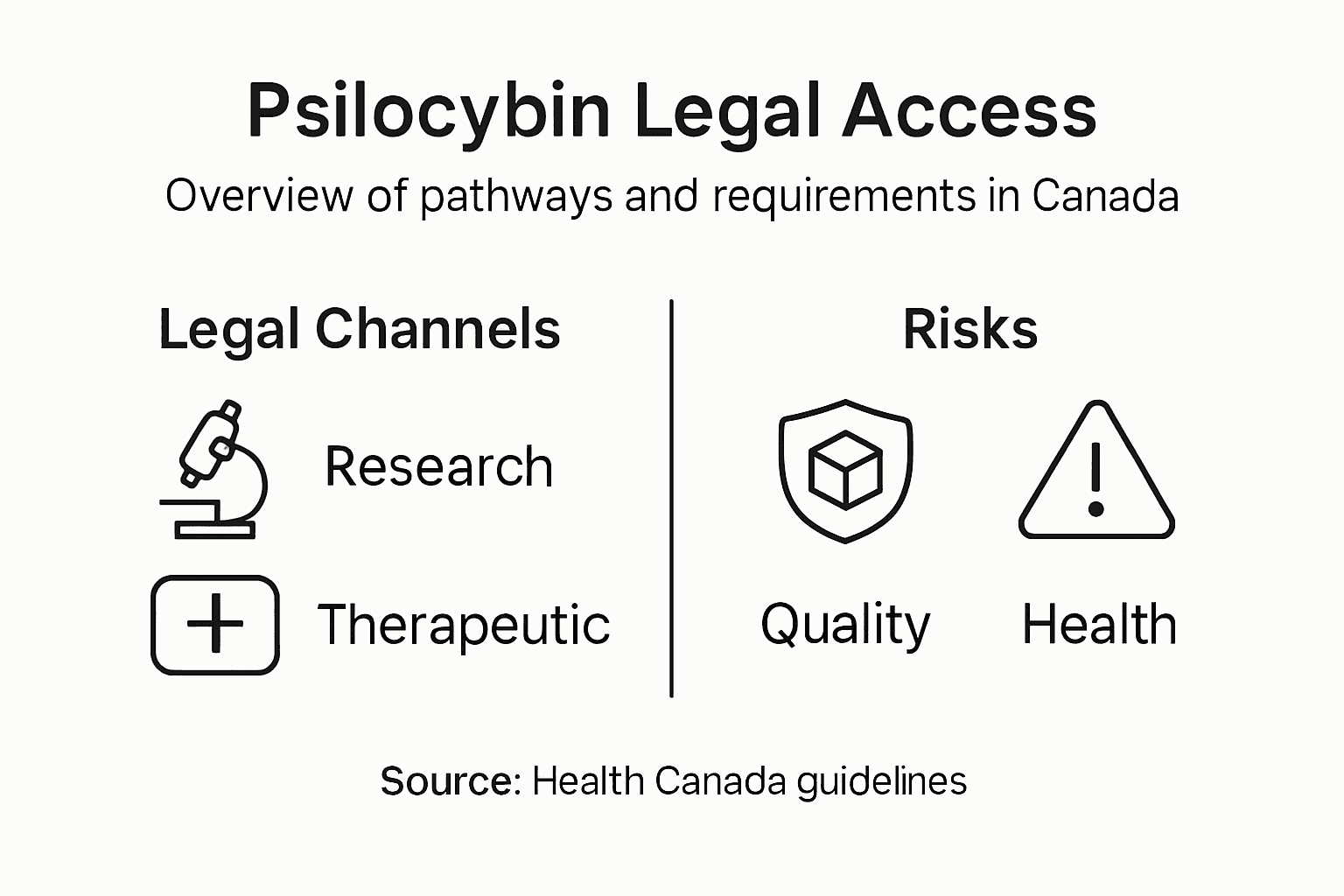
Consumers seeking psilocybin access must understand that current legal frameworks prioritize medical research and controlled therapeutic interventions. This means individuals cannot simply purchase or consume psilocybin without explicit medical authorization and professional guidance.
The following table compares legal and unregulated psilocybin access in Canada:
| Access Pathway | Legal Status | Requirements | Risks |
|---|---|---|---|
| Special Access Program | Legal, highly restricted | Medical authorization; strict documentation | Minimal, supervised |
| Recreational purchase | Illegal | None; unregulated vendors | Legal penalties; unknown purity |
| Personal cultivation | Illegal | Not permitted by law | Risk of prosecution and product misidentification |
Pro tip: Always verify regulatory compliance and seek guidance from licensed healthcare professionals before considering any psilocybin-related therapeutic interventions.
Discover Safe and Legal Ways to Explore Psilocybin in Canada
Navigating the complex legal landscape surrounding psilocybin in Canada can be challenging. This article highlights crucial concerns such as strict possession laws and the risks of unregulated sourcing. If you value safety, legality, and informed decisions about microdosing or therapeutic use, understanding your options is essential. At Fungal Friend, we specialize in providing carefully curated psilocybin products designed for Canadian consumers seeking natural support for mood balance, anxiety reduction, and focused clarity within a responsible and legal framework.
Explore our comprehensive resources in Uncategorized Archives – Fungal Friend to deepen your knowledge about dosage, strain varieties, and the important legal context. Take control of your psilocybin journey today by choosing safe, discreet products from a trusted Canadian source. Visit Fungal Friend now to find solutions that respect both your wellness goals and current regulations.
Frequently Asked Questions
What is psilocybin and how does it affect the brain?
Psilocybin is a naturally occurring psychoactive compound found in certain mushrooms. It primarily affects serotonin receptors in the brain, leading to altered perception and mood stabilization, cognitive flexibility, and potential therapeutic benefits for mental health issues.
Why is psilocybin considered illegal in Canada?
Psilocybin is classified as a controlled substance under the Controlled Drugs and Substances Act (CDSA), which prohibits its possession, production, and distribution without specific authorization, thereby hindering its use for therapeutic purposes.
What are the risks of using psilocybin illegally?
Illegal use of psilocybin can lead to criminal penalties, unpredictable potency and quality of the substance, potential health risks including severe psychological reactions, and lack of professional medical supervision.
How can one access psilocybin legally for therapeutic use?
Access to psilocybin for therapeutic use can be obtained through Canada’s Special Access Program, which allows healthcare professionals to apply for permits for patients facing treatment-resistant mental health conditions, but it requires extensive documentation and case-by-case approval.