
How to Store Mushroom Edibles Naturally for Freshness
Nearly 30 percent of mushroom enthusiasts lose product to spoilage each year, simply because they overlook key storage steps. Preserving mushroom edibles is about more than finding an empty jar or stashing them in the fridge. The right methods protect your stash from moisture, light, and temperature swings, keeping quality and potency at their peak. Follow these expert-backed steps so your mushrooms stay safe, effective, and ready whenever you need them.
Table of Contents
- Step 1: Prepare Storage Space And Gather Airtight Containers
- Step 2: Choose Optimal Temperature And Humidity Conditions
- Step 3: Separate And Label Different Mushroom Edible Types
- Step 4: Store Mushroom Edibles Away From Light And Heat
- Step 5: Verify Freshness And Potency Before Each Use
Quick Summary
| Key Point | Explanation |
|---|---|
| 1. Use airtight containers for storage | Choose containers like glass jars or ceramic with sealing lids to keep mushrooms fresh and free from moisture. |
| 2. Maintain ideal temperature and humidity | Store mushrooms at about 4 degrees Celsius with 80-85% humidity to prolong their freshness and potency. |
| 3. Label and separate different mushroom types | Clearly label containers with mushroom strain, storage date, and specific handling instructions to avoid cross contamination. |
| 4. Store away from light and heat | Keep mushrooms in dark, cool spaces to prevent degradation; use opaque containers or wrap them to shield from light. |
| 5. Check freshness before use | Conduct regular inspections for discoloration, smell, or texture changes to ensure mushrooms are safe for consumption. |
Step 1: Prepare storage space and gather airtight containers
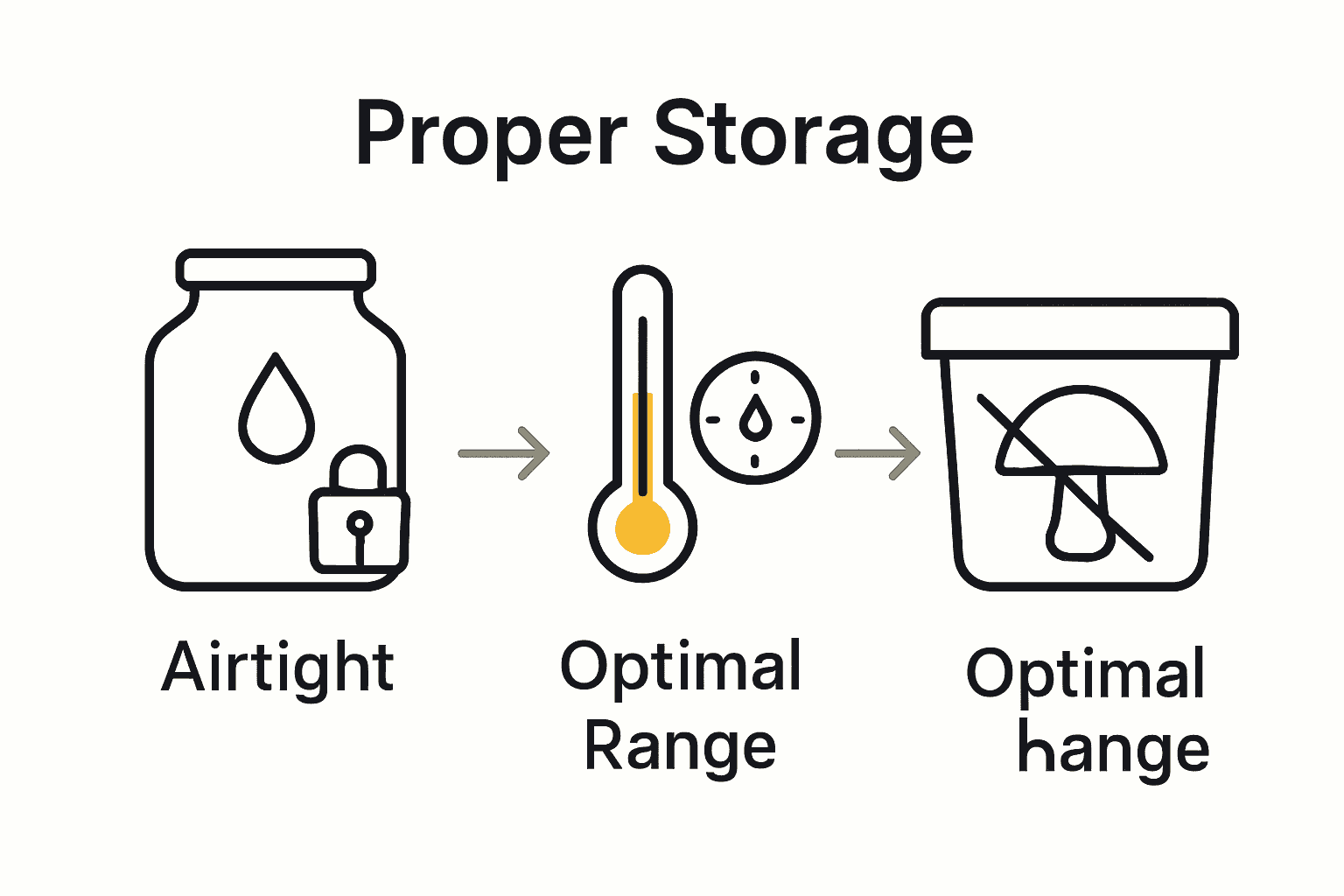
Preparing the perfect storage environment is crucial for maintaining the freshness and potency of your mushroom edibles. In this step, you will create an optimal preservation space that protects your valuable fungi from moisture, light, and temperature fluctuations.
Start by selecting a cool, dark location in your home. According to research from agronomyjournals, packaging mushrooms in polyethylene or similar airtight containers and storing them at approximately 4 degrees Celsius with 85% relative humidity helps preserve their quality. This means you will want to look for glass jars with tight sealing lids, ceramic containers with rubber gaskets, or specialized food storage containers designed to create an airtight seal.
When choosing your storage containers, prioritize materials that do not absorb moisture and can be easily cleaned. Avoid containers with previous strong odors that might transfer to your mushrooms. Consider purchasing containers specifically designed for food preservation which often come with additional features like humidity control or UV protection. Pro tip: Use silica gel packets inside your containers to absorb any excess moisture and help maintain a stable environment for your edibles.
Your next step will involve carefully preparing and organizing these containers to ensure maximum preservation of your mushroom products.
Step 2: Choose optimal temperature and humidity conditions
Selecting the right temperature and humidity is critical for preserving the quality and longevity of your mushroom edibles. In this step, you will learn how to create the ideal storage environment that maintains their potency and prevents degradation.
Research provides clear guidance on optimal storage conditions. According to MDPI, storing Hericium erinaceus mushrooms at 5 degrees Celsius effectively maintains their quality and extends shelf life. Similarly, PMC indicates that button mushrooms exhibit prolonged freshness when stored between 2 and 4 degrees Celsius with reduced decay rates. For most mushroom edibles, aim to maintain a consistent refrigerator temperature around 4 degrees Celsius.
Humidity control is equally important. You will want to maintain a relative humidity between 80 to 85 percent. Avoid fluctuating temperatures or placing your containers near areas with frequent temperature changes like stove tops or heating vents. A dedicated drawer in your refrigerator or a cool basement storage area can provide the stable environment your mushroom edibles require. Pro tip: Use a small digital thermometer and hygrometer to monitor and track your storage conditions precisely.
With your temperature and humidity dialed in, you are now ready to carefully transfer and organize your mushroom edibles in their prepared containers.
Step 3: Separate and label different mushroom edible types
Organizing and distinguishing between various mushroom edible types is essential for maintaining their individual quality and preventing potential cross contamination. In this step, you will learn how to systematically separate and label your different mushroom products to ensure optimal preservation and easy identification.
According to agronomyjournals, different mushroom types such as Agaricus bisporus and Pleurotus species require specific storage conditions. This means you will need to create a careful organizational system that respects each mushroom type’s unique preservation requirements. Start by sorting your edibles into distinct containers based on their strain or type. Use waterproof labels that clearly indicate the mushroom variety, date of storage, and any specific handling instructions.
When labeling, include critical information like the mushroom strain name, potency level, and the date you packaged the edibles. Consider using color coded stickers or markers to create an additional visual separation between different types. If you are storing multiple batches or varieties, create a small reference chart that helps you quickly identify each container’s contents.
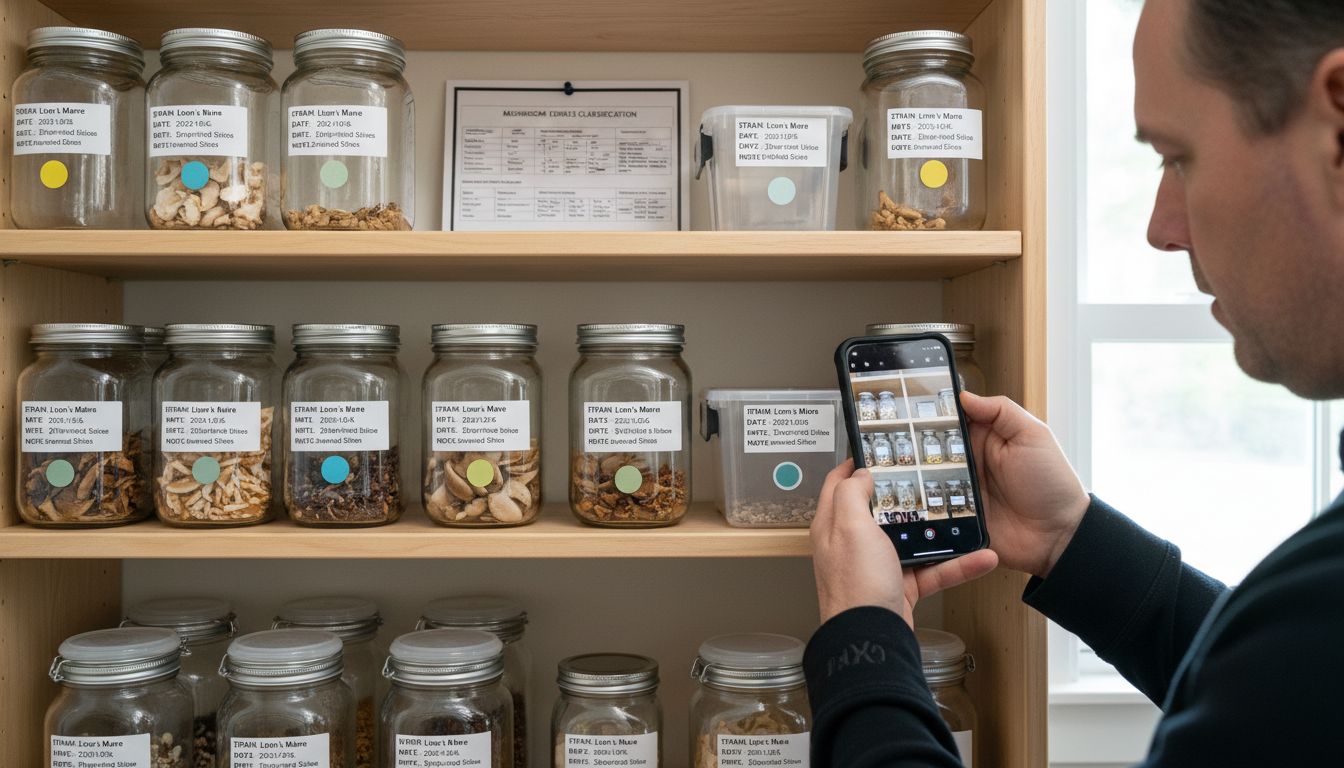 Pro tip: Take a photograph of each labeled container for your personal records and to help you track your collection over time.
With your mushroom edibles now carefully separated and labeled, you are ready to move forward with implementing your long term storage strategy. Understanding What Are Mushroom Strains can provide additional insights into the nuanced world of mushroom varieties.
Step 4: Store mushroom edibles away from light and heat
Protecting your mushroom edibles from light and heat is crucial for maintaining their potency and preventing rapid degradation. In this step, you will learn how to create the ideal storage environment that shields your valuable products from harmful environmental factors.
Research consistently demonstrates the importance of proper storage conditions. According to agronomyjournals, storing mushrooms in cool and dark environments helps prevent degradation and maintains their quality. MDPI further confirms that exposure to light and heat accelerates spoilage in mushrooms. This means you should avoid storing your edibles in areas with direct sunlight, near windows, or close to heat sources like stoves, radiators, or electronic devices that generate warmth.
Instead, choose storage locations that are consistently cool and dark. A dedicated drawer in your refrigerator, a basement storage area, or a dark cabinet away from kitchen appliances are ideal options. If you are using opaque containers, this provides an additional layer of protection against light exposure. Pro tip: Consider using dark glass containers or wrapping clear containers in aluminum foil to create an extra barrier against light.
With your mushroom edibles now safely protected from light and heat, you are ready to move forward in your preservation journey. For more insights, check out our Magic Mushroom Storage Guide to ensure optimal preservation of your edibles.
Step 5: Verify freshness and potency before each use
Ensuring the quality and safety of your stored mushroom edibles is a critical step in maintaining their effectiveness and preventing potential health risks. In this final step, you will learn how to systematically assess your mushroom products before consumption.
Research highlights the importance of regular quality checks. According to PMC, consistently assessing the quality of stored mushrooms ensures they remain fresh and suitable for consumption. MDPI recommends monitoring stored mushrooms for specific signs of spoilage, such as discoloration, unusual texture changes, or off odors. When examining your mushroom edibles, look for these key indicators: consistent color without dark or gray patches, absence of moisture or sliminess, and a clean neutral smell.
Begin your inspection by carefully removing the container from storage and examining the contents in good lighting. Gently inspect each piece without touching them directly. If you notice any signs of mold, unusual smell, or significant color changes, discard the entire batch immediately. Pro tip: Keep a small magnifying glass near your storage area to help you conduct more detailed visual inspections. Always trust your senses and err on the side of caution.
With these verification steps complete, you can confidently enjoy your preserved mushroom edibles. For more detailed insights into assessing mushroom quality, explore our guide on understanding the signs of quality magic mushrooms.
Preserve Your Mushroom Edibles with Confidence and Care
Storing mushroom edibles naturally can be challenging when aiming to maintain freshness, potency, and safety. This article shows you how to control temperature, humidity, and light exposure while organizing your edibles for long-term enjoyment.
 If you want to go beyond proper storage and explore premium psilocybin products designed with quality and natural support in mind visit our Uncategorized Archives – Fungal Friend for carefully curated options.
Get the most out of your mushroom experience by choosing from Fungal Friend’s trusted selection of microdose capsules, infused teas, and magic mushroom chocolates. Our products come with strain information and usage guidance to help you safely enhance mood, reduce anxiety or deepen your psychedelic journey. Start protecting your investment today by exploring the full range at Fungal Friend and take control of your mushroom wellness with expert-backed solutions.
Frequently Asked Questions
How should I prepare storage space for mushroom edibles?
To prepare storage space for mushroom edibles, select a cool, dark location in your home. Use airtight containers made from glass or ceramic to protect them from moisture and light.
What temperature and humidity should I aim for when storing mushroom edibles?
Aim to store mushroom edibles at a consistent temperature of around 4 degrees Celsius and maintain humidity levels between 80 to 85 percent. Use a digital thermometer and hygrometer to monitor these conditions closely.
How can I separate and label different types of mushroom edibles for storage?
Separate mushroom edibles by type and place them in distinct containers. Label each container with the mushroom’s strain name, packaging date, and any unique storage instructions to prevent cross contamination.
Why is it important to keep mushroom edibles away from light and heat?
Keeping mushroom edibles away from light and heat prevents rapid degradation and maintains their potency. Store them in opaque containers or dark cabinets to minimize exposure.
What should I check for to verify the freshness of stored mushroom edibles?
To verify freshness, inspect mushroom edibles for consistent color, absence of moisture or sliminess, and a clean scent. Discard any batch showing discoloration or off odors immediately for safety.
How often should I check the quality of my stored mushroom edibles?
Regularly check the quality of your stored mushroom edibles, at least once a month. This practice helps ensure they remain fresh and safe for consumption.