
Psilocybin Dosage Workflow for Enhanced Wellbeing
Nearly 80 percent of Canadian adults who try microdosing report greater mental clarity, yet many still struggle to structure an effective and safe workflow. Whether you are already comfortable with psilocybin or simply curious about refining your approach, it can be tough to sort real science from american influencer trends. This guide simplifies each step of the dosing process into clear actions designed to support better mental health and sustainable productivity, based on what actually works.
Table of Contents
- Step 1: Assess Personal Goals and Baseline Needs
- Step 2: Select Optimal Psilocybin Dosage and Product
- Step 3: Prepare Environment and Tracking Tools
- Step 4: Administer Dosage with Mindful Intention
- Step 5: Verify Effects and Adjust Future Workflow
Quick Summary
| Key Point | Explanation |
|---|---|
| 1. Assess Personal Goals First | Understand your motivations and mental state before starting psilocybin, as this sets the foundation for your journey. |
| 2. Choose the Right Dosage | Select an appropriate psilocybin dosage based on your goals, body weight, and previous experience to ensure effectiveness and safety. |
| 3. Prepare Your Environment | Create a supportive and distraction-free space for your psilocybin experience to enhance comfort and therapeutic outcomes. |
| 4. Administer with Mindful Intention | Establish a clear intention for your dose, reflecting on your motivations to align your experience with your wellness objectives. |
| 5. Track and Adjust Your Experience | Regularly review your responses and make adjustments to your psilocybin workflow to promote better outcomes in future sessions. |
Step 1: Assess Personal Goals and Baseline Needs
Before diving into a psilocybin workflow, understanding your personal goals and baseline mental health is crucial. The process starts with honest self reflection about what you want to achieve and where you currently stand psychologically. Research indicates that comprehensive psychological preparation is fundamental to safe and effective psilocybin experiences.
Start by conducting a thorough personal inventory. Consider creating a structured self assessment document that explores key areas like current mental health status, specific wellness objectives, stress levels, sleep quality, emotional resilience, and any existing psychological challenges. Pay special attention to understanding your motivations for exploring psilocybin microdosing. Are you seeking anxiety reduction? Enhanced cognitive performance? Mood stabilization? Clarity about your intended outcomes will help guide your entire approach.
Your assessment should also include a critical review of your medical history. Comprehensive psychological support models emphasize the importance of evaluating individual patient readiness before psychedelic treatment. This means documenting any prior mental health diagnoses, current medications, past trauma, and potential contraindications. Consulting with a healthcare professional during this stage can provide additional insights and ensure you have a safe, personalized strategy.
Pro tip: Create a baseline tracking journal where you can document your mental and physical state before beginning your psilocybin journey, allowing you to measure and understand your personal progression accurately.
Here’s a summary of baseline factors to consider before starting psilocybin microdosing:
| Assessment Category | Importance for Workflow | Example Considerations |
|---|---|---|
| Mental Health Status | Ensures safe preparation | Mood, anxiety, emotional stability |
| Medical History | Identifies contraindications | Medications, past trauma, diagnoses |
| Personal Goals | Guides dosing decisions | Wellness objectives, motivation |
| Stress & Sleep Quality | Impacts response variability | Stress levels, sleep habits |
Step 2: Select Optimal Psilocybin Dosage and Product
Choosing the right psilocybin dosage and product requires careful consideration of your personal goals, physical characteristics, and therapeutic intentions. Research on dose response demonstrates that selecting appropriate dosage ranges is critical for balancing therapeutic efficacy and safety.
Start by understanding the different product types available. Microdose capsules typically range from 0.1 to 0.3 grams, offering subtle cognitive enhancement without intense psychoactive effects. For more targeted therapeutic experiences, consider products specifically formulated for anxiety reduction, mood stabilization, or cognitive performance. Comprehensive dose response studies highlight the importance of matching product selection to specific clinical outcomes, which means carefully evaluating each product’s composition and intended effect.
Here is a comparison of common psilocybin microdose product types:
| Product Type | Typical Dosage Range | Intended Effect | Who Might Benefit |
|---|---|---|---|
| Capsules | 0.1–0.3 grams | Subtle cognitive enhancement | Beginners, daily users |
| Gummies | 0.2–0.4 grams | Mood support, easy ingestion | Those sensitive to taste |
| Tinctures | 0.1–0.25 grams | Fast onset, precise control | Experienced users |
Your dosage selection should account for several key factors: body weight, metabolic rate, previous psychedelic experience, and specific wellness objectives. Beginners should start with the lowest recommended dose and gradually increase, paying close attention to individual physiological responses. For microdosing, consistency and precise measurement are essential. Track your responses meticulously, noting any changes in mood, energy, focus, and overall mental state.
Pro tip: Consider maintaining a detailed dosage journal that records product type, exact dosage, time of consumption, and subjective effects to help you fine tune your personal psilocybin workflow.
Step 3: Prepare Environment and Tracking Tools
Comprehensive psychological support frameworks emphasize the critical importance of creating a controlled and supportive environment when preparing for a psilocybin experience. Your physical and mental space plays a crucial role in shaping the overall journey, influencing your comfort, safety, and potential therapeutic outcomes.
Design your physical environment with intentionality. Choose a quiet, comfortable space where you will not be interrupted. This might mean selecting a private room with soft lighting, comfortable seating, and minimal external stimuli. Prepare supportive elements like blankets, water, a journal, and calming background music. Detailed preparation guidelines recommend establishing a safe setting that minimizes potential psychological disruptions and allows for a focused, introspective experience.

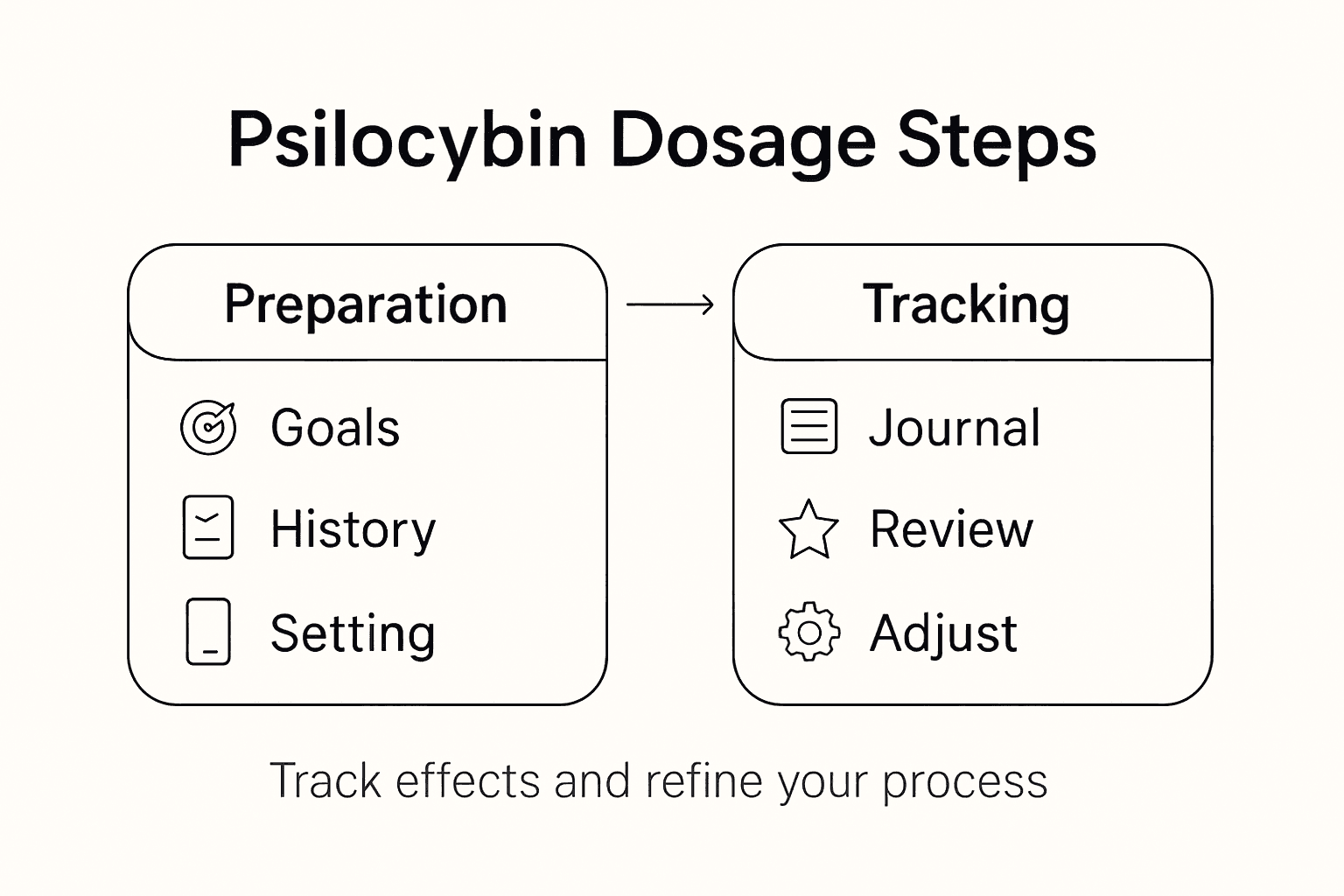
Develop a comprehensive tracking system to monitor your physiological and psychological responses. This could involve digital apps, a physical journal, or a combination of tools that allow you to record dosage, time of consumption, emotional state, cognitive changes, and physical sensations. Creating a structured method for documenting your experience will help you understand your unique response to psilocybin and make informed adjustments in future sessions.
Pro tip: Create a pre-designed tracking template with specific categories to streamline your documentation process and ensure you capture meaningful insights during your psilocybin experience.
Step 4: Administer Dosage with Mindful Intention
Research demonstrates that intentional administration of psilocybin is crucial for maximizing therapeutic potential and psychological safety. Administering your microdose requires more than simply consuming a substance it involves creating a deliberate mental framework that supports your wellness objectives.
Begin by setting a clear and specific intention for your experience. This might involve identifying a particular emotional state you want to explore or a specific mental challenge you hope to address. Take a few moments of quiet reflection before consumption to center yourself and articulate your purpose. Psychological support models emphasize the importance of structured therapeutic context when administering psychedelic compounds, which means approaching your microdose with thoughtfulness and self awareness.
When you are ready to administer your dose, do so with full presence. Measure your precise dosage carefully, noting the exact amount in your tracking journal. Consider creating a brief personal ritual around your consumption a moment of mindfulness that signals to your body and mind that this is an intentional therapeutic practice. Pay attention to your breath, your physical sensations, and your emotional state as you take your microdose.
Pro tip: Develop a consistent pre dosing meditation practice lasting 5 to 10 minutes to help cultivate the mental clarity and intentionality necessary for a meaningful microdosing experience.
Step 5: Verify Effects and Adjust Future Workflow
Comprehensive research emphasizes the critical importance of systematically tracking and evaluating post administration responses to psilocybin microdosing. Verifying effects is not just about documenting what happened but understanding how the experience aligns with your original wellness objectives.
Review your tracking journal meticulously within 24 to 48 hours after your microdose session. Analyze your notes on cognitive function, emotional state, energy levels, and any subtle physiological changes. Look for patterns and connections between your dosage, intention, and observed outcomes. Naturalistic studies recommend ongoing mental health assessments to refine future microdosing protocols, which means being both objective and compassionate with your self evaluation.
Based on your observations, consider potential adjustments to your workflow. This might involve slight modifications to dosage, timing, frequency, or preparation practices. Remember that microdosing is a highly personalized journey. What works perfectly for one individual might require nuanced tweaking for another. Pay attention to how your body and mind respond, and be prepared to make incremental changes that support your overall wellness goals.
Pro tip: Create a standardized post microdose assessment template with consistent categories to ensure you capture comprehensive insights and track your progress systematically.
Unlock Your Optimal Psilocybin Dosage with Fungal Friend
Navigating the complexities of a psilocybin dosage workflow can be challenging. This article highlights key pain points like assessing your baseline mental health, selecting the right dosage, and maintaining mindful intention to enhance your wellbeing safely. If you want to take control of your microdosing journey with confidence and clarity, the right products and guidance matter immensely.
Explore Fungal Friend’s thoughtfully curated range of microdose psilocybin capsules, infused teas, and chocolates designed for targeted wellness goals like anxiety reduction and mood balance. Our Canadian e-commerce platform emphasizes education and safety, helping you tailor your dosing workflow with precise, strain-based options and expert insights. Learn more about the science behind microdosing and discover helpful tips for your journey in our Uncategorized Archives – Fungal Friend.
Take the next step toward a safer and more effective psilocybin experience today. Visit Fungal Friend to find your personalized mushroom products and start enhancing your mental clarity and emotional resilience with trusted, high-quality solutions.
Frequently Asked Questions
What is the first step in the Psilocybin Dosage Workflow for Enhanced Wellbeing?
Before starting, you should assess your personal goals and baseline mental health. Conduct a thorough personal inventory to evaluate your current mental health status, specific wellness objectives, stress levels, and any existing psychological challenges.
How do I select the right psilocybin dosage for my needs?
To choose the optimal dosage, understand different product types and their effects. Start with the lowest recommended dose, especially if you are a beginner, and gradually increase while closely monitoring your physiological responses.
What should I include in my tracking tools after taking psilocybin?
Maintain a detailed tracking system to record your dosage, time of consumption, emotional state, cognitive changes, and physical sensations. Create a structured method for documenting your experience so you can identify patterns and make informed adjustments for future sessions.
How can I prepare my environment for a psilocybin experience?
Design a comfortable and quiet space to minimize distractions during your experience. Include supportive elements such as soft lighting, calming music, and items like blankets and water to create a safe environment conducive to introspection.
What should I do after my microdosing session?
Review your tracking journal within 24 to 48 hours to analyze cognitive function, emotional state, and energy levels. Use this information to consider adjustments to your dosage, timing, or workflow in order to align better with your wellness goals.
How do I set an intention for my psilocybin dosage?
Begin by reflecting on your specific emotional state or mental challenge you wish to address during your experience. Take a few moments of quiet reflection before consumption to articulate your purpose clearly, which can enhance the therapeutic potential of your dose.