
Stackable Psychedelics: Unlocking Synergistic Benefits
Searching for reliable ways to manage anxiety and sharpen focus can leave many Canadian adults overwhelmed by conflicting information. As psychedelics like psilocybin increasingly attract attention for their therapeutic potential, myths and misconceptions about stacking these substances create confusion for mental health advocates and newcomers alike. This article brings clarity by highlighting the science behind stackable psychedelics, debunking common myths, and outlining safe, legal avenues to explore their benefits in Canada.
Table of Contents
- Stackable Psychedelics Defined And Common Myths
- Popular Stacking Types And Combinations
- How Stackable Psychedelics Work In The Body
- Legal Status And Regulation In Canada
- Risks, Safety Steps, And Interaction Concerns
Key Takeaways
| Point | Details |
|---|---|
| Stackable Psychedelics | These compounds can be intentionally combined to achieve synergistic effects while targeting specific neurological pathways for enhanced therapeutic outcomes. |
| Common Myths | Misconceptions about psychedelics include the belief that all combinations are inherently unpredictable and dangerous, which is not the case with informed and careful use. |
| Legal Regulations | In Canada, psychedelics are regulated under the Controlled Drugs and Substances Act, with specific pathways for medical and therapeutic access, emphasizing patient safety. |
| Safety Protocols | Responsible psychedelic use requires thorough medical screening, continuous professional guidance, and a controlled environment to mitigate risks and ensure safe experiences. |
Stackable psychedelics defined and common myths
Psychedelics represent a complex class of substances that fundamentally alter perception and consciousness through unique neurological mechanisms. Neuropharmacological research on psychedelic interactions reveals these compounds primarily engage serotonin receptors, creating profound cognitive and perceptual shifts.
At their core, stackable psychedelics refer to compounds that can be intentionally combined to produce synergistic or complementary effects. These combinations are not random mixtures but carefully considered interactions designed to enhance therapeutic potential or expand consciousness exploration. Key characteristics include:
- Precise receptor targeting
- Controlled interaction mechanisms
- Potential for enhanced therapeutic outcomes
- Individualized response profiles
Neurological mechanisms drive these interactions, with different psychedelics potentially amplifying or modulating each other’s effects through complex serotonergic pathways. Systematic reviews of psychedelic compounds consistently demonstrate that controlled combinations can produce nuanced psychological experiences.
Common myths surrounding psychedelic stacking often stem from misunderstandings about their neurological complexity. Contrary to popular belief, these substances are not inherently dangerous when approached with scientific rigor and professional guidance. Misconceptions include:
- All psychedelic combinations are unpredictable
- Mixing compounds always increases risk
- Psychological effects are purely random
- Therapeutic potential is minimal
Responsible psychedelic exploration requires comprehensive understanding, professional guidance, and respect for individual neurochemical variations.
Pro tip: Always consult qualified healthcare professionals before considering any psychedelic combination to ensure personal safety and optimal therapeutic potential.
Popular stacking types and combinations
Psychedelic stacking represents a sophisticated approach to intentional substance combinations, where different compounds are strategically paired to enhance or modulate psychological experiences. Drug interaction research reveals complex mechanisms underlying these combinations, highlighting the nuanced pharmacological interactions between different psychedelic substances.
Several prominent stacking types have emerged from clinical and user-based research, each with distinct characteristics and potential outcomes:
-
Classic Psychedelic Combinations
- LSD with psilocybin
- Mescaline with ayahuasca
- Low-dose ketamine with psilocybin
-
Therapeutic Stacking Approaches
- Microdose pairings for mood regulation
- Complementary compounds for anxiety reduction
- Neuroplasticity-enhancing combinations
Polysubstance interactions involve intricate neurochemical exchanges that can produce profound psychological shifts. Comprehensive analysis of stacking practices demonstrates that users often seek specific experiential outcomes through carefully considered substance combinations.
Understanding these interactions requires deep knowledge of individual compound properties, potential synergies, and inherent risks. Some combinations can amplify therapeutic potential, while others might introduce unexpected neurological complications. Key considerations include:

Here’s a concise summary comparing key psychedelic stacking approaches:
| Stacking Approach | Example Pairings | Main Goal | Typical Setting |
|---|---|---|---|
| Classic Combinations | LSD + psilocybin | Deep exploration | Research or guided use |
| Therapeutic Pairings | Microdose psilocybin + ketamine | Mood enhancement | Clinical supervision |
| Neuroplasticity-Focused | Psilocybin + ayahuasca | Cognitive flexibility | Research trials |
| Anxiety-Reduction Sets | Low-dose mescaline + complementary agents | Emotional balance | Personalized therapy |
- Individual neurochemical variations
- Potential interaction mechanisms
- Dosage precision
- Personal physiological response
Responsible psychedelic stacking demands extensive research, professional guidance, and a comprehensive understanding of individual neurological responses.
Pro tip: Always document and track your personal experiences with minimal, carefully controlled substance interactions to understand your unique neurochemical response.
How stackable psychedelics work in the body
Psychedelics interact with the human body through complex neurochemical mechanisms, fundamentally reshaping brain connectivity and neural communication. Neural network interactions reveal intricate destabilization processes that allow unprecedented psychological flexibility and cognitive restructuring.
The primary mechanism of action involves targeted receptor engagement, particularly with serotonin pathways. Key neurological interactions include:
-
Serotonin 5-HT2A Receptor Activation
- Disrupts established neural patterns
- Increases brain network entropy
- Promotes neuroplasticity
-
Neural Network Modulation
- Reduces default mode network rigidity
- Enhances functional connectivity
- Facilitates psychological flexibility
Neuroplastic transformations occur through sophisticated biochemical interactions that temporarily dissolve entrenched cognitive patterns. Psychedelic connectivity research demonstrates how these compounds create unique neurological states characterized by increased neural communication and reduced network constraints.
The body’s response to stackable psychedelics involves multiple complex stages:
- Initial receptor binding
- Neurochemical cascade activation
- Neural network reconfiguration
- Psychological experience generation
- Gradual neural integration
Psychedelic interactions represent a delicate dance of neurochemical communication, where precise molecular interactions unlock unprecedented cognitive potential.
Pro tip: Maintain a detailed journal documenting your physiological and psychological responses during psychedelic experiences to better understand your unique neurochemical landscape.
Legal status and regulation in Canada
Psychedelic substances in Canada exist within a complex legal framework that balances public health considerations with emerging scientific research. Provincial and municipal regulations demonstrate nuanced approaches to managing these compounds, creating a dynamic landscape of legal interpretation.
Under current Canadian law, psychedelics are primarily regulated through the Controlled Drugs and Substances Act, which classifies most psychedelic compounds as controlled substances. Key legal characteristics include:
-
Federal Regulatory Framework
- Psilocybin classified as controlled substance
- Strict production and distribution controls
- Limited medical and research exceptions
-
Access Pathways
- Health Canada Special Access Program
- Clinical trial participation
- Section 56 exemptions for therapeutic use
Medical and Research Exceptions provide critical pathways for legal psychedelic engagement. Health Canada’s regulatory approach emphasizes careful screening and controlled access, prioritizing patient safety and scientific investigation.
The legal landscape continues to evolve, with several key developments emerging:
- Increasing research authorization
- Growing therapeutic interest
- Gradual decriminalization discussions
- Emerging regulatory frameworks
- Expanding medical exemptions
Legal access to psychedelics remains tightly controlled, requiring rigorous documentation and professional medical guidance.
Pro tip: Always consult legal professionals and healthcare providers to understand the most current regulations surrounding psychedelic substances in your specific jurisdiction.
Risks, safety steps, and interaction concerns
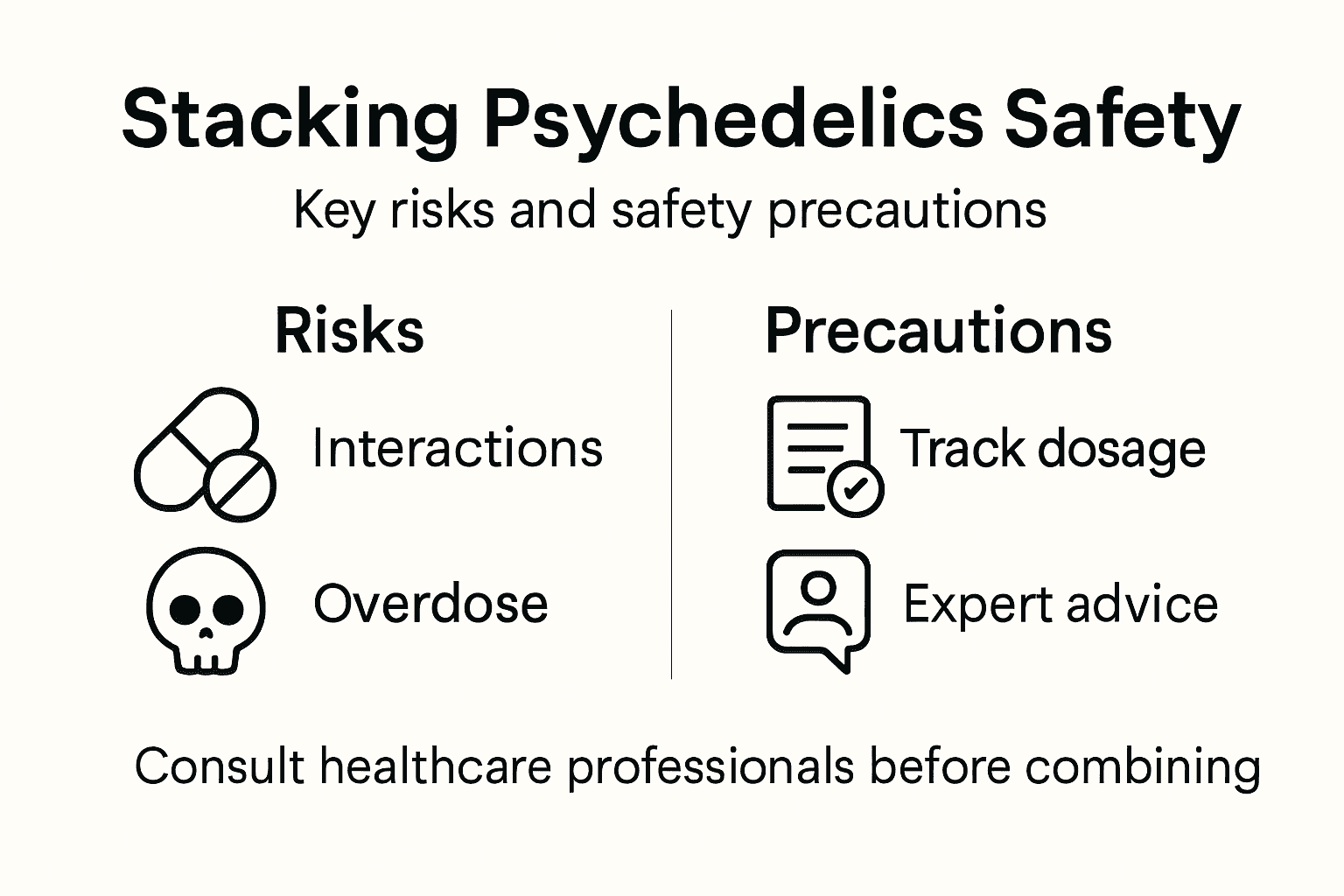
Navigating the complex landscape of psychedelic stacking requires a comprehensive understanding of potential risks and safety protocols. Psychedelic safety frameworks emphasize the critical importance of structured, supported use to mitigate adverse psychological reactions.
Potential risks associated with psychedelic combinations include:
-
Psychological Risks
- Heightened anxiety
- Potential paranoid episodes
- Temporary ego dissolution
- Unexpected emotional intensity
-
Physiological Considerations
- Cardiovascular stress
- Neurochemical imbalances
- Potential serotonin syndrome
- Individual metabolic variations
Drug interaction dynamics represent a critical area of concern. Comprehensive drug interaction research reveals complex interplay between psychedelics and other substances, demonstrating nuanced potentiation and attenuation effects.
Safety steps for responsible psychedelic exploration include:
- Comprehensive medical screening
- Professional guidance
- Controlled environment
- Thorough integration support
- Gradual, monitored dosage progression
Responsible psychedelic use demands meticulous preparation, professional support, and deep personal awareness.
Pro tip: Maintain a detailed health journal documenting your physiological and psychological responses, and always consult healthcare professionals before attempting any psychedelic combinations.
The following table summarizes safety and risk factors for psychedelic stacking:
| Risk Type | Specific Concerns | Recommended Precaution |
|---|---|---|
| Psychological | Intense emotional shifts | Pre-use mental health screening |
| Physiological | Cardiac stress, serotonin syndrome | Monitor vital signs closely |
| Interaction Dynamics | Enhanced or diminished effects | Consult drug interaction experts |
| Personal Variation | Unique neurochemical responses | Start with low, gradual doses |
Discover Safe and Effective Psychedelic Stacking with Fungal Friend
Understanding the complexities of stackable psychedelics requires precision, safety, and trusted guidance. If you are seeking to navigate the challenges of combining microdoses or exploring synergistic effects like those detailed in the article, Fungal Friend offers a carefully curated selection of psilocybin products designed with your unique neurochemical responses in mind. Our range supports anxiety reduction, mood balance, and focused exploration, all within a legal and safe Canadian framework.
Start your journey toward enhancing cognitive flexibility and therapeutic potential today by exploring Uncategorized Archives – Fungal Friend for insights, or visit our main site to find the perfect microdose solution for your needs. Take control of your psychedelic experience with expert guidance and premium products that put safety and efficacy first.
Frequently Asked Questions
What are stackable psychedelics?
Stackable psychedelics are compounds that can be intentionally combined to create synergistic or complementary effects, enhancing therapeutic outcomes or consciousness exploration.
How do stackable psychedelics work in the body?
They interact with the brain’s serotonin receptors, disrupting established neural patterns and promoting neuroplasticity, which can lead to enhanced cognitive flexibility and unique psychological experiences.
What are some common combinations of stackable psychedelics?
Popular combinations include LSD with psilocybin, mescaline with ayahuasca, and low-dose ketamine with psilocybin, each targeting specific therapeutic goals.
What safety precautions should be taken when using stackable psychedelics?
It is crucial to have comprehensive medical screenings, professional guidance, a controlled environment for use, and gradual dosage progression to minimize risks associated with combining psychedelics.