
Mushroom Tolerance Explained: Complete User Guide
Did you know that brain tolerance to magic mushrooms can start building in just a few hours after your first dose? Many people are surprised by how quickly their bodies adjust, making each experience feel less intense. Understanding why mushroom tolerance develops matters if you want to make the most of your psilocybin journeys. Discover the science behind this rapid adaptation and learn practical tips to keep your experiences meaningful and effective.
Table of Contents
- What Is Mushroom Tolerance And Why It Develops
- How Mushroom Tolerance Affects Dosage And Effects
- Timeline Of Tolerance Build-Up And Reset
- Risks And Myths About Mushroom Tolerance
- Best Practices To Manage And Avoid Tolerance
Key Takeaways
| Point | Details |
|---|---|
| Mushroom Tolerance | Tolerance develops quickly, requiring larger doses for the same effects, influenced by frequency of use, dosage, and individual factors. |
| Dosage Management | Users should space full-dose experiences by 3-4 weeks to maintain psilocybin’s potency and avoid rapid tolerance escalation. |
| Common Myths | Misunderstandings about dosage and frequency can lead to dangerous assumptions; users must be aware of individual metabolic differences. |
| Best Practices | Start with low doses, practice moderation, and allow for recovery periods to enhance the effectiveness of psilocybin experiences. |
What Is Mushroom Tolerance And Why It Develops
Mushroom tolerance refers to the body’s diminishing response to psilocybin after repeated exposure, requiring increasingly larger doses to achieve the same psychological and perceptual effects. According to unlimitedsciences, short-term tolerance to psilocybin can develop rapidly, compelling users to adjust their consumption strategies.
The biological mechanism behind mushroom tolerance is rooted in how our brain’s serotonin receptors respond to repeated psilocybin exposure. When you consume magic mushrooms, the psilocybin compound binds to specific serotonin receptors, particularly the 5-HT2A receptors in the brain. With consecutive doses, these receptors become less sensitive, creating a neurological adaptation that reduces the intensity of psychedelic experiences. magicmushroomsdelivery confirms that tolerance can build up quickly, with brain receptivity diminishing within hours after an initial dose.
Tolerance development isn’t uniform across all users and depends on several factors:
Here’s a summary of main factors influencing mushroom tolerance:
| Factor | Description | Impact on Tolerance |
|---|---|---|
| Frequency of Use | How often mushrooms are consumed | High frequency accelerates tolerance |
| Dosage Amount | Quantity of psilocybin per session | Larger doses build tolerance faster |
| Metabolic Rate | Individual body’s processing speed | Faster metabolism may alter tolerance rate |
| Body Chemistry | Unique neurochemical makeup | Influences receptor sensitivity |
| Mushroom Strain | Specific psilocybin species | Potency varies tolerance effects |
- Frequency of consumption
- Individual metabolic rates
- Dosage amounts
- Personal body chemistry
- Specific mushroom strain consumed
Interested users can learn more about different mushroom strains to understand how variability might impact their personal tolerance levels. By understanding these nuanced mechanisms, individuals can make more informed decisions about their psilocybin experiences and manage consumption more effectively.
How Mushroom Tolerance Affects Dosage And Effects
Dosage escalation is the primary consequence of mushroom tolerance, where users must consume increasingly larger quantities to experience similar psychedelic effects. psychedelicpassage recommends spacing out full-dose experiences by 3 to 4 weeks to prevent rapid tolerance development and maintain the substance’s potency.
The practical implications of mushroom tolerance are significant for both recreational and therapeutic users. welcomehomevetsofnj highlights that consuming mushrooms more frequently than once every week to 10 days can dramatically reduce their effectiveness. In fact, users might need 1.5 to 2 times the original dosage to achieve comparable psychological and perceptual experiences.
Key factors that influence tolerance and dosage include:
- Frequency of consumption
- Individual metabolism
- Body weight
- Personal neurochemistry
- Specific mushroom strain potency
For those seeking to optimize their psilocybin dosage, understanding these tolerance mechanisms becomes crucial. By implementing strategic consumption patterns and allowing adequate recovery periods between experiences, users can maintain the integrity and effectiveness of their psilocybin journeys.

Timeline Of Tolerance Build-Up And Reset
Tolerance development in psilocybin mushrooms follows a rapid and predictable neurological progression. magicmushroomsdelivery reveals that brain tolerance can increase dramatically within hours after initial consumption, with a complete reset typically occurring after 5-7 days.
The speed of tolerance buildup makes strategic consumption critical for those seeking consistent psychedelic experiences. psychedelicpassage recommends spacing out full-dose journeys by 3 to 4 weeks to prevent tolerance and maintain the substance’s transformative potential. This extended interval allows neural receptors to fully recalibrate, ensuring that subsequent experiences remain potent and meaningful.
A detailed tolerance timeline typically looks like this:
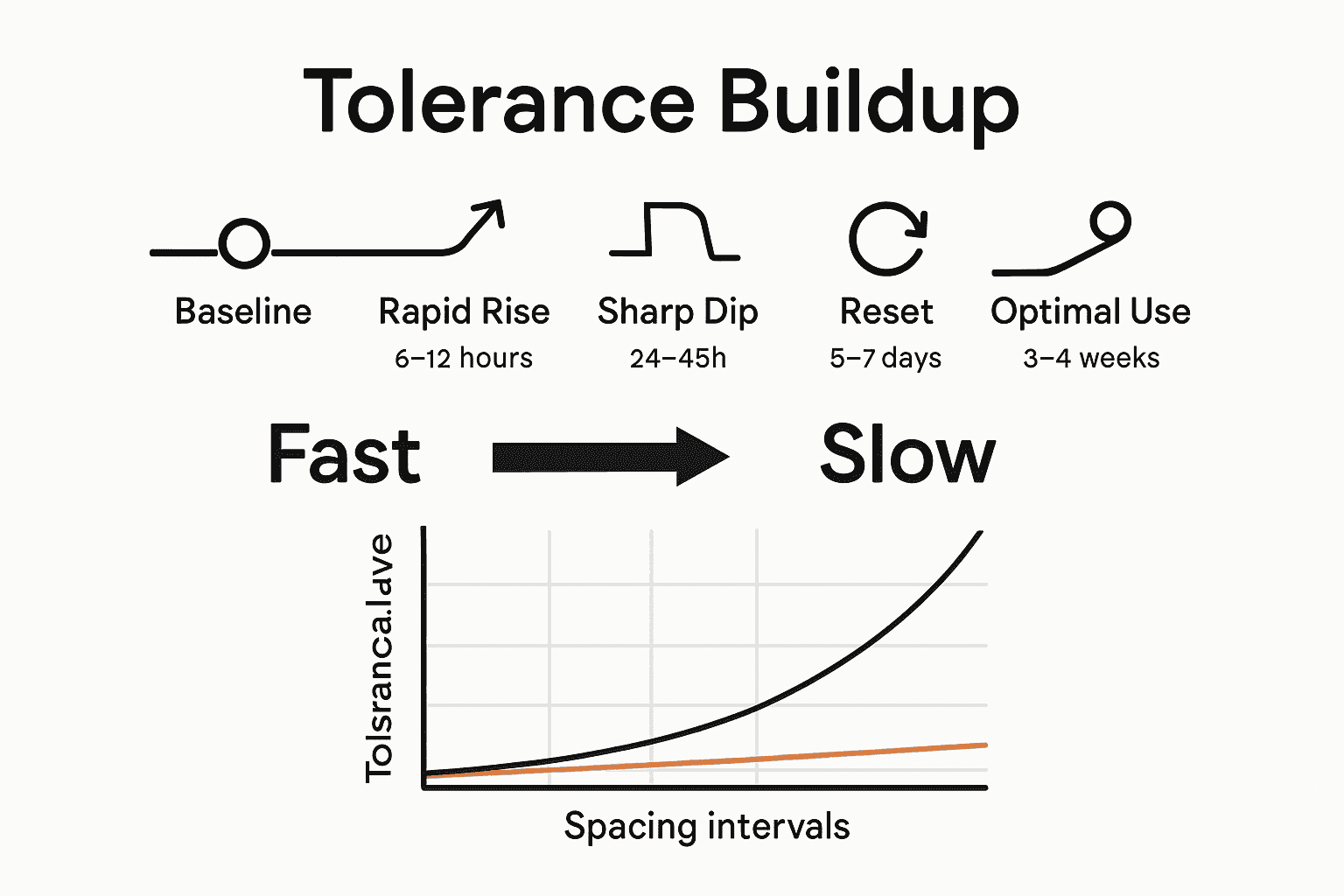
- Initial Consumption: Immediate receptor sensitivity changes
- 6-12 Hours Post-Consumption: Rapid tolerance development
- 24-48 Hours: Significantly reduced psychedelic sensitivity
- 5-7 Days: Complete neurological reset
- 3-4 Weeks: Optimal window for next full-dose experience
Check out our guide on understanding how tolerance works to dive deeper into the neurological mechanisms behind this fascinating biological adaptation. Understanding these nuanced timelines can help users approach psilocybin experiences with greater intentionality and respect for their body’s complex neurochemical responses.
Risks And Myths About Mushroom Tolerance
Mushroom tolerance myths often lead users to make potentially dangerous assumptions about psilocybin consumption. welcomehomevetsofnj highlights a critical misconception: users frequently believe they can maintain consistent experiences by simply increasing dosage, when in reality, tolerance develops rapidly, requiring 1.5 to 2 times the original amount to achieve similar effects.
One prevalent myth suggests that frequent consumption has no long-term consequences. psychedelicpassage contradicts this by recommending spacing out full-dose experiences by 3 to 4 weeks to prevent tolerance buildup and maintain the substance’s therapeutic potential. This guidance underscores the biological complexity of psilocybin interactions with neural receptors.
Common myths and realities about mushroom tolerance include:
- Myth: More frequent use means better experiences
- Reality: Increased frequency accelerates tolerance development
- Myth: Dosage can be consistently scaled up
- Reality: Neural receptors become progressively less responsive
- Myth: Tolerance is the same for everyone
- Reality: Individual metabolic differences significantly impact tolerance
Learn more about distinguishing mushroom myths from facts to approach your experiences with greater awareness and intentionality. Understanding these nuanced biological mechanisms can help users make more informed, safer choices in their psychedelic explorations.
Best Practices To Manage And Avoid Tolerance
Tolerance management requires a strategic and mindful approach to psilocybin consumption. hydromit7 recommends starting with low doses to understand your body’s unique reaction and practicing moderation to maintain neurological sensitivity. This approach helps users navigate their psychedelic experiences more intentionally and safely.
psychedelicpassage emphasizes the critical importance of spacing out full-dose experiences by 3 to 4 weeks. This extended interval allows neural receptors to fully reset, preventing the rapid tolerance buildup that can diminish the substance’s transformative potential. Consistent adherence to this guideline helps maintain the integrity and effectiveness of psilocybin experiences.
Key best practices for managing and avoiding tolerance include:
- Interval Spacing: Wait 3-4 weeks between full-dose experiences
- Dosage Control: Start with minimal quantities and adjust gradually
- Metabolic Awareness: Understand your individual physiological responses
- Intentional Consumption: Approach each experience with clear purpose
- Recovery Periods: Allow adequate time for neurological recalibration
Check out our comprehensive mushroom safety checklist to further enhance your understanding of responsible consumption. By implementing these strategies, users can optimize their psilocybin experiences while minimizing potential risks associated with rapid tolerance development.
Manage Your Mushroom Tolerance With Trusted Solutions From Fungal Friend
If you have experienced diminishing effects from repeated psilocybin use or find it challenging to maintain a consistent and meaningful journey, you are not alone. The rapid buildup of mushroom tolerance described in the guide means many users face the struggle of increasing dosages and unpredictable experiences. Understanding terms like “dosage escalation” and “neurological adaptation” is key, but managing tolerance also requires the right approach and products crafted for your unique needs.

Explore Uncategorized Archives – Fungal Friend to discover a carefully curated selection of microdose capsules, infused teas, and magic mushroom chocolates that promote balanced, intentional consumption. Each product supports mindful use with consistent potency, helping you avoid rapid tolerance buildup and maintain enhanced focus, anxiety relief, or deeper psychedelic exploration. Start optimizing your psilocybin experience by visiting https://fungalfriend.co today. Take control of your journey with trusted support crafted for sustained benefits and safe enjoyment.
Frequently Asked Questions
What is mushroom tolerance?
Mushroom tolerance refers to the body’s decreased responsiveness to psilocybin after repeated consumption, requiring larger doses to achieve the same effects.
How quickly does tolerance to psilocybin develop?
Tolerance can develop rapidly, often within hours of the initial consumption, with significant reductions in sensitivity occurring within 24-48 hours.
How long does it take for psilocybin tolerance to reset?
Tolerance typically resets after 5-7 days of not consuming psilocybin, allowing serotonin receptors to regain their sensitivity.
What are some best practices to manage mushroom tolerance?
To manage tolerance, it’s recommended to space out full-dose experiences by 3-4 weeks, start with low doses, and allow adequate recovery periods between uses.