
What Is Psilocybin and Its Role in Mental Wellness
Finding trustworthy information about psilocybin can feel confusing, especially with so many myths swirling around Canadian conversations about mental wellness. For adults seeking relief from anxiety or hoping to sharpen focus, the question remains: what is true about microdosing magic mushrooms and what is hype? This introduction highlights the true definition of psilocybin, its ancient cultural role, and the difference between outdated stereotypes and the real science behind microdosing for mental clarity and emotional balance.
Table of Contents
- Psilocybin Explained: Definition And Myths
- Common Types And Forms Of Psilocybin
- How Psilocybin Affects Mood And Focus
- Legal Status Of Psilocybin In Canada
- Microdosing Benefits And Safety Risks
Key Takeaways
| Point | Details |
|---|---|
| Understanding Psilocybin | Psilocybin is a naturally occurring compound found in specific mushrooms, historically used for spiritual purposes and showing potential in treating mental health conditions. |
| Myths Clarified | Psilocybin is not solely for recreational use; ongoing research highlights its therapeutic applications in treating depression and anxiety. |
| Legal Landscape | Psilocybin remains illegal in Canada, but exceptions for clinical research are evolving, indicating a potential shift towards medical acceptance. |
| Microdosing Insights | Microdosing may offer cognitive benefits without the full psychedelic experience, but scientific validation remains limited and mixed, emphasizing the need for caution. |
Psilocybin Explained: Definition and Myths
Psilocybin is a naturally occurring compound found in certain mushroom species, specifically an indole-based secondary metabolite produced by fungi. If you’ve encountered the term “magic mushrooms,” you’re already familiar with psilocybin-containing varieties. The compound itself is what produces the psychedelic effects people experience when consuming these mushrooms.
The history runs deeper than modern times. Ancient Aztec civilizations called psilocybin-containing mushrooms “god’s flesh,” using them in spiritual and ceremonial contexts for centuries. This long cultural history matters because it shows psilocybin isn’t some newfangled drug, but rather a substance humans have engaged with for millennia.
Let’s clear up the myths right away. One persistent misconception: psilocybin is only for recreational highs. That’s incomplete at best. Research on psilocybin’s therapeutic potential reveals clinical applications for depression, anxiety, and addiction treatment. Major medical institutions are conducting rigorous trials to understand how psilocybin-assisted psychotherapy could support mental health outcomes.
Another common myth suggests psilocybin is uniformly dangerous. The reality is more nuanced. Psychedelic effects include altered perceptions and intense emotions, which can feel uncomfortable for some people. However, clinical research involves extensive safety monitoring and controlled dosages, distinguishing therapeutic use from recreational experimentation. Yes, adverse psychological reactions are possible, especially without proper set and setting, but this doesn’t negate the compound’s therapeutic promise.
The legal status creates confusion too. While psilocybin remains restricted in most jurisdictions, including Canada, the scientific community continues advancing clinical research. This gap between legal status and medical potential is shifting as more evidence accumulates about its benefits for treatment-resistant conditions.
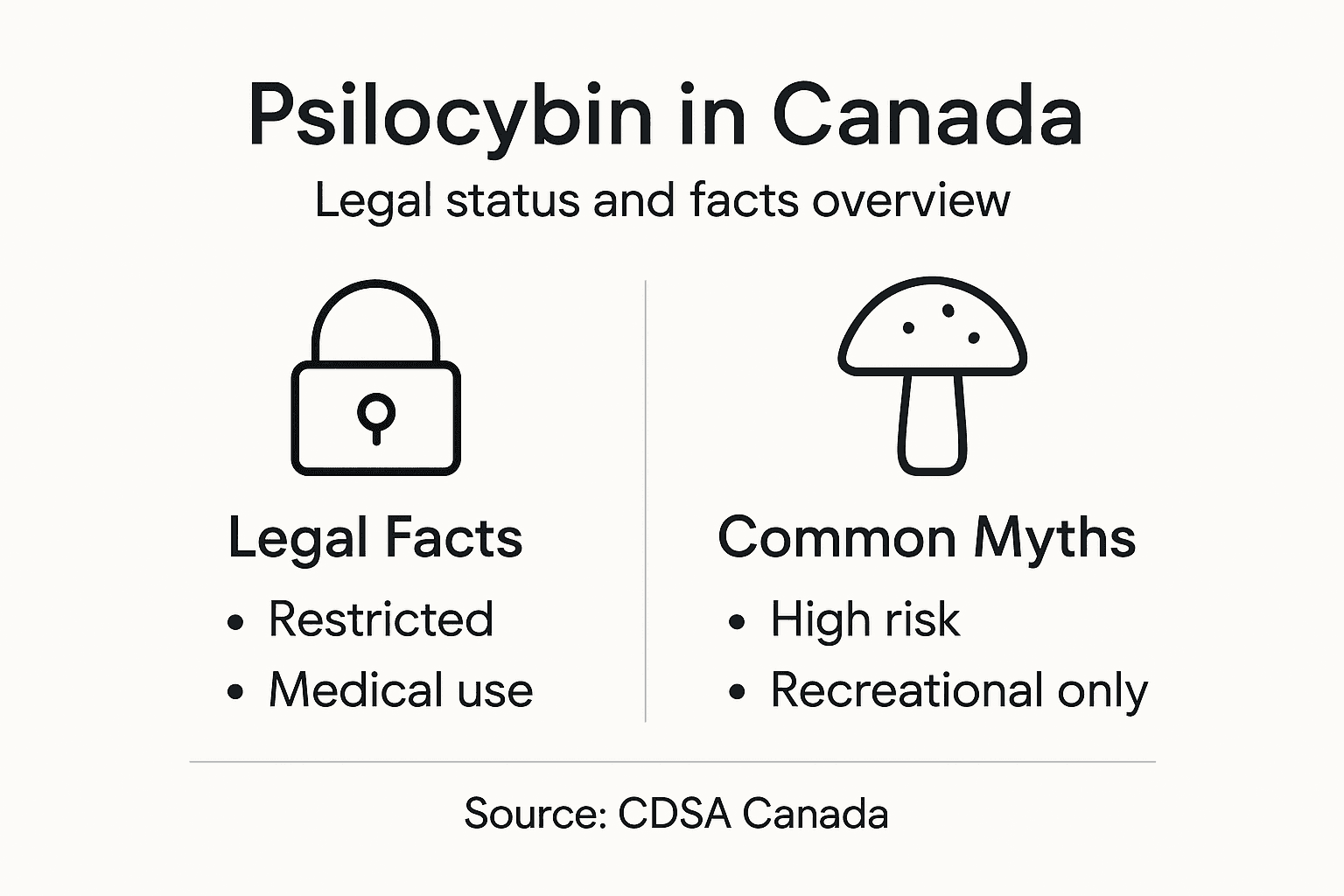
Understanding psilocybin means separating historical use, recreational perception, and emerging therapeutic data into distinct categories. Each tells part of the story.
Pro tip: If you’re curious about psilocybin’s scientific basis, exploring the biochemistry behind how it interacts with your brain can deepen your understanding beyond myths and headlines.
Common Types and Forms of Psilocybin
Psilocybin-containing mushrooms exist in staggering diversity. Over 200 species of these fungi grow worldwide, each with distinct characteristics, potency levels, and geographic distribution. This variety matters because different species contain different concentrations of psilocybin and related compounds, affecting both experience and safety.
The primary genus is Psilocybe, which contains the majority of psychoactive species. However, other genera like Panaeolus and Gymnopilus also produce psilocybin and related alkaloids. Beyond psilocybin itself, these mushrooms contain psilocin, baeocystin, and norbaeocystin, compounds that work synergistically to create the overall experience.
Three species dominate discussion among Canadian users. Psilocybe cubensis grows readily in controlled environments and offers moderate potency. Psilocybe semilanceata, the “liberty cap,” occurs naturally in temperate climates and carries higher potency per gram. Psilocybe azurescens represents the upper end of the potency spectrum, though it’s less commonly encountered.
Here’s a summary comparing major psilocybin mushroom species frequently discussed in Canada:
| Species Name | Potency Level | Typical Environment | Key Characteristic |
|---|---|---|---|
| Psilocybe cubensis | Moderate | Controlled cultivation | Readily grown indoors |
| Psilocybe semilanceata | High per gram | Temperate grasslands | Known as ‘liberty cap’ |
| Psilocybe azurescens | Very high | Coastal woodlands | Less common, very potent |
Psilocybin mushrooms are consumed in several forms. Whole dried mushrooms remain the traditional method, offering variable dosing based on individual specimens. Capsules provide standardized dosing, eliminating guesswork about potency. Infused products like teas and chocolates offer a gentler consumption experience, though absorption may vary. Powder forms allow precise measurement for those microdosing for anxiety management or focus enhancement.
Understanding chemical composition across species is crucial for safe use. Two mushrooms that look identical might contain vastly different psilocybin levels. This variation explains why responsible sourcing matters, whether you’re exploring psilocybin for therapeutic purposes or deeper psychedelic experiences.
Geographic origin affects both availability and legality in Canada. Some species thrive in specific climates, influencing their prevalence in different regions. This distribution knowledge helps contextualize what’s accessible versus what requires careful sourcing.
Pro tip: Start by researching which psilocybin forms align with your specific goals, whether that’s microdosing for daily mental wellness or exploring a single therapeutic experience.
How Psilocybin Affects Mood and Focus
Psilocybin’s impact on your mental state operates through specific brain chemistry. The compound works primarily by binding to serotonin 5-HT2A receptors, which are scattered throughout your brain. This interaction triggers a cascade of effects that reshape how your brain processes emotions and connects different regions.
The mood improvement you might experience stems from altered brain connectivity. Psilocybin enhances emotional processing by changing how different brain areas communicate with each other. This rewiring appears particularly helpful for people trapped in rigid thought patterns, which is why depression and anxiety sufferers report breakthrough shifts in perspective.
What makes this different from traditional antidepressants? Most SSRIs work by increasing serotonin availability broadly across your brain. Psilocybin works more strategically. Serotonin receptors in the medial frontal cortex appear central to mood benefits, distinct from the visual system areas responsible for perceptual changes. This distinction matters because it suggests therapeutic benefits could eventually be separated from hallucinogenic effects.
For focus enhancement, the mechanism differs slightly. Psilocybin doesn’t work like stimulant medications that simply increase alertness. Instead, it appears to improve your ability to filter distractions and maintain attention on what matters. Microdosers in Canada frequently report sharper mental clarity and sustained concentration during work or creative projects, though research on this specific application remains limited.
The anxiety reduction many people seek also connects to emotional processing improvements. When your brain processes emotions more effectively, anxious spirals lose their grip. You maintain perspective rather than getting caught in repetitive worried thoughts.
Therapeutic benefit requires more than just brain chemistry though. The psychological work you do alongside the experience matters enormously. This is why clinical applications emphasize psychedelic-assisted psychotherapy rather than psilocybin alone.
Pro tip: Start with lower doses when exploring mood and focus benefits, allowing your nervous system to adjust while you learn how psilocybin personally affects your mental clarity and emotional resilience.
Legal Status of Psilocybin in Canada
Let’s be direct: psilocybin remains illegal in Canada under federal law. The Controlled Drugs and Substances Act (CDSA) classifies psilocybin and psilocin as Schedule III controlled substances, meaning possession, production, and sale without authorization are criminal offenses. This legal reality hasn’t changed despite growing scientific interest and therapeutic applications.
However, the situation is more nuanced than a simple ban. Psilocybin remains restricted medically with no approved psilocybin-based products for general therapeutic use. That said, Health Canada permits specific exemptions for authorized clinical research and treatment in controlled medical settings. This creates a narrow legal pathway that didn’t exist five years ago.
Provincial frameworks are shifting the landscape. Alberta has integrated psilocybin-assisted therapy within medical governance, allowing psychiatrists to prescribe it under special regulatory conditions. This provincial-level movement suggests Canada’s approach may be decentralizing, with some regions exploring medical access while federal restrictions remain in place.
The gap between legal status and therapeutic evidence is significant. Clinical trials consistently demonstrate psilocybin’s potential for treatment-resistant depression, anxiety, and addiction. Yet this promising research doesn’t translate to legal availability for most Canadians seeking mental wellness support through conventional medical channels.
Your responsibilities matter here. Purchasing or possessing psilocybin mushrooms without proper authorization carries legal consequences. However, the enforcement landscape varies, and attitudes are evolving as more clinicians and researchers advocate for policy reform.
The timeline for broader legal access remains uncertain. Some experts predict medical legalization within five years in certain Canadian provinces. Others believe federal changes require more extensive clinical data and political will. What’s clear is that the conversation is happening, even if current law remains restrictive.
Pro tip: Stay informed about provincial regulatory changes by following Canadian health policy updates and medical journals, as psilocybin access rules may shift faster in some regions than others.
Microdosing Benefits and Safety Risks
Microdosing psilocybin means taking sub-perceptual doses, typically one-tenth to one-fifth of a full psychedelic dose. The appeal is straightforward: potential mental wellness benefits without the hallucinogenic experience. Many Canadian adults use microdosing to manage anxiety, improve focus, and enhance mood while maintaining normal daily functioning.
The reported benefits sound compelling. Microdosers describe improved emotional resilience, sharper mental clarity, and reduced anxiety throughout their day. Some report enhanced creativity and problem-solving abilities at work. These accounts drive significant interest among professionals seeking cognitive enhancement without disrupting their careers.
Here’s where research gets honest. Microdosing studies show mixed results, with most human research remaining preliminary. Many reported benefits may stem from placebo effects rather than the compound itself. Current science stresses the need for rigorous studies before declaring microdosing definitively effective for specific mental health outcomes.
A landmark study examined this directly. Controlled microdosing research found subjective effects and altered brain rhythms at low doses but no significant improvements in creativity or cognitive function compared to placebo. The study underscores how expectation shapes what people experience and perceive as benefits.
Safety risks exist but remain understudied. Potential concerns include anxiety, sleep disruption, and psychological discomfort in sensitive individuals. Long-term effects of regular microdosing remain unknown. Your personal neurochemistry, mental health history, and current medications all influence your individual risk profile.
The honest takeaway: microdosing shows promise for some people but lacks the robust scientific validation that full-dose psilocybin therapy demonstrates. Anecdotal evidence differs significantly from clinical evidence. Your experience may differ substantially from reported benefits.
This table highlights the main differences between full-dose and microdose psilocybin use:
| Dosage Approach | Typical Effects | Purpose | Common Risks |
|---|---|---|---|
| Full-dose | Strong psychedelic | Therapeutic/experiential | Psychological distress |
| Microdose | Subtle cognitive shift | Mood, focus, daily wellness | Sleep issues, anxiety |
Pro tip: If you decide to microdose, start with a minimal dose, track your subjective responses carefully over weeks, and remain skeptical of assumed benefits, distinguishing real changes from placebo effects through honest self-observation.
Unlock Natural Mental Wellness with Trusted Psilocybin Solutions
Struggling with anxiety, focus challenges, or mood imbalances? This article highlights the powerful role psilocybin plays in mental wellness through carefully controlled dosing and the importance of safe, informed use. If you seek to explore microdosing or want products aligned with therapeutic goals, discover how a curated selection tailored for Canadian consumers can support your journey.
Explore Uncategorized Archives – Fungal Friend for educational insights and find specially crafted psilocybin capsules, infused teas, and chocolates to suit your needs at Fungal Friend. Take control today with safe, legal options designed for mood balance and focus enhancement. Visit now and start your path toward better mental clarity and emotional resilience.
Frequently Asked Questions
What is psilocybin and how does it work in the brain?
Psilocybin is a naturally occurring compound found in certain mushrooms that produces psychedelic effects by binding to serotonin 5-HT2A receptors in the brain. This interaction alters emotional processing and connectivity between different brain regions.
What are the therapeutic benefits of psilocybin?
Research indicates that psilocybin has potential therapeutic applications for conditions such as depression, anxiety, and addiction. Studies show that it may help shift rigid thought patterns, providing breakthrough perspectives for individuals suffering from these issues.
How is psilocybin consumed and what are the different forms?
Psilocybin can be consumed in various forms, including whole dried mushrooms, capsules for standardized dosing, infused products like teas and chocolates, and powdered forms for microdosing. Each form offers unique dosing experiences, impacting individual effects.
What are the risks associated with microdosing psilocybin?
Microdosing, which involves taking sub-perceptual doses of psilocybin, can present potential risks, including anxiety and sleep disruption. Individual responses may vary, and long-term effects remain unknown, highlighting the need for cautious self-monitoring.