
Step by Step Microdosing for Anxiety and Focus Success
Choosing to explore legal psilocybin microdosing can feel both exciting and daunting when your goals include less anxiety and improved productivity. For many Canadian adults, the desire to feel more focused and mentally balanced drives careful research before taking any steps. This guide reveals how a safe and structured microdosing setup supports mental health while helping you avoid common risks and maximize subtle benefits.
Table of Contents
- Step 1: Prepare a Safe Microdosing Setup
- Step 2: Select the Optimal Strain for Your Needs
- Step 3: Set Your Initial Psilocybin Dose
- Step 4: Implement a Consistent Microdosing Schedule
- Step 5: Monitor Your Progress and Outcomes
Quick Summary
| Important Insight | Explanation |
|---|---|
| 1. Create a Safe Microdosing Setup | Establish a controlled environment with essential supplies to minimize risks and maximize mental health benefits. |
| 2. Select the Right Psilocybin Strain | Choose a strain based on psilocybin content and desired effects, as different mushrooms can lead to varied outcomes. |
| 3. Start with a Low Dose | Begin with a low initial dose of 0.1 to 0.5 grams to achieve therapeutic effects without hallucinogenic experiences. |
| 4. Follow a Consistent Schedule | Maintain a regular microdosing routine, like dosing every 3-4 days, to optimize benefits and track your progress. |
| 5. Monitor and Analyze Your Progress | Keep detailed records of mood, anxiety levels, and cognitive performance to understand your personal response to microdosing. |
Step 1: Prepare a Safe Microdosing Setup
Creating a safe and controlled microdosing environment is crucial for a successful experience. This step focuses on establishing a structured approach that minimizes risks and maximizes potential benefits for your mental health and cognitive performance.
To begin preparing your microdosing setup, you’ll want to follow a systematic approach that prioritizes safety. Microdosing safety protocols emphasize the importance of carefully controlled dosing and risk minimization. Start by gathering essential supplies and creating a supportive environment:
- Clean storage container for your microdose substances
- Digital scale capable of measuring small, precise quantities
- Notebook or tracking app to record dosage and effects
- Private, calm space for initial microdosing experiences
- Trusted support person who understands your microdosing journey
Researchers recommend carefully controlled screening and monitoring to ensure safety during psychedelic microdosing. This means being honest about your medical history, current medications, and mental health status before beginning.
Safety isn’t just about the substance — it’s about creating a holistic, supportive environment for your personal exploration.
Consider consulting with a healthcare professional who understands psychedelic microdosing. They can provide personalized guidance and help you develop a responsible approach tailored to your specific health needs.

Pro tip: Start with the lowest possible recommended dose and maintain a detailed journal to track your body’s unique response to microdosing.
Step 2: Select the Optimal Strain for Your Needs
Choosing the right psilocybin mushroom strain is critical for achieving your specific mental health and cognitive performance goals. Your selection will directly impact the effectiveness of your microdosing experience, particularly for anxiety reduction and focus enhancement.
Psilocybin strain research demonstrates that different mushroom varieties can produce varied effects based on their unique alkaloid profiles. When selecting a strain, consider these key factors:
- Psilocybin content levels in the mushroom
- Desired mental health outcomes (anxiety reduction, focus, mood)
- Personal sensitivity to psychedelic compounds
- Consistency of strain characteristics
- Reputation of mushroom source
Most microdosing practitioners prefer Psilocybe cubensis strains due to their reliable and consistent psilocybin concentrations. Different cubensis varieties like Golden Teacher, Penis Envy, or B+ offer subtle variations in effects that can align with your specific wellness objectives.
Not all mushroom strains are created equal. Your ideal strain is the one that harmonizes with your unique biochemistry and mental health goals.
Consider starting with a mild, well-documented strain and maintaining detailed notes about your experience. This approach allows you to understand how different strains interact with your individual physiology and psychological landscape.
Pro tip: Consult experienced practitioners or a healthcare professional who can provide personalized guidance on strain selection based on your specific mental health profile and microdosing objectives.
Step 3: Set Your Initial Psilocybin Dose
Setting your initial psilocybin microdose requires careful consideration and a strategic approach to ensure safety and effectiveness. This step focuses on determining the most appropriate starting dose that minimizes potential risks while maximizing potential benefits for anxiety reduction and cognitive enhancement.
Microdosing guidelines recommend starting with extremely low doses between 0.1 to 0.5 grams of dried mushrooms. Your goal is to find a sub-perceptual dose that provides therapeutic benefits without inducing hallucinogenic effects.
When establishing your initial dose, follow these key principles:
- Start at the lowest possible dosage (0.1 grams)
- Use a precise digital scale for accurate measurement
- Track your physiological and mental responses
- Wait 3-4 days between doses
- Observe subtle changes in mood and cognition
Researchers suggest incremental dosage approaches that allow you to slowly titrate your dose. Most practitioners recommend staying within the 0.1 to 0.3 gram range for anxiety and focus enhancement.
Your body’s response is unique. What works for others might not be your perfect dosage.
Carefully document your experiences, including any changes in anxiety levels, focus, mood, and potential side effects. This personal record will help you fine-tune your microdosing strategy over time.
Pro tip: Consider keeping a detailed journal to track your physiological and psychological responses, enabling you to identify your optimal microdose with precision and confidence.
Step 4: Implement a Consistent Microdosing Schedule
Establishing a reliable and structured microdosing schedule is crucial for achieving consistent mental health benefits and tracking your progress effectively. This step will help you design a sustainable routine that supports your anxiety reduction and focus enhancement goals.
Microdosing protocols recommend dosing every three to four days to prevent tolerance and maintain clear therapeutic effects. Understanding these scheduling principles will help you optimize your microdosing experience.
Popular microdosing schedules to consider include:
- Fadiman Protocol: One day on, two days off
- Stamets Stack: Four days on, three days off
- Modified Weekend Protocol: Microdose only on weekends
- Intuitive Approach: Listen to your body and adjust accordingly
Researchers suggest consistent routine adherence to maximize the potential benefits of microdosing. Choose a schedule that fits seamlessly into your lifestyle while providing enough regularity to track meaningful changes.
Here’s a quick comparison of popular microdosing schedules and their potential benefits:
| Schedule Name | Dosing Pattern | Key Benefit |
|---|---|---|
| Fadiman Protocol | 1 day on, 2 days off | Easy to follow and track effects |
| Stamets Stack | 4 days on, 3 days off | Potential for cognitive enhancement |
| Modified Weekend | Saturdays and Sundays only | Minimal lifestyle disruption |
| Intuitive Approach | Flexible, as needed | Personalized, responsive to changes |
Consistency is key. Your microdosing schedule should be a supportive tool, not a rigid constraint.
Track your experiences meticulously, noting any shifts in anxiety levels, focus, mood, and overall well-being. This documentation will help you refine your approach and understand your unique response to microdosing.
Pro tip: Set calendar reminders and use a dedicated tracking app or journal to maintain discipline and gather valuable insights about your microdosing journey.
Step 5: Monitor Your Progress and Outcomes
Carefully tracking and evaluating your microdosing experience is essential for understanding its impact on your mental health and cognitive performance. This step focuses on developing a systematic approach to documenting and analyzing your journey with psilocybin microdosing.
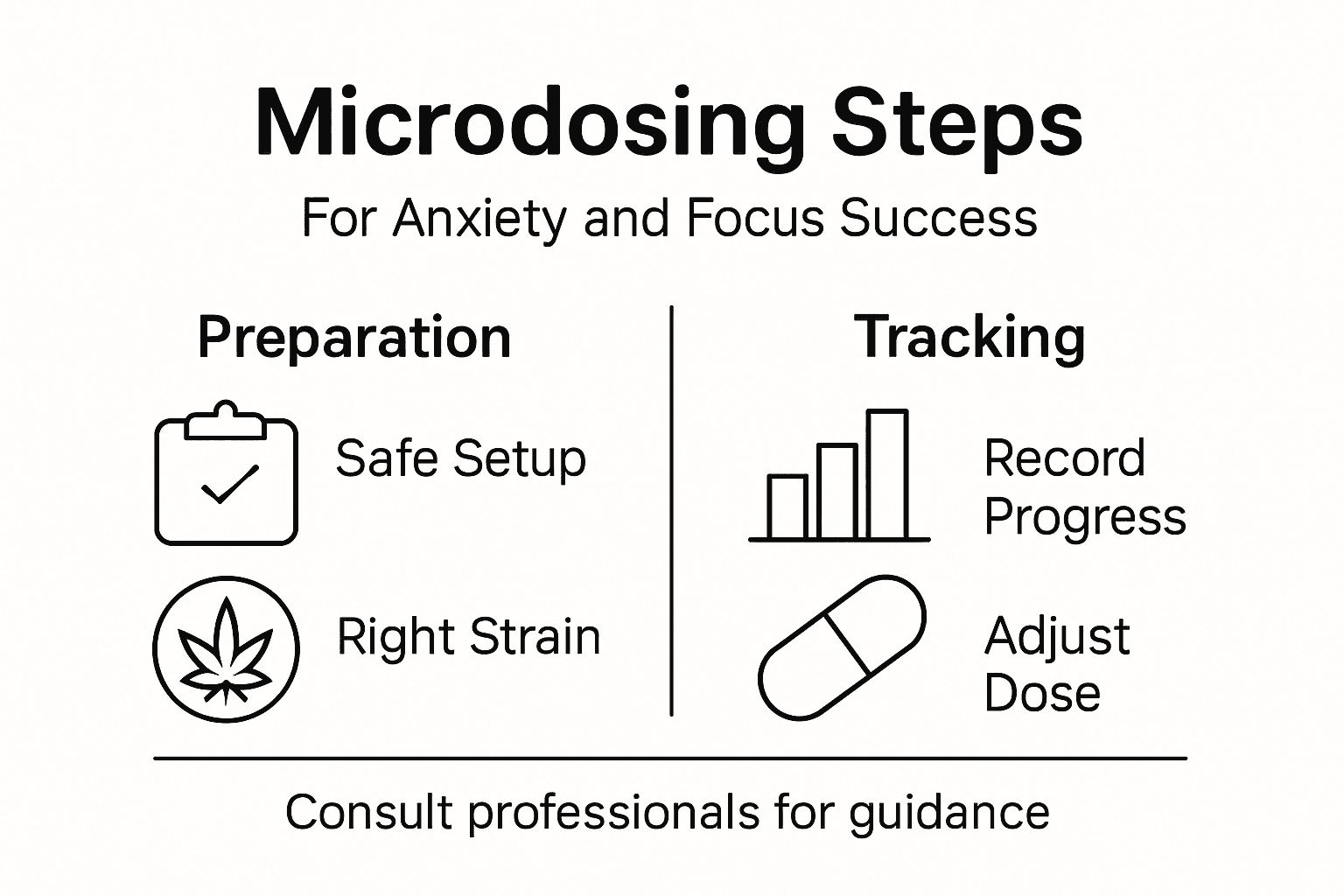
Daily psychological assessments are crucial for capturing nuanced changes in mood, cognition, and overall well-being. By implementing structured monitoring, you can gain meaningful insights into your microdosing experience.
Key elements to track in your monitoring process include:
- Mood fluctuations and emotional stability
- Anxiety levels and stress response
- Cognitive performance and mental clarity
- Sleep quality and energy levels
- Physical sensations and potential side effects
Researchers recommend validated tracking methods that help distinguish between actual therapeutic effects and potential placebo responses. Use standardized psychological scales or dedicated tracking apps to ensure objective measurement.
Your microdosing journey is unique. Consistent, honest tracking will reveal your personal patterns and optimal approach.
Consider using quantitative rating scales and qualitative journaling to capture a comprehensive view of your experience. This multi-dimensional approach provides a more nuanced understanding of microdosing’s effects on your mental health.
The table below summarizes essential factors to monitor for effective self-assessment during microdosing:
| Tracking Factor | Why Track It | Example Measurement Tool |
|---|---|---|
| Mood and emotions | Detect patterns over time | Daily mood rating scale |
| Anxiety and stress | Assess intervention success | Anxiety questionnaire/score |
| Cognitive performance | Monitor clarity and focus | Short cognitive tasks or journal |
| Sleep and energy | Identify changes in wellness | Sleep log or wearable device |
| Side effects | Ensure user safety | Symptom checklist |
Pro tip: Create a weekly review ritual where you synthesize your tracking data, looking for trends and meaningful changes in your overall mental wellness.
Discover a Safer Way to Microdose for Anxiety and Focus
If you are looking to safely navigate your microdosing journey while targeting anxiety reduction and improved focus, you are not alone. This article outlines the key steps from choosing the right strain to monitoring your progress in a clear, manageable way. Many face challenges such as finding precise dosing, selecting the ideal mushroom strain, and maintaining a balanced schedule to avoid tolerance. At Fungal Friend, we understand these concerns and offer carefully crafted products designed to support your goals with consistency and safety.
Explore our thoughtfully curated collection ranging from microdose capsules to infused teas and chocolates. Whether you are new to psilocybin or seeking targeted strains for mental clarity, our selection empowers you to take control of your wellbeing. Visit our Uncategorized Archives – Fungal Friend to learn more about product types and benefits. Start your journey today with confidence and discreet delivery by heading to Fungal Friend. Your next step toward natural anxiety relief and improved cognitive focus is just a click away.
Frequently Asked Questions
What is the best way to prepare a safe microdosing setup?
Creating a safe microdosing setup involves gathering essential supplies, such as a clean storage container, a digital scale, a notebook for tracking, and choosing a private space for your experiences. Start by organizing these items in a calm environment to minimize risks and enhance your microdosing journey.
How do I choose the right psilocybin mushroom strain for anxiety and focus?
Select a psilocybin mushroom strain that aligns with your specific mental health goals, considering factors like psilocybin content and personal sensitivity. Research various strains, such as Psilocybe cubensis, and keep detailed notes on how each strain affects you to find the right match for your needs.
What should my initial psilocybin dose be for microdosing?
Begin with a microdose between 0.1 to 0.5 grams of dried mushrooms, aiming for the lowest effective dose without inducing hallucinogenic effects. Document your experiences and adjust incrementally based on your body’s responses to find your optimal dose.
How often should I microdose and what schedule should I follow?
Implement a microdosing schedule, such as the Fadiman Protocol (one day on, two days off) or the Stamets Stack (four days on, three days off), to maintain consistent therapeutic effects. Stick to your chosen schedule to help track meaningful changes in anxiety and focus levels.
What factors should I monitor while microdosing?
Monitor key factors like mood fluctuations, anxiety levels, cognitive performance, sleep quality, and any physical sensations you experience. Use a consistent tracking method, such as a journal or rating scales, to evaluate these factors and gain insights into your microdosing effects over time.
How can I effectively track my microdosing progress?
To effectively track your microdosing progress, maintain a detailed journal documenting your dosage, physiological responses, and mental effects. Set aside time each week to review your notes, looking for patterns and trends to refine your microdosing strategies.