
Role of Adaptogens in Microdosing Psilocybin
Finding trustworthy ways to support your mental well-being can feel confusing, especially with so many new trends appearing in the natural wellness space. For Canadian adults searching for effective and safe mental clarity tools, understanding how adaptogens and microdosing work together is a smart step. This guide breaks down the essentials, highlighting how adaptogens promote homeostasis and microdosing subtly enhances mood and cognition, empowering you to make informed decisions about your mind and body.
Table of Contents
- What Are Adaptogens and Microdosing?
- Popular Adaptogens Used With Psilocybin
- How Adaptogens and Microdosing Interact
- Benefits for Focus, Stress, and Mood
- Risks, Safety, and Canadian Guidelines
Key Takeaways
| Point | Details |
|---|---|
| Understand Adaptogens | Adaptogens help the body manage stress by promoting balance, and it’s recommended to start with one type at a time. |
| Microdosing Benefits | Microdosing psilocybin enhances mood and cognitive function without the full psychedelic experience, typically within several days. |
| Combining Approaches | Using adaptogens alongside microdosing can provide multi-layered support for mental wellness by addressing stress and enhancing resilience. |
| Safety Considerations | Monitor individual responses and space dosing intervals to avoid adverse effects; consult a healthcare provider if under medication or with health conditions. |
What Are Adaptogens and Microdosing?
Two practices gaining traction among Canadian adults seeking natural wellness solutions are adaptogens and microdosing. Understanding what each does—and how they differ—is key before considering them together.
Understanding Adaptogens
Adaptogens are natural compounds that help your body manage stress more effectively. These bioactive substances work by promoting homeostasis, helping your system return to balance after stress exposure.
Pro tip: Start with one adaptogen at a time for at least two weeks to observe how your body responds before combining multiple types.
They function by modulating your stress response system. Adaptogens increase your resistance to stress through the hypothalamic-pituitary-adrenal axis, a key biological pathway controlling how you experience and recover from stressors.
Common adaptogens include:
- Rhodiola: supports energy and mental clarity under pressure
- Ashwagandha: promotes relaxation and reduces cortisol levels
- Reishi mushrooms: enhances sleep quality and immune function
- Cordyceps: boosts physical endurance and stamina
- Ginseng: improves focus and sustained energy
Traditional medicine systems like Ayurveda and Traditional Chinese Medicine have used these plants for thousands of years. Modern research now validates many of these historical uses.
Understanding Microdosing
Microdosing refers to taking very small doses of psilocybin—well below the threshold needed for hallucinogenic effects. The goal is subtle cognitive and mood enhancement without the intense psychological experience.

Microdosing involves consuming small doses of psychedelic substances to enhance mood or cognition without full psychedelic effects. Most people experience improved focus, mood stability, and emotional flexibility at these minimal doses.
Typical microdose protocols involve:
- Taking 0.1 to 0.5 grams of dried psilocybin mushrooms
- Following a schedule like one dose every three days
- Tracking mood, focus, and overall well-being
- Adjusting based on personal response
The Connection Between Both
Both adaptogens and microdosing share a common goal: enhancing your resilience to stress while improving mental performance. They work through different biological mechanisms but complement each other by supporting your nervous system.
Both practices focus on improving mental resilience and cognitive function through biological regulation of your body’s stress response.
Adaptogens work steadily over time, building your baseline stress tolerance. Microdosing addresses mood and focus more directly, creating subtle shifts in perception and neuroplasticity. Together, they can create a more comprehensive approach to mental wellness.
Pro tip: Keep a journal tracking how adaptogens and microdosing affect your sleep, focus, mood, and energy levels separately before combining them.
Here’s a concise comparison of how adaptogens and microdosing support mental wellness from different angles:
| Approach | Primary Action | Main Benefit | Onset Timeline |
|---|---|---|---|
| Adaptogens | Modulate stress system | Steady stress resilience | Weeks of daily use |
| Microdosing | Influence neurochemistry | Subtle mood/cognition lift | Within several days |
| Combination | Multi-layered support | Balanced mental wellness | Most noticeable long-term |
Popular Adaptogens Used With Psilocybin
Combining adaptogens with psilocybin microdosing creates a complementary approach to mental wellness. Adaptogens provide steady physiological support while psilocybin addresses mood and perception, working together without competing effects.
Key Adaptogens for Microdosing Support
Adaptogenic mushrooms such as reishi, lion’s mane, and cordyceps are particularly popular for pairing with psilocybin. Each offers distinct benefits that enhance your overall experience without causing psychoactive effects.
Three standout adaptogens include:
- Lion’s mane: supports memory, focus, and nerve growth
- Reishi: promotes stress adaptation and sleep quality
- Cordyceps: enhances endurance and reduces physical stress effects
These fungal adaptogens work by supporting your nervous system’s baseline resilience. They don’t interfere with psilocybin’s effects—instead, they create a more stable foundation for subtle mood and cognitive shifts.
How Each Adaptogen Complements Microdosing
Lion’s mane deserves special attention for microdosing support. Lion’s mane has been linked to neuroprotective and cognitive-enhancing effects, possibly supporting memory and focus during microdosing cycles.
Many Canadian users report improved clarity and sharper thinking when combining lion’s mane with their microdose routine. The adaptogen builds cognitive reserve, while psilocybin gently shifts perspective and emotional processing.
Reishi works differently. It modulates your immune response and stress hormones, creating a calmer internal state. This baseline calm can help you notice subtle improvements from microdosing more clearly.
Cordyceps address physical resilience. While psilocybin influences mood and perception, cordyceps help your body handle daily stressors without fatigue accumulation.
Adaptogens create physiological stability that makes microdosing benefits more noticeable and sustainable over time.
Practical Combination Strategies
Timing matters when combining adaptogens with psilocybin. Take adaptogens consistently every day, treating them as foundational support. Microdose psilocybin on your chosen schedule—typically once every three days.
Avoid taking adaptogens and psilocybin simultaneously. Space them by at least 2-3 hours so each can be processed independently by your body.
Start with one adaptogen before adding more. This approach clarifies which mushroom supports your specific needs without creating confusion about what’s helping.
Pro tip: Track which adaptogen pairs best with your microdosing routine by journaling mood, focus, and sleep quality for four weeks with each mushroom before rotating.
How Adaptogens and Microdosing Interact
Adaptogens and psilocybin work through different biological pathways, but their mechanisms complement each other when used together. Understanding how they interact helps you optimize both for maximum wellness benefit.
Complementary Biological Mechanisms
Adaptogens and microdosing influence your nervous system through distinct yet overlapping routes. Microdosing psychedelics affects mood, cognition, and creative processes through modulation of serotonin receptors and neuroplasticity, while adaptogens target your stress-response systems directly.
This difference creates synergy rather than competition:
- Psilocybin: modulates serotonin receptors, enhances neuroplasticity, shifts perspective
- Adaptogens: regulate stress hormones, reduce inflammation, build resilience
- Combined effect: mental flexibility supported by physiological stability
Think of psilocybin as opening new neural pathways while adaptogens strengthen the foundation beneath them. Neither interferes with the other—they work in parallel.
How They Support Each Other
Adaptogens reduce baseline stress while you microdose, creating a calmer internal environment. This stability helps you notice the subtle shifts psilocybin produces more clearly.
Without adaptogenic support, microdosing benefits can feel scattered or hard to detect amid daily stress fluctuations. With adaptogens in place, the signal becomes clearer.
Microdosing addresses emotional rigidity and stuck thought patterns. Adaptogens handle the physiological stress load that might otherwise obscure those mental benefits.
Both substances modulate stress-related pathways, creating complementary support for mood stability and cognitive enhancement.
The Role of Stress-Response Pathways
Both adaptogens and microdosing influence your HPA axis—the hormonal system controlling stress response. Both exert multidimensional effects by modulating stress-related pathways including the HPA axis, inflammatory responses, and central nervous system neurotransmitters.
Adaptogens work on the physiological layer, reducing cortisol and inflammatory markers. Microdosing works on the neurochemical layer, shifting how your brain processes emotion and thought.
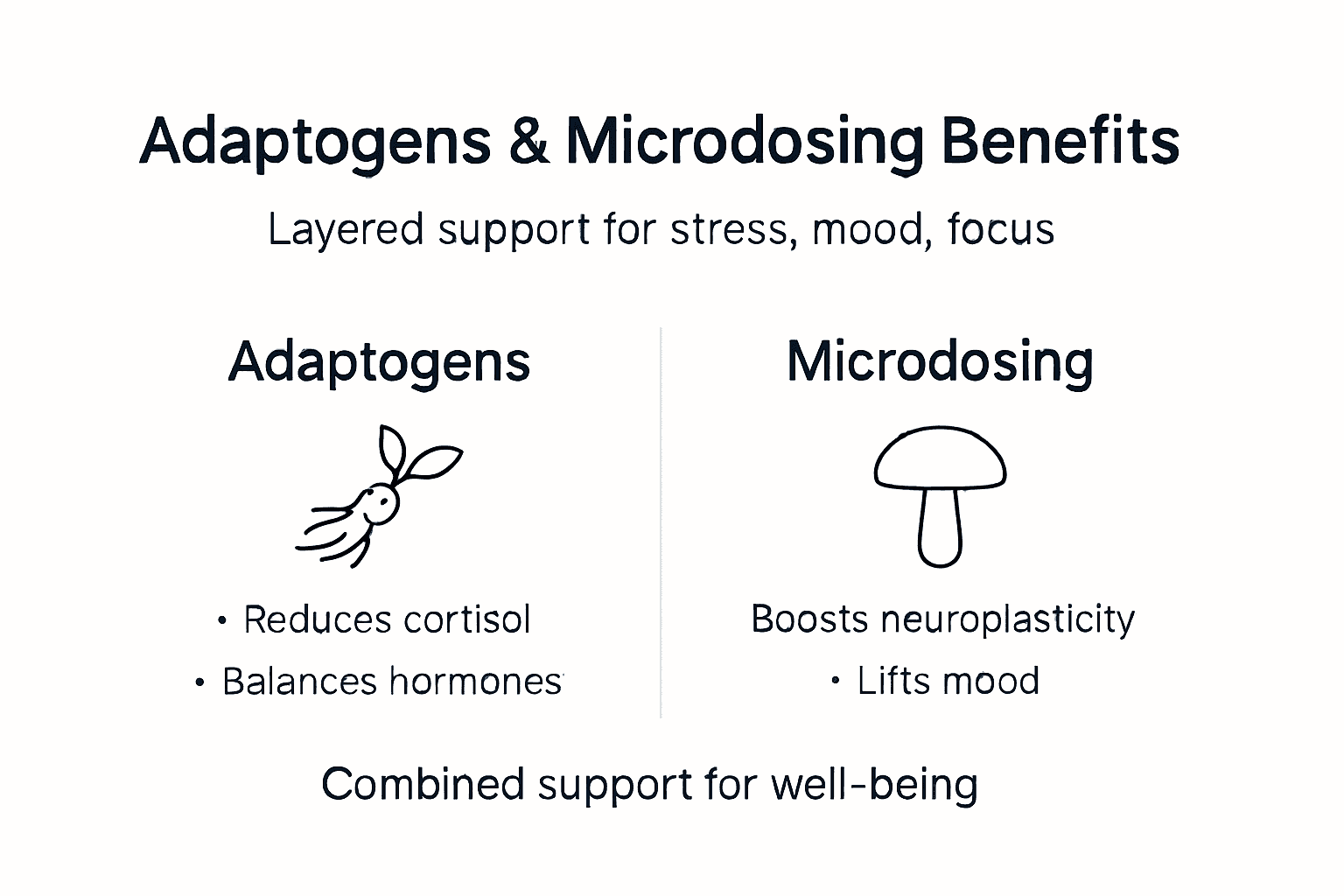
When combined, they address stress from multiple angles simultaneously. This multi-layered approach is more effective than either alone for most Canadian users.
Important Practical Considerations
Direct scientific research on their combined interaction remains limited. Most evidence is theoretical, based on overlapping pharmacological pathways rather than head-to-head studies.
This means careful monitoring matters. Track your response individually before assuming synergy. Start conservatively with both substances.
Dosage timing is critical. Space adaptogens and psilocybin by several hours to allow independent processing. Never combine them in the same dose.
Pro tip: Maintain a four-week baseline log of adaptogens alone before adding microdosing, establishing your individual physiological response pattern first.
Benefits for Focus, Stress, and Mood
Combining adaptogens with psilocybin microdosing targets three areas most Canadian adults care about: mental clarity, stress management, and emotional balance. Each substance contributes distinct benefits that amplify when used together.
Enhanced Focus and Cognitive Performance
Microdosing supports attention and mental sharpness without overwhelming your system. Microdosing psychedelics has been reported to improve mood, enhance cognition, social functioning, and reduce symptoms of anxiety and depression.
Adaptogens like lion’s mane specifically target cognitive function. They support memory retention, mental clarity, and sustained focus throughout your workday. Together, psilocybin and adaptogens create a cognitive enhancement that feels natural, not stimulated.
You experience sharper thinking without jitters or crashes:
- Improved attention span during demanding tasks
- Better retention of new information
- Enhanced problem-solving and creative thinking
- Sustained mental energy across the day
Stress Reduction and Nervous System Stability
Stress undermines everything else. Adaptogens tackle stress at the physiological level by reducing cortisol and inflammatory markers. Microdosing addresses stress’s emotional and perceptual components.
Adaptogens provide consistent, daily stress resilience. You handle setbacks more gracefully and recover faster from difficult situations. This baseline stability prevents stress from accumulating into burnout.
Microdosing adds perspective. Stressors feel less overwhelming because your brain becomes more flexible in how it interprets challenges. What felt catastrophic last week feels manageable this week.
Adaptogens build stress resistance while microdosing shifts your emotional relationship with stress itself.
Mood Stabilization and Emotional Flexibility
Mood improvements from this combination tend to be subtle but durable. Recent studies suggest microdosing psilocybin may offer modest improvements in mood, attention, and emotional resilience, with reduced anxiety and depression symptoms in some individuals.
Most users report:
- Reduced anxiety and racing thoughts
- Improved emotional regulation
- Greater emotional flexibility and resilience
- Decreased depressive symptoms
- Enhanced social comfort and connection
Adaptogens prevent emotional crashes by supporting neurotransmitter balance. Microdosing promotes neuroplasticity, helping your brain form new emotional patterns. This combination addresses both the chemical and structural aspects of mood.
Important Reality Check
These benefits are real but subtle. You won’t experience a dramatic shift. Instead, you’ll notice you handle stress better, stay focused longer, and feel more emotionally balanced over weeks, not days.
Results vary significantly between individuals. Your baseline stress, genetics, diet, and sleep all influence outcomes. Track your personal response rather than expecting universal results.
Pro tip: Measure baseline mood, focus, and stress levels for two weeks before starting adaptogens, then add microdosing while maintaining logs to isolate which substance drives specific improvements.
Risks, Safety, and Canadian Guidelines
Before combining adaptogens with psilocybin microdosing, you need to understand the legal landscape and potential risks specific to Canada. Safety isn’t optional—it’s foundational.
Canadian Legal Status and Regulations
Psilocybin exists in a complicated legal space in Canada. Canadian regulations classify psilocybin as a Schedule III controlled substance, prohibiting unregulated possession and distribution.
However, Health Canada’s Special Access Program allows therapeutic use under specific conditions. This applies primarily to clinical settings and research contexts. Recreational or personal wellness use remains legally restricted.
Adaptogens, by contrast, are legal and widely available across Canada. They’re classified as natural health products, making them accessible without prescription or special authorization.
Understand your location’s specific bylaws. Some Canadian cities have decriminalized psilocybin possession, but decriminalization doesn’t mean legality—it means reduced enforcement priority.
Potential Adverse Effects to Monitor
Combining substances requires vigilance. Watch for these symptoms:
- Increased anxiety or panic
- Elevated heart rate or blood pressure
- Digestive discomfort or nausea
- Sleep disruption or vivid dreams
- Emotional sensitivity or mood shifts
- Headaches or dizziness
Adaptogens rarely cause severe reactions, but individual sensitivities exist. Start with one adaptogen at minimal dose before layering psilocybin into your routine.
Consider these safety checkpoints when combining adaptogens and microdosing in Canada:
| Safety Step | Why It Matters | Canadian Context |
|---|---|---|
| Track personal response | Detect adverse reactions early | Advised due to limited research |
| Space dosing intervals | Prevent interaction risks | 3+ hours recommended |
| Use legal sources | Ensure product safety | Only adaptogens widely legal |
| Consult a provider | Personalized risk assessment | Especially with medications |
Begin with the lowest effective doses and increase gradually while monitoring your physical and emotional responses carefully.
Safe Protocol Recommendations
Establish a foundation before combining substances. Follow these steps:
- Start with adaptogens alone for 2-4 weeks
- Track baseline mood, sleep, energy, and focus
- Introduce psilocybin microdosing separately
- Maintain detailed logs of all experiences
- Space adaptogens and psilocybin by 3+ hours
- Never combine them in single doses
- Consult healthcare providers familiar with psychedelics
Who Should Avoid This Combination
Certain individuals face elevated risks and should avoid combining adaptogens with psilocybin:
- People with personal or family history of psychosis
- Those on SSRIs or other psychiatric medications
- Individuals with cardiovascular conditions
- Pregnant or breastfeeding adults
- Anyone with active substance use disorders
- People with severe trauma or PTSD requiring professional care
This isn’t judgment—it’s harm reduction. Your safety matters more than experimentation.
Sourcing and Quality Assurance
Use trusted sources for both adaptogens and psilocybin products. Unregulated markets carry contamination risks and unpredictable potency. Poor-quality products undermine safety and make tracking individual responses impossible.
Adaptogens should come from reputable Canadian retailers with third-party testing. Quality matters for effectiveness and safety.
Pro tip: Before starting, document your current medications, supplements, health conditions, and family psychiatric history, then consult a healthcare provider experienced with psychedelics and adaptogens.
Discover Natural Synergy for Mind and Mood with Fungal Friend
Navigating the delicate balance between stress resilience and enhanced focus can feel overwhelming especially when exploring adaptogens and psilocybin microdosing together. If you are seeking natural solutions to support your nervous system, reduce anxiety, and sharpen cognition Fungal Friend offers thoughtfully curated products that align perfectly with your wellness goals. Our range includes mushroom capsules, infused teas, and chocolates designed to complement the subtle cognitive and emotional benefits discussed in the “Role of Adaptogens in Microdosing Psilocybin” article.
Ready to build steady stress resilience while experiencing enhanced mental clarity and mood balance? Explore our selection today at Fungal Friend and start your journey with trusted guidance and quality products. Discover more insights and support by visiting our Uncategorized Archives – Fungal Friend and see how we make natural psychedelic wellness accessible and safe for Canadian adults.
Frequently Asked Questions
What are adaptogens, and how do they work?
Adaptogens are natural compounds that help the body manage stress by promoting homeostasis, aiding recovery after stress exposure, and enhancing overall resilience to stressors.
How do adaptogens benefit microdosing psilocybin?
Adaptogens provide steady physiological support while microdosing helps to improve mood and cognitive function, creating a balanced mental wellness approach that complements each other’s effects.
Can I combine different adaptogens while microdosing?
It’s best to start with one adaptogen at a time for at least two weeks to monitor your body’s response before introducing additional adaptogens into your routine.
What are some common adaptogens that pair well with psilocybin?
Popular adaptogens that are often paired with psilocybin include lion’s mane, reishi, and cordyceps, each offering distinct benefits that enhance overall well-being during microdosing.