
Complete Guide to the Advantages of Psychedelic Therapy
More than 20 percent of american adults experience mental health challenges each year, prompting a growing interest in alternatives to standard therapies. Recent advances reveal that psychedelic therapy offers a new path for those who have not found relief through traditional treatment. By exploring how carefully guided psychedelic sessions work, readers gain insight into this promising approach and its potential to create meaningful, lasting changes for mental wellness.
Table of Contents
- What Is Psychedelic Therapy And How It Works
- Key Types Of Psychedelic Therapies Available
- Mental Health Benefits And Therapeutic Uses
- Safety Factors And Legal Status In Canada
- Comparing Psychedelic Therapy With Other Treatments
Key Takeaways
| Point | Details |
|---|---|
| Innovative Treatment Approach | Psychedelic therapy employs controlled psychoactive substances to facilitate emotional and psychological healing under professional supervision. |
| Structured Therapeutic Protocol | The therapy follows a three-stage process: preparation, guided experience, and integration, ensuring a supportive environment. |
| Potential Mental Health Benefits | Research indicates significant improvements in symptoms for conditions like depression, anxiety, and PTSD through psychedelic interventions. |
| Need for Professional Oversight | Due to its experimental nature, psychedelic therapy requires comprehensive screening and professional guidance for safe implementation. |
What Is Psychedelic Therapy and How It Works
Psychedelic therapy represents an innovative approach to mental health treatment that utilizes carefully controlled psychoactive substances to facilitate profound psychological healing. Unlike traditional therapeutic methods, this approach leverages psilocybin and other psychedelic compounds to help patients access deeper layers of consciousness and emotional understanding.
At its core, psychedelic therapy involves administering carefully measured doses of psychoactive substances under professional supervision in a structured, supportive environment. The therapeutic process typically follows a three-stage protocol: preparation, guided experience, and integration. During the guided experience, patients receive a controlled dose of a psychedelic substance like psilocybin while being monitored by trained therapists who help navigate the psychological landscape and emotional revelations.
The mechanisms of psychedelic therapy are rooted in neurological transformation. Psychedelic substances temporarily disrupt typical brain communication patterns, creating what neuroscientists call “heightened neuroplasticity.” This allows individuals to break free from entrenched mental patterns, providing unprecedented opportunities for emotional processing and psychological restructuring. Research suggests these experiences can help patients address deep-seated trauma, reduce symptoms of depression and anxiety, and develop more adaptive thinking patterns.
Key aspects of effective psychedelic therapy include:
- Carefully controlled clinical environments
- Professional therapeutic guidance
- Personalized treatment protocols
- Comprehensive psychological screening
- Structured integration sessions following the psychedelic experience
While promising, psychedelic therapy remains an emerging field requiring continued research and responsible implementation. Potential patients should always consult healthcare professionals and understand the nuanced approach required for safe, effective therapeutic experiences.
Key Types of Psychedelic Therapies Available
Psychedelic therapy encompasses several distinct approaches, each utilizing different substances to address specific mental health challenges. Therapeutic applications of psychedelics have expanded dramatically in recent years, with researchers exploring targeted treatments for complex psychological conditions.
The primary types of psychedelic therapies include:
-
Psilocybin-Assisted Therapy: Utilizing psilocybin from magic mushrooms, this approach is particularly promising for treating depression, anxiety, and addiction. Patients typically receive carefully measured doses in controlled clinical settings, allowing for profound introspective experiences that can help reshape negative thought patterns.
-
MDMA-Assisted Therapy: Specifically designed for treating post-traumatic stress disorder (PTSD), this therapy helps patients process traumatic memories with reduced emotional reactivity. The substance enables individuals to approach painful memories with increased emotional resilience and decreased fear response.
-
LSD-Assisted Therapy: Historically significant, LSD therapy explores potential treatments for anxiety, depression, and addiction. The substance’s ability to temporarily disrupt typical brain communication patterns allows patients to gain novel perspectives on deeply ingrained psychological challenges.
-
Ketamine-Assisted Therapy: Emerging as a rapid intervention for treatment-resistant depression, ketamine therapy provides quick relief by creating new neural connections and temporarily alleviating depressive symptoms.
Each psychedelic therapy type follows a structured protocol involving three critical stages:
- Comprehensive psychological screening
- Carefully supervised therapeutic sessions
- Integrated follow-up and processing
Psilocybin-assisted treatments represent a particularly promising frontier, offering potential breakthroughs for individuals struggling with traditional therapeutic approaches. While these therapies show immense potential, they remain experimental and require professional medical supervision to ensure safe and effective implementation.
Mental Health Benefits and Therapeutic Uses
Psychedelic therapy has emerged as a groundbreaking approach to addressing complex mental health challenges, offering hope for individuals struggling with traditional treatment methods. Psychological healing through psychedelic interventions represents a transformative paradigm that goes beyond symptom management to facilitate deep emotional and neurological transformation.

Research indicates that psychedelic treatments can produce profound therapeutic benefits across multiple mental health domains. Patients experiencing treatment-resistant depression, anxiety disorders, and post-traumatic stress disorder have demonstrated significant improvements after carefully supervised psychedelic therapy sessions. The unique mechanism of action allows individuals to access deeper psychological insights, temporarily disrupting entrenched negative thought patterns and creating opportunities for transformative healing.
Key mental health benefits observed in clinical research include:
- Rapid and sustained reduction in depressive symptoms
- Decreased anxiety and fear responses
- Enhanced emotional resilience
- Improved capacity for psychological processing
- Increased neuroplasticity and cognitive flexibility
- Potential long-term remission of treatment-resistant conditions
The therapeutic potential extends beyond traditional diagnostic categories. Mood enhancement through psychedelic interventions suggests these treatments can help individuals develop more adaptive psychological frameworks, offering a holistic approach to mental wellness that addresses root causes rather than merely managing surface-level symptoms.
While promising, psychedelic therapies remain experimental and require professional medical supervision. Individuals considering these treatments should undergo comprehensive psychological screening and work closely with trained healthcare professionals to ensure safe and effective implementation.
Safety Factors and Legal Status in Canada
Psychedelic therapy in Canada exists in a complex regulatory landscape that balances potential medical benefits with rigorous safety protocols. Legal considerations for psychedelic substances have evolved significantly, creating nuanced pathways for controlled therapeutic use under professional supervision.
Safety remains the paramount concern in psychedelic treatments. Pharmaceutical-grade substances administered under professional oversight represent the gold standard for therapeutic interventions. Comprehensive screening processes typically involve:
- Detailed medical history evaluation
- Psychological risk assessment
- Pre-treatment psychiatric consultation
- Comprehensive physical health screening
- Evaluation of potential contraindications
- Assessment of patient mental health stability
The legal framework surrounding psychedelic therapy in Canada is evolving, with regulatory bodies increasingly recognizing the therapeutic potential of controlled psychedelic interventions. Health Canada has established specialized exemption frameworks that allow for limited, supervised use of substances like psilocybin in specific medical contexts. These regulations prioritize patient safety while creating controlled pathways for innovative mental health treatments.
Critical safety considerations include:
- Mandatory professional medical supervision
- Controlled dosage administration
- Structured therapeutic environments
- Comprehensive patient monitoring
- Rigorous participant screening protocols
- Immediate medical intervention capabilities
Individuals interested in psychedelic therapy must work exclusively with certified healthcare professionals who can navigate the complex legal and medical requirements. While promising research continues to emerge, patients should approach these treatments with careful consideration and comprehensive medical guidance.
Comparing Psychedelic Therapy With Other Treatments
Psychedelic therapy represents a groundbreaking approach that fundamentally differs from traditional mental health treatments. Potential health benefits of alternative therapeutic interventions highlight the transformative potential of this emerging field, offering patients new pathways to psychological healing.
Traditional pharmaceutical treatments often rely on long-term medication management, requiring daily intake and potentially producing ongoing side effects. In contrast, psychedelic-assisted therapy demonstrates remarkable efficiency, with therapeutic breakthroughs potentially occurring after just a few intensive sessions. The key differentiators include:
- Shorter treatment duration
- Potentially faster symptom resolution
- Deeper psychological insights
- Reduced dependency on daily medications
- More holistic approach to mental wellness
- Capacity for profound personal transformation
While conventional therapies like cognitive behavioral therapy and pharmaceutical interventions focus on symptom management, psychedelic therapy aims to address root psychological conditions. Innovative approaches for understanding psychological blends suggest that these treatments can facilitate neurological rewiring, enabling patients to develop more adaptive mental frameworks.
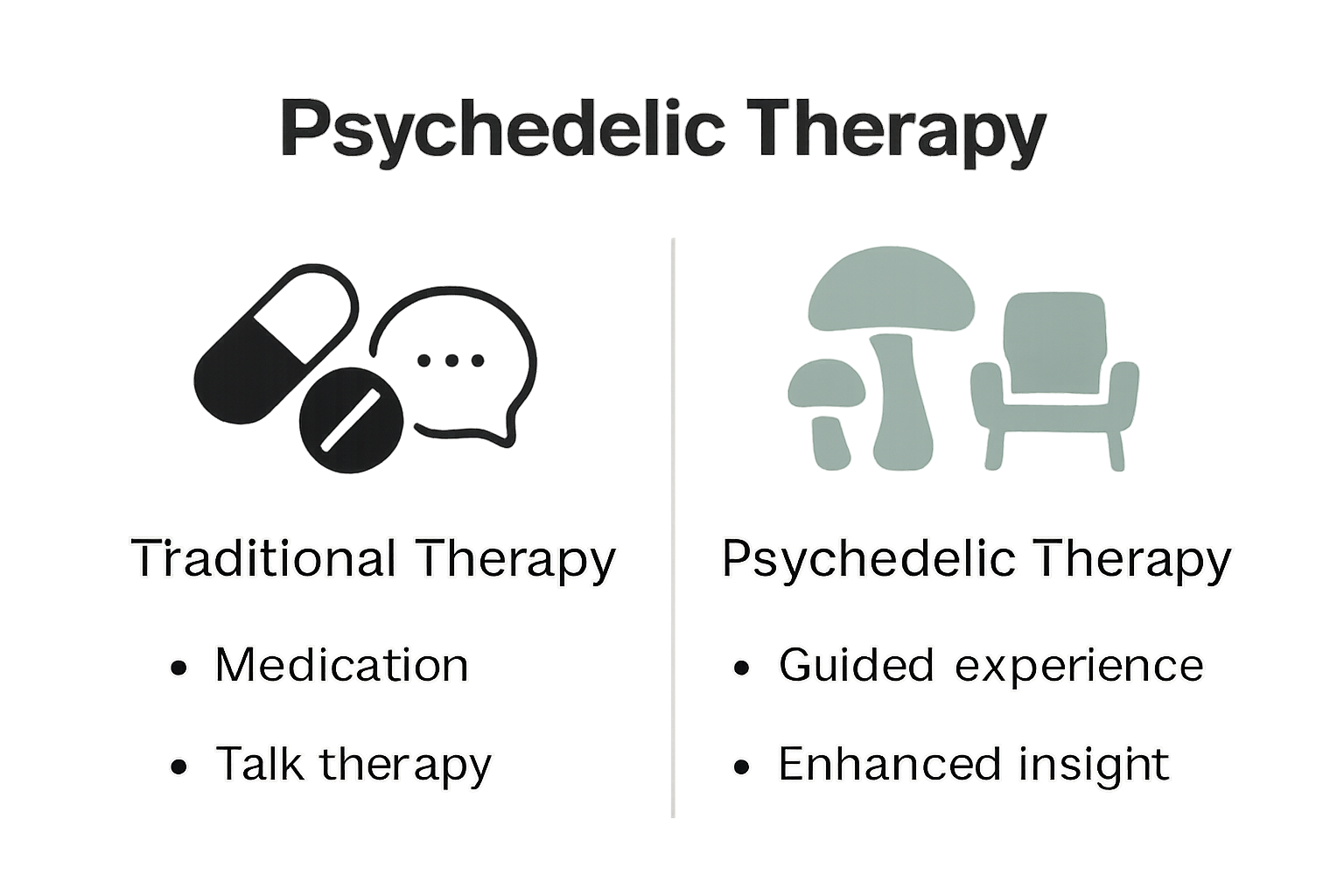
Specific comparisons reveal significant advantages in treating complex conditions like treatment-resistant depression and post-traumatic stress disorder. Where traditional methods might require years of consistent treatment, psychedelic therapy offers the potential for breakthrough experiences that can create lasting psychological shifts. Individuals struggling with chronic mental health challenges may find this approach particularly compelling, especially when conventional treatments have yielded limited results.
Critical considerations remain, including the need for professional supervision, comprehensive screening, and individualized treatment protocols. Patients should approach psychedelic therapy as a complementary approach, working closely with healthcare professionals to determine the most appropriate treatment strategy for their unique psychological needs.
Discover Safe and Conscious Support for Your Psychedelic Therapy Journey
Navigating the complexities of psychedelic therapy can bring hope but also uncertainty. If you are seeking natural, reliable options to support mood balance, anxiety reduction, or enhanced psychological insight, exploring microdose psilocybin products might be a meaningful step. The article highlights critical needs like professional guidance, dose control, and personalized protocols. At Fungal Friend, we understand the challenges of finding trustworthy psychedelic solutions that align with your therapeutic goals and safety priorities.

Explore our carefully curated range designed with these principles in mind at Uncategorized Archives – Fungal Friend. Whether you are new to microdosing or aiming to deepen your experience, our educational resources and strain selections support responsible use. Visit Fungal Friend now to access thoughtfully crafted products and comprehensive information so you can confidently take the next step toward emotional resilience and mental clarity.
Frequently Asked Questions
What is psychedelic therapy?
Psychedelic therapy is an innovative approach to mental health treatment that uses carefully controlled psychoactive substances to facilitate psychological healing. It typically involves a structured protocol of preparation, guided experience, and integration under professional supervision.
How does psychedelic therapy work?
Psychedelic therapy works by temporarily disrupting typical brain communication patterns, leading to heightened neuroplasticity. This allows individuals to break free from entrenched mental patterns and access deeper emotional insights, which can aid in addressing trauma and mental health symptoms like depression or anxiety.
What are the key types of psychedelic therapies available?
Key types of psychedelic therapies include psilocybin-assisted therapy, MDMA-assisted therapy, LSD-assisted therapy, and ketamine-assisted therapy. Each type targets specific mental health challenges and follows a protocol consisting of psychological screening, supervised sessions, and integration.
What are the potential benefits of psychedelic therapy?
Research shows that psychedelic therapy can lead to rapid and sustained reductions in symptoms of depression and anxiety, enhance emotional resilience, and facilitate deep psychological processing. It also offers potential long-term remission for treatment-resistant mental health conditions.