
Microdosing for Mental Wellness: Science, Safety, Benefits
Over one third of American adults have shown interest in microdosing as a potential mental health tool. Confusion often surrounds what microdosing truly means, especially since myths can spread faster than facts. For those curious about its benefits and risks, understanding the difference between science and common misconception is critical. This guide clarifies what legitimate microdosing involves, how it can affect mental wellness, and why safety guidelines matter for Americans exploring this growing trend.
Table of Contents
- Defining Microdosing And Common Misconceptions
- Types Of Psychedelic Mushrooms And Key Effects
- How Microdosing Supports Mental Health
- Legal Status Of Psilocybin In Canada
- Essential Guidelines For Safe Microdosing
- Risks, Side Effects, And Alternatives
Key Takeaways
| Point | Details |
|---|---|
| Microdosing Defined | Microdosing involves consuming psychedelics at sub-hallucinogenic levels for cognitive and emotional enhancement without significant perceptual changes. |
| Psychedelic Mushroom Varieties | Different species of psychedelic mushrooms, especially those containing Psilocybin, have unique effects, impacting users’ psychological experiences. |
| Mental Health Benefits | Research suggests microdosing may improve mood, anxiety reduction, and emotional processing, but requires personalized guidance. |
| Legal Considerations in Canada | Psilocybin remains controlled in Canada, with specific therapeutic exceptions allowing regulated access for certain medical conditions. |
Defining Microdosing and Common Misconceptions
Microdosing represents a nuanced approach to consuming psychedelic substances at sub-hallucinogenic levels, designed to enhance mental wellness without triggering significant perceptual alterations. Understanding the precise definition of microdosing is crucial for responsible use and accurate scientific research.
Contrary to popular misconceptions, microdosing is not about experiencing a “trip” or dramatic psychological shift. Instead, it involves consuming extremely small quantities of psychedelic compounds – typically around 5-10% of a standard recreational dose – with the primary goal of subtle cognitive and emotional optimization. Microdosing aims to provide gentle neurological support without compromising an individual’s daily functionality or consciousness.
Key characteristics of genuine microdosing include:
- Consuming doses too small to produce hallucinations
- Maintaining full mental clarity and professional performance
- Experiencing potential incremental improvements in mood, creativity, and focus
- Avoiding significant perceptual or consciousness-altering effects
Researchers continue to emphasize that there remains no universally accepted definition for microdosing across different psychedelic substances. This lack of standardization underscores the importance of approaching microdosing with careful research, professional guidance, and a responsible, measured mindset.
Types of Psychedelic Mushrooms and Key Effects
Psychedelic mushrooms encompass a diverse range of species, each with unique chemical compositions and potential psychological impacts. Psilocybin, the primary active compound, plays a crucial role in determining the specific effects and characteristics of different mushroom varieties.
Among the most notable species, Psilocybe azurescens stands out for its exceptional potency and distinctive properties. This species is renowned for its powerful psychoactive characteristics, often producing more intense experiences compared to other psilocybin-containing mushrooms. The variability in mushroom types means that users can experience significantly different psychological and perceptual effects depending on the specific strain consumed.
Key psychedelic mushroom varieties include:
- Psilocybe cubensis: Most common and widely cultivated species
- Psilocybe azurescens: Known for extreme potency
- Psilocybe semilanceata: Often called “liberty caps”
- Psilocybe cyanescens: Another potent wild variety
Each mushroom strain presents unique characteristics that influence its potential mental wellness applications. Researchers studying different mushroom types continue to explore how specific chemical profiles might offer targeted support for mood regulation, cognitive enhancement, and emotional processing.
How Microdosing Supports Mental Health
Microdosing has emerged as a promising approach for individuals seeking natural methods of supporting mental health and emotional well-being. Scientific research investigating microdosing experiences reveals complex psychological benefits, including potential improvements in mood regulation, cognitive function, and emotional resilience.

Studies have consistently highlighted the nuanced mental health impacts of microdosing. Mood enhancement appears to be a primary benefit, with participants reporting reduced anxiety and increased emotional stability. Empirical research examining individual microdosing experiences suggests that practitioners approach these practices with remarkable intentionality, seeking practical solutions for mental wellness challenges.
Key mental health support mechanisms of microdosing include:
- Potential reduction in anxiety symptoms
- Improved emotional processing
- Enhanced cognitive flexibility
- Increased capacity for emotional regulation
- Subtle mood stabilization
While promising, researchers emphasize the importance of understanding proper microdosing protocols to maximize potential mental health benefits and minimize potential risks. Individual responses can vary significantly, underscoring the need for personalized approaches and professional guidance when exploring microdosing as a mental wellness strategy.
Legal Status of Psilocybin in Canada
The legal landscape surrounding psilocybin in Canada represents a complex and evolving regulatory environment. While psilocybin remains a controlled substance, recent developments have created nuanced pathways for specific medical and therapeutic applications. Legal perspectives on psychedelic substances continue to shift as researchers and policymakers explore the potential mental health benefits of these compounds.
Therapeutic exceptions have emerged as a critical avenue for regulated psilocybin access. Health Canada has granted limited legal permissions for specific medical contexts, particularly for patients with treatment-resistant mental health conditions. These carefully controlled exemptions allow individuals to explore psilocybin-assisted therapies under professional medical supervision, signaling a progressive approach to psychedelic medicine.
Key legal considerations for psilocybin in Canada include:
- Psilocybin remains a controlled substance under current regulations
- Medical exceptions exist for specific therapeutic contexts
- Research studies can obtain specialized legal permissions
- Some indigenous and religious groups have unique legal considerations
- Ongoing policy discussions suggest potential future regulatory changes
Legal psychedelic options in Canada continue to expand, reflecting growing scientific interest and public demand for alternative mental wellness approaches. Individuals interested in exploring psilocybin must navigate these regulations carefully, prioritizing legal compliance and professional medical guidance.
Essential Guidelines for Safe Microdosing
Comprehensive guidelines for safe microdosing are critical for responsible and effective psychedelic exploration. Understanding the nuanced approach to microdosing requires careful consideration of individual health factors, precise dosing protocols, and a thoughtful, intentional mindset.
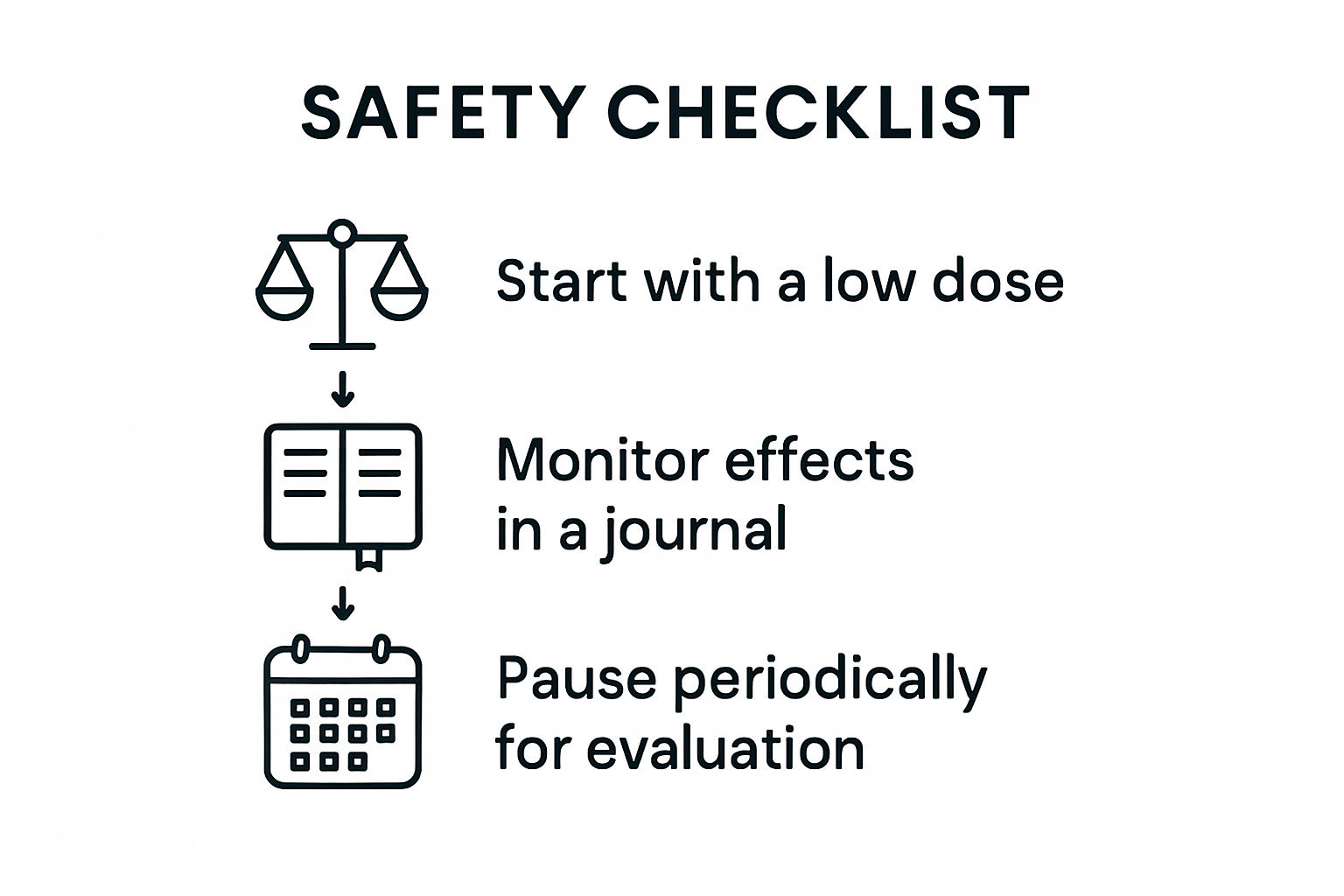
The foundation of safe microdosing involves careful preparation and self-awareness. Individuals must conduct thorough personal health assessments, considering potential interactions with existing medications, underlying mental health conditions, and personal physiological sensitivities. Professional medical consultation is strongly recommended before initiating any microdosing regimen, ensuring a personalized and risk-aware approach.
Key safety guidelines for microdosing include:
- Start with the lowest possible recommended dose
- Maintain a consistent and structured dosing schedule
- Monitor and document personal psychological and physiological responses
- Implement periodic tolerance breaks
- Avoid mixing with other substances or medications
- Prioritize mental and physical health tracking
Experienced microdosers recommend following a structured safety checklist to minimize potential risks and maximize potential benefits. Responsible microdosing demands a holistic, patient approach that prioritizes personal well-being and careful self-observation.
Risks, Side Effects, and Alternatives
Scientific investigations into microdosing risks reveal a complex landscape of potential physiological and psychological challenges. While microdosing offers promising mental wellness potential, individuals must carefully evaluate potential side effects and individual risk factors before beginning any psychedelic exploration.
The primary risks associated with microdosing can manifest across multiple domains. Physiological responses may include increased heart rate, mild digestive discomfort, and transient changes in sensory perception. Psychological risks encompass potential anxiety amplification, subtle mood disruptions, and unexpected emotional processing that could temporarily destabilize an individual’s mental state.
Key potential side effects and risks include:
- Temporary increased anxiety
- Mild physiological discomfort
- Potential interactions with existing medications
- Unpredictable emotional responses
- Potential exacerbation of underlying mental health conditions
- Possible development of psychological dependency
Rigorous scientific studies continue to explore the nuanced challenges of psychedelic microdosing, highlighting the critical need for personalized medical guidance and comprehensive health assessments. Alternative approaches such as therapy, meditation, and traditional wellness practices remain valuable options for individuals seeking mental health support with lower potential risk profiles.
Discover Safe and Effective Microdosing Solutions for Mental Wellness
If you’re looking to support your mental health with microdosing but want to do so safely and effectively you are not alone. The article emphasizes the importance of proper dosing protocols and understanding different mushroom strains to optimize mood balance and cognitive function. At Fungal Friend we address these challenges by offering carefully curated microdose psilocybin products designed for natural anxiety reduction and focus enhancement.
Our selection includes precise mushroom capsules infused teas and chocolates that make it easy to start your microdosing journey with confidence. By visiting our Uncategorized Archives – Fungal Friend you can explore detailed information about our products and how they align with microdosing science and safety guidelines discussed in the article.
Take control of your mental wellness today with a trusted Canadian provider that prioritizes education safety and quality. Explore our full product range at Fungal Friend and find your personalized path toward subtle and sustainable mental clarity and mood enhancement. Start your safe microdosing experience now and feel the difference.
Frequently Asked Questions
What is microdosing and how does it work?
Microdosing involves consuming sub-hallucinogenic doses of psychedelic substances to enhance mental wellness without triggering significant perceptual alterations. It typically entails taking around 5-10% of a standard recreational dose to provide subtle cognitive and emotional optimization.
What are the potential benefits of microdosing?
Microdosing may offer various mental health benefits, including improved mood regulation, reduced anxiety, enhanced cognitive flexibility, and increased emotional resilience, allowing individuals to experience subtle mood stabilization and greater emotional processing.
Are there risks and side effects associated with microdosing?
Yes, potential risks of microdosing include temporary increased anxiety, mild physiological discomfort, interactions with existing medications, and unpredictable emotional responses. It’s important to evaluate individual risk factors and seek professional guidance before starting a microdosing regimen.
What should I know before starting a microdosing regimen?
Before beginning a microdosing regimen, it’s crucial to conduct a thorough personal health assessment, consult with a healthcare professional, start with the lowest recommended dose, maintain a consistent dosing schedule, and track psychological and physiological responses to the substance.