
Mushroom Tea for Anxiety: Natural Relief Explained
Most Canadian adults feel the strain of busy schedules and rising stress, yet many are turning away from traditional American pharmaceuticals. Natural options like mushroom tea are quickly gaining attention, thanks to their promising role in emotional wellness and everyday calm. With a growing interest in safe microdosing and holistic self-care, this guide highlights evidence-backed details on how medicinal mushrooms can help manage anxiety without harsh chemicals.
Table of Contents
- What Is Mushroom Tea for Anxiety?
- Types of Mushroom Teas and Main Effects
- How Psilocybin Tea Supports Calm and Clarity
- Legal Status and Safe Use in Canada
- Potential Risks and Choosing the Right Dose
Key Takeaways
| Point | Details |
|---|---|
| Natural Approach | Mushroom teas like Reishi and Lion’s Mane offer a holistic method for managing anxiety through bioactive compounds that interact with the nervous system. |
| Unique Benefits | Each mushroom species provides specific advantages; for example, Reishi calms stress while Lion’s Mane enhances cognitive function. |
| Psilocybin Potential | Psilocybin tea can promote emotional regulation and cognitive flexibility by interacting with serotonin receptors, but should be used under professional guidance. |
| Dosing Considerations | Start with low doses of mushroom teas to minimize risks and document personal responses to tailor the consumption approach. |
What Is Mushroom Tea for Anxiety?
Mushroom tea for anxiety represents a natural, holistic approach to mental wellness that leverages powerful medicinal fungi known for their potential stress-reducing properties. These specialized teas are crafted from specific mushroom species carefully selected for their adaptogenic and neurological support capabilities. By brewing carefully prepared mushroom extracts, individuals can potentially access a gentle, plant-based strategy for managing emotional turbulence.
The core mechanism behind mushroom tea involves extracting bioactive compounds like triterpenes, polysaccharides, and neuroplasticity-stimulating elements from medicinal mushrooms such as Reishi, Lion’s Mane, and Chaga. These compounds interact with the human nervous system in nuanced ways, potentially helping to modulate stress responses, support emotional regulation, and promote overall mental balance. Unlike pharmaceutical interventions, mushroom tea offers a more subtle, holistic approach to anxiety management that works with the body’s natural rhythms.
Clinical and traditional research suggests that different mushroom species offer unique benefits for anxiety relief. Reishi mushrooms, often called the “mushroom of immortality” in traditional medicine, are renowned for their calming properties. Lion’s Mane has shown promising potential in supporting cognitive function and emotional stability, while Chaga mushrooms contribute powerful antioxidant and adaptogenic qualities that may help the body resist stressors. These natural ingredients work synergistically to provide a comprehensive approach to mental wellness that goes beyond symptom management.
Pro tip: Start with small, consistent doses of mushroom tea and track your personal response, as individual reactions can vary significantly with natural supplements.
Types of Mushroom Teas and Main Effects
Mushroom teas offer a diverse range of anxiety and stress management options, with each species delivering unique therapeutic benefits. Functional mushroom teas like Reishi and Lion’s Mane provide distinct pathways for mental wellness, targeting different aspects of emotional and cognitive health through their complex bioactive compounds.
Reishi mushroom tea stands out as a powerful adaptogenic brew, renowned for its ability to balance stress hormones and promote deep relaxation. Its triterpene and adaptogen compounds work directly on the body’s stress response system, helping to reduce anxiety and support more restorative sleep cycles. Lion’s Mane mushroom tea takes a different approach, focusing on neuroplasticity by stimulating nerve growth factor, which can help mitigate stress-induced cognitive impairments and support overall brain health.
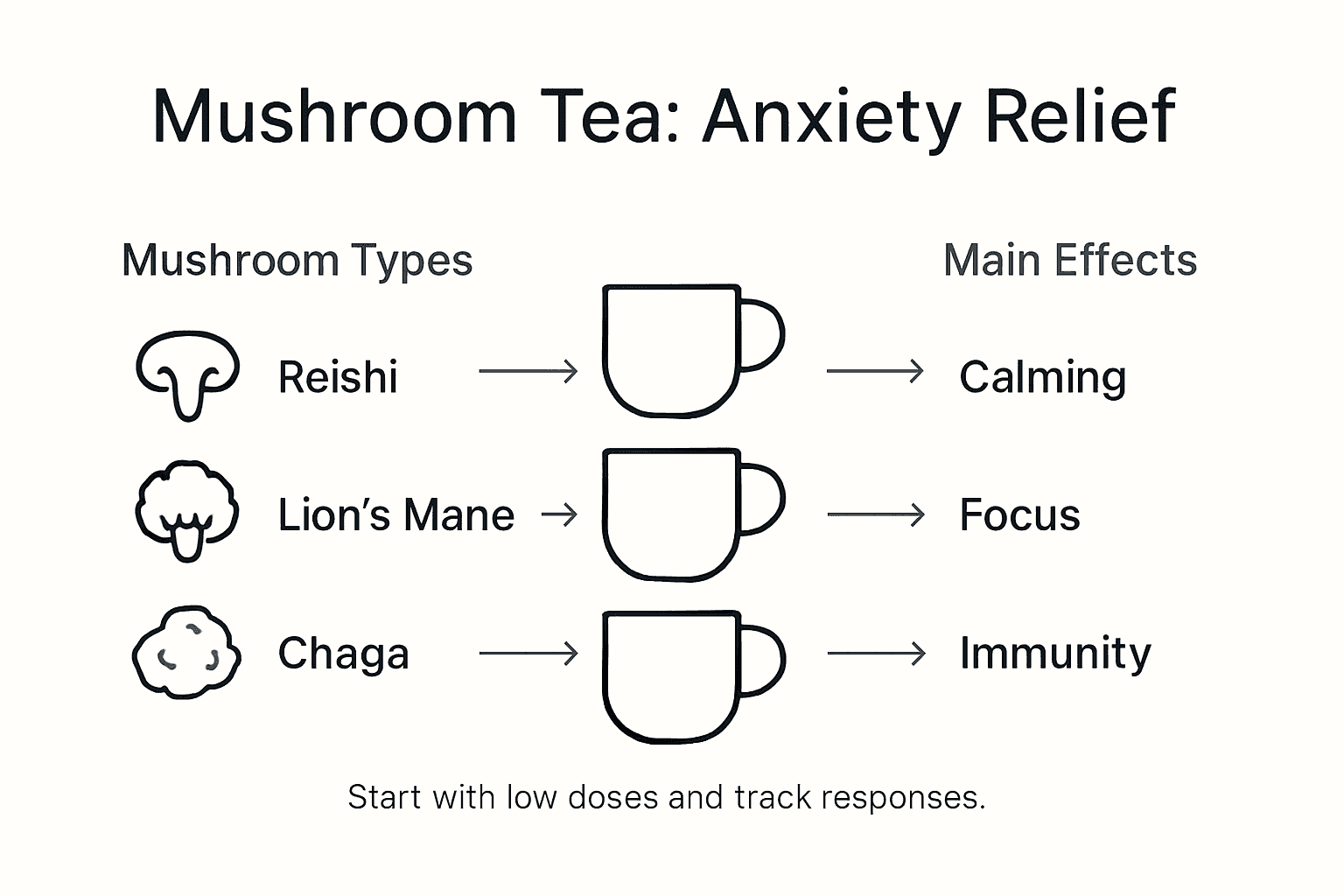
Chaga and Cordyceps mushroom teas complement these anxiety-relief options with their unique properties. Chaga offers extensive antioxidant and anti-inflammatory benefits that enhance overall stress resilience, while Cordyceps provides energy-balancing effects that can help combat the physical manifestations of chronic anxiety. Each mushroom species presents a nuanced approach to mental wellness, allowing individuals to select a tea that most closely matches their specific emotional and physiological needs.
Here’s a summary of key mushroom teas and their unique benefits for anxiety relief:
| Mushroom Species | Primary Effect | Bioactive Compound Focus | Notable Advantage |
|---|---|---|---|
| Reishi | Calms stress | Triterpenes, adaptogens | Supports relaxation |
| Lion’s Mane | Boosts cognition | Nerve growth factor | Enhances emotional stability |
| Chaga | Reduces inflammation | Antioxidants, adaptogens | Increases stress resilience |
| Cordyceps | Balances energy | Cordycepin, adenosine | Combats fatigue linked to anxiety |
Pro tip: Experiment with different mushroom tea blends and track your personal response, as individual biochemistry can significantly influence the effectiveness of natural anxiety management strategies.
How Psilocybin Tea Supports Calm and Clarity
Psilocybin tea offers a unique approach to mental wellness, providing a nuanced pathway for individuals seeking natural anxiety relief and cognitive enhancement. Understanding the potential for mental clarity through psychedelic experiences reveals a complex interaction between neurochemical processes and psychological states that can profoundly impact emotional regulation and stress management.

The primary mechanism of psilocybin involves its interaction with serotonin receptors in the brain, specifically the 5-HT2A receptors. This interaction triggers a cascade of neurological responses that can temporarily disrupt rigid thought patterns, allowing individuals to experience a more flexible and open mental state. By reducing the brain’s default mode network activity, psilocybin can help break cycles of rumination and anxiety, creating space for new perspectives and emotional processing.
Clinical research suggests that carefully controlled psilocybin experiences can produce lasting changes in emotional processing and stress resilience. The tea format offers a gentler, more controlled method of consumption compared to other psychedelic intake methods, allowing users to potentially experience reduced anxiety, enhanced mood stability, and improved cognitive flexibility. These effects are particularly notable for individuals struggling with persistent negative thought patterns or chronic stress responses that traditional treatments have not effectively addressed.
Pro tip: Always consult with a healthcare professional and start with extremely low doses when exploring psilocybin tea, ensuring a safe and controlled approach to potential mental wellness benefits.
Legal Status and Safe Use in Canada
Navigating the legal landscape of psilocybin in Canada requires careful understanding of current regulations and potential therapeutic applications. Canadian legal protocols for purchasing and consuming psychedelic mushrooms have undergone significant evolution in recent years, creating a nuanced framework for individuals seeking alternative mental health treatments.
Currently, psilocybin remains a controlled substance in Canada, with specific exemptions for medical and research purposes. Health Canada has begun granting limited permissions for therapeutic use, particularly for individuals struggling with treatment-resistant mental health conditions like depression, anxiety, and end-of-life distress. These exemptions typically require professional medical supervision and are not available for recreational consumption, emphasizing the importance of a structured, medically guided approach to psychedelic use.
Safe consumption involves multiple critical considerations beyond legal status. Potential users must undergo comprehensive medical screening, understand potential interactions with existing medications, and recognize the importance of set and setting. This means creating a controlled, comfortable environment with professional guidance, avoiding mixing psilocybin with other substances, and being aware of personal mental health history. The emerging regulatory landscape suggests a careful, research-driven approach that prioritizes individual safety and therapeutic potential over unrestricted access.
Pro tip: Always consult with a licensed healthcare professional and verify current legal regulations before considering any psilocybin-based treatment, as guidelines can change rapidly.
Potential Risks and Choosing the Right Dose
Understanding the nuanced landscape of mushroom tea dosage requires careful consideration of individual health factors and potential risks. Safe psilocybin consumption strategies emphasize the critical importance of personalized approach and medical supervision when exploring these alternative wellness options.
Dosage variability represents a significant factor in managing potential risks associated with mushroom teas. Medicinal mushroom extracts like Reishi and Lion’s Mane generally have low toxicity profiles, but individual sensitivity can dramatically impact physiological responses. Overconsumption may trigger gastrointestinal discomfort, potential medication interactions, or unexpected psychological reactions. Factors such as body weight, metabolic rate, existing health conditions, and concurrent medications all play crucial roles in determining appropriate consumption levels.
Professional guidelines recommend a systematic approach to mushroom tea consumption. This includes comprehensive medical screening, starting with minimal doses, and maintaining careful documentation of physiological and psychological responses. Microdosing protocols have emerged as a preferred method for many individuals seeking anxiety relief, allowing for subtle neurological benefits while minimizing potential adverse effects. The goal is to achieve a therapeutic threshold that supports mental wellness without overwhelming the individual’s neurological and physiological systems.
Compare the dosing and safety considerations for medicinal mushroom teas and psilocybin tea:
| Tea Type | Typical Dosing Approach | Key Safety Measures | Common Side Effects |
|---|---|---|---|
| Medicinal (Reishi, Lion’s Mane, etc.) | Start low, increase gradually | Medical screening, track response | Mild GI discomfort, rare reactions |
| Psilocybin | Microdosing, strict control | Healthcare supervision, set/setting | Temporary mood changes, anxiety spikes |
Pro tip: Maintain a detailed journal tracking dosage, timing, and subjective experiences to help healthcare professionals develop a personalized and safe consumption strategy.
Discover Natural Anxiety Relief with Mushroom Teas and Microdosing
If you are seeking a gentle and natural way to manage anxiety and enhance mental clarity, exploring mushroom tea and microdose psilocybin products could be the answer. This article highlights the unique benefits of medicinal mushrooms like Reishi and Lion’s Mane, focusing on calming stress and boosting emotional stability. At Fungal Friend, we understand the challenges of finding safe and effective plant-based solutions for anxiety, especially when legal and dosage guidelines can feel overwhelming.
Take the first step toward balanced mental wellness by exploring our carefully curated collection of microdose psilocybin mushrooms, infused teas, and more. Each product is crafted with your safety and clarity in mind, backed by educational resources to help you make informed choices. Whether you want daily calm or deeper exploration, start your journey with trusted options from Fungal Friend and learn more about our offerings in the Uncategorized Archives – Fungal Friend. Unlock natural relief today and embrace a clearer, calmer tomorrow.
Frequently Asked Questions
What is mushroom tea for anxiety?
Mushroom tea for anxiety is a natural beverage made from medicinal mushroom species known for their stress-reducing properties. It is designed to help manage emotional turbulence through bioactive compounds that interact with the nervous system to promote mental balance.
How do different types of mushroom tea help with anxiety?
Different mushroom teas offer various benefits: Reishi tea calms stress, Lion’s Mane boosts cognitive function, Chaga enhances stress resilience, and Cordyceps balances energy. Each type targets specific aspects of emotional and cognitive health.
What are the best practices for using psilocybin tea for anxiety?
When exploring psilocybin tea, always consult with a healthcare professional. Start with extremely low doses in a controlled environment while ensuring proper supervision to safely experience potential mental wellness benefits.
How can I determine the right dose for mushroom tea?
To determine the right dose for mushroom tea, start with small amounts and gradually increase while monitoring your body’s response. Individual factors like body weight, health conditions, and existing medications can affect dosage, so maintaining a journal can be helpful.