
Psychedelic Experiences: Insights for Wellness Seekers
More than 25 percent of American adults have experienced a mental health condition this year, with many Canadians searching for new paths to wellness beyond traditional prescriptions. Curiosity about microdosing psilocybin mushrooms is reshaping the conversation for those who want safe, informed options. This guide uncovers the science and practical steps for Canadians considering psilocybin, making it easier to understand what defines a psychedelic experience and how it could fit into a modern mental wellness plan.
Table of Contents
- What Defines A Psychedelic Experience
- Classic Psychedelics And Key Variations
- Common Effects And How They Manifest
- Legal Status And Access In Canada
- Potential Benefits And Real-World Applications
- Risks, Safety Guidelines, And Integration
Key Takeaways
| Point | Details |
|---|---|
| Psychedelic Experience Characteristics | Psychedelic experiences involve significant alterations in perception, cognition, and emotional processing, often marked by sensory hallucinations and ego dissolution. |
| Neuroscientific Mechanisms | These experiences stem from complex brain network reconfigurations, revealing profound insights and interconnectedness through altered neural communication. |
| Therapeutic Potential | Psychedelics show promise in treating severe mental health conditions such as depression and PTSD, facilitating emotional healing and personal growth. |
| Safety and Integration | Safe exploration demands thorough mental health screening, professional guidance, and structured integration strategies to translate experiences into meaningful personal development. |
What Defines a Psychedelic Experience
A psychedelic experience represents a profound alteration of consciousness characterized by dramatic shifts in perception, cognition, and emotional processing. These experiences transcend ordinary sensory perception, creating transformative states where individuals encounter radical changes in how they interpret reality. Phenomenological research from systematic studies indicates these experiences involve complex neurological and psychological transformations.
Typically, psychedelic experiences manifest through several distinctive features. These include sensory hallucinations where visual, auditory, and tactile perceptions become dramatically altered or enhanced. Users might observe geometric patterns, experience synesthesia (where senses blend), or perceive time and space differently. Another critical component is ego dissolution – a state where personal identity boundaries become fluid, allowing individuals to experience consciousness from a less individualistic perspective.
The neurological underpinnings of psychedelic experiences involve significant brain network reconfiguration. Neuroscientific research suggests these substances temporarily disrupt default neural pathways, enabling unprecedented cross-communication between brain regions that typically operate independently. This neurological restructuring can produce profound insights, emotional breakthroughs, and a sense of interconnectedness that many participants describe as deeply meaningful.
Pro Tip for Safe Exploration: Always start with minimal doses in a controlled, comfortable environment with a trusted guide present to ensure a supportive and secure psychedelic journey.
Classic Psychedelics and Key Variations
Psychedelics represent a diverse family of substances that fundamentally alter human consciousness, with each compound offering unique perceptual and psychological experiences. Comprehensive research on psychedelic variations reveals distinct characteristics that make each substance unique in its neurological and experiential profile.
The classic psychedelics are typically categorized into several primary groups. Serotonergic psychedelics like psilocybin, LSD, and mescaline directly interact with serotonin receptors, producing profound alterations in perception and consciousness. These compounds share common features such as visual hallucinations, expanded emotional awareness, and potential for introspective experiences. Dissociative psychedelics like ketamine and PCP operate differently, creating a sense of detachment from one’s physical body and immediate environment.
Each psychedelic substance offers a unique neurochemical pathway to altered consciousness. Psilocybin, derived from mushrooms, tends to produce more organic, nature-connected experiences with strong emotional components. LSD generates more geometric and pattern-based visual experiences, while mescaline from peyote often creates more introspective and spiritually oriented journeys. The variability depends on chemical structure, dosage, individual neurochemistry, and psychological set and setting.
Here’s a quick comparison of classic psychedelics and their unique experiential effects:
| Substance | Primary Effect Type | Distinct Experiential Qualities | Common Applications |
|---|---|---|---|
| Psilocybin | Serotonergic | Nature-connected, emotional depth | Depression, personal growth |
| LSD | Serotonergic | Geometric visuals, expanded thought | Creativity, existential inquiry |
| Mescaline | Serotonergic (phenethylamine) | Spiritual, introspective journeys | Spiritual healing, self-discovery |
| Ketamine | Dissociative | Physical detachment, altered sense | PTSD, chronic pain management |
Pro Tip for Responsible Exploration: Always research and understand the specific characteristics of each psychedelic substance, recognizing that individual experiences can vary dramatically based on personal physiology and psychological preparedness.
Common Effects and How They Manifest
Psychedelic experiences generate a complex array of neurological and psychological transformations that profoundly alter an individual’s perception and consciousness. Comprehensive neuropsychological research on acute and long-term psychedelic effects reveals multiple dimensions of how these substances impact human experience.
The primary manifestations of psychedelic experiences typically include several key phenomenological characteristics. Perceptual alterations represent the most immediate and noticeable effect, where sensory input becomes dramatically reimagined. Visual hallucinations might involve intricate geometric patterns, color intensification, and fluid morphing of environmental surfaces. Auditory perceptions can become enhanced or transformed, with sounds acquiring unusual depth, texture, and emotional resonance. Cognitive shifts accompany these sensory changes, enabling novel thought patterns, reduced ego boundaries, and dramatically expanded introspective capabilities.

Beyond immediate sensory and cognitive transformations, psychedelics can trigger profound emotional and psychological experiences. Participants frequently report experiencing intense emotional states, ranging from profound peace and interconnectedness to challenging confrontations with deeply buried psychological material. These experiences often facilitate significant personal insights, emotional processing, and potential therapeutic breakthroughs. The neurological mechanisms underlying these transformations involve complex interactions with serotonin receptors, temporarily disrupting default neural networks and enabling unprecedented cross-communication between different brain regions.
Pro Tip for Mindful Exploration: Approach psychedelic experiences with clear intentionality, respect for the substance, and a carefully prepared mental and physical environment to maximize potential therapeutic insights while minimizing potential psychological disruption.
Legal Status and Access in Canada
The legal landscape for psychedelics in Canada represents a complex and evolving regulatory environment that balances medical research, therapeutic potential, and controlled substance restrictions. Detailed analysis of Canadian psychedelic law reveals nuanced pathways for legal access, highlighting several critical legal mechanisms for individuals seeking therapeutic psychedelic experiences.
Currently, most psychedelic substances remain classified under the Controlled Drugs and Substances Act, making unauthorized possession and distribution illegal. Legal access primarily occurs through three primary channels: Section 56 federal exemptions, the Special Access Program, and authorized clinical trials. Section 56 exemptions allow individuals to request permission for medical or scientific purposes, providing a critical pathway for those seeking therapeutic interventions. The Special Access Program enables healthcare practitioners to request access to substances not available through standard medical channels for patients with serious or life-threatening conditions who have exhausted conventional treatment options.
The Canadian legal framework continues to evolve, with growing recognition of psychedelics’ potential therapeutic benefits. Recent developments suggest increasing openness to medical and research applications, particularly for mental health treatments. Psilocybin, for instance, has received more nuanced consideration, with controlled legal pathways emerging for specific medical contexts. Provincial and municipal regulations can also introduce additional complexities, creating a dynamic legal landscape that requires careful navigation and ongoing attention to regulatory changes.
Pro Tip for Legal Navigation: Always consult with legal and medical professionals before pursuing any psychedelic treatment, and maintain comprehensive documentation to ensure compliance with current Canadian regulations.
Potential Benefits and Real-World Applications
Psychedelics are emerging as a groundbreaking frontier in mental health treatment, offering promising therapeutic approaches for conditions that have historically resisted conventional interventions. Comprehensive clinical research illuminates the transformative potential of psychedelic medicine, revealing substantial benefits across multiple mental health domains.
The most compelling real-world applications center on treating treatment-resistant mental health conditions. Clinical studies demonstrate significant potential for addressing severe depression, post-traumatic stress disorder (PTSD), and addiction disorders. Psilocybin and other psychedelics appear to facilitate profound psychological healing by enabling patients to process deeply embedded emotional traumas, interrupt negative cognitive patterns, and generate novel neurological connections. Unlike traditional pharmaceutical approaches that often manage symptoms, psychedelic therapies seem to offer more fundamental psychological restructuring, potentially providing long-term relief after just a few carefully guided sessions.
Beyond clinical mental health applications, researchers are exploring psychedelics’ potential in personal development, creativity enhancement, and existential understanding. Controlled studies suggest these substances can trigger transformative experiences that increase emotional intelligence, enhance problem-solving capabilities, and promote greater self-awareness. Participants frequently report improved interpersonal relationships, reduced anxiety, and a more profound sense of connection to themselves and their environment. These broader applications extend psychedelic research beyond traditional medical frameworks, positioning these substances as powerful tools for holistic human potential and psychological growth.
Pro Tip for Responsible Exploration: Always approach potential psychedelic experiences with professional guidance, clear therapeutic intentions, and a comprehensive understanding of both the potential benefits and inherent psychological risks.
Risks, Safety Guidelines, and Integration
Psychedelic experiences, while potentially transformative, require careful navigation and comprehensive understanding of potential psychological risks. Comprehensive frameworks for safe psychedelic integration emphasize the critical importance of structured preparation, professional guidance, and intentional post-experience processing.
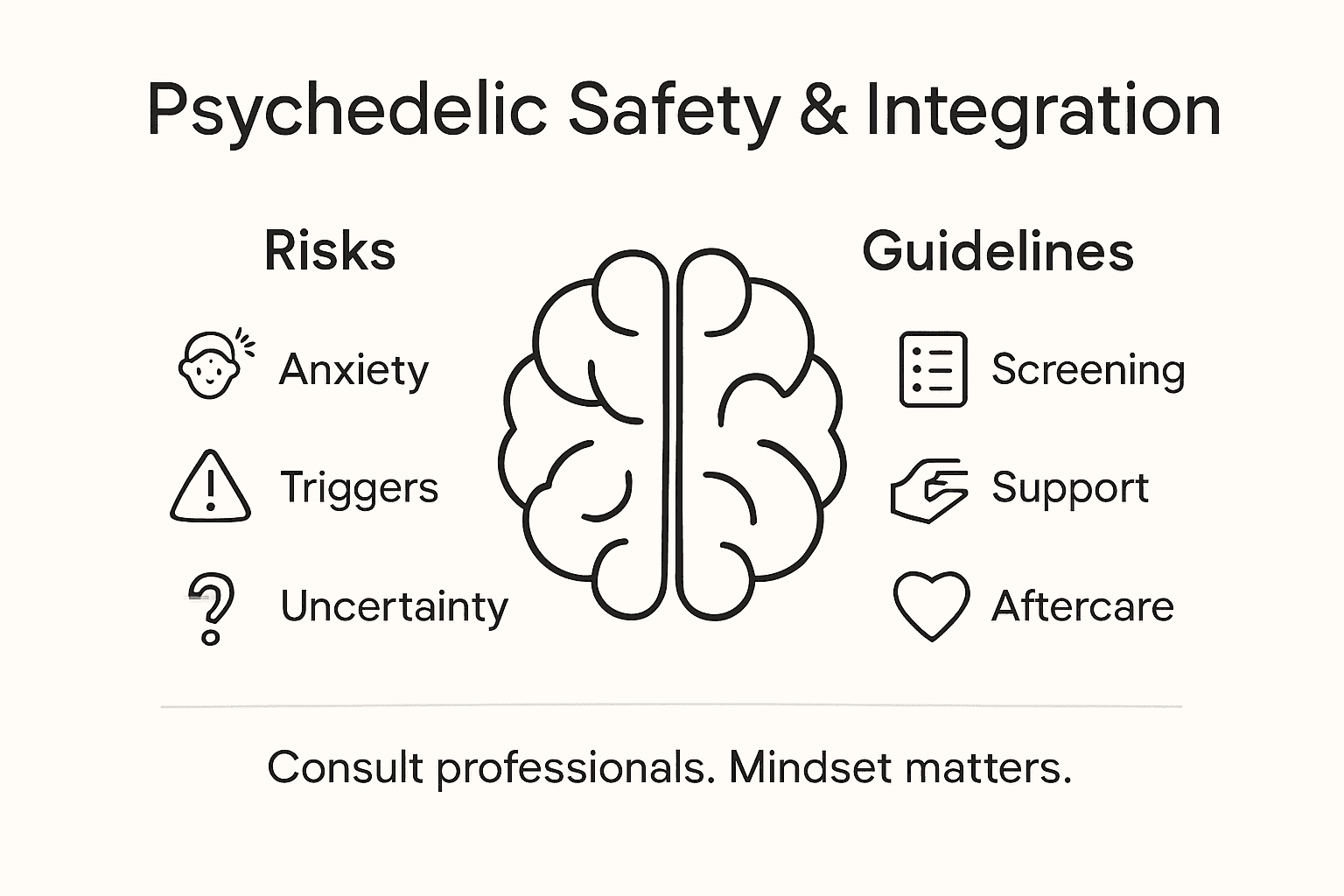
The primary risks associated with psychedelic experiences center on psychological vulnerability and potential triggering of underlying mental health conditions. Potential psychological risks include temporary or prolonged experiences of anxiety, depersonalization, and potential exacerbation of pre-existing mental health disorders such as schizophrenia or bipolar disorder. Individuals with a personal or family history of psychotic disorders face heightened risks and should approach psychedelic experiences with extreme caution. Key safety guidelines include comprehensive medical screening, psychological assessment, careful dosage management, and the presence of trained professional support during the experience.
This table summarizes essential risks and integration strategies for safe psychedelic experiences:
| Risk Category | Potential Risks | Screening Strategy | Recommended Integration Approach |
|---|---|---|---|
| Psychological Health | Anxiety, depersonalization | Professional evaluation, family history | Therapy, reflective journaling |
| Dose & Environment | Overdose, confusion | Controlled doses, trusted guide | Structured post-session processing |
| Pre-existing Conditions | Worsening mental disorders | Medical screening, risk assessment | Ongoing support, gradual exposure |
Successful psychedelic integration involves structured processes that help individuals meaningfully interpret and incorporate their experiences into daily life. This typically requires professional psychological support, reflective practices like journaling, and potentially therapy sessions designed to help process the insights and emotional revelations generated during the psychedelic experience. Integration is not a passive process but an active, intentional approach to translating profound psychological experiences into sustainable personal growth, emotional healing, and behavioral transformation.
Pro Tip for Safe Exploration: Prioritize comprehensive mental health screening, engage with experienced professional guides, and develop a structured integration plan before considering any psychedelic experience.
Unlock Your Path to Safe and Insightful Psychedelic Experiences
Navigating the complex and transformative world of psychedelics can feel overwhelming, especially when seeking safe, meaningful, and legally compliant ways to explore mood balance, anxiety reduction, or deeper personal insights. This article highlights the importance of careful dosage, understanding substance variations, and comprehensive preparation to minimize risks and maximize benefits. At Fungal Friend, we understand these challenges and offer curated microdose psilocybin products designed to support your wellness journey with safety and confidence.

Discover nature-based options crafted to provide gentle yet effective experiences whether you are new or experienced. Explore our selection of mushroom capsules, infused teas, and chocolates—all available with discreet shipping across Canada. Take control of your mental health and personal growth by visiting Fungal Friend today and find trusted resources and products tailored to your unique needs. Start your journey with professional guidance and a commitment to responsible, intentional exploration right now.
Frequently Asked Questions
What defines a psychedelic experience?
A psychedelic experience is a profound alteration of consciousness characterized by changes in perception, cognition, and emotional processing. It often includes sensory hallucinations and can lead to states of ego dissolution.
What are the types of classic psychedelics and their unique effects?
Classic psychedelics can be divided into serotonergic psychedelics like psilocybin, LSD, and mescaline, which enhance sensory perception and emotional awareness, and dissociative psychedelics like ketamine that create a sense of detachment from reality.
What are the potential therapeutic benefits of psychedelics?
Psychedelics show promise in treating treatment-resistant mental health conditions such as depression, PTSD, and addiction. They may help patients process traumas and generate new neurological connections, providing long-term relief after a few sessions.
What are important safety guidelines for psychedelic experiences?
Safety guidelines include comprehensive medical screening, psychological assessment, managing dosage carefully, and having trained professional support present during the experience. Post-experience integration support is also crucial for meaningful processing of insights.