
Psilocybin vs Other Psychedelics: Complete Guide
Over 26 million American adults have tried a psychedelic at least once, making these substances more common than many expect. With ongoing debates about their risks, benefits, and legal status, understanding psychedelics—especially psilocybin—has become crucial for anyone curious about mental health advances or personal transformation. This guide offers a clear look at the key psychedelic types, their effects, the ways psilocybin stands apart, the legal realities in Canada, and the safety essentials every user should know.
Table of Contents
- Defining Psilocybin and Other Psychedelics
- Major Psychedelic Types and Their Effects
- How Psilocybin Differs From LSD, DMT, and Others
- Legal Status of Psychedelics in Canada
- Safety, Risks, and Responsible Use Guidelines
Key Takeaways
| Point | Details |
|---|---|
| Understanding Psilocybin | Psilocybin, found in certain mushrooms, uniquely interacts with serotonin receptors, offering potential mental health treatment for conditions like depression and anxiety. |
| Types of Psychedelics | Psychedelics can be categorized into natural (e.g., Psilocybin, Mescaline) and synthetic (e.g., LSD, 2C-B), each providing distinct experiences based on their molecular structures. |
| Legal Landscape in Canada | The legal status of psychedelics is evolving, with psilocybin existing in a gray area while certain medical exemptions and research permissions allow controlled access. |
| Safety Considerations | Thorough pre-experience screening and a supportive environment are crucial for responsible psychedelic use, emphasizing individual mental health and safety. |
Defining Psilocybin and Other Psychedelics
Psychedelics represent a fascinating class of substances capable of profoundly altering human perception and consciousness. Psychedelic compounds are molecular agents that can dramatically shift cognitive processing, sensory experiences, and emotional states through interactions with neurological systems.
At the core of psychedelic experiences is psilocybin, a naturally occurring compound found in certain mushroom species. Unlike other recreational substances, psilocybin interacts uniquely with serotonin receptors in the brain, producing extraordinary perceptual and psychological transformations. Scientific research into therapeutic uses of psilocybin reveals potential applications for mental health treatment, particularly in managing conditions like depression, anxiety, and addiction.
Different psychedelic substances produce varied experiences based on their molecular structures and neurological interactions. Key psychedelics include:
- Psilocybin: Derived from mushrooms, known for introspective and mystical experiences
- LSD: Synthetic compound producing intense sensory alterations
- DMT: Extremely rapid and powerful consciousness-shifting substance
- Mescaline: Derived from peyote cacti, producing visionary experiences
- Ayahuasca: Complex botanical brew with profound psychological impacts
Each psychedelic offers unique neurochemical pathways, creating distinct perceptual landscapes that challenge traditional understandings of consciousness and human experience.
Major Psychedelic Types and Their Effects
Hallucinogenic compounds represent a complex category of substances capable of profound neurological interactions, each offering unique psychological experiences and potential therapeutic applications. These substances fundamentally alter perception, consciousness, and cognitive processing through intricate neurochemical mechanisms.

Psychedelics can be broadly categorized into several primary types, each with distinctive molecular structures and neurological impacts. Natural psychedelics emerge from botanical sources, while synthetic psychedelics are human-engineered compounds. Scientific research on hallucinogens indicates these substances are generally considered physiologically safe and non-addictive, challenging traditional perceptions about psychoactive compounds.
Key psychedelic types include:
-
Tryptamines:
- Psilocybin (mushroom-derived)
- DMT (found in ayahuasca)
- 5-MeO-DMT (from plant and animal sources)
-
Phenethylamines:
- Mescaline (from peyote cactus)
- 2C-B (synthetic compound)
- DOM (synthetic hallucinogen)
-
Ergolines:
- LSD (synthetic)
- Ergine (naturally occurring in morning glory seeds)
Synthetic psychedelics often produce more intense and longer-lasting experiences compared to their natural counterparts, with precisely controlled molecular compositions that enable predictable neurological interactions. Emerging research on mushroom strains continues to expand our understanding of these fascinating compounds and their potential therapeutic applications.
How Psilocybin Differs from LSD, DMT, and Others
Neurological interactions of psychedelic compounds reveal fascinating distinctions between various hallucinogenic substances, despite their shared capacity to dramatically alter human perception and consciousness. While these compounds share fundamental mechanisms of neural interaction, each presents unique characteristics that distinguish its psychological and physiological effects.
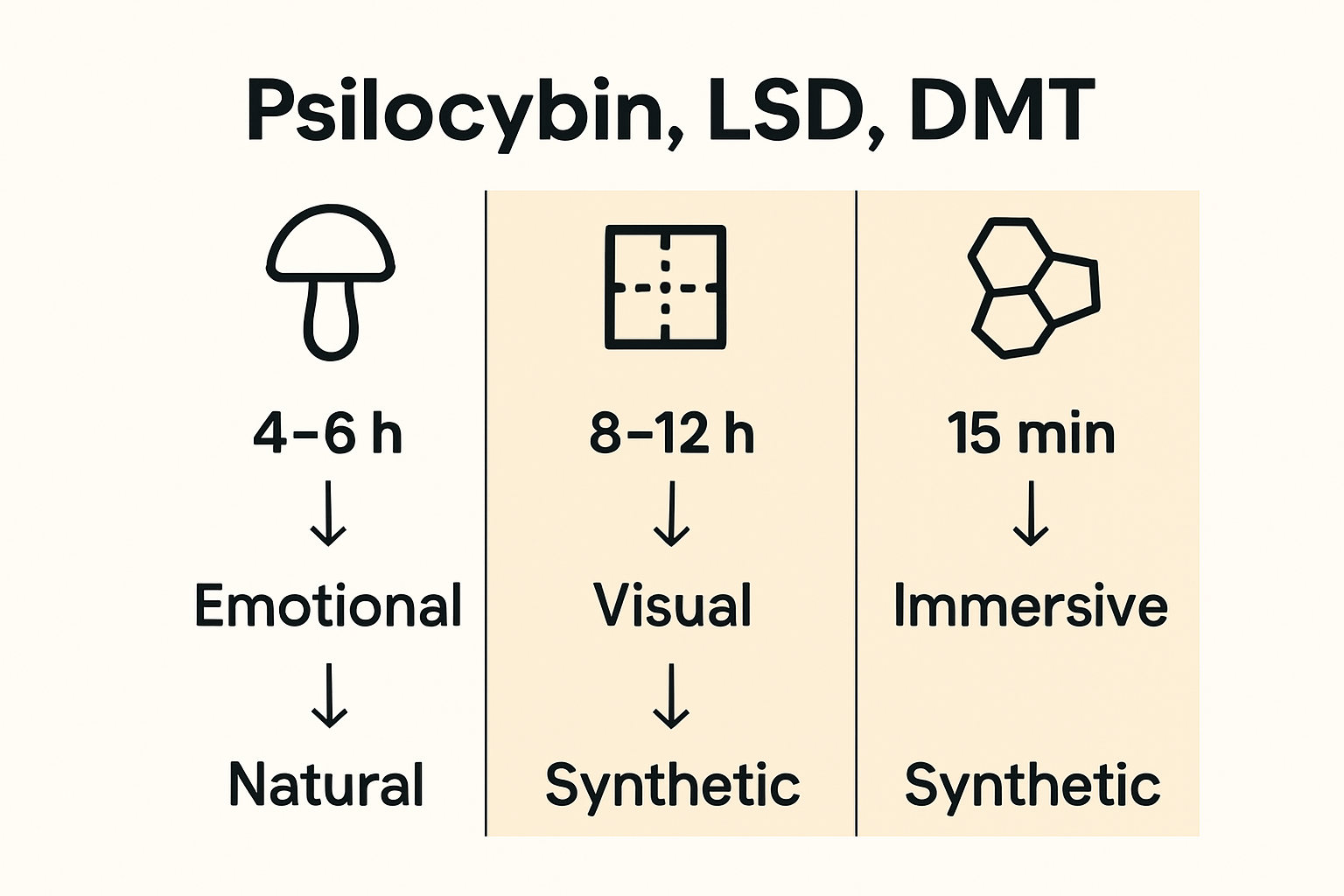
Psilocybin stands apart from other psychedelics through its specific molecular structure and interaction profile. Neurochemical research demonstrates that while psilocybin, LSD, and DMT all engage serotonin receptors, their precise mechanisms of action differ significantly. Psilocybin typically produces a more introspective, emotionally nuanced experience compared to the more intense perceptual alterations associated with synthetic counterparts.
Key differences between major psychedelics include:
-
Psilocybin:
- Natural origin (mushroom-derived)
- Shorter duration (4-6 hours)
- More gentle onset
- Strong emotional and introspective qualities
-
LSD:
- Synthetic compound
- Longer duration (8-12 hours)
- More intense visual hallucinations
- Stronger perceptual distortions
-
DMT:
- Extremely rapid onset
- Very short duration (15-30 minutes)
- Intense, immersive alternate reality experiences
- Often described as more ‘mechanical’ or ‘technological’ in character
Neurological complexity means that each psychedelic offers a unique journey, with subtle variations in receptor interactions, metabolic processing, and individual neurochemical responses determining the ultimate experiential landscape.
Legal Status of Psychedelics in Canada
Psychedelic substances occupy a complex legal landscape in Canada, with recent regulatory shifts creating nuanced opportunities for therapeutic and research applications. Legal psychedelic frameworks continue to evolve, reflecting a growing recognition of potential medical and wellness benefits associated with these compounds.
Psilocybin currently exists in a unique legal gray zone. While technically classified as a controlled substance, recent exemptions have emerged for specific medical and therapeutic contexts. Online purchasing regulations have become increasingly sophisticated, allowing controlled access for individuals with specific medical conditions or research purposes.
Key legal considerations for psychedelics in Canada include:
-
Medical Exemptions:
- Special access programs for treatment-resistant conditions
- Compassionate use permissions
- Therapeutic research approvals
-
Research Permissions:
- Licensed institutional studies
- Clinical trial frameworks
- Controlled substance research permits
-
Emerging Regulatory Trends:
- Gradual destigmatization
- Increased scientific interest
- Potential future decriminalization
The legal landscape continues to shift, with ongoing discussions about potential broader legalization signaling a progressive approach to understanding psychedelic substances beyond traditional regulatory constraints.
Safety, Risks, and Responsible Use Guidelines
Psychological experiences with psychedelics require careful consideration of individual mental health, environmental context, and personal readiness. Understanding potential risks and implementing comprehensive safety protocols are essential for a responsible and transformative experience.
Psychological risks represent the most critical aspect of psychedelic engagement. Magic mushroom safety guidelines emphasize the importance of mental and physical preparation, highlighting that while psilocybin is generally considered physiologically safe, individual psychological responses can vary dramatically. Potential adverse reactions may include temporary emotional instability, heightened anxiety, or intense psychological confrontations.
Key safety considerations include:
-
Pre-Experience Screening:
- Mental health history assessment
- Current psychological state evaluation
- Medication interaction checks
- Understanding personal risk factors
-
Environmental Preparation:
- Secure, comfortable setting
- Trusted support person present
- Minimal external stressors
- Controlled, predictable environment
-
Dosage and Consumption Guidelines:
- Start with minimal recommended doses
- Use precise, measured quantities
- Understand individual tolerance levels
- Avoid mixing with other substances
Responsible consumption demands a holistic approach, recognizing that psychedelic experiences are deeply personal and potentially transformative journeys requiring thoughtful navigation and profound self-awareness.
Discover Safe and Effective Psilocybin Alternatives for Your Journey
If you are exploring the distinctions between psilocybin and other psychedelics, understanding their unique effects and legal status is crucial for a safe and meaningful experience. Many individuals seek reliable sources for natural products that support mental wellness, focus, and emotional balance while navigating Canada’s evolving legal framework. At Fungal Friend, we specialize in providing carefully curated microdose psilocybin mushrooms and related items crafted to meet these specific needs.
Explore our Uncategorized Archives – Fungal Friend for educational resources and product insights that align with your interests. Take control of your mental clarity and emotional health with our high-quality capsules, teas, and chocolates designed for responsible use. Visit Fungal Friend now to benefit from discreet delivery and expert guidance so you can confidently step into your psychedelic exploration today.
Frequently Asked Questions
What is the primary difference between psilocybin and LSD?
Psilocybin is a natural compound derived from mushrooms, typically producing a shorter duration of effects (4-6 hours) with more introspective qualities. In contrast, LSD is a synthetic compound that lasts longer (8-12 hours) and often results in more intense visual hallucinations and perceptual distortions.
How do psychedelics like psilocybin and DMT differ in their effects?
Psilocybin generally provides a gentler, more emotional experience, while DMT is known for its rapid onset and deeply immersive experiences, usually lasting only 15-30 minutes, characterized by intense and sometimes ‘mechanical’ perceptions.
Are there any safety considerations when using psilocybin?
Yes, it’s vital to consider psychological risks, mental health history, and environmental factors such as having a comfortable setting and trusted support present. Starting with a minimal dosage and being aware of individual tolerance levels is also important for safe use.
What categories of psychedelics exist, and how do they impact the user?
Psychedelics can be broadly categorized into natural psychedelics (like psilocybin and mescaline) and synthetic psychedelics (like LSD and 2C-B). Each category has unique molecular structures that influence their duration, intensity, and overall user experience.