
Psychedelic Therapy: Transforming Mental Wellness Safely
Most advice about psychedelic therapy in the American mental health world overlooks the unique needs of Canadian adults searching for safe, natural anxiety relief. As researchers report that about 17 percent of Canadians will face anxiety challenges in their lifetime, more people are exploring legal options like psilocybin microdosing. This guide breaks down the essentials of psychedelic therapy, giving you clear insights into what makes it different, how it works, and what to know for your own wellness journey.
Table of Contents
- Defining Psychedelic Therapy And Core Principles
- Different Types Of Psychedelic-Assisted Therapy Approaches
- How Psychedelic Therapy Works In The Brain
- Legal Status Of Psychedelic Therapy In Canada
- Safety, Side Effects, And Responsible Use
Key Takeaways
| Point | Details |
|---|---|
| Psychedelic Therapy Overview | This innovative approach uses psychedelic substances under professional guidance to address deep-seated psychological issues, focusing on holistic healing. |
| Core Principles | The therapy emphasizes safety, ethical practice, personal exploration, and integration of insights, diverging from traditional mental health methods. |
| Brain Mechanisms | Psychedelics enhance neuroplasticity, allowing the brain to reorganize and form new adaptive patterns, potentially transforming treatment for resistant mental health conditions. |
| Safety and Responsible Use | Thorough psychological screening and integration practices are essential to ensure participant safety and maximize therapeutic benefits. |
Defining Psychedelic Therapy and Core Principles
Psychedelic therapy represents a groundbreaking approach to mental wellness that integrates carefully administered psychedelic substances with professional therapeutic guidance. Unlike traditional pharmaceutical treatments, this innovative modality focuses on holistic healing by leveraging the transformative potential of substances like psilocybin to address deep-seated psychological challenges. Therapeutic uses of psilocybin have demonstrated remarkable potential in treating conditions such as treatment-resistant depression, anxiety, and trauma-related disorders.
At its core, psychedelic therapy follows seven fundamental principles that distinguish it from conventional mental health interventions. These principles include safety, ethical practice, personal exploration, harm reduction, social responsibility, transpersonal understanding, and psychological integration. The therapy recognizes that healing is not about suppressing symptoms but creating transformative experiences that allow individuals to understand and reframe their internal psychological landscapes.
The therapeutic process typically involves three critical stages: preparation, direct psychedelic experience, and integration. During preparation, patients work with trained professionals to establish psychological safety, set intentions, and understand potential emotional terrain. The actual psychedelic session occurs in a controlled, supportive environment where individuals can explore their consciousness with professional guidance. Post-experience integration helps patients translate insights into meaningful personal growth and behavioral changes.
Pro Tip for Safe Exploration: Consult with a licensed psychedelic therapy professional who specializes in trauma-informed care and has extensive experience guiding therapeutic psychedelic sessions. Ensure they follow established safety protocols and can provide comprehensive psychological support throughout your healing journey.
Different Types of Psychedelic-Assisted Therapy Approaches
Psychedelic-assisted therapy encompasses several nuanced approaches designed to address mental health challenges through carefully structured therapeutic interventions. Psychedelic therapy models primarily fall into three distinct categories, each offering unique strategies for psychological healing and personal transformation. These approaches range from pharmacologically focused treatments to deeply integrated therapeutic experiences that prioritize holistic mental wellness.

The three primary models include the pharmacologic-only model, which emphasizes the direct neurological effects of psychedelic substances; the experience-supported psychotherapy model, which provides therapeutic context and emotional support during the psychedelic experience; and the combined manualized psychotherapy model, which integrates structured therapeutic techniques with psychedelic interventions. Each model offers distinct advantages depending on the patient’s specific psychological needs, underlying conditions, and therapeutic goals.
Within these broad categories, specific therapeutic approaches can vary significantly. Some focus on treating specific mental health conditions like depression or addiction, while others aim for broader personal growth and psychological exploration. Techniques might include traditional talk therapy, somatic experiencing, mindfulness practices, and trauma-informed care, all carefully integrated with the psychedelic experience to maximize therapeutic potential and minimize potential risks.
Here’s a summary of the three main psychedelic-assisted therapy models and their distinct characteristics:
| Therapy Model | Defining Feature | Typical Setting | Ideal For |
|---|---|---|---|
| Pharmacologic-Only | Focuses on medicine’s neurological effects | Medical or clinical environments | Biological symptom relief |
| Experience-Supported Psychotherapy | Emphasizes therapeutic support during sessions | Therapist-guided sessions | Emotional processing, self-exploration |
| Combined Manualized Psychotherapy | Integrates structured therapy with psychedelics | Stepwise, protocol-based therapy | Comprehensive psychological healing |
Pro Tip for Therapeutic Exploration: Research and consult with licensed professionals who specialize in psychedelic-assisted therapy, ensuring they have extensive training in multiple therapeutic models and can provide personalized guidance tailored to your unique psychological landscape.
How Psychedelic Therapy Works in the Brain
Psychedelic therapy fundamentally transforms brain functioning through complex neurological mechanisms that go far beyond traditional pharmaceutical interventions. Neuroplasticity enhancement represents the cornerstone of how these substances create profound psychological changes, enabling the brain to reorganize neural connections and develop more adaptive cognitive patterns. By temporarily disrupting default neural networks, psychedelics create a unique neurological state where existing mental patterns can be reconfigured and healing can occur.
The brain’s response to psychedelic substances involves intricate interactions with serotonin receptors, particularly the 5-HT2A receptor, which triggers cascading neurochemical and structural changes. Neural entropy increases during psychedelic experiences, allowing for more flexible information processing and breaking down rigid cognitive patterns associated with conditions like depression, anxiety, and trauma. This increased neural plasticity enables the brain to form new connections, essentially “rewiring” itself to support more adaptive emotional and cognitive responses.
Research demonstrates that psychedelic compounds induce molecular, structural, and functional brain changes that can persist long after the immediate experience. These changes include increased dendritic spine density, enhanced neurogenesis, and improved connectivity between brain regions that are typically less communicative. The result is a potentially transformative therapeutic approach that addresses psychological challenges at their neurological roots, offering hope for individuals struggling with treatment-resistant mental health conditions.
Pro Tip for Brain Health Exploration: Approach psychedelic therapy as a holistic healing process, understanding that neurological changes require supportive integration practices, including mindfulness, therapy, and lifestyle modifications to maximize long-term psychological benefits.
Legal Status of Psychedelic Therapy in Canada
The legal landscape for psychedelic therapy in Canada represents a complex and evolving regulatory environment that balances medical innovation with careful patient protection. Legal psychedelic options have expanded significantly in recent years, creating new opportunities for individuals seeking alternative mental health treatments. Currently, psilocybin remains a controlled substance, but specific exemptions and pathways exist for medical and therapeutic use under strict regulatory frameworks.
Canadian legal provisions allow for medical exemptions and research protocols that permit controlled psychedelic therapy under specific circumstances. Health Canada has increasingly recognized the potential therapeutic value of substances like psilocybin, particularly for treatment-resistant mental health conditions. Patients can access psychedelic therapies through specialized medical programs, compassionate access routes, and clinical research studies, though these pathways require comprehensive medical documentation, professional oversight, and rigorous screening processes.
The regulatory approach in Canada distinguishes between recreational use and carefully supervised therapeutic interventions. Healthcare professionals must navigate complex legal requirements, including obtaining special permits, demonstrating medical necessity, and ensuring comprehensive patient safety protocols. While full legalization has not occurred, the current legal framework allows for controlled, medically supervised psychedelic experiences that prioritize patient well-being and scientific understanding of these potentially transformative treatments.
Pro Tip for Legal Navigation: Consult with licensed healthcare professionals who specialize in psychedelic medicine and stay informed about the latest regulatory changes, as the legal landscape continues to evolve rapidly in response to emerging medical research and therapeutic potential.
Safety, Side Effects, and Responsible Use
Psychedelic therapy demands a nuanced approach that prioritizes participant safety, psychological preparation, and comprehensive harm reduction strategies. Psychedelic Harm Reduction and Integration represents a critical clinical model that emphasizes non-pathologizing, client-empowering approaches to managing both challenging and transformative psychedelic experiences. Understanding potential risks, side effects, and responsible usage protocols is essential for anyone considering these powerful therapeutic interventions.
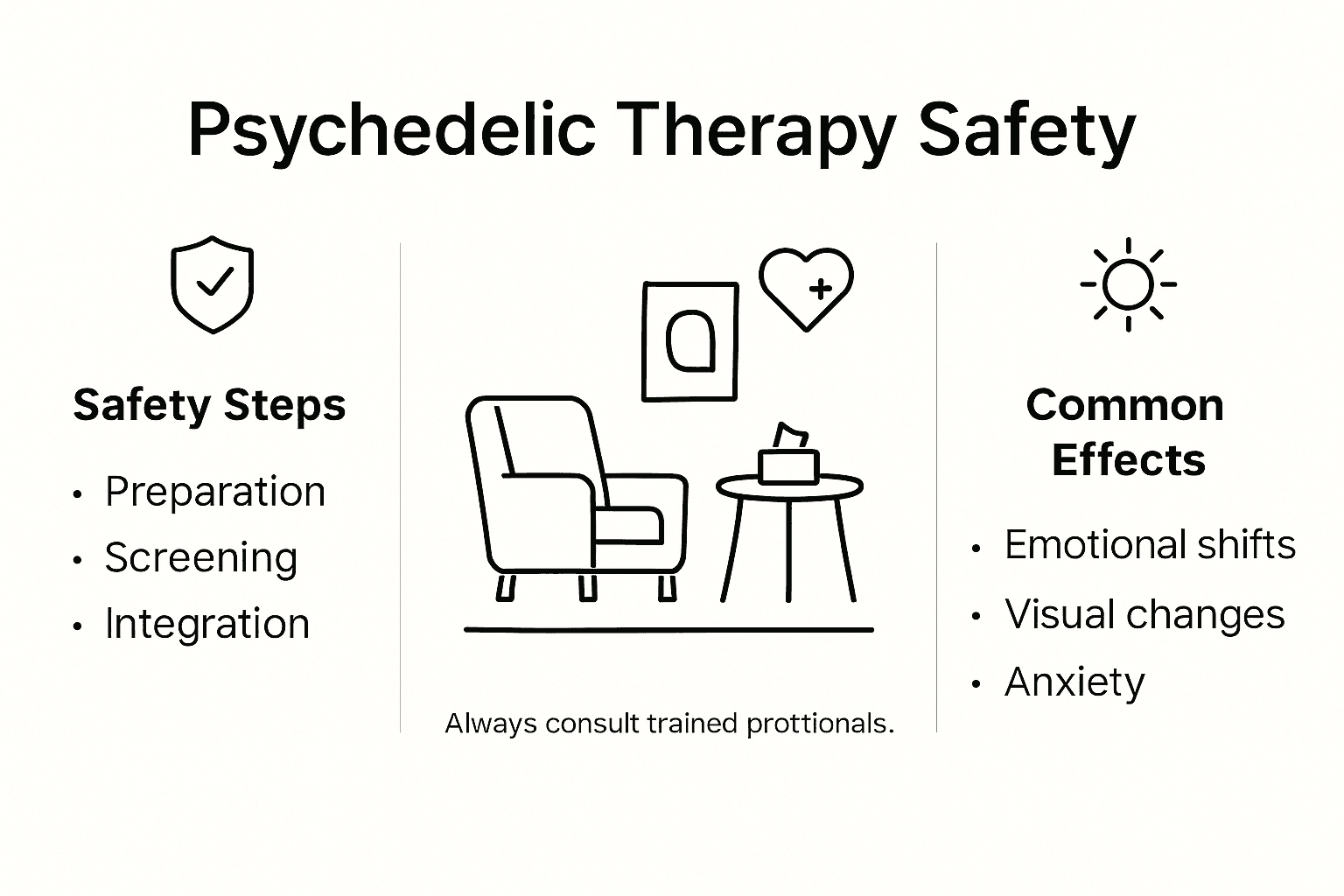
Common side effects can include temporary psychological disorientation, emotional intensity, altered perception, and potential short-term physiological responses such as increased heart rate, changes in blood pressure, and mild nausea. Psychological screening is crucial before engaging in any psychedelic therapy, with particular attention to pre-existing mental health conditions, personal and family psychiatric history, and potential contraindications. Individuals with a history of schizophrenia, bipolar disorder, or severe psychiatric conditions may be at higher risk and should consult specialized medical professionals before considering psychedelic treatments.
Responsible use involves multiple critical components: selecting an appropriate, controlled therapeutic environment, working with certified and experienced practitioners, understanding personal mental and physical health context, and establishing robust integration practices. Participants should prioritize comprehensive preparation, including mental health assessments, setting clear therapeutic intentions, creating a supportive post-experience environment, and potentially engaging in integration therapy to process and understand the insights gained during the psychedelic experience.
The table below provides an overview of common side effects, risk factors, and safety recommendations in psychedelic therapy:
| Aspect | Example | Importance |
|---|---|---|
| Psychological Side Effects | Emotional intensity, temporary confusion | Requires prescreening and support |
| Physical Side Effects | Mild nausea, increased heart rate | Usually short-lived, monitor closely |
| Risk Factors | Personal/family psychiatric history | Determines therapy suitability |
| Safety Measures | Supervised sessions, integration planning | Lowers risk, supports well-being |
Pro Tip for Safe Exploration: Always conduct thorough personal research, consult multiple healthcare professionals, and approach psychedelic therapy with a mindset of respect, intentionality, and openness to the potential psychological transformations that may emerge.
Explore Safe and Transformative Psychedelic Experiences with Fungal Friend
Navigating the complexities of psychedelic therapy can feel overwhelming, especially when prioritizing safety, legal considerations, and personalized healing goals. This article highlights the importance of guided preparation, professional support, and responsible integration to unlock the therapeutic potential of substances like psilocybin. If you are seeking natural support to enhance mood balance, reduce anxiety, or deepen your mental wellness journey, Fungal Friend offers a curated selection crafted to meet these needs.

Visit Fungal Friend to discover trusted products such as microdose capsules, infused teas, and magic mushroom chocolates that align with your therapeutic intentions. For insights into strain differences and usage guidance, explore our Uncategorized Archives – Fungal Friend and start your path to safe psychedelic exploration today. Take control of your mental wellness with education, quality, and discreet delivery—your journey begins now.
Frequently Asked Questions
What is psychedelic therapy?
Psychedelic therapy is a mental health treatment that combines carefully administered psychedelic substances with professional therapeutic guidance to address deep-seated psychological challenges and promote holistic healing.
What are the core principles of psychedelic therapy?
The core principles include safety, ethical practice, personal exploration, harm reduction, social responsibility, transpersonal understanding, and psychological integration, focusing on transformative experiences rather than merely suppressing symptoms.
How does psychedelic therapy work in the brain?
Psychedelic therapy enhances neuroplasticity, allows for reorganization of neural connections, and facilitates a unique neurological state that can help break rigid cognitive patterns associated with conditions like depression, anxiety, and trauma.
What are potential side effects and safety measures in psychedelic therapy?
Common side effects can include emotional intensity, temporary confusion, and mild physiological responses such as increased heart rate. Safety measures involve working with certified practitioners, undergoing psychological screening, and having a structured integration plan post-experience.