
Risks of Microdosing: Safety, Side Effects, Legal Impacts
Finding clear guidance on microdosing can feel challenging when myths and confusion dominate the conversation. For Canadian adults curious about safe, legal options, cutting through the noise is essential to make informed choices for anxiety relief or cognitive enhancement. By highlighting the real science behind psilocybin and explaining what microdosing actually means, this guide brings a balanced look at both the benefits and practical realities of this emerging practice.
Table of Contents
- Microdosing Defined And Common Misconceptions
- Types Of Microdosing Psychedelics In Canada
- How Psilocybin Microdosing Works In The Brain
- Legal Status Of Microdosing Psilocybin In Canada
- Potential Physical And Psychological Risks
- Alternatives And Safer Approaches To Microdosing
Key Takeaways
| Point | Details |
|---|---|
| Microdosing Basics | Microdosing involves consuming minimal amounts of psychedelics, aimed at enhancing mood and focus without significant perceptual changes. Common substances include Psilocybin and LSD, but Psilocybin is more prevalent in Canada due to its accessibility and emerging research support. |
| Common Misconceptions | Many people mistakenly believe that larger doses yield better results or expect instant benefits akin to full psychedelic experiences. Understanding realistic outcomes is essential for managing expectations. |
| Legal Considerations | Psilocybin is classified as a controlled substance in Canada, and legal access primarily exists through clinical trials. Consumers should weigh potential legal risks if considering microdosing outside these contexts. |
| Safer Alternatives | Alternatives like meditation, psychotherapy, and legal nootropics can provide anxiety relief and cognitive benefits without the risks associated with microdosing, making them reliable options to explore first. |
Microdosing Defined and Common Misconceptions
Microdosing refers to consuming very small, sub-therapeutic doses of psychedelic substances, typically 1 to 100 micrograms of compounds like psilocybin or LSD. To put this in perspective, a standard recreational dose might be 10 to 20 times larger. You’re taking amounts so minimal that they don’t produce the hallucinations or major perceptual shifts associated with full psychedelic experiences. Instead, the goal is to achieve subtle, background-level effects that theoretically enhance mood, focus, and creativity without significantly altering your daily perception of reality. For Canadian adults exploring this practice for anxiety relief or cognitive enhancement, understanding what microdosing actually is separates genuine therapeutic potential from unrealistic expectations.
The term itself has roots in psychiatry, where researchers in the 1980s began using micro doses to study drug safety and effects before traditional clinical trials. Today, the practice has expanded well beyond laboratory settings. People typically microdose by taking a fraction of what would constitute a recreational dose, sometimes described as taking 1/10th to 1/20th of a recreational dose, spread across consistent intervals like every few days or weekly. This approach differs fundamentally from both recreational use and clinical treatment, existing in a unique space that Canadian consumers often misunderstand.
Common misconceptions cloud the reality of microdosing. Many people assume that if a tiny dose is good, a slightly larger dose must be better, leading them to increase their intake beyond what research suggests is optimal. Others believe microdosing produces instant, dramatic results comparable to meditation retreats or therapy breakthroughs. The truth is more nuanced. Some benefits like subtle mood shifts or slight improvements in pattern recognition may appear within days, while other potential advantages develop slowly over weeks or months of consistent use. Another widespread myth suggests that microdosing carries no risks because the doses are so small. While lower doses do reduce certain risks associated with higher amounts, microdosing still involves pharmacological activity in your brain and body, bringing its own set of considerations and potential side effects that deserve serious attention.
Additionally, people often conflate microdosing with a guaranteed cure or replacement for professional mental health treatment. The research quality varies significantly, with some self-reported benefits potentially influenced by expectation effects or placebo response rather than direct pharmacological action. This doesn’t mean microdosing is ineffective, but rather that realistic expectations are crucial. You’re experimenting with a substance that affects brain chemistry, not taking a simple supplement with straightforward, universal outcomes.
Pro tip: Start by clearly defining what you hope to achieve from microdosing, then research whether scientific evidence actually supports that outcome, separating personal anecdotes from controlled research findings.
Types of Microdosing Psychedelics in Canada
Psilocybin mushrooms dominate Canadian microdosing discussions for good reason. These fungi contain psilocybin, which breaks down into psilocin in your body and interacts with serotonin receptors in your brain. A randomized clinical trial at the University of Toronto is currently studying psilocybin microdoses of 2mg weekly for people with Major Depressive Disorder, demonstrating that Canadian researchers are actively investigating this substance’s therapeutic potential. The appeal of psilocybin for Canadian adults is straightforward. It’s relatively accessible through controlled sources, the research on its safety profile is growing, and anecdotal reports suggest benefits for both anxiety reduction and cognitive enhancement. Many people find mushroom-based microdosing more appealing than other psychedelics because the dosing is easier to standardize when working with cultivated, consistent products.
LSD (lysergic acid diethylamide) represents another option, though it operates differently than psilocybin. While both affect serotonin pathways, LSD’s pharmacology keeps it active in your system longer, and microdoses typically range from 5 to 20 micrograms. The challenge with LSD in Canada involves both its legal status and practical dosing precision. Measuring such tiny quantities requires specialized equipment, making psilocybin mushrooms a more practical choice for most people. Additionally, LSD’s controlled status under Canada’s Controlled Drugs and Substances Act means legal access is severely limited outside of approved research contexts. Some Canadian enthusiasts explore LSD microdosing through personal research, but this exists in a legal gray area.
Other psychedelics like mescaline (found in certain cacti) and various tryptamines exist on the fringes of Canadian microdosing culture, but they’re far less common. Mescaline is controlled, and most tryptamines that remain unregulated are experimental compounds with minimal safety data. For practical purposes, Canadian microdosers focus primarily on psilocybin mushrooms because they offer the best combination of accessibility through legal or semi-legal channels, established safety research, and predictable effects. The type you choose ultimately depends on your goals, comfort level with legality, and personal response to different psychedelics. Starting with psilocybin mushrooms makes sense if you’re new to microdosing, given the clearer legal landscape and growing body of clinical research supporting its use.
Here’s a structured comparison of the most common psychedelics used for microdosing in Canada:
| Substance | Typical Microdose Amount | Legal Status in Canada | Practical Accessibility |
|---|---|---|---|
| Psilocybin | 1–100 micrograms or 2mg | Controlled, research-only | Widely available, semi-regulated |
| LSD | 5–20 micrograms | Strictly controlled, illegal | Difficult to obtain and measure |
| Mescaline | 10–50 milligrams | Controlled, illegal | Rare, low safety data |
| Tryptamines | 1–10 milligrams | Some unregulated, most rare | Experimental, limited information |
Pro tip: If you’re considering microdosing in Canada, psilocybin mushrooms offer the most research support and practical dosing consistency, so they’re the logical starting point before exploring other psychedelics.
How Psilocybin Microdosing Works in the Brain
Understanding how psilocybin affects your brain is key to grasping why microdosing produces such subtle yet meaningful effects. When you consume psilocybin, your body converts it into psilocin, which then crosses the blood-brain barrier and interacts with serotonin receptors throughout your brain. The primary target is the 5-HT2A receptor, a serotonin receptor involved in mood regulation, perception, and cognitive processing. At microdose levels, psilocybin binds to these receptors at subperceptual doses, meaning the activation is too gentle to trigger hallucinations or major perceptual shifts. This is fundamentally different from recreational or therapeutic doses, where the receptor activation is intense enough to produce noticeable psychedelic effects. The beauty of microdosing is that you get neurochemical activity without the intensity.
The real magic happens at the network level. Research shows that psilocybin causes desynchronization in brain networks, particularly the default mode network (DMN), which is active when your brain is at rest and thinking about itself. This network is involved in self-referential thinking, rumination, and ego-driven thought patterns. When psilocybin disrupts this network’s coordination, it essentially quiets down the constant internal chatter and self-focused narrative that dominates your baseline mental state. For Canadian adults dealing with anxiety, this network disruption can be therapeutic because anxiety often loops through default mode activity. By gently reducing that overactive self-talk, microdosing may create space for calmer, more flexible thinking patterns.
Another crucial finding involves sustained neuroplasticity. Studies indicate that psilocybin’s effects on brain connectivity persist for weeks beyond the acute dose, suggesting that the brain doesn’t simply snap back to baseline. This lingering neuroplasticity may explain why microdosers report cumulative benefits over time rather than just acute effects during dosing days. Your brain appears to remain in a slightly more flexible, reorganizable state even when the psilocybin itself has left your system. This sustained plasticity creates a window for new neural pathways to form, which aligns with reported improvements in mood, focus, and creative problem-solving that build gradually across weeks or months of consistent microdosing.
Pro tip: Track your mood and cognitive patterns for at least four weeks before starting microdosing so you have a clear baseline to compare against, making it easier to notice whether the neurochemical changes are actually translating into personal benefits.
Legal Status of Microdosing Psilocybin in Canada
Let’s be direct about the current legal situation. Psilocybin is a controlled substance in Canada under the Controlled Drugs and Substances Act (CDSA), classified as a Schedule III drug alongside other psychedelics like LSD and mescaline. This classification means that possessing, distributing, or producing psilocybin without explicit authorization violates federal law. Unlike cannabis, which has a legalized framework for medical and recreational use, psilocybin operates in a much more restricted space. Health Canada’s regulations limit psychedelic access outside approved research, meaning there is no straightforward legal pathway for most Canadian adults to microdose psilocybin at home. The legal situation remains static despite growing public interest and emerging clinical evidence supporting therapeutic applications.
However, Canada has created narrow windows for legal psilocybin use through research exemptions. Clinical trials, such as the University of Toronto study examining psilocybin microdosing for Major Depressive Disorder, operate under Health Canada’s investigational drug frameworks, allowing qualified researchers to administer controlled doses in approved settings. Additionally, Health Canada maintains a Special Access Programme that theoretically permits access to unapproved drugs for patients with serious conditions when conventional treatments have failed, though psychedelics rarely qualify in practice. These pathways exist, but they’re not accessible to typical consumers seeking microdosing for anxiety relief or cognitive enhancement. Your only legal option as a regular Canadian is to participate in an authorized clinical trial if you meet the enrollment criteria.
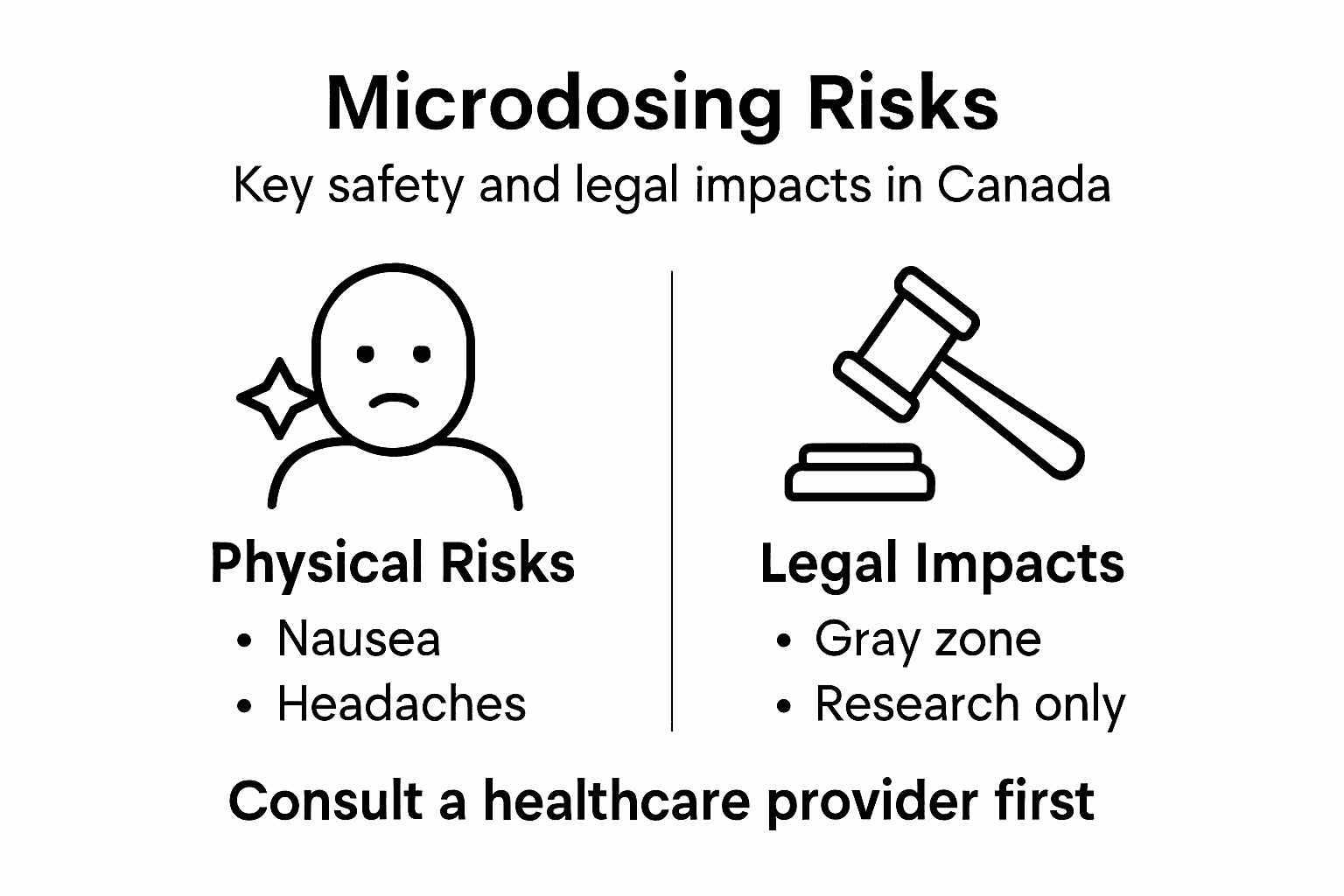
The practical reality for Canadian microdosers exists in a gray zone. While possession for personal use carries legal risks, enforcement varies significantly, and the regulatory landscape is actively evolving. Several Canadian jurisdictions have decriminalized small amounts of certain drugs, creating uncertainty about prosecution priorities. Furthermore, the federal government has expressed interest in exploring therapeutic access models for psychedelics, similar to what some provinces have implemented for medical assistance in dying. This suggests potential policy shifts in the coming years, but nothing is guaranteed. For now, if you’re considering microdosing outside of clinical trials, you need to understand the legal consequences in your specific province and make an informed personal decision about the risks you’re willing to accept.
Pro tip: If you’re interested in legal access, research whether clinical trials for psilocybin microdosing are recruiting participants in your area, as this is your most direct path to using the substance without legal risk while contributing to Canadian research.
Potential Physical and Psychological Risks
While microdosing involves smaller amounts than recreational use, it still carries real risks that deserve serious consideration. The physical side effects tend to be mild but noticeable for some people. Users report symptoms like slight nausea, mild headaches, increased heart rate, or subtle tremors, particularly in the first few hours after dosing. These typically fade within a few hours, but they’re uncomfortable enough to disrupt your workday or exercise routine. More concerning is the potential for unexpected strong drug responses even at microdose levels, especially if you have underlying sensitivities to psychedelics or take medications that interact poorly with psilocybin. Drug interactions represent a legitimate worry. If you’re on SSRIs for depression, blood pressure medications, or certain other pharmaceuticals, combining them with psilocybin could create unwanted reactions that nobody can fully predict at individual doses. Additionally, the quality control problem is real. If your source isn’t rigorous about dosing consistency, you might accidentally take what feels more like a mini-dose than a true microdose, pushing you into uncomfortable territory.

The psychological risks are where things get genuinely complicated. Reported psychological risks include increased anxiety or mood fluctuations that can persist for days after dosing. For people with a personal or family history of anxiety disorders, depression, or mood instability, microdosing can sometimes amplify these conditions rather than alleviate them. Some users report worsened mental health despite expecting benefits. This is partly why baseline mental health assessment matters so much. If you’re already struggling with rumination or intrusive thoughts, a substance that affects your brain’s default mode network could theoretically make those patterns worse before they improve. There’s also the risk of dissociation or derealization, where you feel disconnected from your body or surroundings. While this is rare at true microdoses, it happens enough that it deserves mention.
The research gap makes everything harder. Limited understanding of long-term physical and psychological risks means we don’t have solid data on how microdosing affects your brain chemistry over years, whether tolerance develops, or how it interacts with aging or hormonal changes. Most existing studies examine short-term effects over weeks or months, not years. Canadian adults aged 25 to 45 are experimenting with a substance where the genuine long-term safety profile remains unknown. This doesn’t mean microdosing is inherently dangerous, but it does mean you’re operating with incomplete information. The psychological risk of feeling physically fine while potentially experiencing subtle cognitive or emotional changes that take months to become apparent is also worth acknowledging.
Pro tip: Before starting microdosing, schedule a conversation with a healthcare provider about your medications and mental health history, and keep a detailed symptom journal for at least two weeks after your first dose to catch any adverse reactions early.
Alternatives and Safer Approaches to Microdosing
If you’re drawn to microdosing but worried about the risks, several safer alternatives exist that can address similar concerns without the legal complications or unknown long-term effects. Meditation and mindfulness practices offer scientifically validated benefits for anxiety reduction and cognitive clarity. Unlike microdosing, they carry virtually no medical risks, cost nothing, and produce measurable improvements in brain connectivity similar to what psychedelics achieve, though through a different mechanism. Apps like Headspace or Calm provide structured guidance, and even 10 minutes daily shows meaningful results within weeks. For cognitive enhancement specifically, nootropics and adaptogens like lion’s mane mushroom, rhodiola, or L-theanine plus caffeine combinations provide mild cognitive boosts without psychoactive effects. These are legal, accessible through Canadian retailers, and have established safety profiles from years of use.
If you’re specifically interested in psilocybin but want to minimize risk, safer microdosing practices reduce but don’t eliminate concerns. Research recommends establishing clear dosing protocols with careful dose regulation to ensure you’re truly taking subperceptual amounts rather than accidentally escalating. Taking intentional off days prevents tolerance buildup, which is when people tend to increase their doses chasing effects. Most experts suggest a pattern like dosing every three days rather than daily. More importantly, integrating psychotherapy with microdosing maximizes therapeutic benefits while providing professional support if things go sideways. Having a therapist involved means you’re not experimenting alone, and they can help you contextualize experiences and process what emerges.
Another consideration is pursuing psilocybin-assisted therapy through legal channels. If you’re in Canada, research clinical trials recruiting in your area. Some provinces are exploring medical exemptions for serious conditions, and this landscape may expand in coming years. This approach gives you legal access, professional oversight, and participation in advancing scientific understanding. For anxiety specifically, consider whether traditional anxiolytic treatments might be sufficient before exploring psychedelics. Cognitive behavioral therapy, particularly for anxiety disorders, produces lasting results without neurochemical unknowns. Additionally, lifestyle modifications like consistent sleep, exercise, and social connection create measurable mental health improvements and carry zero risk. These aren’t as exciting as microdosing, but they’re reliable, accessible, and work particularly well when combined.
Pro tip: Start with a three-month commitment to meditation, regular exercise, and improved sleep before deciding whether microdosing is necessary, since you may find these foundational practices address your goals without added risk.
Below is a summary of safer alternatives to microdosing and how they support mental health and cognition:
| Alternative Practice | Key Benefit | Accessibility in Canada | Risk Level |
|---|---|---|---|
| Meditation/Mindfulness | Reduces anxiety, clarity | Free or app-based | Very low |
| Legal Nootropics/Adaptogens | Cognitive enhancement | Easy (lots of retailers) | Generally low |
| Psychotherapy | Lasting mental health | Covered by many plans | Very low |
| Lifestyle Adjustments | Improved well-being | Free, universally available | None |
Navigate Microdosing Risks with Confidence and Care
Understanding the risks of microdosing psilocybin mushrooms is essential for safe and effective use. Many Canadian adults struggle with concerns about side effects, legal impacts, and the right dosage described in discussions about microdosing safety. At Fungal Friend, we recognize these challenges and offer carefully curated, lab-tested products designed to minimize unpredictability and support your goals for anxiety reduction, mood balance, and focus enhancement. Our dedication to education means you will find detailed information on dosing, strain differences, and legal considerations alongside our product selection to guide your journey.
Discover trusted microdosing solutions at Fungal Friend. Explore our Uncategorized Archives – Fungal Friend for insights on safety and best practices. Ready to take the next step safely and confidently? Visit our site now to find your ideal microdose and empower your wellness routine today.
Frequently Asked Questions
What are the potential side effects of microdosing?
Microdosing may cause mild side effects such as slight nausea, mild headaches, increased heart rate, or subtle tremors, particularly shortly after dosing. These effects typically fade within a few hours but can disrupt activities like work or exercise.
How does microdosing affect mental health?
Microdosing can have both positive and negative effects on mental health. While some report improvements in mood and cognitive clarity, others may experience increased anxiety or mood fluctuations, especially those with a history of anxiety disorders.
Is it safe to combine microdosing with other medications?
Combining microdosing with other medications can be risky. Certain pharmaceuticals, like SSRIs or blood pressure medications, may interact negatively with psilocybin, potentially causing unwanted reactions that are difficult to predict.
What is the legal status of microdosing with psilocybin?
Psilocybin is classified as a controlled substance in many areas, meaning possession and distribution without authorization is illegal. The legal landscape is evolving, with research exemptions for clinical trials, but typical individuals lack legal pathways for microdosing at home.