
Beginner microdosing workflow for mental wellness 2026
Many Canadians between 25 and 45 struggle with anxiety, scattered focus, and low mood in their daily lives. Traditional approaches don’t always resonate, leading people to explore alternative practices like microdosing psilocybin mushrooms. This article walks you through a safe, structured beginner workflow to approach microdosing mindfully, helping you understand preparation, execution, and monitoring for mental wellness and focus enhancement.
Table of Contents
- Understanding Microdosing: Benefits, Risks, And Mindset
- Prepping Your Microdosing Workflow: Tools, Timing, And Dosage
- Executing Your Microdosing Routine: Step-By-Step Beginner Workflow
- Monitoring Progress And Troubleshooting Common Issues
- Explore Safe Microdosing Products And Guidance At Fungal Friend
Key takeaways
| Point | Details |
|---|---|
| Microdosing offers potential mood and focus benefits | When practiced mindfully with proper preparation, microdosing can support anxiety reduction and cognitive clarity. |
| Safe workflow requires preparation and routine | Establishing dosing schedules, tracking effects, and understanding dosage prevents common pitfalls. |
| Effects are temporary and individual | Scientific research shows benefits occur mainly on dosing days, with significant variation between individuals. |
| Education and monitoring are essential | Journaling observations and adjusting based on responses ensures a personalized, safe approach. |
Understanding microdosing: benefits, risks, and mindset
Microdosing involves taking sub-perceptual amounts of psychedelic substances, typically psilocybin mushrooms or LSD, to achieve subtle improvements in mood, creativity, and focus without experiencing full psychedelic effects. You won’t hallucinate or feel intoxicated. Instead, you might notice enhanced emotional balance, sharper concentration, or reduced anxiety.
The Microdosing Institute’s 6-week program emphasizes that microdosing can potentially improve mental wellness and focus when approached with education and intention. This isn’t a quick fix but a practice requiring patience and self-awareness.
Potential benefits include:
- Improved mood regulation and emotional resilience
- Enhanced focus and productivity during work or creative tasks
- Reduced symptoms of anxiety and depression
- Increased mindfulness and present-moment awareness
However, risks exist. A study on microdosing side effects found that microdosing LSD and psilocybin can lead to increased blood pressure and anxiety in some individuals, though most side effects remain mild and temporary. You might experience slight nausea, headaches, or heightened emotions initially.
Adopting the right mindset matters enormously. Approach microdosing as an experiment in self-discovery rather than a guaranteed solution. Track your responses honestly, adjust as needed, and prioritize safety throughout. Learning about microdosing psilocybin effects helps you set realistic expectations and recognize what constitutes a healthy practice.
“Microdosing isn’t about escaping reality. It’s about engaging with it more fully, with clarity and intention.”
Prepping your microdosing workflow: tools, timing, and dosage
Before you begin, gather the necessary supplies and establish a clear plan. Organization prevents confusion and supports consistent practice.
You’ll need:
- Dried psilocybin mushrooms or pre-measured capsules
- A precision digital scale (0.01g accuracy minimum)
- A dedicated journal or digital tracking app
- Small containers for storing individual doses
- Labels and permanent markers for organization
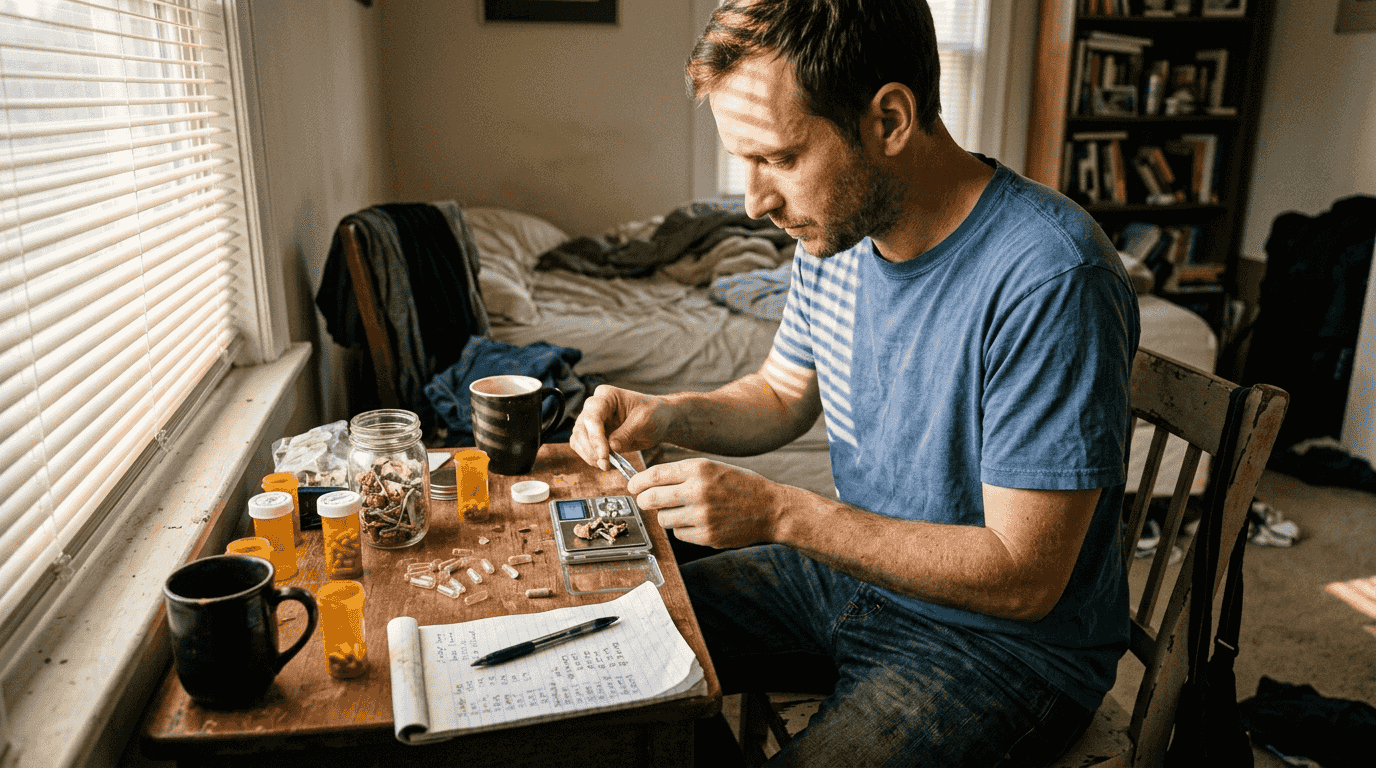
Dosage forms the foundation of safe microdosing. For psilocybin mushrooms, beginners typically start with 0.1 to 0.3 grams of dried material. Start at the lower end and adjust upward only after observing your initial responses over several sessions. If you feel noticeably altered or uncomfortable, reduce the amount.
| Dosage Range | Typical Effects | Best For |
|---|---|---|
| 0.05 to 0.1g | Very subtle, minimal perceptual changes | First-time experimenters, highly sensitive individuals |
| 0.1 to 0.2g | Mild mood lift, slight focus enhancement | Most beginners seeking gentle benefits |
| 0.2 to 0.3g | Noticeable emotional shifts, increased energy | Experienced microdosers adjusting for personal response |
Scheduling prevents tolerance buildup. The UBC Study on Microdosing Patterns demonstrates that typical microdosing practices alternate dosing and non-dosing days to limit rapid tolerance development. A common protocol involves dosing one day, then taking two days off before the next dose. This “one on, two off” rhythm gives your body time to reset.
Your journal tracks mood, focus, anxiety levels, sleep quality, and any side effects. Record entries both on dosing days and off days to spot patterns. Over time, you’ll identify which doses and schedules work best for your unique biology. Exploring a beginner microdosing guide provides additional structure for tracking and adjusting.
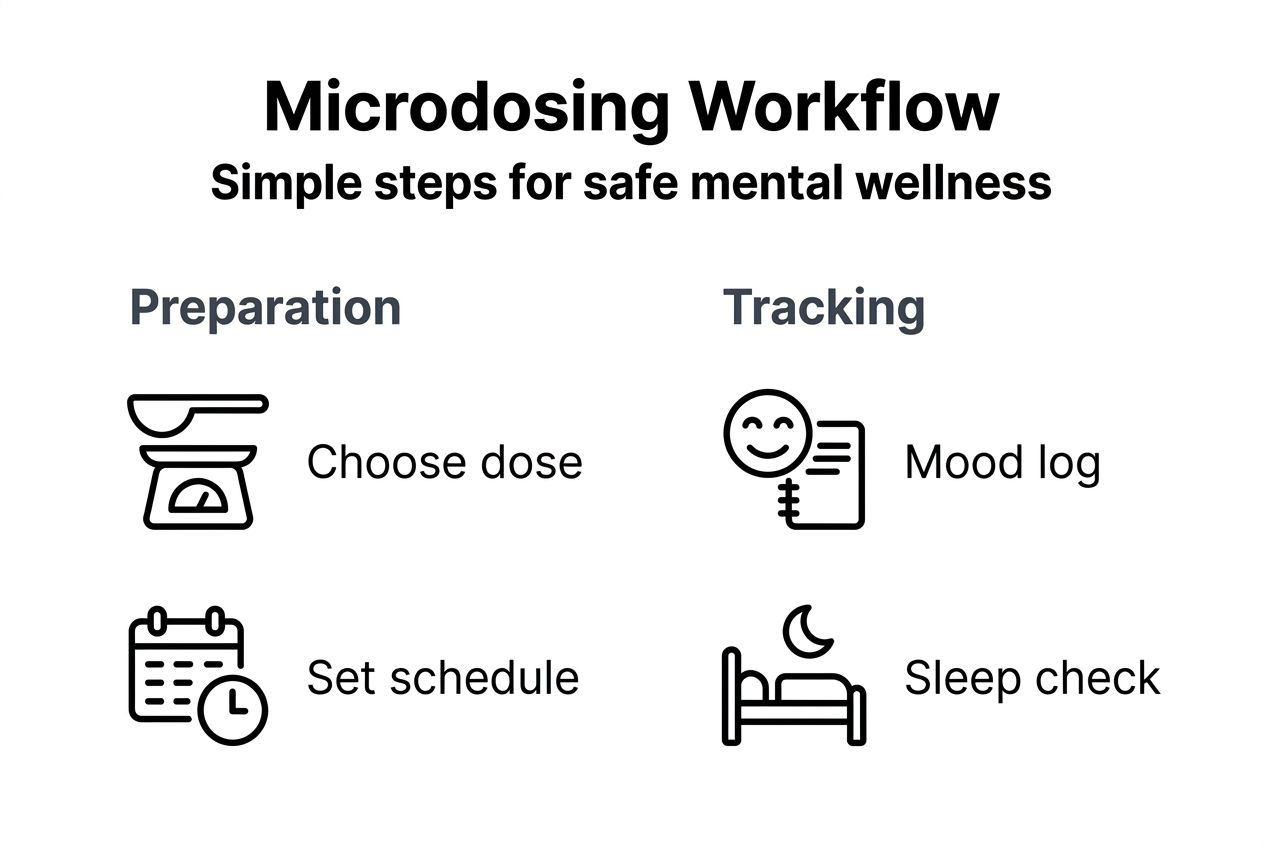
Pro Tip: Pre-measure doses into labeled capsules or containers for the entire week. This removes guesswork and ensures accuracy, especially on busy mornings when precision matters most.
Executing your microdosing routine: step-by-step beginner workflow
With preparation complete, follow this structured workflow to build a safe, effective microdosing practice.
-
Set clear intentions before starting. Define what you hope to achieve through microdosing. Are you seeking anxiety relief, better focus at work, or enhanced creativity? Writing down specific goals creates accountability and helps you evaluate progress objectively.
-
Take your measured microdose at a consistent time. Many people dose in the morning after breakfast to align with natural circadian rhythms and avoid potential sleep disruption. Consistency builds routine and makes tracking easier.
-
Engage in mindfulness practices alongside dosing. Meditation, breathwork, or gentle movement like yoga complements microdosing effects. The Microdosing Institute coaching program highlights that education and coaching help develop a mindful relationship with the medicine, amplifying benefits through intentional practice.
-
Record effects, mood, focus, and any side effects. Use your journal immediately after dosing and again in the evening. Note energy levels, emotional states, productivity, and physical sensations. Be honest and specific rather than vague.
-
Adjust dose or schedule as needed based on observations. If you feel nothing after three sessions at 0.1g, try 0.15g next time. If you feel overstimulated or anxious, reduce by 0.05g. Your body provides feedback constantly. Listen carefully and respond accordingly.
Pro Tip: Stay hydrated throughout dosing days. Psilocybin can cause mild dehydration, and proper water intake supports overall well-being and clearer mental function.
“Microdosing is a conversation with yourself. Each dose asks a question. Your journal records the answer.”
Never drive, operate heavy machinery, or engage in high-risk activities on dosing days until you understand your personal response completely. Safety always comes first. Following a detailed microdosing checklist ensures you don’t overlook critical safety steps.
Monitoring progress and troubleshooting common issues
After a few weeks of consistent practice, patterns emerge. Recognizing what’s working and what needs adjustment keeps your practice effective and safe.
Typical benefits appear within the first hour and peak around two to four hours post-dose. You might notice:
- Elevated mood and reduced anxiety
- Sharper mental clarity and easier task completion
- Enhanced appreciation for music, nature, or creative work
- Greater emotional resilience when facing daily stressors
However, the UBC Study on microdosing found that microdosing effects are present mainly on dosing days but may not persist on non-dosing days. This means you won’t build permanent improvements instantly. Consistency over months matters more than intensity in single sessions.
Common side effects and solutions:
- Mild nausea: Take doses with food or ginger tea to settle your stomach.
- Slight anxiety or restlessness: Reduce dosage by 0.05g and practice grounding breathwork.
- Headaches: Ensure adequate hydration and consider lowering dose.
- Difficulty sleeping: Move dosing time earlier in the day, ideally before noon.
Signs your dose might be too high include noticeable perceptual changes, difficulty concentrating, or feeling uncomfortably stimulated. Too low, and you feel no discernible difference even after multiple sessions. Adjust incrementally in 0.05g steps and give each adjustment at least two weeks before changing again.
| Schedule Type | Dosing Pattern | Best For |
|---|---|---|
| Fadiman Protocol | 1 day on, 2 days off | Beginners seeking balance and tolerance management |
| Stamets Stack | 4 days on, 3 days off | Experienced users wanting sustained cognitive support |
| Intuitive Dosing | As needed based on personal rhythm | Advanced practitioners with strong self-awareness |
When should you pause or stop? If side effects persist despite adjustments, if you feel emotionally unstable, or if microdosing no longer serves your wellness goals, take a break. Some people benefit from cycling on for two months, then off for one month. Understanding microdosing for anxiety and focus helps you recognize when practice supports you versus when rest serves you better.
Explore safe microdosing products and guidance at Fungal Friend
Starting a microdosing practice requires reliable information and quality products. Fungal Friend offers comprehensive resources designed specifically for Canadians exploring safe, effective microdosing for mental wellness and focus enhancement.
Our platform provides detailed educational guides, including a beginner microdosing guide for safe use that walks you through every step with clarity and care. We’ve curated microdose mushroom capsules precisely measured for consistency, removing guesswork and supporting your journey from day one.
Explore our safe microdosing method psilocybin resources to deepen your understanding of best practices, dosing protocols, and mindful integration. Whether you’re seeking anxiety relief, cognitive clarity, or simply curious about this wellness practice, Fungal Friend combines education with quality products to support your path forward.
FAQ
Is microdosing legal in Canada?
In Canada, psilocybin remains a controlled substance under federal law. However, Health Canada has granted exemptions for medical and research purposes in specific contexts. Microdosing outside these approved frameworks may carry legal risk, though regulations continue evolving as clinical research expands.
What is the safest way to start microdosing?
Begin with the lowest effective dose, typically 0.1g of dried psilocybin mushrooms, and maintain a consistent schedule alternating dosing and non-dosing days. Track your responses carefully in a journal and adjust gradually based on observations. Educating yourself through resources like a beginner microdosing guide and considering coaching support enhances safety significantly.
Can microdosing help with anxiety?
Emerging research suggests potential benefits. A Kingston Phase 2 Clinical Trial approved by Health Canada is investigating microdosing psilocybin for generalized anxiety disorder. Early evidence indicates mood improvements and enhanced well-being on dosing days, though effects vary between individuals and more research is needed.
How do I know if microdosing is working for me?
Look for subtle improvements in daily functioning such as reduced anxiety, enhanced focus during work tasks, and better emotional regulation. Effects typically manifest on dosing days rather than carrying over indefinitely. Consistent journaling reveals patterns over weeks, helping you assess whether microdosing genuinely supports your wellness goals. Exploring microdose routines for mental wellness provides comparison points for evaluating your personal experience.