
How to set microdosing intentions for mental health 2026
Many people start microdosing with vague hopes like “feel better” or “reduce stress,” only to experience unfocused, underwhelming results. Without clear intention, even consistent microdosing can leave you wondering if it’s working at all. This guide teaches you how to set meaningful, actionable intentions that direct your microdosing practice toward real mental health benefits like reduced anxiety, improved focus, and emotional resilience.
Table of Contents
- Understanding The Importance Of Setting Intentions
- Prerequisites: Tools And Mindset For Setting Intentions
- How To Set Microdosing Intentions: Step-By-Step Process
- Common Mistakes And How To Troubleshoot Intention Setting
- Tools, Reflection, And Success Metrics For Ongoing Practice
- Safety Considerations And Integration Practices
- Alternative Approaches And Customization Options
- Explore Microdosing Resources And Guides
- Frequently Asked Questions
Key takeaways
| Point | Details |
|---|---|
| Intention directs neuroplasticity | Clear intentions guide how microdosing enhances emotional resilience, creativity, and stress response. |
| Mindfulness and journaling boost clarity | Tracking intentions through journaling correlates with higher adherence and clearer therapeutic outcomes. |
| Avoid vague or future-focused goals | Present-tense, specific affirmations maximize mental health gains and prevent unfocused experiences. |
| Regular reflection accelerates progress | Consistent review and adjustment of intentions enhance integration and outcome realization. |
| Safety requires realistic expectations | Awareness of mental health status and manageable goals prevent overwhelm and support sustainable practice. |
Understanding the importance of setting intentions
Intention setting is the practice of defining a clear mental focus or purpose that guides your microdosing experience. Think of it as a directional compass for your mind. When you microdose without intention, you’re essentially asking your brain to reorganize itself without giving it a destination.
Microdosing combined with intention setting supports neuroplasticity, enhancing emotional resilience, creativity, and stress response. Your intention activates specific neural pathways, channeling the neuroplastic effects of psilocybin toward your chosen mental health goals. Without this focus, benefits remain scattered and hard to measure.
Clear intentions engage the mind-body-spirit connection that makes microdosing transformative rather than merely recreational. When you consciously direct your experience toward emotional healing, improved focus, or anxiety reduction, you create a feedback loop that reinforces positive change. This isn’t mystical thinking. It’s practical application of how attention shapes neural adaptation.
Setting intention before microdosing acts as a mental anchor, directing neuroplasticity toward specific therapeutic outcomes rather than diffuse effects.
Many people overlook this step, jumping straight into dosing protocols without understanding that intention is what separates purposeful microdosing from passive consumption. If you’ve struggled with common microdosing mistakes and how to avoid them, lacking clear intention is likely a core issue. The good news? Intention setting is a skill you can develop with practice.
Prerequisites: Tools and mindset for setting intentions
Before you set your first microdosing intention, you need the right mental preparation and physical tools. Start with mindfulness practice. Even five minutes of daily breathing exercises builds the awareness necessary to identify what you truly want from microdosing. Self-awareness is non-negotiable. You must understand your current mental health baseline to set realistic, meaningful intentions.
Physical tools matter just as much as mindset. A dedicated journal for tracking intentions and outcomes is essential. Tracking intention outcomes through journaling correlates with higher adherence to microdosing protocols and clearer realization of therapeutic benefits. Digital trackers work too, but handwriting often deepens the reflective process.
Your environment shapes intention quality. Find a quiet, distraction-free space where you can sit comfortably for 10 to 15 minutes. This doesn’t need to be elaborate. A corner of your bedroom works fine as long as you can focus without interruption. Turn off notifications. Light a candle if it helps you center.
Alternative approaches include digital intention-setting tools like calendars and journals which offer customizable support for long-term intention clarity and habit tracking. Choose tools that match your lifestyle. If you’re tech-oriented, apps with reminders and progress graphs keep you accountable. If you prefer analog methods, a simple notebook and pen suffice.
Here’s what you need before setting intentions:
| Prerequisite | Purpose | Examples |
|---|---|---|
| Mindfulness practice | Builds awareness and mental clarity | Daily meditation, breathwork, body scans |
| Journaling tools | Tracks intentions and outcomes | Physical journal, digital apps, voice memos |
| Quiet environment | Reduces distractions during intention setting | Dedicated corner, early morning space, nature setting |
| Mental health awareness | Establishes baseline for realistic goals | Self-assessment, mood tracking, professional consultation |
| Consistent schedule | Maintains regular reflection routine | Weekly check-ins, daily microdose logs, monthly reviews |
If you’re new to microdosing, review our microdosing anxiety and focus guide to understand how intentions intersect with specific mental health goals. The more prepared you are mentally and physically, the more powerful your intention setting becomes.
How to set microdosing intentions: Step-by-step process
Setting effective microdosing intentions follows a simple ritual that takes 10 to 15 minutes. Start by preparing your space. Sit comfortably in your quiet area with your journal and microdose nearby. Turn off distractions. Take three deep breaths to center yourself.
Hold your microdose in your hand. Close your eyes and focus on your breath for one minute. This anchors you in the present moment and calms mental chatter. Notice physical sensations. Feel the weight of the capsule or chocolate in your palm.

Now state your intention clearly, either aloud or silently. Use present-tense, positive language. Instead of “I want to feel less anxious,” say “I am calm and grounded.” Instead of “I hope to focus better,” say “My mind is clear and focused.” This subtle shift in language activates different neural patterns.
Write your intention in your journal immediately after stating it. Include the date and your desired mental health outcome. Be specific. “I am improving my emotional resilience” works better than “I feel better.” Specificity gives your brain a clear target.
Follow these steps each time you microdose:
- Prepare your quiet space and gather your journal and microdose.
- Center yourself with three deep breaths and one minute of focused breathing.
- Hold your microdose and visualize your intention manifesting.
- State your intention clearly in present-tense, positive language.
- Write your intention and desired outcome in your journal with the date.
- Take your microdose mindfully, maintaining awareness of your intention.
- Set a reminder to reflect on your intention later in the day.
Pro Tip: Create a simple mantra from your intention and repeat it three times throughout your microdose day to deepen focus and reinforce neural pathways.
Regular reflection is crucial. At the end of each microdose day, spend five minutes journaling about how your intention showed up in your experience. Did you notice moments of calm? Improved focus? Emotional shifts? This feedback loop strengthens future intention setting.
Adjust your intentions as you evolve. If you’ve been working on anxiety reduction for four weeks and notice significant improvement, shift your focus to a new goal like creative expression or relationship communication. Our beginner microdosing guide offers additional context for matching intentions with dosing protocols.
Common mistakes and how to troubleshoot intention setting
The most frequent mistake is setting vague intentions like “be happier” or “feel better.” Common failure in intention setting is vagueness or lack of presence, often leading to unfocused experiences and weaker mental health improvements. Vague intentions give your brain no clear direction.
Another major error is focusing only on future outcomes rather than present states. When you say “I will be calm,” you’re placing your goal in an undefined tomorrow. Prematurely setting overly broad or future-oriented goals rather than present-tense intentions reduces neuroplastic gains. Your brain responds to present-moment affirmations, not hypothetical futures.
Skipping reflection is the third major pitfall. Many people set intentions once and never revisit them. Without regular check-ins, you lose track of progress and miss opportunities to adjust course. Journaling isn’t optional. It’s the mechanism that turns intention into lasting change.
Intentions without reflection are wishes. Intentions with consistent reflection become transformative practices.
Overwhelming expectations sabotage progress too. Setting 10 different intentions or expecting dramatic shifts after one microdose creates disappointment. Start small. Focus on one clear intention per microdosing cycle. Build gradually.
Here’s how to troubleshoot common failures:
- Vague intention problem: Replace abstract goals with specific, measurable statements. Change “reduce stress” to “I remain calm during work challenges.”
- Future-focus problem: Rewrite all intentions in present tense. “I will be focused” becomes “My mind is focused and clear.”
- Skipped reflection problem: Set phone reminders for end-of-day journaling. Make it non-negotiable like brushing teeth.
- Overwhelm problem: Choose only one primary intention per two-week cycle. Master one before adding another.
- Disconnection problem: Link intentions to concrete daily actions. “I am patient” pairs with noticing three moments of patience each day.
If you’re struggling despite following these fixes, review our guide on common microdosing mistakes and fixes for additional troubleshooting strategies. Sometimes the issue isn’t your intention but your dosing protocol or lifestyle factors.
Tools, reflection, and success metrics for ongoing practice
Tracking your intention-setting practice requires consistent tools and clear success metrics. Journaling templates provide structure for daily reflection. Many microdosers use simple prompts like “Today’s intention,” “Observed changes,” and “Challenges encountered.” Digital trackers add convenience with automated reminders and progress graphs.
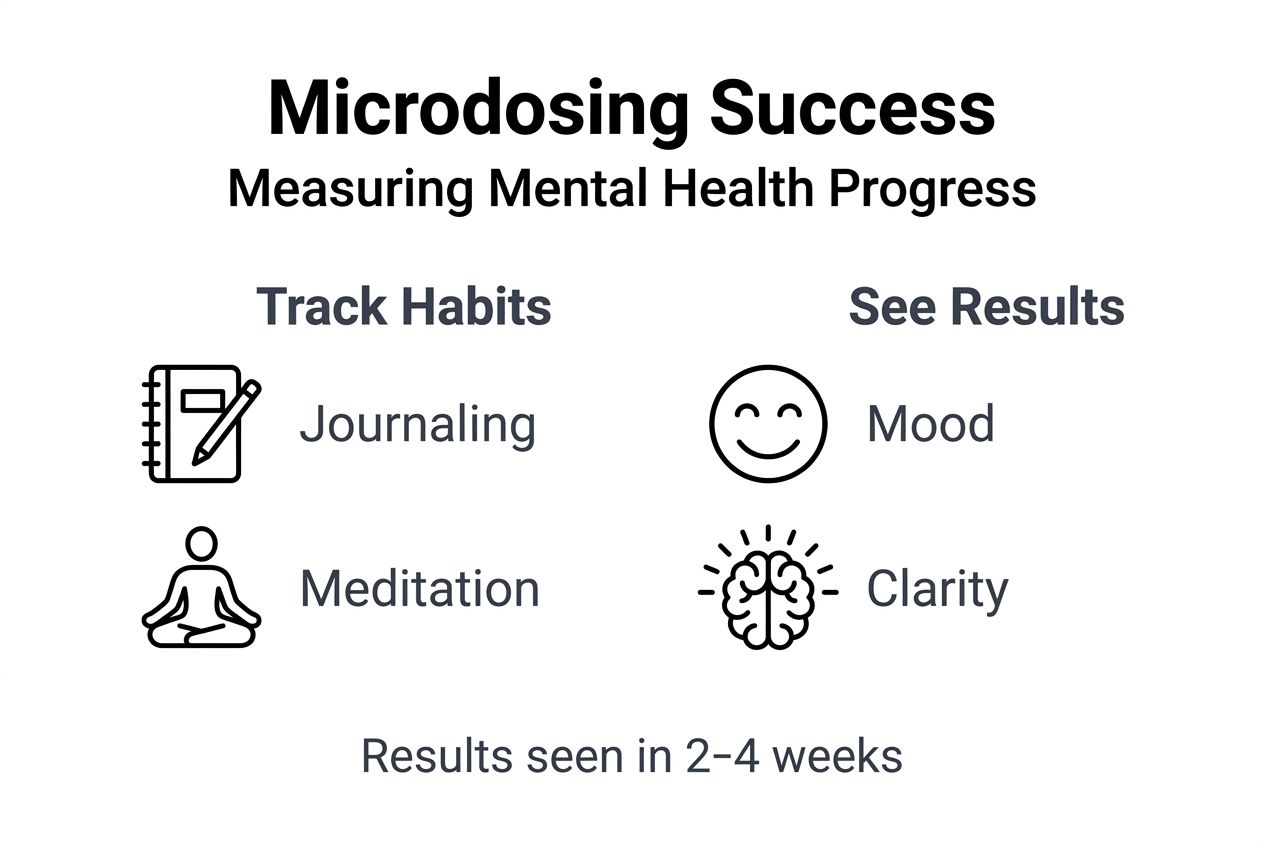
Microdosing intention setting typically shows measurable mental health benefits in two to four weeks when paired with reflection and lifestyle adjustments. This timeline helps set realistic expectations. You won’t transform overnight, but consistent practice yields noticeable shifts within a month.
Meditation apps complement intention work by building the mindfulness foundation necessary for clear goal setting. Apps like Insight Timer or Headspace offer free guided sessions that train attention control. Even five minutes daily makes a difference.
Success metrics vary by intention but typically include improvements in anxiety levels, mood stability, mental clarity, and emotional resilience. Track these qualitatively through journaling and quantitatively through simple rating scales. Rate your anxiety daily on a scale of 1 to 10 before starting and throughout your microdosing practice.
| Success Metric | Measurement Method | Typical Timeline | Signs of Progress |
|---|---|---|---|
| Anxiety reduction | Daily 1-10 rating scale | 2-4 weeks | Consistent lower ratings, fewer panic moments |
| Mood stability | Emotion tracking journal | 3-4 weeks | Less dramatic swings, more baseline contentment |
| Mental clarity | Focus duration tracking | 2-3 weeks | Longer work sessions, easier task completion |
| Emotional resilience | Stressor response notes | 4-6 weeks | Calmer reactions to challenges, faster recovery |
| Sleep quality | Sleep journal with quality rating | 2-4 weeks | Easier falling asleep, feeling more rested |
Consistent reflection amplifies all these metrics. Review your weekly progress every Sunday. Adjust intentions based on what’s working. If anxiety improved but focus remains challenging, shift your next intention accordingly.
Here are tips for improving tracking adherence:
- Schedule journaling at the same time daily, preferably evening when you can review the full day.
- Use voice memos if writing feels burdensome. Transcribe later for pattern analysis.
- Create accountability by sharing progress with a trusted friend or microdosing community.
- Celebrate small wins. Noticing one calm moment matters more than you think.
- Link tracking to existing habits. Journal right after dinner or morning coffee.
Pro Tip: Set weekly mini-checkpoints every Sunday to evaluate intention progress and adjust focus areas. This prevents drift and maintains momentum toward your mental health goals.
Explore our microdosing mental wellness benefits guide for deeper context on how tracking enhances therapeutic outcomes. The more data you collect, the clearer your patterns become.
Safety considerations and integration practices
Safety in intention setting starts with realistic expectations. Safety precautions in intention setting include avoiding overwhelming expectations and awareness of mental health status, especially for those with anxiety or depression. Setting an intention to “cure” anxiety in one week sets you up for disappointment and potential harm.
Know your mental health baseline before setting intentions. If you’re managing clinical depression or anxiety disorders, work with a mental health professional alongside your microdosing practice. Intention setting complements therapy but doesn’t replace it. Be honest about your current state.
Integration transforms microdosing insights into lasting positive change. This means taking intentional actions in your daily life that align with your stated intentions. If your intention is “I am patient,” integration involves practicing patience in small moments throughout your day, not just while microdosing.
Safety in intention setting means honoring your limits, acknowledging your mental health reality, and building change gradually rather than forcing dramatic shifts.
Avoid setting intentions during acute mental health crises. If you’re experiencing severe depression, active suicidal ideation, or intense anxiety, stabilize first with professional support before adding microdosing and intention work.
Best safety practices include:
- Start with manageable, specific intentions rather than life-overhaul goals.
- Monitor mental health changes weekly and adjust practice if symptoms worsen.
- Build a support system of trusted friends or communities who understand your practice.
- Consult mental health professionals, especially if you have diagnosed conditions.
- Recognize when professional intervention is needed beyond self-directed intention work.
- Take breaks from microdosing if you feel overwhelmed or disconnected from intentions.
Integration practices bridge intention and daily life. After each microdose day, identify one concrete action that embodies your intention. If you’re working on calm, practice one minute of breathing when stress arises. If you’re cultivating focus, structure your work environment to minimize distractions.
Review our microdosing safety checklist canada for comprehensive guidance on safe practices. Intention setting enhances safety by keeping your practice purposeful and grounded rather than experimental or reckless.
Alternative approaches and customization options
Beyond basic intention setting, several alternative frameworks deepen the practice. Ritual approaches incorporate mantras, breathwork, and bodily awareness to create multisensory intention experiences. Some people combine intention setting with yoga or movement practices, anchoring mental goals in physical sensations.
Alternative approaches include digital intention-setting tools like calendars and journals which offer customizable support for long-term intention clarity and habit tracking. These bundles often include monthly prompts, progress trackers, and reflection frameworks that guide your practice over extended periods.
Workshops and coaching provide personalized guidance for those who want expert support. Microdosing coaches help you identify blind spots in your intention setting and offer accountability structures. Group workshops create community and shared learning that solo practice lacks.
| Approach | Engagement Level | Customization | Best For |
|---|---|---|---|
| Ritual with mantras | High, 15-20 min daily | Highly personal | Those who value ceremony and embodied practice |
| Digital tracking tools | Medium, 5-10 min daily | Template-based with options | Tech-savvy individuals wanting data and structure |
| Workshops/coaching | High initially, ongoing check-ins | Fully personalized | People new to intention work or seeking accountability |
| Hybrid journaling | Medium, 10-15 min daily | Mix of structure and freedom | Those who want guidance without rigidity |
Choose approaches based on your needs:
- Pick ritual methods if you value ceremony and want deeper mind-body connection.
- Choose digital tools if you prefer data tracking and automated reminders.
- Opt for coaching if you’re new to intention work or struggle with consistency.
- Combine methods for comprehensive support that addresses multiple learning styles.
Customization is key. Some people thrive with detailed journaling prompts while others prefer free-form reflection. Experiment with different formats during your first month. Notice what keeps you engaged and what feels forced.
Our safe psilocybin beginner guide includes suggestions for integrating various intention-setting approaches into your overall microdosing protocol. The most effective approach is the one you’ll actually maintain consistently.
Explore microdosing resources and guides
Ready to deepen your microdosing practice with expert guidance? Fungal Friend offers comprehensive educational resources designed specifically for Canadians interested in safe, intentional psilocybin use. Our beginner microdosing guide safe psilocybin use walks you through dosing protocols, strain selection, and safety considerations that complement your intention-setting practice.

Explore our guide on the safe microdosing method psilocybin for detailed protocols that align with mental health goals. Understanding proper dosing enhances intention effectiveness by ensuring you’re working with optimal amounts for neuroplastic benefits without overwhelm. Our effects microdose psilocybin guide helps you identify what to expect and how to track changes as your intentions manifest into real mental health improvements.
Frequently asked questions
What is the best way to formulate microdosing intentions?
Use present-tense, positive affirmations that focus on specific mental health goals rather than vague wishes. Be concrete about what you want to experience. Write your intentions down immediately after formulating them to reinforce clarity and create accountability. Specificity gives your brain a clear direction for neuroplastic change.
How long does it take to see mental health benefits from intention-based microdosing?
Most people notice improvements in anxiety, mood, or mental clarity within two to four weeks when intentions are combined with consistent reflection and lifestyle adjustments. Individual timelines vary based on baseline mental health, dosing protocol, and commitment to integration practices. Regular journaling accelerates progress by making subtle changes visible and reinforcing positive patterns.
What are common mistakes to avoid when setting microdosing intentions?
Avoid vague, abstract intentions like “feel better” or future-oriented goals like “I will be happy.” Don’t skip daily journaling and reflection, as this breaks the feedback loop necessary for change. Set realistic, present-focused goals rather than expecting dramatic transformation overnight. One clear intention sustained for two weeks outperforms five scattered intentions attempted simultaneously.
Can digital tools improve microdosing intention setting?
Yes, digital journals and habit trackers help maintain clarity and consistency by providing automated reminders, progress visualization, and structured reflection prompts. They offer customizable frameworks that adapt to individual needs and learning styles. Many users find that combining digital tracking with occasional handwritten reflection provides the best balance of convenience and depth for long-term intention work.