
Common Microdosing Myths: Separating Hype From Reality
Most advice about microdosing mushrooms makes it sound either like a miracle cure or an american trend with little scientific backing. Yet, over 50 percent of Canadian adults report daily struggles with anxiety and staying focused at work or home. Sorting fact from fiction matters if you want safe, real results. This article explores what microdosing psilocybin really involves and clears up common myths so Canadian readers can make informed, responsible choices.
Table of Contents
- Defining Microdosing And Widespread Misconceptions
- Types Of Microdosing Products And Methods
- How Microdosing Actually Works
- Canadian Legal Status And Safety Risks
- Why Responses And Effects Vary For Each Person
- Mistakes To Avoid When Starting Microdosing
Key Takeaways
| Point | Details |
|---|---|
| Microdosing Definition | Microdosing involves consuming small amounts of psychedelics like psilocybin to achieve therapeutic benefits without full psychedelic experiences. |
| Individual Variability | Responses to microdosing vary greatly among individuals due to factors like genetics, mental state, and environmental contexts. |
| Legal and Safety Considerations | In Canada, psilocybin is illegal without authorization, emphasizing the need for professional guidance and awareness of potential psychological risks. |
| Common Mistakes | Beginners often err by inconsistent dosing, neglecting personal context, and lacking proper education, which can compromise their microdosing experience. |
Defining Microdosing and Widespread Misconceptions
Microdosing represents a nuanced approach to psychedelic consumption where individuals consume extremely small quantities of substances like psilocybin, typically around one-tenth of a standard recreational dose. Scientific research suggests that microdosing aims to achieve therapeutic benefits without inducing full psychedelic experiences, creating a subtle yet potentially impactful method of personal wellness exploration.
Contrary to popular misconceptions, microdosing is not about achieving dramatic hallucinations or profound altered states. Systematic reviews clarify that microdosing involves carefully calibrated doses designed to provide potential cognitive and mood enhancements without overwhelming neurological experiences. Users typically seek incremental improvements in creativity, focus, emotional regulation, and overall mental wellness.
The emerging scientific landscape around microdosing reveals several widespread myths. Many individuals mistakenly believe microdosing is a guaranteed solution for mental health challenges or a shortcut to enhanced productivity. However, current research indicates significant variability in individual responses, emphasizing the importance of personalized approaches, professional guidance, and realistic expectations. Understanding these nuances is crucial for responsible and informed exploration of microdosing practices.
Pro tip: Always consult healthcare professionals and thoroughly research potential interactions before considering any microdosing regimen, ensuring your personal safety and understanding of potential effects.
Types of Microdosing Products and Methods
Microdosing encompasses a diverse range of substances and delivery methods, with researchers documenting various approaches to administering small, precise quantities of psychedelic compounds. Common substances include psilocybin mushrooms, LSD, and DMT, each offering unique potential effects and requiring different preparation techniques. The most prevalent product types range from capsules and tinctures to powders and liquid solutions, allowing users to customize their microdosing experience.
Scientific literature highlights multiple product formats designed for precise low-dose administration, each with specific advantages. Capsules provide consistent dosing and easy consumption, while liquid tinctures offer more flexible measurement. Powdered formats enable users to adjust quantities with greater precision, making them popular among experienced microdosers seeking exact control over their intake.
The methods of microdosing extend beyond simple product selection, involving carefully structured protocols. Some individuals follow structured schedules like the Fadiman protocol, which recommends consuming a microdose every third day to prevent tolerance buildup. Others adopt more personalized approaches, experimenting with timing, frequency, and dosage to discover what best supports their individual wellness goals. It’s crucial to recognize that microdosing is not a one-size-fits-all strategy, but a nuanced practice requiring careful self-observation and potential professional guidance.
Pro tip: Start with the lowest recommended dose and maintain a detailed journal tracking your physical and mental responses to understand your unique microdosing experience.
Here is a summary of common microdosing substances and their key characteristics:
| Substance | Typical Dose (Microdosing) | Potential Effects | Considerations |
|---|---|---|---|
| Psilocybin | 0.1–0.3 grams | Mood, creativity, focus | Legal restrictions, mild onset |
| LSD | 5–20 micrograms | Enhanced clarity, energy | Precise dosing needed |
| DMT | Less than 5 mg | Mild perceptual shifts | Short duration, specialized forms |
| Mescaline | 10–30 mg | Increased empathy, alertness | Rarely microdosed, challenging measurement |
How Microdosing Actually Works
Scientific research reveals that microdosing works by subtly interacting with the brain’s complex neurochemical systems, specifically targeting the serotonergic network and 5-HT2A receptors. This nuanced interaction facilitates potential cognitive and emotional enhancements without triggering the intense perceptual changes associated with full psychedelic experiences. The mechanism involves modulating neural plasticity, potentially improving brain connectivity, mood regulation, and cognitive flexibility.

The neurological process of microdosing is intricate and not yet fully understood. Researchers suggest that tiny doses can stimulate neurogenesis, potentially encouraging the growth of new neural connections and supporting brain adaptability. These micro-interventions provide unique insights into pharmacological interactions at extremely low concentrations, offering a window into how substances interact with human physiology without causing significant systemic disruptions.
Crucially, individual responses to microdosing vary widely, influenced by factors such as personal biochemistry, mental state, expectations, and environmental context. While some users report enhanced creativity, improved emotional balance, and increased focus, scientific understanding remains preliminary. The placebo effect plays a significant role, highlighting the complex interplay between neurochemical changes and psychological perception. This variability underscores the importance of personalized approaches and careful, self-aware experimentation.
Pro tip: Maintain a detailed personal journal documenting your microdosing experience, tracking subtle changes in mood, cognition, and overall well-being to develop a nuanced understanding of your individual response.
Canadian Legal Status and Safety Risks
Current Canadian regulations classify magic mushrooms and psilocybin as controlled substances, strictly limiting their legal possession and use. Under the Controlled Drugs and Substances Act, it remains illegal to produce, sell, or possess psilocybin without specific authorization from Health Canada. While clinical research exploring therapeutic potential continues to expand, no general therapeutic approvals currently exist for widespread public consumption.
The legal landscape for microdosing remains complex, with case-by-case exemptions potentially available through Health Canada’s Special Access Program. Individuals seeking legal access must navigate stringent regulatory requirements, typically involving documented medical necessity and professional medical guidance. Potential legal pathways include specific medical exemptions, research participation, or participating in authorized clinical trials investigating psychedelic therapeutics.
Safety risks associated with microdosing extend beyond legal considerations. Potential psychological risks include unexpected mood changes, anxiety responses, and interactions with pre-existing mental health conditions. Individual biochemistry plays a significant role in determining potential adverse reactions, making professional medical consultation critical before considering any microdosing approach. The unregulated nature of current practices further complicates risk assessment, emphasizing the importance of careful, informed decision-making.
Pro tip: Consult with a healthcare professional and thoroughly research legal implications before considering any microdosing exploration in Canada.
Why Responses and Effects Vary for Each Person
Individual microdosing experiences are profoundly complex, shaped by an intricate interplay of biological, psychological, and environmental factors. Genetic variations, unique brain chemistry, mental health history, and personal biochemistry create a complex landscape where no two individuals will experience identical responses. Subtle differences in neuroreceptor sensitivity, metabolic rates, and neurological connectivity mean that a microdose producing enhanced creativity in one person might trigger anxiety or minimal effects in another.
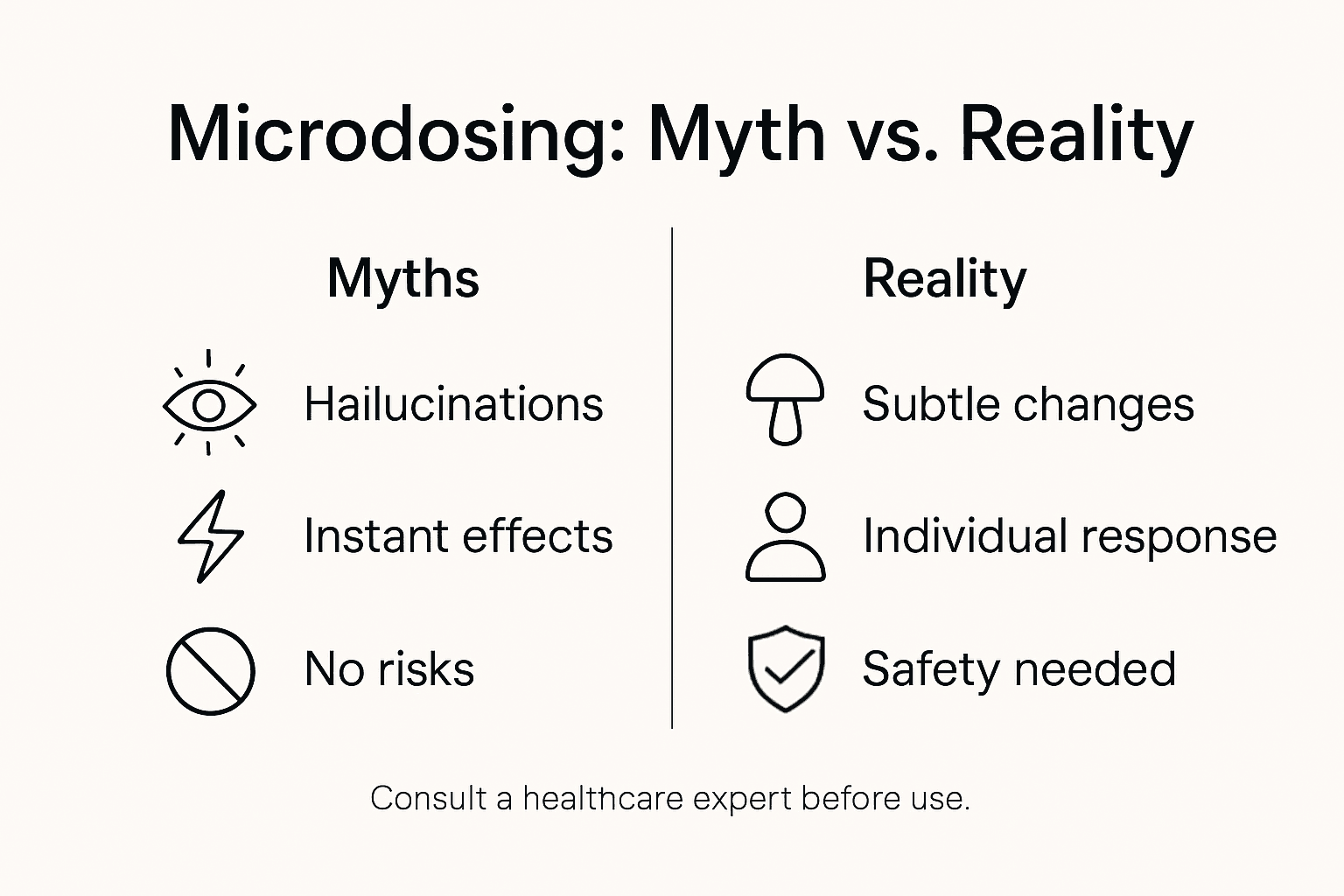
Beyond biological factors, psychological expectations and contextual elements significantly modulate microdosing outcomes. Citizen science research reveals that individual neurochemistry plays a crucial role in determining subjective experiences with psychedelic substances, with factors like personal mindset, current emotional state, and environmental setting dramatically influencing potential effects. The placebo effect becomes particularly potent in microdosing, where subtle neurological changes can be easily interpreted through the lens of personal expectations and psychological priming.
Researchers have identified several key variables that contribute to this remarkable individual variability. Factors such as age, prior psychological history, current medication interactions, stress levels, sleep patterns, and nutritional status can all modify how an individual might respond to microdosing. Some individuals might experience enhanced cognitive flexibility and mood regulation, while others might encounter increased anxiety or minimal perceptible changes. This variability underscores the importance of personalized, carefully monitored approaches to microdosing.
Pro tip: Maintain a detailed, objective journal tracking your physical and psychological responses, documenting dosage, timing, and contextual factors to develop a comprehensive understanding of your unique microdosing experience.
The following table outlines major factors affecting individual microdosing outcomes:
| Factor | Impact on Experience | Example Variation |
|---|---|---|
| Genetics | Alters metabolism | Fast vs. slow drug processing |
| Mental State | Influences perception | Anxious vs. relaxed mindset |
| Environmental Context | Affects response | Quiet home vs. busy office |
| Medication Interactions | Can modify outcome | Antidepressants vs. no medication |
Mistakes to Avoid When Starting Microdosing
Navigating the initial stages of microdosing requires careful attention to several critical pitfalls that can undermine your experience. One of the most common errors is imprecise dosing, where individuals either consume too much or too little, potentially negating the subtle therapeutic benefits. Accurate measurement demands precision, specialized tools, and a meticulous approach to ensure consistent, low-level substance intake that supports cognitive enhancement without overwhelming neurological systems.
Experienced microdosing practitioners emphasize the importance of systematic scheduling and contextual awareness. Inconsistent dosing intervals can disrupt potential neurological benefits, while neglecting the critical role of personal mindset and environmental setting can significantly alter microdosing outcomes. Many beginners mistakenly treat microdosing as a casual experiment, failing to establish clear intentions, track responses, or understand the nuanced interaction between substance, psychology, and personal biochemistry.
Another significant mistake involves inadequate education and professional guidance. Microdosing is not a one-size-fits-all approach, and blindly following internet recommendations without understanding individual variability can lead to suboptimal or potentially negative experiences. Mixing substances without professional consultation, ignoring potential medication interactions, and failing to monitor personal physiological and psychological responses are dangerous oversights that can compromise both safety and effectiveness.
Pro tip: Begin your microdosing journey with a comprehensive consultation from a healthcare professional, start with the lowest possible dose, and maintain a detailed, objective journal documenting your precise experiences and reactions.
Discover the Truth Behind Microdosing With Trusted Canadian Support
Navigating the myths and realities of microdosing can feel overwhelming given the mixed messages and legal complexities. This article highlights the importance of precise dosing, understanding individual responses, and approaching microdosing with safe, informed intentions. If you are seeking natural ways to support mood balance, focus enhancement, or anxiety reduction using psilocybin, it is critical to choose products crafted with care and a strong emphasis on education and safety.
Start your journey confidently with Fungal Friend’s carefully curated selection of microdose psilocybin mushrooms and psychedelic products designed for both beginners and seasoned users. Explore our Uncategorized Archives – Fungal Friend to deepen your knowledge and discover products formulated for consistency and wellness. Visit our main site now to learn how proper microdosing can help you separate hype from reality and support your personal transformation safely.
Frequently Asked Questions
What is microdosing and how does it differ from recreational use?
Microdosing involves consuming very small quantities of psychedelic substances, typically around one-tenth of a standard dose. Unlike recreational use, the goal of microdosing is not to induce hallucinations but to achieve subtle cognitive and mood enhancements.
What are common substances used for microdosing?
Common substances for microdosing include psilocybin (magic mushrooms), LSD, and DMT. Each substance offers unique potential effects and requires different preparation methods for accurate dosing.
How do individual responses to microdosing vary?
Individual responses can vary widely due to factors such as genetics, mental state, and environmental context. Personal biochemistry plays a significant role, meaning what works for one person might not work for another.
What mistakes should I avoid when starting microdosing?
Common mistakes include imprecise dosing, inconsistent scheduling, and neglecting personal mindset and environmental context. It’s crucial to educate yourself, consult professionals, and maintain a detailed journal to enhance your microdosing experience.