
Microdosing for Creativity: Boosting Focus Safely
What makes microdosing psilocybin mushrooms so intriguing for Canadian creative professionals is the promise of gentle mental shifts without the intensity of a full psychedelic experience. With many reporting heightened creativity and sharper focus, the idea of natural cognitive enhancement is gaining ground across Canada’s design studios, agencies, and collaborative workspaces. This guide navigates the complexities of microdosing and its potential for creative growth, providing insight into methods, safety considerations, and real-world outcomes.
Table of Contents
- Defining Microdosing And Creative Enhancement
- Types Of Psilocybin Microdosing Methods
- How Microdosing Affects Creative Processes
- Legal Status And Safety In Canada
- Risks, Common Errors, And Safer Alternatives
Key Takeaways
| Point | Details |
|---|---|
| Microdosing Defined | Microdosing involves taking small doses of psychedelics like psilocybin to enhance cognitive performance without hallucinogenic effects. |
| Microdosing Protocols | Various protocols exist, such as Fadiman and Stamets, emphasizing different dosing schedules and individual health considerations. |
| Legal and Safety Concerns | Psilocybin remains illegal in Canada, with limited medical exemptions; individuals should consult professionals before starting a microdosing regime. |
| Risks and Alternatives | Common errors include inconsistent dosing and lack of medical guidance; safer alternatives like mindfulness and cognitive behavioral therapy are recommended. |
Defining Microdosing and Creative Enhancement
Microdosing represents a subtle yet potentially transformative approach to enhancing cognitive performance and creative output. At its core, microdosing involves consuming extremely small, sub-perceptual doses of psychedelic substances like psilocybin mushrooms – quantities too minimal to produce traditional hallucinogenic effects but potentially sufficient to unlock cognitive enhancements.
Scientific research has explored this fascinating intersection between psychedelics and creativity, with mixed but intriguing results. Recent controlled studies suggest that while participants often report feeling more creative, objective measurement of creative performance remains challenging. This complexity stems from the inherent difficulty in quantifying creativity as a measurable construct.
Key characteristics of microdosing for creative enhancement include:
- Consuming approximately 1/10th to 1/20th of a standard psychedelic dose
- Maintaining full cognitive functionality and daily productivity
- Potential subtle improvements in:
- Cognitive flexibility
- Problem-solving skills
- Mood regulation
- Mental clarity
Neurological mechanisms underlying microdosing suggest potential interactions with serotonin receptors, which might contribute to enhanced neural plasticity and cognitive function. However, controlled trials indicate that subjective experiences of creativity do not always translate to measurable creative performance.
Pro tip: Start with extremely conservative dosages and maintain meticulous personal documentation of your cognitive and creative experiences during microdosing experiments.
Types of Psilocybin Microdosing Methods
Psilocybin microdosing encompasses several nuanced approaches, each designed to optimize cognitive enhancement while minimizing potential risks. Microdosing protocols vary widely, reflecting the complex and personalized nature of this emerging wellness practice.
Current research explores diverse microdosing techniques that demonstrate significant variation in methodology and individual implementation. These approaches typically fall into several fundamental categories:
- Fadiman Protocol: Dosing every third day
- Day 1: Microdose
- Day 2: Rest/integration
- Day 3: Rest/integration
- Stamets Protocol: More frequent dosing with additional supplementation
- 4 days on, 3 days off
- Includes additional neurogenesis-supporting supplements
- Low and Slow approach
- Extremely conservative initial dosing
- Gradual incremental increases
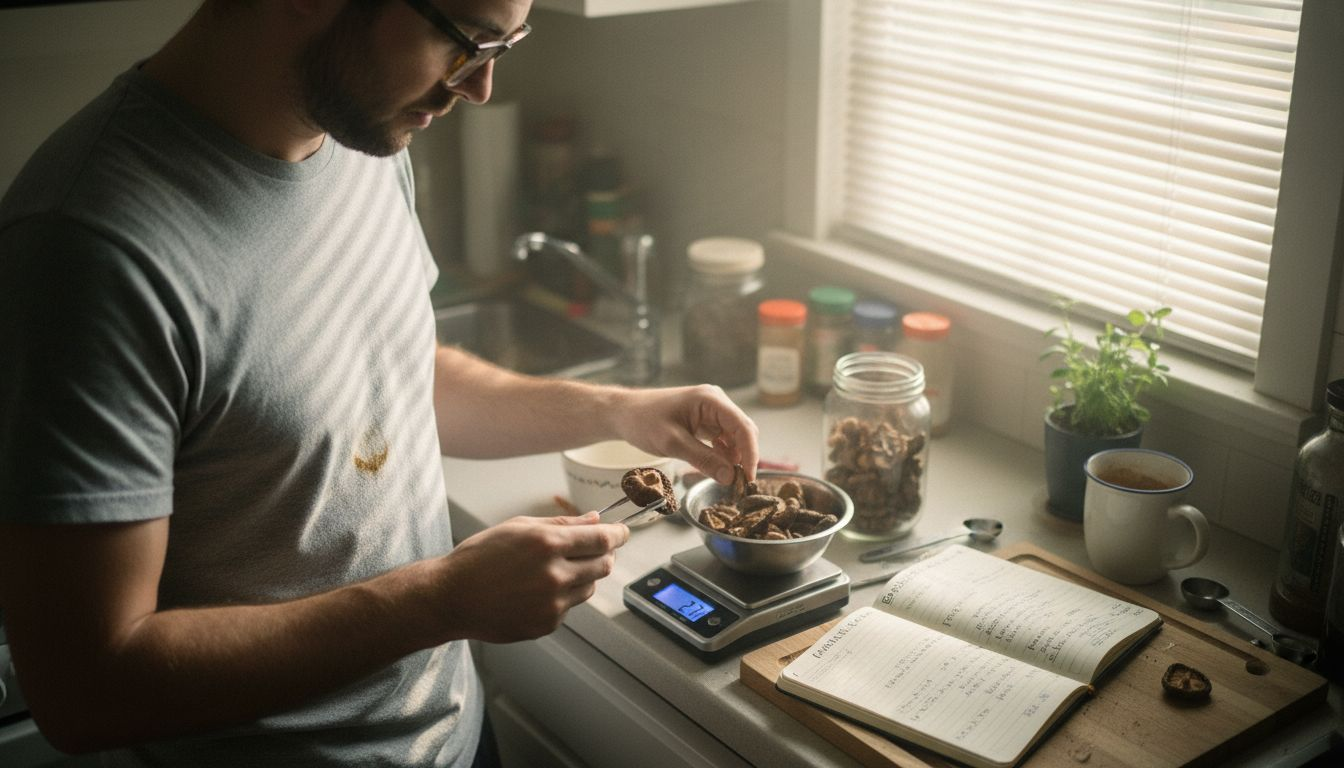
Dosage considerations are critical, with most protocols recommending approximately 0.1-0.3 grams of dried psilocybin mushrooms. Scientific examinations highlight the importance of individualized approaches and consistent documentation.
Here’s a comparison of popular psilocybin microdosing protocols and their unique attributes:
| Protocol Name | Dosing Schedule | Additional Features |
|---|---|---|
| Fadiman Protocol | Dose every 3rd day | Emphasizes integration periods |
| Stamets Protocol | 4 days on, 3 days off | Includes neurogenic supplements |
| Low and Slow | Gradual weekly rise | Focused on minimal risk, slow adaptation |
The key is finding a personalized microdosing method that aligns with your specific cognitive and wellness goals.
Individuals typically consume microdoses through various methods:
- Capsules with precisely measured dried mushroom powder
- Tinctures with standardized concentrations
- Liquid solutions with controlled droplet measurements
Pro tip: Always start with the lowest possible dose and maintain a detailed journal tracking your cognitive, emotional, and physical responses to establish your optimal personal microdosing protocol.
How Microdosing Affects Creative Processes
Creativity is a complex cognitive process that involves multiple mental mechanisms, and microdosing offers an intriguing potential pathway for cognitive enhancement. Emerging research explores nuanced impacts on creative thinking, revealing subtle yet significant neurological interactions.
The creative process fundamentally involves two primary cognitive domains:
- Convergent thinking: Problem-solving through logical, linear approaches
- Divergent thinking: Generating multiple unique solutions and innovative ideas
Microdosing appears to influence these cognitive domains through several mechanisms:
- Increased neural plasticity
- Enhanced cognitive flexibility
- Reduced mental rigidity
- Improved mood and emotional regulation
Neurological research suggests that psilocybin microdoses may modulate serotonin receptors, potentially unlocking alternative neural pathways. Scientific investigations reveal complex interactions between microdosing and creative thinking that extend beyond simplistic enhancement models.
Creativity is not about receiving a magical solution, but about creating conditions where innovative thinking can naturally emerge.
Key potential creative benefits include:
- Reduced mental barriers
- Increased psychological openness
- Enhanced pattern recognition
- More fluid thought transitions
Pro tip: Document your creative experiences meticulously, noting specific cognitive shifts, innovative ideas, and subjective changes during microdosing experiments to develop personalized insights.
Legal Status and Safety in Canada
Navigating the legal landscape of psilocybin in Canada requires careful understanding of current regulations and potential therapeutic contexts. Canadian health regulations currently classify psilocybin as a controlled substance, with strict limitations on possession, distribution, and use.
Key legal considerations for Canadian microdosing enthusiasts include:
- Psilocybin remains a prohibited substance under the Controlled Drugs and Substances Act
- Unauthorized possession can result in criminal penalties
- Limited medical and research exemptions exist
- Potential legal pathways emerging through therapeutic research
Medical exemptions represent a nuanced area of Canadian drug policy. Health Canada has begun granting special access for:
- Treatment-resistant mental health conditions
- End-of-life psychological support
- Supervised clinical research programs
- Compassionate use scenarios
Personal responsibility and legal awareness are fundamental when exploring alternative wellness approaches.
Safety considerations extend beyond legal frameworks and include:
- Consulting healthcare professionals before microdosing
- Understanding individual health risks
- Monitoring potential psychological interactions
- Maintaining transparent communication with medical providers
Pro tip: Always consult legal and medical professionals before initiating any microdosing regimen to understand your specific risk profile and potential legal implications.
Risks, Common Errors, and Safer Alternatives
Microdosing psilocybin involves complex psychological and physiological considerations that demand careful, informed approach. Research highlights significant potential risks associated with unguided or inconsistent microdosing practices.
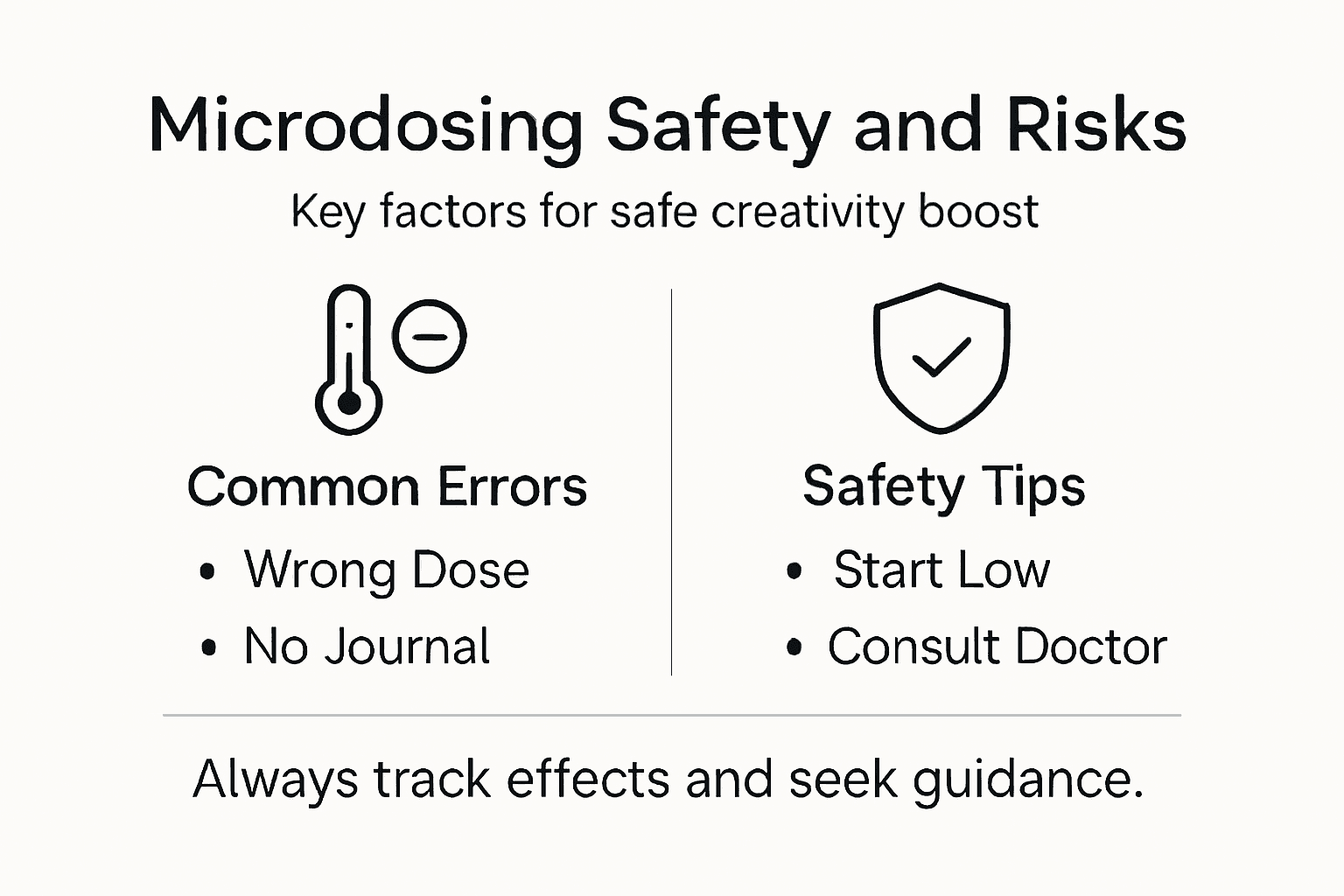
Common microdosing errors that can compromise safety include:
- Inconsistent or unpredictable dosing schedules
- Lack of professional medical consultation
- Ignoring individual health contraindications
- Underestimating potential psychological impacts
- Self-diagnosing without professional guidance
Psychological risks encompass several critical dimensions:
- Potential exacerbation of underlying mental health conditions
- Unexpected emotional volatility
- Potential development of dependency patterns
- Disruption of normal cognitive processing
Responsible exploration requires comprehensive understanding and professional guidance.
Expectancy bias can significantly distort perceived microdosing benefits, making objective self-assessment challenging. Alternative approaches for cognitive enhancement include:
The following table summarizes potential risks of microdosing and safer alternative strategies:
| Potential Risk | Risk Description | Safer Alternative |
|---|---|---|
| Dosing Inconsistencies | Inaccurate timing or measurement | Use pre-measured capsules |
| Psychological Side Effects | Mood swings or anxiety | Seek professional supervision |
| Legal Penalties | Charges for unauthorized use | Pursue therapy exemptions |
| Expectancy Bias | Overestimating benefits subjectively | Track effects in detail |
- Mindfulness meditation practices
- Nootropic supplements
- Cognitive behavioral therapy
- Regular exercise and sleep optimization
- Structured nutrition strategies
Pro tip: Prioritize comprehensive medical consultation and maintain a detailed personal log documenting any physical or psychological changes during experimental microdosing periods.
Unlock Your Creative Potential with Safe Microdosing Solutions
If you are intrigued by how microdosing psilocybin can enhance focus and creativity while maintaining daily productivity then you have come to the right place. This article highlights the importance of precise dosing and personalized protocols to safely tap into cognitive flexibility and mood regulation. At Fungal Friend we understand the challenge of finding high-quality and reliable microdosing options that align with your wellness goals.
Explore our carefully curated selection of microdose mushroom capsules, infused teas, and magic mushroom chocolates designed specifically to support anxiety reduction and boost creative clarity. Learn more about microdosing best practices and safety on our Uncategorized Archives – Fungal Friend page. Ready to start your journey toward enhanced creativity and focus? Visit https://fungalfriend.co today to discover trusted Canadian products paired with expert guidance for your safest and most effective microdosing experience.
Frequently Asked Questions
What is microdosing and how does it enhance creativity?
Microdosing involves taking very small doses of psychedelics, like psilocybin mushrooms, that are too low to cause hallucinogenic effects but may enhance cognitive performance, mood, and creative output.
What are the popular microdosing protocols?
Common microdosing protocols include the Fadiman Protocol (every third day), Stamets Protocol (four days on, three days off), and the Low and Slow approach (gradual dosing increases). Each varies in frequency and dosage considerations.
What are the potential risks associated with microdosing?
Potential risks include psychological side effects such as mood swings, the exacerbation of underlying mental health issues, and legal penalties for unauthorized use. Inconsistent dosing and lack of medical guidance can also pose risks.
How should I start with microdosing to boost focus safely?
Begin with extremely conservative dosages and document your experiences meticulously. Consult with healthcare professionals about potential health risks and maintain a structured approach to monitoring cognitive and emotional changes.