
Psilocybin and Creativity: Cognitive Innovation Unlocked
Most advice about microdosing psilocybin overlooks its scientific impact on creativity and mental wellness. With Canadian and American researchers reporting that controlled microdosing may enhance cognitive flexibility, adults are exploring natural options to spark innovative thinking while caring for mental health. This article uncovers research-backed insights into how subtle neurochemical shifts could transform your approach to creativity, offering practical knowledge for those seeking mindful self-improvement.
Table of Contents
- Psilocybin’s Influence on Creative Thinking
- Microdosing vs. Macrodosing: Impact Differences
- Scientific Research on Creativity Enhancement
- Legal and Safety Considerations in Canada
- Potential Benefits and Practical Risks
Key Takeaways
| Point | Details |
|---|---|
| Psilocybin Enhances Creativity | Psilocybin disrupts default neural networks, allowing for improved cognitive flexibility and creative thinking. Microdosing may lead to enhanced idea flow without significant perceptual disruption. |
| Microdosing vs. Macrodosing | Microdosing offers slight cognitive enhancement and is safer than macrodosing, which induces intense experiences but carries higher risks. Individual goals should dictate the approach. |
| Long-Term Effects on Creativity | Studies show lasting increases in novel idea generation post-psilocybin use, indicating potential long-term benefits in creativity and cognitive patterns. |
| Legal and Safety Considerations | Psilocybin remains a controlled substance in Canada, necessitating legal compliance and cautious exploration of its psychological effects under professional guidance. |
Psilocybin’s Influence on Creative Thinking
Creative thinking represents a complex neurological process that can be profoundly influenced by psilocybin’s unique interactions with brain chemistry. Recent scientific exploration reveals that psilocybin does more than temporarily alter perception – it fundamentally reshapes cognitive pathways associated with imagination and innovative problem solving.
Researchers have discovered that psilocybin disrupts default neural networks, essentially breaking established cognitive patterns that often limit creative expression. When consuming microdoses, individuals experience enhanced cognitive flexibility, which allows thoughts to flow more freely and connect in unexpected ways. Understanding the science of psilocybin demonstrates how these neurochemical shifts create an environment where creative insights can emerge more naturally.
The neuroplastic effects of psilocybin are particularly fascinating for creative professionals. By temporarily reducing the brain’s rigid information processing patterns, the compound enables what neuroscientists call “cognitive defragmentation” – a state where mental barriers dissolve and novel connections between ideas become more accessible. This isn’t about hallucination, but about creating mental space for innovative thinking.

Pro tip: Start with extremely low microdoses and track your creative output systematically to understand your personal neurological response to psilocybin.
While individual experiences vary, many users report heightened pattern recognition, increased metaphorical thinking, and a sense of mental expansiveness that supports creative problem solving. The key is intentional, measured consumption that respects both neurological complexity and personal cognitive boundaries.
Microdosing vs. Macrodosing: Impact Differences
Navigating the landscape of psilocybin consumption requires understanding the nuanced differences between microdosing and macrodosing, two distinctly different approaches to experiencing psilocybin’s potential cognitive and creative benefits. While both methods involve psilocybin consumption, their impacts on mental processes, perception, and personal experience vary dramatically.
Microdosing for mental wellness represents a subtle, controlled approach where individuals consume extremely small quantities of psilocybin – typically around 0.1 to 0.3 grams – designed to provide mild cognitive enhancement without inducing full psychedelic experiences. Research indicates these minimal doses can improve creative thinking, mood regulation, and cognitive flexibility with minimal perceptual disruption. A 2024 scientific study demonstrated that microdosing can enhance divergent thinking capabilities without the intense alterations associated with larger doses.
Macrodosing, in contrast, involves consuming significantly larger quantities of psilocybin that induce profound alterations in consciousness. These higher doses typically range from 2 to 5 grams and can trigger intense introspective experiences, dramatic shifts in perception, and potentially transformative psychological insights. While macrodosing offers deeper psychological exploration, it also carries greater risks and requires more careful preparation and psychological support.
The core distinction lies in intentionality and integration. Microdosing supports functional daily creativity and cognitive enhancement, whereas macrodosing often serves deeper therapeutic or personal growth objectives. The subtle neurochemical shifts during microdosing create space for innovative thinking without overwhelming the cognitive system.
Here’s a comparison of microdosing versus macrodosing psilocybin:
| Aspect | Microdosing (0.1-0.3g) | Macrodosing (2-5g) |
|---|---|---|
| Cognitive Impact | Subtle boost in flexibility | Intense perceptual shifts |
| Creativity Effects | Enhanced daily idea flow | Deep, lasting insights |
| Level of Disruption | Minimal, functional | Major, often immersive |
| Risk Level | Lower, more predictable | Higher, psychological risks |
Pro tip: Always start with the lowest possible dose and maintain a detailed journal tracking your cognitive performance, mood, and creative output to understand your personal neurological response.
Scientific Research on Creativity Enhancement
Scientific exploration of psilocybin’s impact on creativity represents a fascinating frontier in neurocognitive research, challenging traditional understanding of cognitive processes and creative thinking. Researchers are increasingly interested in how this compound might unlock unique pathways of mental innovation and cognitive flexibility.
Groundbreaking neurological studies reveal complex, nuanced interactions between psilocybin and creative cognitive functions. A pivotal 2021 double-blind, placebo-controlled trial uncovered remarkable insights into how psilocybin mediates creative thinking. Interestingly, the research demonstrated that while acute psilocybin administration initially increased spontaneous creative insights, it simultaneously decreased deliberate, task-based creativity – highlighting the compound’s intricate neurological effects.
The most intriguing finding emerged from long-term observations: participants showed a significant increase in novel idea generation seven days after psilocybin administration. This suggests that the compound’s creative enhancement extends beyond immediate consumption, potentially triggering lasting neuroplastic changes that support innovative thinking. The study underscores the time- and context-dependent nature of psilocybin’s cognitive impacts, revealing that creative benefits are not simply immediate but can unfold progressively.
Beyond individual studies, emerging research points to psilocybin’s potential in disrupting rigid cognitive patterns. By temporarily reducing the brain’s conventional information processing mechanisms, the compound creates neurological space for unconventional connections and perspectives. This mechanism explains why many creative professionals and researchers are increasingly interested in understanding psilocybin’s precise interactions with cognitive flexibility and innovative thinking.
Pro tip: Approach psilocybin-assisted creativity research with scientific skepticism, documenting personal experiences systematically and understanding that individual neurological responses can vary significantly.
Legal and Safety Considerations in Canada
Navigating the complex landscape of psilocybin use in Canada requires a nuanced understanding of current legal frameworks and potential risks. While interest in psychedelic research continues to grow, Canadian regulations remain stringent and carefully controlled, presenting both opportunities and significant legal challenges for individuals exploring psilocybin’s potential.
Psychedelic safety practices are critical given the current regulatory environment. Health Canada classifies psilocybin as a controlled substance under the Controlled Drugs and Substances Act, which means unauthorized possession, sale, and production remain illegal. However, recent legal developments suggest a gradual shift towards more progressive approaches, with special access programs and clinical trials providing limited pathways for authorized use.
The legal landscape is evolving rapidly, with recent court decisions challenging previous restrictions. A 2025 Federal Court of Appeal ruling, for instance, ordered Health Canada to reconsider limitations on psilocybin access, signaling potential changes in how therapeutic and research applications are interpreted. This emerging flexibility suggests a growing recognition of psilocybin’s potential therapeutic benefits, while simultaneously maintaining strict safety protocols to protect public health.
Individuals interested in psilocybin must exercise extreme caution and prioritize legal compliance. Potential risks include unpredictable psychological effects, potential interactions with pre-existing mental health conditions, and the significant legal consequences of unauthorized possession. Professional medical guidance, comprehensive research, and a thorough understanding of personal health history are absolutely essential before considering any form of psilocybin exploration.
Pro tip: Always consult with a licensed healthcare professional and thoroughly understand the legal implications before considering any psilocybin-related activities in Canada.
Potential Benefits and Practical Risks
Psilocybin represents a complex compound with profound potential for cognitive enhancement and therapeutic intervention, simultaneously offering promising benefits and significant psychological considerations. Understanding its nuanced impacts requires a balanced, scientifically grounded perspective that acknowledges both its transformative potential and inherent complexities.
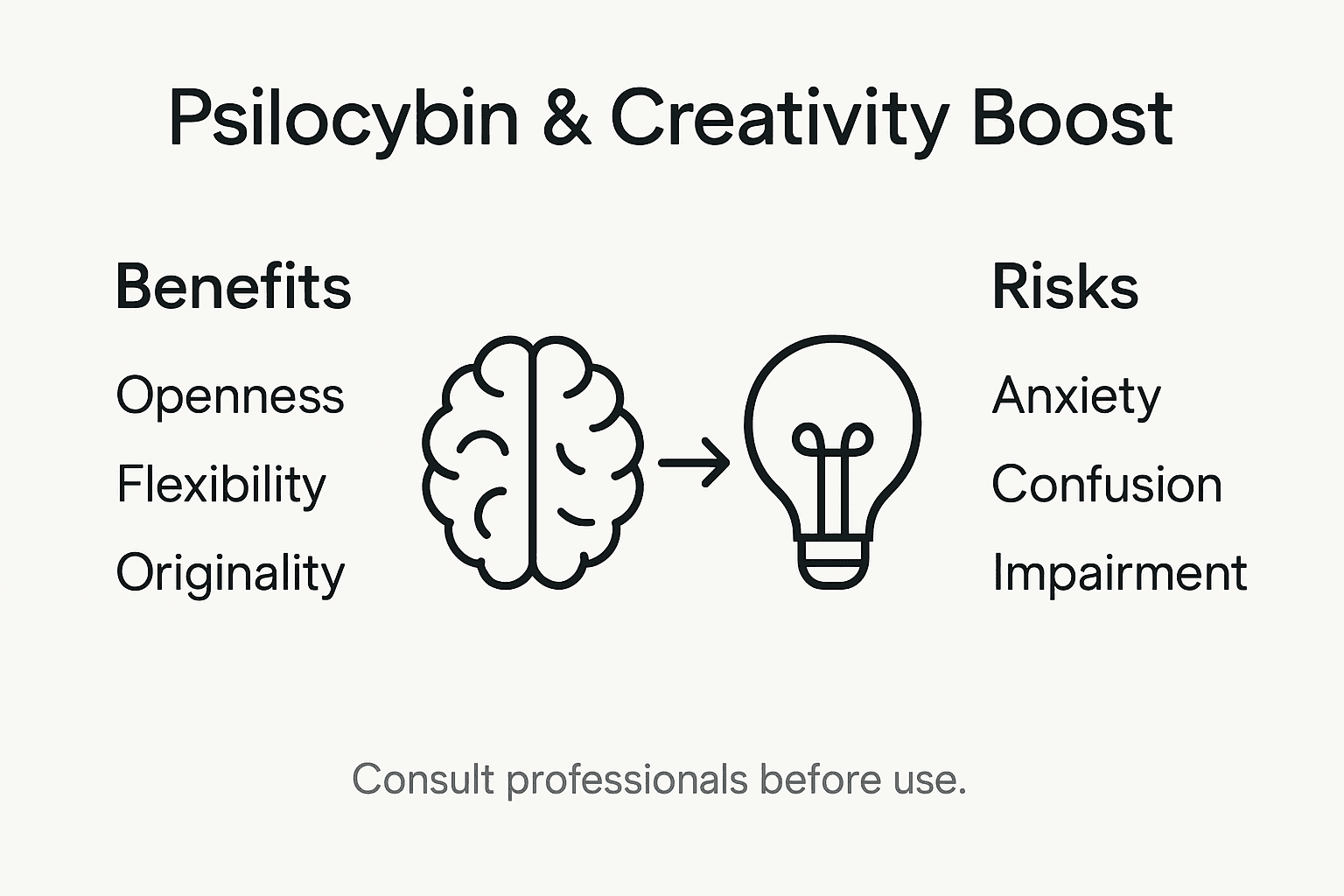
Comprehensive scientific reviews of psilocybin microdosing reveal a multifaceted landscape of potential psychological outcomes. A 2024 critical analysis synthesizing over 50 studies demonstrated notable improvements in psychological well-being and creativity, with relatively few serious short-term physiological side effects. However, the research also highlighted critical risk factors, including unpredictable individual responses and potential psychological vulnerabilities.
The therapeutic landscape of psilocybin is particularly intriguing for mood and anxiety disorders. Emerging research suggests potential benefits in cognitive flexibility, emotional processing, and neuroplasticity. Yet, significant challenges remain in dosage optimization, understanding individual variability, and mitigating potential adverse psychological reactions. Researchers emphasize the critical need for continued rigorous investigation to fully comprehend the compound’s long-term implications and therapeutic boundaries.
Individuals considering psilocybin exploration must approach the experience with exceptional caution and self-awareness. Potential risks include temporary psychological destabilization, interactions with pre-existing mental health conditions, and the possibility of triggering latent psychological vulnerabilities. Personal medical history, current mental health status, and comprehensive professional guidance are absolutely essential prerequisites for responsible exploration.
The following table summarizes key benefits and risks of psilocybin use:
| Domain | Potential Benefit | Practical Risk |
|---|---|---|
| Creativity | Improved idea generation | Temporary mental confusion |
| Mood Disorders | Enhanced emotional processing | Triggering underlying conditions |
| Neuroplasticity | Support for cognitive flexibility | Unpredictable individual responses |
| Legal Standing | Restricted medical access | Serious legal consequences if misused |
Pro tip: Conduct thorough personal psychological screening and consult multiple healthcare professionals before considering any psilocybin-related experiences.
Unlock Your Creative Potential with Safe and Effective Psilocybin Microdosing
The article reveals how psilocybin can enhance creative thinking by increasing cognitive flexibility and breaking rigid thought patterns. If you have struggled with finding new ways to boost your imagination or want to explore innovative problem solving without overwhelming your mind, you are not alone. Many seek balanced microdosing approaches that promote daily creativity and mental clarity while respecting neurological safety.
At Fungal Friend, we specialize in carefully curated psilocybin microdose products designed to support your journey toward cognitive innovation. Our selection includes mushroom capsules, infused teas, and chocolates tailored for focus, mood balance, and subtle creative enhancement. To help you get started, explore our Uncategorized Archives – Fungal Friend for useful guides and product insights.
Ready to embrace a trusted path to enhance your creativity and cognitive flexibility? Visit Fungal Friend today to discover safe and legal psilocybin options available in Canada. Empower your mind with responsible microdosing and take control of your creative growth now.
Frequently Asked Questions
What is psilocybin and how does it affect creativity?
Psilocybin is a naturally occurring compound found in certain mushrooms that alters brain chemistry and may enhance creative thinking by disrupting default neural networks, promoting cognitive flexibility, and allowing novel connections to form.
What is the difference between microdosing and macrodosing psilocybin?
Microdosing involves consuming very small amounts of psilocybin (0.1 to 0.3 grams) for subtle cognitive benefits without significant perceptual changes, while macrodosing involves larger doses (2 to 5 grams) that induce profound alterations in consciousness and personal insights.
How can I safely experiment with psilocybin for creativity?
It is important to start with low microdoses, track your creative output, and maintain a detailed journal of your experiences. Consulting with healthcare professionals and understanding personal health histories is also crucial to ensure safety.
What are the potential risks associated with using psilocybin?
Potential risks include unpredictable psychological effects, interactions with pre-existing mental health conditions, and the possibility of triggering latent psychological vulnerabilities. Careful consideration and professional guidance are recommended before use.