
Psychedelic Safety Guidelines: Safer Microdosing for Canadians
Most Canadian adults considering microdosing psilocybin are surprised to learn that safety guidelines differ significantly from American approaches. Navigating these differences is essential because personal health, legality, and risk management vary by country, especially when mental wellness is at stake. This guide breaks down the crucial safety protocols, legal context in Canada, and practical steps for safer microdosing so you can make informed choices with confidence.
Table of Contents
- Defining Psychedelic Safety Guidelines
- Types of Psychedelics and Key Differences
- Safe Microdosing: Dosage, Protocols, and Effects
- Legal Status and Medical Access in Canada
- Risks, Interactions, and Harm Reduction Strategies
- Common Mistakes and Safer Use Practices
Key Takeaways
| Point | Details |
|---|---|
| Psychedelic Safety Guidelines | Adhere to protocols that prioritize individual health assessments and personalized approaches before engaging in microdosing. |
| Types of Psychedelics | Recognize the differences between classic serotonergic, entactogens, dissociatives, plant-based, and synthetic psychedelics for informed use. |
| Safe Microdosing Practices | Implement structured microdosing protocols to balance therapeutic benefits with minimal side effects, and consult healthcare professionals prior to starting. |
| Harm Reduction Strategies | Engage in comprehensive screening, create supportive environments, and have trusted guides to mitigate potential risks associated with psychedelic use. |
Defining Psychedelic Safety Guidelines
Psychedelic safety guidelines represent a critical framework for responsible and mindful psychedelic exploration, particularly within the context of microdosing. At their core, these guidelines aim to protect individuals from potential physical and psychological risks while maximizing the therapeutic potential of substances like psilocybin mushrooms. Safety isn’t about restriction – it’s about creating intentional, informed pathways for personal growth and mental wellness.
The foundation of psychedelic safety involves understanding individual physiological responses, mental health history, and implementing structured protocols that minimize potential adverse reactions. Psychedelic Safety Considerations for Canadians emphasize the importance of comprehensive preparation, which includes medical screening, controlled dosing, appropriate setting, and ongoing self-monitoring. These guidelines recognize that each person’s neurochemistry and psychological landscape are unique, requiring personalized approaches to microdosing.
Key components of robust psychedelic safety protocols typically include:
- Comprehensive health assessments prior to microdosing
- Understanding personal medical history and potential contraindications
- Starting with minimal doses and incrementally adjusting
- Creating a supportive and controlled environment
- Maintaining consistent documentation of experiences and physiological responses
- Establishing clear boundaries and exit strategies during psychedelic exploration
Pro tip: Before beginning any microdosing regimen, consult with a healthcare professional who understands psychedelic medicine and can provide personalized guidance based on your specific health profile.
Types of Psychedelics and Key Differences
Psychedelics represent a diverse class of compounds with unique neurochemical profiles and therapeutic potentials. Classic serotonergic hallucinogens include substances like psilocybin, LSD, and mescaline, which primarily interact with serotonin receptors and produce profound alterations in perception, consciousness, and emotional processing. These compounds share a fundamental mechanism of action that involves modulating neural connectivity and temporarily disrupting established brain networks.
Beyond classic hallucinogens, psychedelics encompass several distinct categories with varied effects and mechanisms. Entactogens like MDMA create empathogenic experiences characterized by emotional openness and reduced social anxiety, while dissociative psychedelics such as ketamine produce a sense of detachment from one’s physical environment. Different psychedelic types demonstrate remarkable diversity in their psychological and neurological impacts, ranging from introspective journeys to potential therapeutic interventions for mental health conditions.
Key categories of psychedelics include:
Here is a comparison of key psychedelic types and their primary characteristics:
| Psychedelic Type | Common Substances | Main Effects | Therapeutic Focus |
|---|---|---|---|
| Classic Serotonergic | LSD, Psilocybin | Altered perception, insight | Mood, anxiety, PTSD |
| Entactogen | MDMA, 2-CB | Emotional openness, empathy | Trauma, social anxiety |
| Dissociative | Ketamine, DXM | Detachment, altered senses | Depression, chronic pain |
| Plant-Based | Ayahuasca, Peyote | Visionary, introspective | Addiction, personal growth |
| Synthetic Compound | DOM, 2C-E | Enhanced sensory experiences | Experimental, lesser-known uses |
- Classic Serotonergic Hallucinogens: Psilocybin, LSD, Mescaline
- Entactogens: MDMA, 2-CB
- Dissociative Psychedelics: Ketamine, DXM
- Plant-Based Psychedelics: Ayahuasca, Peyote
- Synthetic Compounds: DOM, 2C-E
Pro tip: Always approach psychedelic exploration with careful research, understanding that individual neurochemistry varies significantly and what works for one person might not be appropriate for another.
Safe Microdosing: Dosage, Protocols, and Effects
Microdosing represents a nuanced approach to psychedelic consumption, involving carefully controlled sub-perceptual doses designed to provide subtle neurological and psychological benefits. Systematic research on microdosing protocols reveals that typical doses range between 5-20 micrograms for substances like LSD, with careful attention paid to minimizing perceivable psychoactive effects while potentially enhancing cognitive function, creativity, and emotional regulation.
The fundamental principle of safe microdosing involves establishing a structured protocol that balances potential therapeutic benefits with minimal physiological disruption. Most contemporary microdosing strategies follow a cyclical approach, typically involving consumption on a specific schedule (such as one day on, two days off) to prevent tolerance buildup and maintain neurological sensitivity. This approach allows individuals to explore potential cognitive enhancements while maintaining a controlled and intentional relationship with psychedelic substances.
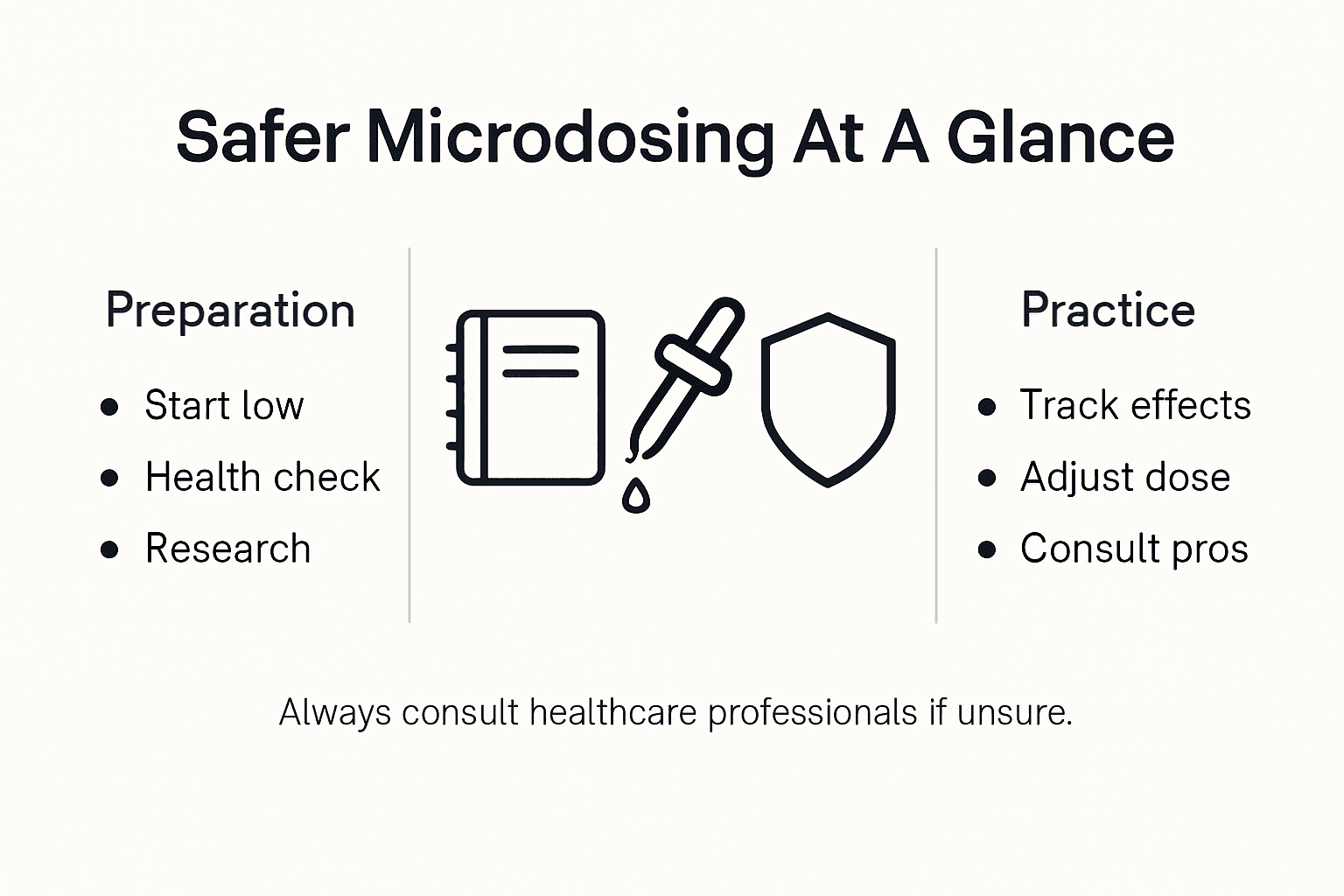
Key considerations for safe microdosing include:
The following table summarizes common microdosing protocols and their unique approaches:
| Protocol Name | Schedule Example | Key Objective |
|---|---|---|
| Fadiman Protocol | 1 day on, 2 days off | Avoid tolerance, consistency |
| Microdosing Every 3rd Day | Dose every third day | Maintain sensitivity |
| Weekday Protocol | Dose only on weekdays | Align with work productivity |
| Intuitive Approach | Flexible, self-assessed | Personal needs and rhythm |
- Precise, consistent dosage measurement
- Careful tracking of physical and psychological responses
- Understanding individual neurochemical variations
- Maintaining a consistent and structured consumption schedule
- Regular self-assessment of mental and physical health
- Consulting healthcare professionals before beginning any microdosing regimen
Pro tip: Start with the lowest possible dose and gradually adjust, keeping a detailed journal to document subtle changes in mood, cognition, and overall well-being.
Legal Status and Medical Access in Canada
The legal landscape for psychedelics in Canada represents a complex and evolving regulatory environment, with nuanced distinctions between recreational use and medical access. Recent developments in Health Canada’s Special Access Program reveal significant challenges for medical professionals seeking legal pathways to prescribe psychedelic treatments, including administrative hurdles and stringent approval processes that can delay patient access to potentially therapeutic interventions.
Under the Controlled Drugs and Substances Act, psilocybin remains a controlled substance, but exceptions exist for specific medical and research contexts. The Section 56 exemption and Special Access Program provide limited pathways for individuals to access psychedelics under carefully controlled medical supervision. These regulations reflect Canada’s cautious but progressive approach to integrating psychedelic substances into therapeutic frameworks, balancing patient potential with rigorous safety protocols.
Key legal considerations for Canadians include:
- Understanding Section 56 exemption requirements
- Navigating the Special Access Program application process
- Recognizing the difference between medical and recreational use
- Documenting medical necessity and therapeutic intent
- Working with licensed healthcare providers
- Maintaining compliance with federal and provincial regulations
Pro tip: Consult with healthcare professionals who specialize in psychedelic medicine and thoroughly document your medical history before pursuing any legal access pathways.
Risks, Interactions, and Harm Reduction Strategies
Psychedelic use requires a comprehensive understanding of potential risks and proactive harm reduction strategies. The Psychedelic Harm Reduction and Integration (PHRI) clinical model provides a sophisticated framework for managing potential psychological and physiological challenges associated with psychedelic experiences, emphasizing careful preparation, context assessment, and post-experience integration.

Complex interactions between psychedelics and individual neurochemistry can produce varied outcomes, making personalized risk assessment crucial. Potential risks include exacerbation of underlying mental health conditions, unexpected psychological reactions, and potential interactions with prescription medications. Individuals with personal or family histories of schizophrenia, bipolar disorder, or severe psychiatric conditions face heightened risks and should exercise extreme caution.
Key harm reduction strategies include:
- Comprehensive medical screening before psychedelic use
- Understanding personal mental health history
- Creating a supportive, controlled environment
- Having a trusted, experienced guide present
- Avoiding mixing substances
- Maintaining hydration and physical comfort
- Establishing clear emotional boundaries
- Preparing integration strategies for processing experiences
Pro tip: Always conduct a thorough personal health assessment and consult medical professionals before exploring any psychedelic experiences, prioritizing your physical and psychological safety.
Common Mistakes and Safer Use Practices
Psychedelic exploration demands meticulous attention to safety and intentionality. Community-based harm reduction research highlights critical strategies for minimizing risks and maximizing potential therapeutic benefits, emphasizing the importance of informed and deliberate approaches to psychedelic consumption.
Common mistakes in psychedelic use often stem from inadequate preparation, lack of understanding about individual neurochemistry, and insufficient attention to environmental and mental state factors. These missteps can transform potentially transformative experiences into challenging or even dangerous situations. Critical errors include inconsistent dosing, mixing substances, ignoring personal mental health history, and approaching psychedelics without clear intention or proper support systems.
Key safer use practices encompass:
- Comprehensive personal health assessment
- Precise and consistent dosage measurement
- Creating a controlled, supportive environment
- Working with experienced guides or therapists
- Establishing clear emotional and physical boundaries
- Maintaining thorough documentation of experiences
- Implementing structured integration practices
- Avoiding substance combinations
- Prioritizing mental and physical preparation
Pro tip: Develop a detailed personal protocol that includes pre-experience screening, carefully controlled setting, and post-experience integration strategies to maximize safety and minimize potential risks.
Discover Safer Microdosing Options with Fungal Friend
Navigating the complex world of psychedelic safety and microdosing can feel overwhelming, especially when considering individual health profiles and legal challenges in Canada. If you want to embrace responsible exploration with carefully measured doses and trusted guidance, our Uncategorized Archives – Fungal Friend offers valuable resources and expert advice tailored to your unique journey. With a deep commitment to safety, education, and quality, Fungal Friend helps you address critical aspects like dosage consistency, supportive environments, and personalized protocols highlighted in the article.

Take control of your microdosing experience today by exploring our curated selection of microdose psilocybin mushrooms and related products at Fungal Friend. Whether you are seeking anxiety reduction, mood balance, or insights from deeper psychedelic experiences, our Canadian-based e-commerce platform provides discreet delivery and reliable options designed to support your mental wellness safely and effectively. Start your safer psychedelic journey now by visiting our site and learning more about responsible microdosing.
Frequently Asked Questions
What are the key components of safe microdosing?
Safe microdosing involves comprehensive health assessments, understanding personal medical history, starting with minimal doses, creating a controlled environment, maintaining documentation of experiences, and establishing clear boundaries during psychedelic exploration.
How do different types of psychedelics differ in effects?
Psychedelics vary in effects based on their neurochemical profiles. Classic serotonergic hallucinogens, for example, alter perception and emotional processing, while entactogens like MDMA enhance emotional openness. Understanding these differences is essential for safe use.
What should I consider before starting a microdosing regimen?
Before starting microdosing, it is crucial to consult with a healthcare professional familiar with psychedelic medicine, assess your medical history, start with the lowest possible dose, and document your experiences to track changes in mood and cognition.
What are some common mistakes to avoid when using psychedelics?
Common mistakes include inadequate preparation, inconsistent dosing, ignoring personal mental health history, and mixing substances. It’s essential to prioritize mental and physical health, maintain consistency in dosage, and establish a supportive environment.