
Psilocybin vs LSD Explained: Effects and Safety Insights
Choosing between psilocybin and LSD can feel complex for Canadian adults looking to support their mental wellness safely. Both have attracted attention for their unique effects on consciousness and mood, with recent research showing that dose — not just the substance — shapes the intensity and nature of these experiences. This guide offers a clear look at how these two psychedelics compare, focusing on practical considerations for safe and informed microdosing.
Table of Contents
- Psilocybin And LSD Defined And Compared
- Psychoactive Effects And User Experiences
- Therapeutic Benefits And Microdosing Methods
- Legal Status And Canadian Regulations
- Risks, Safety, And Responsible Use
Key Takeaways
| Point | Details |
|---|---|
| Psychedelic Nature | Psilocybin is a naturally occurring compound from mushrooms, while LSD is a synthetic substance, both producing similar subjective experiences. |
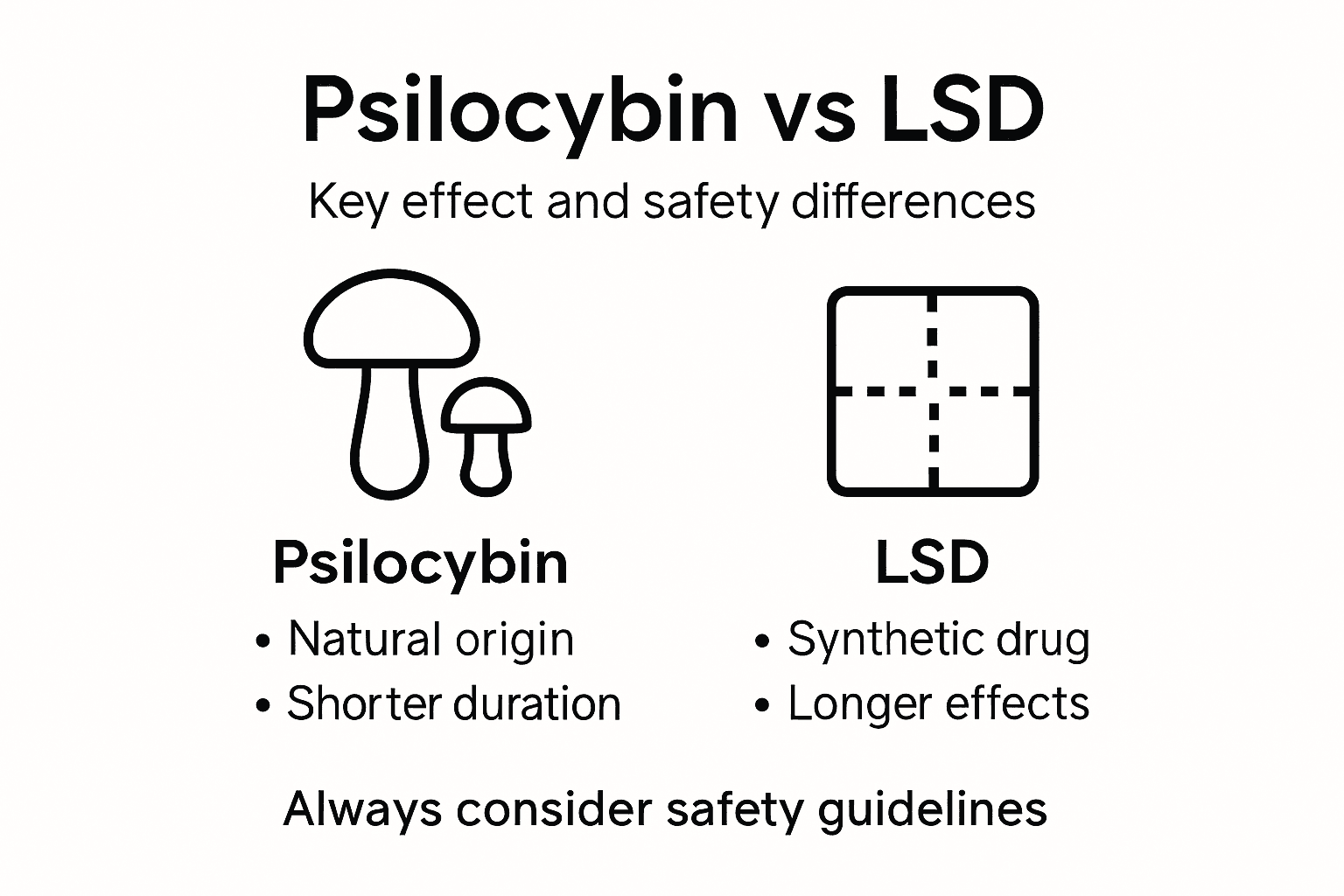
| Duration of Effects | Psilocybin typically lasts 4-6 hours, whereas LSD effects last 8-12 hours, impacting their use and therapeutic applications. |
| Therapeutic Potential | Both substances show promise in treating mental health conditions, with microdosing methods enhancing cognitive and emotional function. |
| Safety and Legal Considerations | Responsible use requires rigorous health screening and compliance with legal regulations, which vary significantly, especially in Canada. |
Psilocybin and LSD Defined and Compared
Psilocybin and lysergic acid diethylamide (LSD) are two powerful psychedelic compounds with fascinating neurological profiles that have intrigued researchers and mental health professionals for decades. While both substances interact with serotonin receptors in the brain, they exhibit nuanced differences in their chemical structures, duration of effects, and physiological responses.
At their core, psilocybin is a naturally occurring compound found in certain mushroom species, while LSD is a synthetic molecule first synthesized in 1938 by Swiss chemist Albert Hofmann. Comparative studies on psychedelic effects reveal remarkable similarities in their psychological impact, with key differences emerging in duration and specific physiological reactions:
- Psilocybin: Naturally derived from mushrooms
- LSD: Fully synthetic chemical compound
- Similar serotonergic receptor interactions
- Comparable subjective psychedelic experiences
- Dose-dependent effect variations
Research indicates that both substances produce remarkably similar subjective experiences, with dose playing a critical role in determining the intensity and qualitative nature of the psychedelic journey. A 2022 randomized study demonstrated that 100-200 ?g of LSD and 30 mg of psilocybin induced comparable psychedelic effects, though with notable variations in physiological responses.
Dose determines the depth and character of the psychedelic experience, not just the substance itself.
The primary distinctions between psilocybin and LSD emerge in their pharmacokinetic properties. LSD tends to have a longer duration of action, typically lasting 8-12 hours, while psilocybin’s effects generally span 4-6 hours. Physiologically, research identified key differences such as LSD’s greater potential for inducing anxiety at higher doses and more pronounced heart rate increases.
Here’s a side-by-side look at key distinctions between psilocybin and LSD:
| Attribute | Psilocybin | LSD |
|---|---|---|
| Natural or Synthetic | Derived from mushrooms | Fully laboratory-synthesized |
| Typical Duration | 4-6 hours | 8-12 hours |
| Onset Time | 30-60 minutes | 20-60 minutes |
| Unique Receptor Activity | Primarily 5-HT2A serotonin | 5-HT2A serotonin & dopamine |
| Common Psychological Tone | Gentle, introspective | Dynamic, intense |
| Likelihood of Anxiety | Lower at standard doses | Higher, especially at high dose |
| Physical Effects | Subtle cardiovascular response | Noticeable heart rate increase |
Pro tip: Always approach psychedelic substances with caution, professional guidance, and a comprehensive understanding of potential risks and individual physiological responses.
Psychoactive Effects and User Experiences
Psilocybin and LSD represent two powerful psychedelic compounds that profoundly alter human consciousness, offering unique journeys through perception, emotion, and cognitive experience. Neurological interactions with serotonin receptors reveal complex mechanisms that trigger extraordinary alterations in mental processing and sensory perception.
Both substances fundamentally transform users’ subjective experiences through distinct neurochemical pathways, with key characteristics including:
- Mood enhancement and emotional recalibration
- Perceptual distortions and sensory amplification
- Potential for introspective and mystical experiences
- Cognitive flexibility and ego dissolution
- Temporary alterations in time and space perception
Psilocybin experiences typically emerge more rapidly, with onset occurring within 30-60 minutes and lasting approximately 4-6 hours. Users frequently describe these experiences as more emotionally introspective, often characterized by gentle, organic shifts in consciousness. In contrast, LSD tends to produce more prolonged and potentially more intense alterations, with experiences potentially lasting 8-12 hours and presenting more dynamic, unpredictable psychological landscapes.
Psychedelic experiences represent a profound exploration of consciousness, where individual biochemistry and environmental context dramatically shape the journey.
The neurological mechanisms underlying these substances demonstrate fascinating complexity. While both interact primarily with serotonin 5-HT2A receptors, LSD demonstrates additional engagement with dopamine receptors, potentially contributing to its uniquely sustained and multifaceted effects. Comparative neurological research suggests that individual variation plays a significant role in determining the qualitative nature of the psychedelic experience.
Pro tip: Always approach psychedelic experiences with intentionality, a supportive environment, and a comprehensive understanding of potential psychological and physiological responses.
Therapeutic Benefits and Microdosing Methods
Psilocybin and LSD have emerged as promising compounds in the realm of mental health treatment, offering innovative approaches to addressing complex psychological challenges. Systematic reviews of therapeutic applications reveal significant potential for alleviating symptoms of depression, anxiety, and other mental health conditions.
Microdosing represents a nuanced approach to psychedelic therapeutic interventions, characterized by the following key attributes:
- Sub-perceptual dosage administration
- Minimal psychoactive experience
- Potential cognitive and emotional enhancement
- Reduced risk of intense psychological disruption
- Targeted psychological and neurological support
Therapeutic microdosing involves consuming extremely low doses of psychedelic substances, typically ranging from 5-10% of a full recreational dose. These minute quantities aim to stimulate neuroplasticity, enhance cognitive flexibility, and potentially mitigate symptoms of mood disorders without inducing profound alterative states of consciousness.

The following table summarizes approaches and considerations for microdosing psychedelics:
| Microdosing Aspect | Description | Example Dosage |
|---|---|---|
| Aim | Cognitive & mood enhancement, not trips | Enhanced focus, stability |
| Dosage Range | 5-10% of recreational amount | LSD: 10-20 ?g; Psilocybin: 1-3 mg |
| Frequency | 1-3 times per week | Not daily, scheduled rests |
| Common Protocols | Fadiman, Stamets | Rotating, supportive journaling |
| Typical Benefits | Potential improved mood & neuroplasticity | Increased creativity, less anxiety |
| Risks If Misused | Tolerance, anxiety, legal exposure | Psychological discomfort, legal complications |
Microdosing represents a delicate balance between therapeutic intervention and maintaining everyday functional capacity.
Recent clinical investigations demonstrate promising mental health outcomes for both psilocybin and LSD, with potential applications in treating substance use disorders, depression, and anxiety. The most effective protocols typically combine pharmacological intervention with comprehensive psychological support, emphasizing a holistic approach to mental wellness.
Pro tip: Always consult with a qualified healthcare professional before exploring microdosing, and maintain a careful, documented approach to understanding your individual neurological response.
Legal Status and Canadian Regulations
The legal landscape surrounding psilocybin and LSD in Canada represents a complex and evolving regulatory environment, with distinct considerations for research, therapeutic use, and personal consumption. Controlled substances in Canada are strictly regulated, with nuanced distinctions between different types of psychedelic compounds and their authorized applications.
Current legal frameworks for psychedelic substances in Canada include:
- Research-approved clinical trials
- Compassionate access programs
- Therapeutic exemptions for specific medical conditions
- Restricted personal possession and use
- Ongoing regulatory review and potential policy changes
Psilocybin currently occupies a unique legal position, with Health Canada providing limited pathways for authorized use. Specific exemptions exist for individuals participating in clinical research, palliative care, or those receiving special medical authorization. These regulatory mechanisms allow controlled access while maintaining stringent safety protocols.
Legal frameworks surrounding psychedelics continue to evolve, reflecting emerging scientific understanding and changing societal perspectives.
Individuals interested in exploring psilocybin or LSD must navigate a complex regulatory landscape that prioritizes medical safety and controlled scientific investigation. While recreational use remains prohibited, the Canadian government has demonstrated increasing openness to exploring therapeutic potential through carefully managed research and medical programs.
Pro tip: Always consult official Health Canada resources and seek professional legal guidance before considering any interactions with controlled psychedelic substances.
Risks, Safety, and Responsible Use
Psychedelic substances like psilocybin and LSD demand rigorous safety considerations, with comprehensive scientific research highlighting critical guidelines for responsible consumption. While these compounds demonstrate relatively low physical toxicity, psychological risks require careful navigation and informed decision-making.
Key safety considerations for psychedelic experiences include:
- Comprehensive personal health screening
- Understanding individual psychological vulnerabilities
- Controlling dosage and substance purity
- Creating supportive, controlled environments
- Ensuring trusted supervision or guidance
- Managing potential adverse psychological reactions
Mental health screening represents a crucial preliminary step, with specific attention to personal or familial history of psychotic disorders. Individuals with pre-existing mental health conditions, particularly those involving schizophrenia or bipolar disorder, face heightened risks and should exercise extreme caution.
Responsible psychedelic exploration requires thorough preparation, self-awareness, and respect for individual psychological boundaries.
Both psilocybin and LSD can induce significant physiological and psychological responses, with potential cardiovascular and anxiety-related effects. Experienced guides recommend starting with minimal doses, creating safe environments, and maintaining close medical supervision during initial experiences.
Pro tip: Always prioritize personal safety by consulting healthcare professionals, understanding your medical history, and approaching psychedelic experiences with intentional, informed preparation.
Discover Safe and Effective Psilocybin Microdosing with Fungal Friend
Navigating the differences between Psilocybin and LSD can be challenging, especially when safety and personal well-being are top priorities. This article highlights key concerns such as dosage, duration, and psychological effects that often leave readers seeking a natural and controlled way to explore psychedelics. Whether you aim to reduce anxiety, enhance focus, or gently balance your mood, understanding these distinctions is essential.
At Fungal Friend, we specialize in providing carefully curated microdose psilocybin products crafted for both newcomers and experienced users seeking safe and intentional psychedelic experiences. Our selection includes mushroom capsules, infused teas, and chocolate blends designed to support mental clarity and emotional wellness. Explore our range to find products that align with your goals and benefit from trusted guidance on legal use in Canada. Take the next step toward mindful exploration by visiting our Uncategorized Archives – Fungal Friend to learn more or start shopping now at Fungal Friend. Elevate your journey with safe, natural options curated just for you.
Frequently Asked Questions
What are the main differences between psilocybin and LSD?
Psilocybin is a naturally occurring compound found in mushrooms, while LSD is a fully synthetic substance. They differ in duration of effects, with psilocybin lasting about 4-6 hours and LSD 8-12 hours, as well as physiological responses and the potential for inducing anxiety at higher doses.
How do psilocybin and LSD affect the brain?
Both psilocybin and LSD primarily interact with serotonin 5-HT2A receptors. LSD additionally engages dopamine receptors, which contributes to its longer-lasting and more intense effects compared to psilocybin.
What is microdosing and how does it work with psilocybin and LSD?
Microdosing involves taking sub-perceptual doses of psychedelics, typically 5-10% of a recreational dose. This approach aims to enhance cognitive function, mood, and emotional stability without inducing significant psychoactive effects.
What safety considerations should be taken when using psilocybin or LSD?
Key safety considerations include understanding personal health and psychological vulnerabilities, controlling dosage, using substances with known purity, and ensuring a supportive environment for the experience. It’s also important to consult a healthcare professional, especially for individuals with a history of mental health issues.