
Psilocybin Tolerance: 3-Day Spacing Boosts Effects
Many believe psilocybin tolerance signals addiction or permanent loss of benefits. That’s a myth. Clinical studies show no evidence of addiction or withdrawal despite repeated psilocybin use. Tolerance is a reversible biological adaptation that manages receptor sensitivity. This article explains the neuroscience behind psilocybin tolerance, debunks misconceptions, and teaches you how to space microdoses for sustained mental health gains.
Table of Contents
- Introduction To Psilocybin And Its Therapeutic Uses
- Neurobiology Of Psilocybin Tolerance
- Common Misconceptions About Psilocybin Tolerance
- Strain Differences And Their Impact On Tolerance
- Impact Of Tolerance On Therapeutic Efficacy
- Practical Implications For Microdosing And Tolerance Management
- Summary And Safe Use Recommendations
- Explore Safe Microdosing With Fungal Friend
Key Takeaways
| Point | Details |
|---|---|
| Tolerance develops fast | Psilocybin tolerance results from reversible 5-HT2A receptor desensitization within 2-3 days of daily dosing. |
| Not addiction | Psilocybin lacks compulsive use patterns, withdrawal symptoms, and dependence hallmarks. |
| Dosing frequency matters most | Spacing microdoses every 3-4 days prevents rapid tolerance and maintains therapeutic benefits. |
| Tolerance reverses quickly | Abstinence for 5-7 days allows receptor resensitization and restores full responsiveness. |
| Strain differences are minor | Dosing interval, not mushroom strain, is the primary driver of tolerance development. |
Introduction to Psilocybin and Its Therapeutic Uses
Psilocybin is a serotonergic psychedelic that binds primarily to 5-HT2A receptors in your brain. These receptors regulate mood, perception, and cognition. As a partial agonist, psilocybin mimics serotonin and triggers changes in neural connectivity and plasticity.
Research is validating psilocybin’s promise for depression, anxiety, and focus enhancement. Canadian adults increasingly turn to microdosing, taking sub-perceptual doses to support mental wellness without full psychedelic effects. Understanding how psilocybin works at the receptor level clarifies why tolerance happens.
Key aspects of psilocybin’s action include:
- Activation of 5-HT2A receptors to modulate mood and cognition
- Enhancement of neuroplasticity through receptor-mediated signaling cascades
- Therapeutic potential for depression, anxiety, and cognitive clarity
- Popularity of microdosing among those seeking subtle mental health benefits
Grasping this mechanism prepares you to understand the biological basis of tolerance and how to manage it for consistent results.
Neurobiology of Psilocybin Tolerance
Repeated psilocybin exposure triggers rapid receptor desensitization. When 5-HT2A receptors are stimulated frequently, they become less responsive. The cell internalizes these receptors, removing them temporarily from the membrane. This adaptation is the root of tolerance.
Tolerance becomes pronounced within 2-3 days of repeated administration due to receptor desensitization. Daily dosing floods receptors with agonist activity, prompting the cell to downregulate its response. Effects diminish sharply, requiring higher doses to achieve the same outcome.
Fortunately, this process reverses. Receptor density reduces after exposure but restores after several days abstinence. Abstaining for 5 to 7 days allows receptors to resensitize and return to baseline function. This isn’t permanent damage; it’s a temporary cellular adjustment.
Key points about tolerance neurobiology:
- Desensitization and internalization of 5-HT2A receptors occur rapidly with daily use
- Tolerance manifests within two to three days and reduces drug efficacy
- Abstinence for 5-7 days restores receptor sensitivity and responsiveness
- The process is reversible, not indicative of harm or permanent change
“Receptor internalization is a natural adaptive mechanism. Cells protect themselves from overstimulation by reducing available targets. Once the stimulus is removed, receptors return to the surface, ready to respond again.”
Understanding this cycle is essential for anyone considering a safe microdosing guide to manage mental health goals. Spacing doses aligns with your biology, not against it.
Common Misconceptions About Psilocybin Tolerance
Tolerance is often confused with addiction, but they are fundamentally different. Psilocybin does not cause classical addiction patterns or withdrawal symptoms. Addiction involves compulsive drug seeking, loss of control, and negative consequences despite harm. Psilocybin lacks these features.
Another myth is that tolerance is permanent. Tolerance is reversible and not permanent after spaced use. You can restore full receptor sensitivity with a brief break. Some users fear they’ll lose all therapeutic benefits once tolerance sets in. That’s inaccurate if you manage your dosing schedule.
Daily microdosing accelerates tolerance buildup. When doses occur too frequently, receptors don’t have time to recover. This reduces benefits and frustrates users. The solution is simple: space your doses.
Common mistakes to avoid:
- Believing tolerance equals addiction or dependence
- Assuming tolerance blocks all benefits permanently
- Dosing daily without breaks, which drives rapid tolerance
- Ignoring the importance of abstinence periods for receptor recovery
- Confusing lack of effect with product quality rather than dosing frequency
Pro Tip: Treat tolerance as a reversible biological response, not a sign of dependency. Your body is adapting, not craving. Adjust your schedule to honor this natural process and maintain benefits.
Applying safe microdosing methods means respecting your neurobiology. Education replaces fear with confidence.
Strain Differences and Their Impact on Tolerance
Psilocybin mushroom strains vary in potency. Some strains contain higher concentrations of psilocybin and psilocin than others. However, this variation has minimal impact on tolerance timelines compared to dosing frequency.
| Strain | Typical Psilocybin Content | Tolerance Impact |
|---|---|---|
| Golden Teacher | Moderate | No difference in tolerance rate |
| Penis Envy | High | No difference in tolerance rate |
| B+ | Moderate | No difference in tolerance rate |
| Albino A+ | Moderate to High | No difference in tolerance rate |
Tolerance develops based on receptor exposure frequency, not the specific compound amount per dose. If you take a potent strain daily, tolerance will build just as fast as with a less potent strain taken daily. The biology of receptor desensitization doesn’t distinguish between strains.
Factors that matter more than strain:
- Frequency of dosing: daily use drives tolerance regardless of strain
- Dose intervals: spacing doses every 3-4 days prevents tolerance
- Individual biology: genetic and metabolic differences affect sensitivity
- Consistency: regular breaks allow receptor recovery across all strains
Users should prioritize dosing schedule management over strain selection for tolerance control. Choosing a strain based on desired intensity is valid, but don’t expect strain differences to alter tolerance timelines. The receptor mechanism is consistent.
Impact of Tolerance on Therapeutic Efficacy
Tolerance directly undermines the mental health benefits you seek from microdosing. Tolerance reduces neuroplasticity enhancements, lowering mood and anxiety benefits. When receptors are desensitized, the signaling cascades that promote neural growth and connectivity are diminished.

Psilocybin’s therapeutic power lies in its ability to stimulate neuroplasticity. This process helps your brain form new connections, improving emotional regulation and cognitive flexibility. Tolerance disrupts this.
Frequent dosing without breaks leads to diminishing returns. Sustained neuroplasticity correlates with improved depression scores, which decline if tolerance is unmanaged. Your initial gains in mood and focus fade as receptors become less responsive.
Maintaining proper dose timing sustains neuroplastic growth and mental health outcomes. Spacing doses ensures receptors remain sensitive enough to trigger beneficial changes. Without this, you’re taking psilocybin but not experiencing its full potential.
“Neuroplasticity is the engine of therapeutic change. If tolerance blocks receptor activation, that engine stalls. Restoring sensitivity through strategic dosing reignites the benefits and supports lasting mental health improvements.”
Proper tolerance management isn’t optional if you want real results. It’s a core component of effective microdosing.
Practical Implications for Microdosing and Tolerance Management
Managing tolerance is straightforward with evidence-based strategies. Recommended dosing intervals to avoid tolerance are at least 3 days apart, allowing receptor resensitization. This spacing gives your 5-HT2A receptors time to recover between doses.
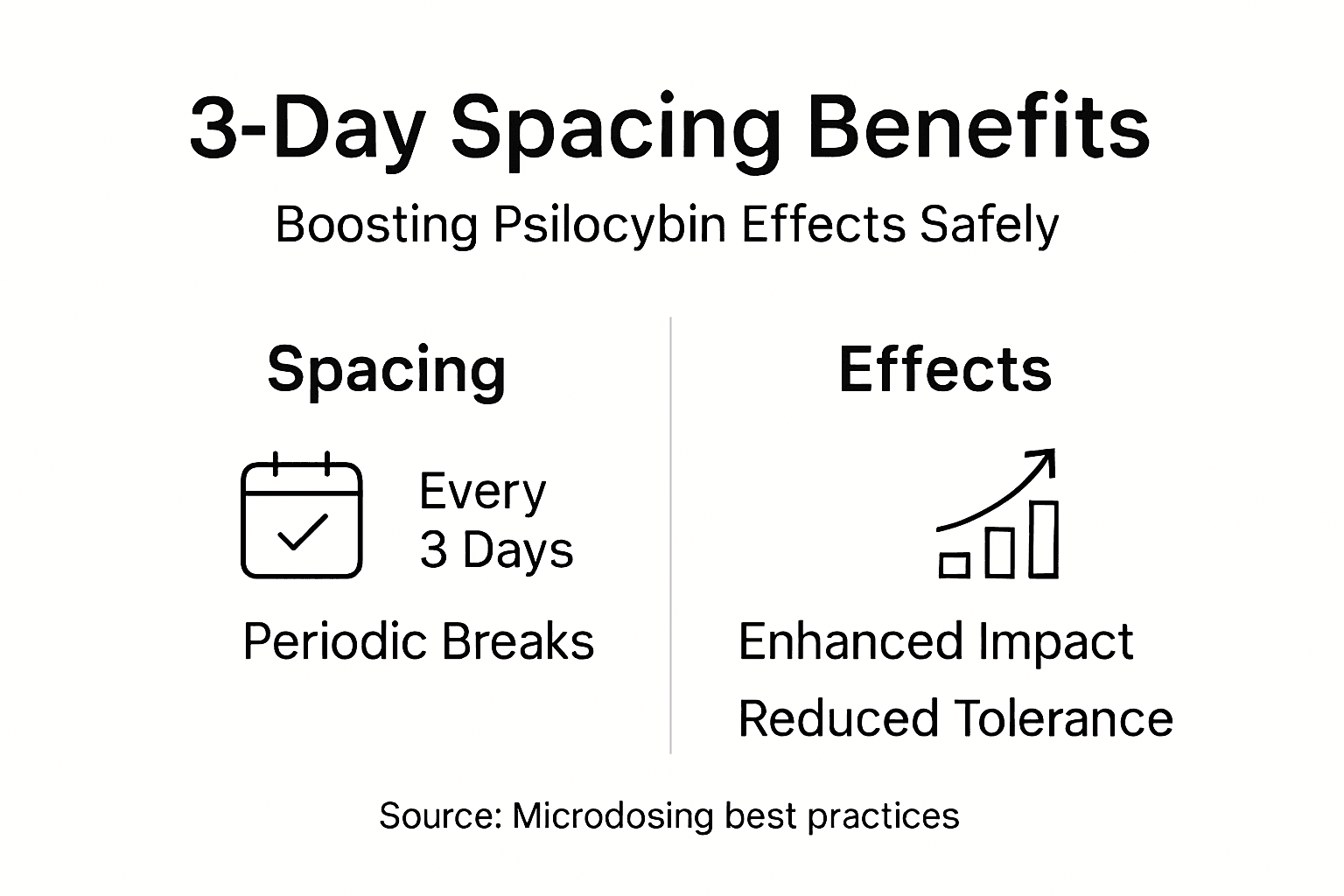
Implement periodic breaks of 5 to 7 days to reset receptor sensitivity fully. After a few weeks of microdosing, take a longer break. This ensures you return to baseline and prevent cumulative tolerance buildup.
Align microdosing schedules with your personal mental health goals and feedback. Track your mood, focus, and anxiety levels. If effects diminish, extend your dosing interval or take a break. Listening to your body is critical.
Actionable steps for safe microdosing:
- Space microdoses at least 3 days apart to prevent rapid tolerance buildup
- Implement periodic breaks of 5-7 days to reset receptor sensitivity
- Track effects in a journal to adjust timing and dosing for optimal results
- Avoid daily dosing, which accelerates tolerance and reduces benefits
- Prioritize consistency and spacing over dose size or mushroom strain
Pro Tip: Consistency and spacing are more critical than dose size or strain. A well-timed lower dose will outperform a higher dose taken too frequently. Trust the process and give your receptors the recovery time they need.
Resources like a beginner microdosing guide, safe microdosing method, and microdosing checklist provide structured support for implementing these strategies effectively.
Summary and Safe Use Recommendations
Psilocybin tolerance is a reversible adaptation resulting from 5-HT2A receptor desensitization. It develops within 2 to 3 days of repeated dosing and reverses after several days of abstinence. This process is distinct from addiction and involves no withdrawal symptoms.
Safe microdosing requires dose spacing of 3 to 4 days and periodic breaks to maintain receptor sensitivity. Proper tolerance management sustains mood, anxiety, and cognitive benefits over time. Educated use enhances therapeutic outcomes and builds user confidence.
Key principles for safe psilocybin use:
- Understand that tolerance is temporary and receptor-based, not a sign of harm
- Space doses every 3-4 days to prevent rapid tolerance development
- Take breaks of 5-7 days periodically to reset receptor sensitivity fully
- Track your mental health responses to adjust your schedule as needed
- Prioritize dosing frequency over strain choice or dose size for tolerance control
By aligning your microdosing practice with these insights, you maximize psilocybin’s therapeutic potential. Education empowers you to make informed decisions that support your mental health journey safely and effectively.
Explore Safe Microdosing with Fungal Friend
Ready to apply what you’ve learned? Fungal Friend offers expert guides to help you microdose safely and effectively. Discover evidence-based dosing schedules designed to manage tolerance and enhance your mental health benefits.
Our beginner microdosing guide walks you through every step, from choosing doses to tracking progress. Learn the safe microdosing method backed by research and trusted by Canadian adults seeking mood and focus support.
Browse our selection of microdose mushroom capsules crafted for consistent, reliable experiences. Each product is curated to support your journey with quality and transparency. Empower your mental health with trusted resources and safe, effective psilocybin solutions.
FAQ
What is psilocybin tolerance and how quickly does it develop?
Tolerance is a temporary decrease in psilocybin’s effects caused by serotonin receptor desensitization. It can develop within 2 to 3 days of repeated dosing. The process reverses after several days of abstinence, restoring full receptor sensitivity.
Does psilocybin cause addiction or withdrawal symptoms?
No, psilocybin does not cause addiction or physical withdrawal symptoms according to clinical studies. Tolerance is a pharmacological response and is reversible, unrelated to dependence or compulsive use patterns.
How can I prevent tolerance when microdosing psilocybin?
Prevent tolerance by spacing microdoses every 3-4 days and allowing regular breaks. Tracking your mood and focus helps you adjust your schedule to sustain efficacy. Avoid daily dosing to maintain receptor sensitivity.
Do different mushroom strains affect tolerance rates?
While psilocybin content varies by strain, dosing frequency is the key factor in tolerance development. Managing dose intervals is more important than strain choice for preventing tolerance. All strains follow the same receptor desensitization timeline.