
Psychedelic Tolerance: What It Means for Safe Use
Most American and Canadian adults exploring microdosing are surprised to learn that over 60 percent misjudge how psychedelic tolerance actually works. As more Canadians look for safe ways to support anxiety and focus, understanding these neurological adaptations becomes key. This article cuts through common myths about tolerance, giving you evidence-based insights on how your body responds to repeated psychedelic use for better mental health outcomes.
Table of Contents
- Defining Psychedelic Tolerance And Common Myths
- How Psychedelic Tolerance Develops In The Brain
- Types Of Tolerance: Short-Term Versus Long-Term Effects
- Cross-Tolerance: What Happens With Multiple Psychedelics
- Risks, Safety Implications, And Responsible Dosing
- Managing And Resetting Tolerance For Effective Use
Key Takeaways
| Point | Details |
|---|---|
| Understanding Psychedelic Tolerance | Tolerance involves complex neurochemical adaptations affecting sensory perception, not complete ineffectiveness after repeated use. |
| Factors Influencing Tolerance | Metabolism, genetics, and frequency of use significantly shape how quickly tolerance develops. |
| Types of Tolerance | Short-term tolerance occurs quickly, while long-term tolerance can last weeks or months, impacting psychological experiences. |
| Risks and Safety | Responsible dosing is vital; individuals should understand their health status and monitor cardiovascular responses carefully. |
Defining Psychedelic Tolerance and Common Myths
Psychedelic tolerance represents the body’s complex neurological adaptation where repeated exposure to psychedelic substances gradually reduces their psychological and physiological effects. Unlike simple drug resistance, tolerance involves sophisticated neurochemical changes in receptor sensitivity and neural pathway responsiveness. Understanding these mechanisms helps demystify common misconceptions about psychedelic experiences.
Many individuals mistakenly believe that psychedelic tolerance means complete ineffectiveness after multiple uses. However, scientific research reveals a more nuanced reality. Philosophical discussions on altered consciousness demonstrate that while tolerance develops, the potential for profound experiential insights remains. Tolerance primarily affects the intensity of sensory perception and psychological impact, not the fundamental neurological mechanisms underlying psychedelic interactions.
Cultural practices and individual biochemistry significantly influence tolerance development. Physiological factors like metabolism, body weight, frequency of use, and genetic predisposition play crucial roles in determining how quickly an individual develops psychedelic tolerance. Research from Dutch psychedelic practices highlights that responsible cultural contexts can help mitigate misconceptions about tolerance and promote safer, more intentional psychedelic experiences.
Pro tip: Track your individual tolerance response carefully by maintaining a detailed journal of dosage, frequency, and subjective effects to understand your unique neurological adaptation patterns.
How Psychedelic Tolerance Develops in the Brain
The brain’s response to psychedelic substances involves a sophisticated neurological adaptation process rooted in complex biochemical interactions. Neurobiological processes of receptor modulation reveal that repeated exposure triggers significant changes in neural network activity, particularly within the serotonergic system. These adaptive mechanisms fundamentally alter how brain cells respond to psychedelic compounds over time.
At the cellular level, psychedelics primarily interact with 5-HT2A serotonin receptors, initiating a cascade of neurochemical responses. Synaptic plasticity plays a critical role in tolerance development, with neurons gradually adjusting their sensitivity and responsiveness. Rapid neuronal excitation mechanisms demonstrate how repeated exposure leads to downregulation of receptor sites, effectively reducing the intensity and duration of psychedelic experiences.
Genetic and individual physiological variations significantly influence tolerance progression. Factors such as metabolic rate, neural connectivity, and individual neurochemistry determine the speed and extent of tolerance development. This personalized neuroadaptation process means that tolerance is not a uniform experience but a nuanced, individualized neurological response that can vary dramatically between different individuals.
This table summarizes common factors influencing individual psychedelic tolerance rates:
| Factor | Influence on Tolerance Development | Example Effect |
|---|---|---|
| Metabolism | Faster breakdown increases tolerance speed | Quicker adaptation |
| Genetic Predisposition | Specific genes impact receptor sensitivity | More or less sensitivity |
| Frequency of Use | Regular use accelerates tolerance | Reduced potency over time |
| Neural Connectivity | Unique brain networks shape responses | Individual experiences |
Pro tip: Implement strategic breaks between psychedelic experiences to allow your neurological system to reset and minimize rapid tolerance development.
Types of Tolerance: Short-Term Versus Long-Term Effects
Psychedelic tolerance manifests through two distinct neurological pathways: short-term and long-term adaptive responses that fundamentally alter an individual’s neurochemical and psychological experience. Acute tolerance mechanisms reveal a complex interplay between immediate neuroreceptor changes and prolonged psychological adaptations, creating a nuanced landscape of neurological responses.

Short-term tolerance represents an immediate neurochemical adjustment characterized by rapid receptor desensitization. Within hours or days of repeated psychedelic exposure, the brain’s 5-HT2A receptors downregulate, significantly reducing the compound’s perceptual and psychological intensity. Scientific reviews of tolerance effects demonstrate that these short-term changes can dramatically diminish the potency of subsequent doses, requiring strategic consumption intervals to maintain consistent experiential outcomes.
Long-term tolerance involves more profound neuroadaptive processes that extend beyond immediate receptor modifications. These protracted changes can persist for weeks or months, potentially altering neural connectivity, synaptic plasticity, and an individual’s psychological responsiveness to psychedelic substances. Genetic predisposition, frequency of use, and individual neurochemistry play crucial roles in determining the extent and duration of these long-term neurological adaptations.
Here’s a comparison of short-term and long-term psychedelic tolerance mechanisms:
| Aspect | Short-Term Tolerance | Long-Term Tolerance |
|---|---|---|
| Duration | Hours to days | Weeks to months |
| Neurochemical Changes | Rapid receptor desensitization | Deep synaptic adaptation |
| Impact on Experience | Reduced intensity, shorter effects | Possible lasting dampening, changes in psychological responsiveness |
| Reversibility | Often quick with abstinence | May require extended breaks |
Pro tip: Maintain a detailed personal log tracking dosage, interval, and subjective experiences to develop a personalized understanding of your unique tolerance development patterns.
Cross-Tolerance: What Happens With Multiple Psychedelics
Cross-tolerance emerges as a critical neurochemical phenomenon that fundamentally alters how different psychedelic substances interact within the human brain. Molecular receptor interactions demonstrate that substances targeting the same neuroreceptors can create significant mutual tolerance effects, dramatically reducing their individual psychological and perceptual impacts.
The primary mechanism of cross-tolerance centers on the serotonin 5-HT2A receptor, a critical neurological pathway shared by most classical psychedelics. Receptor desensitization processes reveal that repeated exposure to one psychedelic can substantially diminish the effectiveness of other psychedelics, creating a complex neuroadaptive response that limits the intensity and duration of subsequent experiences. This means that consuming psilocybin, LSD, or other similar compounds in close succession can significantly reduce their individual potency.
Individual variability plays a crucial role in cross-tolerance development. Factors such as genetic predisposition, metabolic rate, and frequency of use can dramatically influence how quickly and extensively cross-tolerance manifests. Some individuals may experience rapid receptor desensitization, while others might maintain greater neurological responsiveness, making personalized approach and careful tracking essential for understanding one’s unique neurochemical adaptations.
Pro tip: Implement strategic waiting periods between different psychedelic experiences to minimize cross-tolerance and maintain optimal neurological sensitivity.
Risks, Safety Implications, and Responsible Dosing
Responsible psychedelic use demands a nuanced understanding of potential risks and safety considerations that extend beyond casual consumption. Comprehensive safety profile assessments reveal that while psychedelics demonstrate relatively favorable risk characteristics, careful monitoring and strategic dosing remain paramount for minimizing adverse outcomes.
Cardiovascular responses represent a critical domain of safety concern. Psychedelics can trigger physiological changes including increased heart rate and blood pressure, necessitating careful screening and individualized risk assessment. Cardiovascular monitoring becomes essential, particularly for individuals with pre-existing heart conditions or underlying health vulnerabilities. Global regulatory perspectives emphasize the importance of establishing robust clinical protocols that account for diverse population health variations.
The concept of responsible dosing transcends simple quantity measurements. It encompasses a holistic approach involving psychological preparation, environmental context, individual physiological tolerance, and ongoing self-assessment. Factors such as mental health history, current psychological state, medication interactions, and personal neurochemical variability must be carefully evaluated before and during psychedelic experiences. Creating a comprehensive risk mitigation strategy involves understanding one’s unique physiological and psychological landscape.
Pro tip: Develop a personalized safety checklist that includes medical history review, current health status, medication interactions, and planned harm reduction strategies before engaging in any psychedelic experience.
Managing and Resetting Tolerance for Effective Use
Managing psychedelic tolerance requires a strategic and nuanced approach that balances neurochemical adaptation with therapeutic potential. Intermittent dosing strategies demonstrate that carefully planned treatment protocols can optimize receptor sensitivity and minimize rapid tolerance development, ensuring more consistent and meaningful psychedelic experiences.
The concept of drug holidays emerges as a critical mechanism for neurological reset. By implementing intentional abstinence periods, individuals can allow their neuroreceptors to recalibrate, effectively reducing tolerance and restoring the potential for profound psychological insights. Clinical treatment guidelines increasingly emphasize the importance of structured recovery intervals that support both physiological and psychological healing processes.
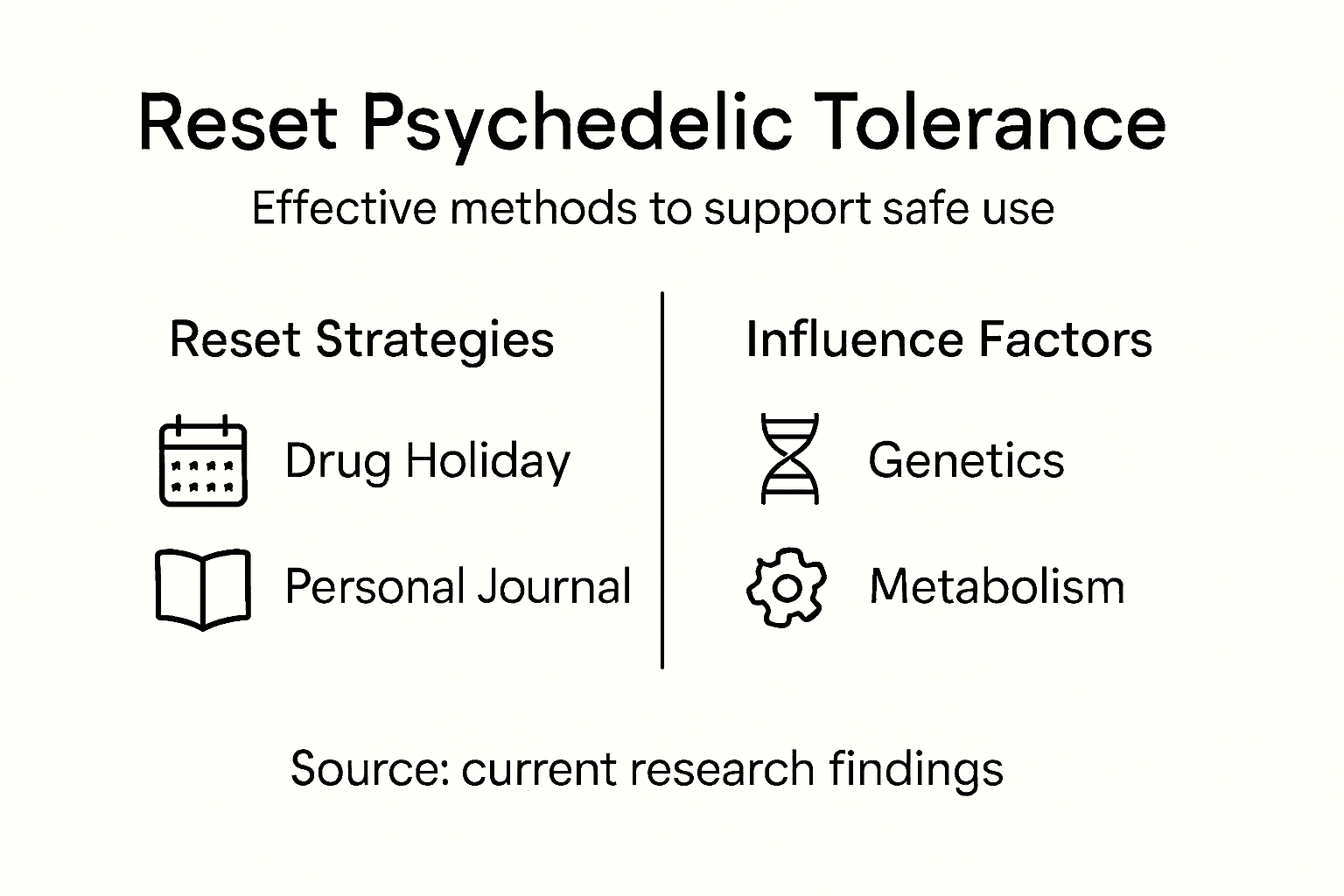
Individual variability plays a significant role in tolerance management. Factors such as metabolism, genetic predisposition, frequency of use, and overall health can dramatically influence how quickly tolerance develops and how effectively it can be reset. A personalized approach that considers these unique physiological characteristics becomes essential for maintaining the therapeutic potential of psychedelic experiences while minimizing potential risks associated with repeated exposure.
Pro tip: Track your personal tolerance progression through a detailed journal documenting dosage, frequency, subjective experiences, and recovery periods to develop a customized tolerance management strategy.
Take Control of Psychedelic Tolerance with Thoughtful Choices
Understanding psychedelic tolerance is essential for safe and effective use. The article highlights key challenges such as rapid receptor desensitization, cross-tolerance between substances, and individual variability in neurological adaptation. These factors can leave you feeling frustrated when your chosen dose no longer delivers the clarity, mood balance, or insight you seek. Knowing how to manage tolerance through strategic breaks and careful dosing is crucial for maintaining the full potential of your psychedelic experiences.

At Fungal Friend, we offer a curated selection of microdose psilocybin mushrooms and related products designed to support your unique tolerance journey. Whether you need guidance on dosage, strain differences, or want to explore responsible consumption strategies, our educational resources and premium options have you covered. Start optimizing your experience today by exploring our Uncategorized Archives – Fungal Friend for answers and visit Fungal Friend to find products that help you reset and manage tolerance safely. Take the next step in your psychedelic journey with confidence and care.
Frequently Asked Questions
What is psychedelic tolerance?
Psychedelic tolerance is the body’s neurological adaptation to repeated exposure to psychedelic substances, leading to a gradual reduction in their psychological and physiological effects.
How does tolerance develop in the brain?
Tolerance develops through complex biochemical interactions, particularly involving the serotonin 5-HT2A receptors, which adjust their sensitivity and responsiveness to psychedelics over repeated use.
What are the differences between short-term and long-term tolerance?
Short-term tolerance occurs quickly, affecting receptor sensitivity within hours or days, while long-term tolerance involves deeper neuroadaptive changes that can last weeks to months, influencing overall psychological responsiveness.
How can I manage and reset my psychedelic tolerance?
To manage and reset tolerance, consider implementing strategic breaks, or “drug holidays,” between experiences to allow your neurochemistry to recalibrate, ensuring more consistent and meaningful psychedelic effects.