
Psilocybin Trends in 2025: Wellness, Law, and Safety
Stress and anxiety can quietly erode your focus and mood, leaving even small tasks feeling overwhelming. More Canadians are exploring psilocybin as a possible path to relief, from microdosing routines to therapeutic sessions. Science shows that psilocybin’s unique interaction with the brain’s serotonin system holds promise for mental wellness, but misconceptions and safety questions still cloud the conversation. This guide clears up key facts and details how safe, informed psilocybin use is unfolding in Canada in 2025.
Table of Contents
- Psilocybin Mushrooms Defined And Misconceptions
- Microdosing, Full Dose, And Product Innovations
- Mental Health Benefits And Use Cases
- Legal Status In Canada And Worldwide Shifts
- Risks, Quality Control, And Safety Protocols
- Cost Factors, Access, And Industry Alternatives
Key Takeaways
| Point | Details |
|---|---|
| Understanding Psilocybin | Psilocybin is being explored for its potential therapeutic benefits, particularly in addressing anxiety and depression without causing addiction or long-term harm. |
| Microdosing vs. Full Dosing | Microdosing offers subtle benefits and is seen as a practical entry point for many, while full doses provide deeper therapeutic experiences under controlled conditions. |
| Legal and Safety Considerations | Psilocybin’s legal status remains complex in Canada, and users must navigate potential risks and quality control issues in unregulated markets. |
| Access and Cost Factors | Clinical access to psilocybin therapy can be expensive, driving many individuals towards more affordable microdosing alternatives for personal exploration. |
Psilocybin Mushrooms Defined and Misconceptions
Psilocybin is a naturally occurring compound found in certain mushroom species across the globe, and it’s what gives these fungi their common nickname: magic mushrooms. The chemical itself isn’t what creates effects in your body—instead, your liver metabolizes psilocybin into psilocin, which then interacts with your brain’s serotonin system to produce changes in perception, emotion, and cognition. What makes this relevant to you in 2025 is that psilocybin affects serotonin in ways researchers believe could help address anxiety, depression, and other mood disorders that many Canadian adults struggle with daily.
Here’s where misconceptions get in the way of real understanding. Most people assume psilocybin is addictive because of its psychoactive nature, but research doesn’t support this claim. There’s no evidence that psilocybin creates physical dependence or compulsive use patterns like opioids or stimulants do. Another common myth is that psilocybin is inherently dangerous or will cause permanent psychological damage. While dosing and set-and-setting matter significantly, clinical research shows that carefully monitored use in therapeutic contexts produces measurable benefits without long-term harm. The real challenge isn’t the substance itself—it’s the lack of clear dosing standards and comprehensive safety data from real-world use, which researchers are actively working to establish. Many people also conflate psilocybin with other drugs entirely, lumping it together with substances that have completely different mechanisms and risk profiles.
What complicates this picture in Canada specifically is that while clinical evidence supports psilocybin’s efficacy for mood and anxiety disorders, misconceptions about legality and safety persist. The stigma from decades of prohibition hasn’t evaporated just because research has accelerated. People worry about unknown long-term effects, potential interactions with medications, and whether they’ll experience the intense visual hallucinations they’ve heard about in stories. The reality is more nuanced. Therapeutic microdosing (taking sub-perceptual amounts) produces different effects than recreational doses, and individual responses vary based on brain chemistry, body weight, tolerance, and many other factors. Understanding these distinctions matters if you’re evaluating psilocybin as a potential tool for managing anxiety or enhancing focus—which many Canadians are doing right now as research legitimacy increases.
Pro tip: If you’re considering psilocybin for wellness, start by understanding your own baseline—what you’re hoping to address (anxiety, focus, mood) and what you currently take (medications, supplements) so you can make informed decisions about safety and dosing.
Microdosing, Full Dose, and Product Innovations
Microdosing and full-dose psilocybin represent two fundamentally different approaches to using these mushrooms, and understanding the distinction matters for your wellness goals. Microdosing involves taking sub-hallucinogenic doses of psilocybin, typically one-tenth to one-twentieth of a full recreational dose, taken on intermittent schedules (often every three days or twice weekly). The appeal is straightforward: you’re seeking subtle enhancements to mood, focus, and creativity without the intense perceptual shifts that come with larger doses. Many Canadian adults experimenting with microdosing report improved anxiety management, better concentration at work, and enhanced emotional resilience—all while maintaining normal daily functioning and no obvious signs of drug use. However, research on microdosing efficacy remains inconclusive due to variable methodologies and strong placebo effects, so individual experiences vary significantly.
Full-dose experiences operate in entirely different territory. These involve consuming amounts substantial enough to produce profound psychological experiences, including visual and sensory changes, altered time perception, and deep introspective states. Full doses remain central to clinical psychedelic therapy protocols because researchers have documented measurable therapeutic benefits for treatment-resistant depression, end-of-life anxiety, and PTSD in controlled settings. The trade-off is real: full-dose experiences carry greater intensity, require careful preparation and a supportive environment, and involve more pronounced physiological effects and psychological intensity. For most people exploring psilocybin in 2025, the choice hinges on intention. Are you looking for a subtle daily cognitive boost (microdosing territory) or a transformative therapeutic experience (full dose)? Your answer shapes everything about how you approach this.
Product innovations are accelerating rapidly in response to growing interest. Delivery methods now include microdose capsules for consistent, measurable dosing, infused teas and chocolates for easier consumption, and emerging formulations combining psilocybin with other compounds like Lion’s Mane or B vitamins to enhance specific outcomes. Novel dosing schedules are being researched to optimize therapeutic benefits while reducing adverse effects, and some innovators are exploring how microdosing combined with neurofeedback might enhance results. A 2025 survey shows that nearly half of all psilocybin use days in the US involve microdose amounts, reflecting a clear market trend toward accessible, lower-risk options. For Canadian consumers, this means more consistent products, better information about what you’re consuming, and options tailored to specific wellness goals rather than one-size-fits-all approaches.
Below is a quick reference for common psilocybin product options and their key features:
| Product Type | Main Advantage | Typical Drawback |
|---|---|---|
| Capsules | Precise dosing, discreet use | Limited personalization of dose |
| Infused Teas | Easy to ingest, gentle onset | Difficult to standardize potency |
| Chocolates | Palatable, masks flavor | Can contain variable psilocybin content |
| Combination Formulas | Targeted effects (e.g., cognition) | Effects less predictable, higher cost |
Pro tip: Start with microdosing if you’re new to psilocybin, track your subjective effects for at least four weeks in a journal, and adjust timing or dose only after collecting real data about what actually works for your body and lifestyle.
Here’s how microdosing compares to full-dose psilocybin use:
| Aspect | Microdosing | Full Dose |
|---|---|---|
| Typical Effects | Subtle mood/focus changes | Intense psychological experience |
| Dose Amount | 1/10 to 1/20 of full dose | Full recreational/clinical dose |
| Supervision Needed | Not typically required | Strongly recommended |
| Risk Level | Low for healthy adults | Higher; increased psychological distress risk |
| Suitability | Daily wellness, focus, mild mood support | Deep therapy, major mental health needs |
| Integration Effort | Minimal (journaling) | High (integration therapy encouraged) |
Mental Health Benefits and Use Cases
The mental health applications of psilocybin represent one of the most compelling areas of research in psychedelic medicine, and the evidence keeps accumulating. Large-scale longitudinal studies document that naturalistic psilocybin use correlates with lasting improvements in anxiety, depression, and burnout, while simultaneously enhancing cognitive flexibility and emotion regulation. What makes this relevant to you in Canada right now is that these aren’t theoretical benefits from tightly controlled lab settings. Real people using psilocybin in natural settings report measurable improvements in how they think, feel, and process emotional challenges. Many Canadian adults struggling with workplace burnout, relationship anxiety, or the persistent low-level depression that modern life can trigger are exploring psilocybin as an alternative to pharmaceutical antidepressants that sometimes feel ineffective or come with unwanted side effects. The catch? Clinical research shows promise for specific conditions, but optimal dosing and patient selection remain unclear, meaning your individual results depend heavily on your situation, expectations, and the support system around your use.

Clinical trials have shown psilocybin’s effectiveness for distinct mental health conditions. Treatment-resistant depression responds particularly well, with some patients experiencing lasting mood improvements after just one or two guided sessions. Anxiety disorders, including existential anxiety in people facing terminal illness, show significant symptom reduction. Obsessive-compulsive disorder, PTSD, and substance use disorder all demonstrate therapeutic potential in clinical research, though implementation barriers and safety considerations still require careful navigation. The mechanism appears to involve psilocybin’s ability to temporarily reorganize neural networks, allowing your brain to break rigid thought patterns and form new connections. For someone with anxiety, this might mean your catastrophizing tendencies lose their grip. For depression, it might mean rediscovering emotional texture in experiences that felt flat. For OCD, it might mean the intrusive thoughts lose their compulsive pull. The therapeutic potential exists, but it’s not a straightforward cure.
Real-world use cases among Canadian microdosers tend toward anxiety reduction and focus enhancement rather than treating diagnosed mental health conditions. People take small, regular doses to manage social anxiety before work meetings, reduce rumination that keeps them awake at night, or improve their ability to concentrate on complex tasks. Some use psilocybin specifically for mood stabilization, reporting that consistent microdosing creates emotional resilience rather than dramatic mood shifts. Others pursue it for grief processing or as a complement to talk therapy. These applications sit in a gray zone: they’re based on personal experience rather than clinical evidence, but they’re also not replacing established treatments. Most importantly, a minority of users do experience adverse effects, ranging from temporary anxiety spikes to difficult introspective episodes. Your mental health baseline, current medications, and personal psychology all influence whether psilocybin helps or harms.
Pro tip: If you’re considering psilocybin for anxiety or depression, don’t use it as a replacement for professional mental health support; instead, integrate it thoughtfully alongside therapy or medical care, and consult with a healthcare provider about potential drug interactions before starting.
Legal Status in Canada and Worldwide Shifts
Canada’s legal position on psilocybin is more complex than many people realize, and it’s shifting in real time. Currently, psilocybin mushrooms remain controlled under the Canadian Controlled Drugs and Substances Act, meaning possession without authorization is illegal. However, Health Canada has created a pathway for patients with terminal illnesses to access psilocybin-assisted therapy through Special Access Programme exemptions, which began in 2021. This represents a significant crack in the prohibition framework, acknowledging therapeutic value while maintaining legal restrictions for general use. What this means for you right now is that buying psilocybin products isn’t a straightforward legal transaction in Canada, though the regulatory environment is more permissive than in most countries. Many Canadian adults are watching closely as regulatory frameworks develop, knowing that decriminalization or legalization could happen in the coming years based on both clinical evidence and shifting public opinion.
Globally, the legal landscape for psilocybin is fracturing rapidly. Several jurisdictions worldwide are decriminalizing or legalizing psilocybin for therapeutic purposes, creating a patchwork of legal approaches ranging from full decriminalization to regulated medical use to emerging legal markets. Some US states and cities have decriminalized psilocybin possession, while others have established licensed psilocybin-assisted therapy programs with trained facilitators. The federal US classification of psilocybin as a Schedule I substance hasn’t changed, but the gap between federal and state law creates a situation where therapeutic use exists in legal gray zones. In other parts of the world, religious or ceremonial psilocybin use has been protected in certain contexts, and some countries permit research that would be difficult to conduct elsewhere. This international variation matters because it influences policy momentum. When multiple jurisdictions demonstrate that regulated psilocybin access works without causing public harm, Canadian policymakers face mounting pressure to follow suit.
The movement toward regulated therapeutic access reflects a genuine shift in how governments view psilocybin. Clinical evidence from major research institutions, regulatory pathways like Health Canada’s Special Access Programme, and changing attitudes among healthcare professionals have legitimized research and therapeutic applications. However, legal status doesn’t necessarily align with safety or accessibility. A substance can be illegal in your jurisdiction but widely available through informal channels, creating uncertainty about product quality and legal risk. Conversely, legal access in another jurisdiction might involve extensive medical screening and high costs. For Canadian consumers in 2025, understanding the legal landscape means recognizing that psilocybin exists in a transitional zone. The legal restrictions remain in place, but they’re becoming more permeable for therapeutic purposes, and the trajectory suggests further liberalization over the next few years. This creates both opportunity and responsibility to stay informed as policy evolves.
Pro tip: Before considering any psilocybin products, research the current legal status in your specific Canadian province, consult with a healthcare provider about therapeutic options, and stay informed about Health Canada announcements regarding Special Access Programme criteria or potential regulatory changes.
Risks, Quality Control, and Safety Protocols
Psilocybin isn’t risk-free, and pretending otherwise does a disservice to anyone considering it. Acute effects can include perceptual distortions, intense emotions, and elevated heart rate, particularly with higher doses. The psychological intensity can trigger distress in people with certain predispositions, especially those with a personal or family history of psychosis or schizophrenia. During the experience itself, impaired judgment creates real safety concerns. Someone under the influence might take physical risks they normally wouldn’t, from driving to dangerous environments to poor decision making that creates lasting consequences. For microdosers, these acute risks are minimal because sub-perceptual doses don’t produce the intensity that causes acute distress. But full-dose experiences demand respect, preparation, and ideally a trained facilitator or trusted, sober person present. The clinical research on psilocybin-assisted therapy works specifically because of robust screening protocols, mental health assessment, and professional supervision. These aren’t unnecessary bureaucratic steps; they’re what makes therapeutic use actually safe.
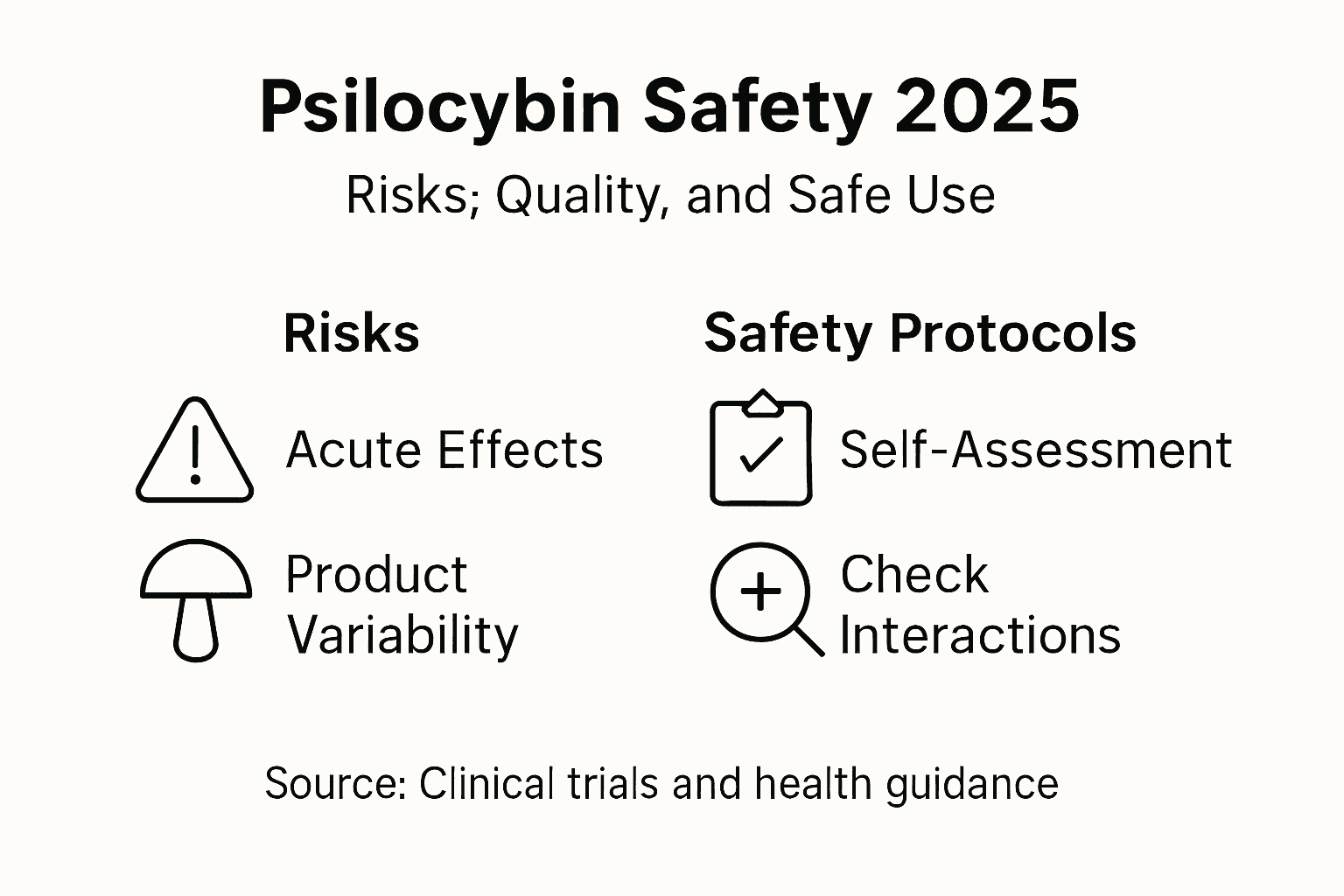
Quality control represents a massive problem in unregulated psilocybin markets. Content variability is real. Two mushrooms of identical appearance can contain vastly different psilocybin concentrations depending on growing conditions, strain genetics, and storage methods. Contamination risks range from bacterial growth to mold to heavy metals absorbed from growing substrates. When you’re consuming a product without third-party testing or standardized manufacturing, you’re essentially guessing at what you’re ingesting. This creates compounding problems: you can’t accurately dose, you can’t predict effects, and you’re potentially exposing yourself to harmful contaminants. This is why pharmaceutical-grade psilocybin products, when they become available through regulated channels, will be genuinely safer than raw mushrooms from unknown sources. The standardization matters enormously. A 10-milligram microdose capsule that’s actually 10 milligrams every time is categorically different from consuming a mushroom that might contain 5 milligrams or 25 milligrams. For Canadian consumers right now, this quality uncertainty is a real factor in the risk calculation.
Safety protocols matter at every stage. Before use, conduct honest self-assessment: Do you have psychiatric vulnerabilities? Are you on medications that might interact? What’s your mental state right now? During use, set and setting determine outcome more than most people realize. Set means your mindset going in. Setting means your physical environment and the people around you. A tense, chaotic environment with skeptical or hostile people nearby creates risk. A calm, intentional space with supportive people creates safety. After use, integration matters. Many people skip this step, but processing what you experienced, discussing insights with someone knowledgeable, and allowing your brain to consolidate the experience reduces adverse outcomes. Clinical trials work because they incorporate all these elements systematically.
Pro tip: If you proceed with psilocybin, use a safety checklist before your first experience covering medication interactions, mental health screening, trusted companions, and emergency planning, treating preparation as seriously as the experience itself.
Cost Factors, Access, and Industry Alternatives
Access to psilocybin-assisted therapy through clinical channels remains prohibitively expensive for most Canadian adults. A single session with a licensed therapist in a clinical setting typically costs between $500 and $2,000, and meaningful therapeutic outcomes often require multiple sessions over several months. Add in the initial psychiatric evaluation, integration therapy, and follow-up care, and you’re looking at total costs that insurance typically doesn’t cover. For someone earning a median Canadian income, this represents a genuine financial barrier that prevents them from accessing what might be life-changing treatment. Legal restrictions and high costs associated with clinical treatment settings create a situation where therapeutic psilocybin remains accessible primarily to wealthy patients or those in specific research programs. This inequity is driving policy conversations and innovations aimed at bringing costs down and access up.
The industry is responding with creative alternatives that could reshape affordability. Group-based psilocybin-assisted therapy has demonstrated significant depression symptom reductions in low-income patients, offering a scalable model that reduces per-person costs substantially compared to individual sessions. Instead of paying thousands for one-on-one therapy, participants in group settings might pay hundreds. Some research institutions are exploring sliding-scale pricing, community clinic models, and training peer facilitators to reduce overhead. Decriminalization efforts in various jurisdictions are creating space for non-clinical therapeutic settings where costs drop even further. These aren’t perfect solutions. Group therapy requires careful facilitation, and peer-led models need quality oversight. But they represent genuine progress toward making therapeutic psilocybin accessible beyond the wealthy elite.
Microdosing products represent an entirely different access point, one that bypasses clinical infrastructure entirely. Capsules, teas, and chocolates formulated for microdosing cost significantly less than full-dose therapeutic protocols because they don’t require professional supervision or extensive clinical infrastructure. A month of microdosing products might cost $50 to $150 compared to thousands for clinical therapy. This affordability makes microdosing accessible to Canadian adults exploring psilocybin for wellness, anxiety reduction, or focus enhancement without entering the healthcare system. The trade-off is clear: you’re not getting professional guidance, clinical-grade products, or therapeutic integration. You’re managing your own experience with the support of research information and community knowledge. For many people, this is the actual entry point to psilocybin exploration in 2025. As regulations evolve and clinical therapies become more accessible through decriminalization models, the landscape will shift. But right now, cost accessibility and legal reality point most Canadian adults toward microdosing rather than formal therapy.
Pro tip: If cost is a barrier to psilocybin exploration, start with microdosing products to understand how psilocybin affects your specific neurobiology before committing to expensive clinical therapy, gathering personal data that makes future therapeutic decisions more informed and targeted.
Discover Safe and Effective Psilocybin Solutions at Fungal Friend
Navigating the complex world of psilocybin in 2025 can feel overwhelming with all the legal nuances, safety concerns, and varying dosages discussed in the latest trends. If you are seeking natural support for anxiety reduction, mood balance, or focus enhancement, understanding microdosing and product quality is essential. At Fungal Friend, we specialize in providing carefully curated psilocybin capsules, infused teas, and chocolates designed to offer consistent dosing and a safer experience tailored to your wellness goals. Our emphasis on education and safety helps you start with confidence and avoid common pitfalls like unpredictable potency or improper dosing.
Explore our selection today at Fungal Friend and take the first step toward responsible microdosing. Whether you want to manage anxiety, boost focus, or experiment with low-risk wellness products, our site offers detailed guidance to help you make informed choices. Don’t let uncertainty or misinformation hold you back. Visit Uncategorized Archives – Fungal Friend to learn more insights and see how our products align with current psilocybin trends. Be proactive about your mental health and wellness with accessible, high-quality psilocybin products — shop now and experience why more Canadians trust Fungal Friend.
Frequently Asked Questions
What is psilocybin and how does it affect the body?
Psilocybin is a naturally occurring compound found in certain mushrooms, commonly known as magic mushrooms. It is metabolized into psilocin in the body, which interacts with the brain’s serotonin system, leading to changes in perception, emotion, and cognition.
What is the difference between microdosing and full-dose psilocybin?
Microdosing involves taking sub-hallucinogenic doses of psilocybin to enhance mood, focus, or creativity without experiencing intense perceptual changes. In contrast, full-dose psilocybin produces profound psychological effects, including visual alterations and deep introspective experiences.
Are psilocybin mushrooms safe to use?
While psilocybin mushrooms have shown therapeutic potential, especially in controlled clinical settings, they aren’t risk-free. The safety of psilocybin use depends on various factors like dosage, individual mental health history, and the environment in which they are consumed. Careful preparation and supervision are essential for full doses.
How can I assess if psilocybin is right for me before trying it?
Before trying psilocybin, conduct a personal assessment of your mental health, current medications, and wellness goals. It’s also crucial to consult with a healthcare provider regarding any potential interactions and to consider integrating psilocybin use with existing mental health support.