
Safety of Psilocybin Microdosing – What Canadians Need to Know
Most American microdosing trends spark curiosity among Canadian adults seeking safer ways to manage anxiety and sharpen focus. With over 30% of working Canadians reporting persistent stress and attention challenges, the search for effective alternatives feels urgent. This guide breaks down facts and common myths about psilocybin microdosing, offering clear insight on legal access points, product types, and health risks specifically relevant for those who prefer to shop online.
Table of Contents
- Psilocybin Microdosing Defined and Debunked
- Types of Psilocybin Products and Dosing
- How Microdosing Works in the Body
- Canadian Legal Status and Safe Access Points
- Risks, Side Effects, and Product Quality Issues
Key Takeaways
| Point | Details |
|---|---|
| Understanding Microdosing | Psilocybin microdosing involves consuming sub-hallucinogenic doses to potentially enhance cognitive functions without profound psychological effects. |
| Product Variation | Psilocybin products vary in formulation, including dried mushrooms, powdered extracts, and synthetic options, each with distinct dosing characteristics. |
| Legal Status in Canada | Psilocybin is classified as a Schedule III controlled substance in Canada, with limited legal access primarily for medical and research purposes. |
| Risks and Monitoring | Microdosing can lead to psychological and physiological risks, necessitating careful monitoring and professional guidance for individual health assessments. |
Psilocybin Microdosing Defined and Debunked
Psilocybin microdosing represents a nuanced approach to consuming psychedelic substances at sub-hallucinogenic levels, designed to potentially enhance cognitive function without inducing intense psychedelic experiences. Current research explores psychological outcomes across diverse populations, examining potential benefits and risks associated with this emerging practice.
At its core, microdosing involves consuming extremely small quantities of psilocybin – typically between 0.1 to 0.3 grams – which are intentionally below the threshold required to trigger full sensory alterations or profound psychological shifts. Unlike traditional psychedelic experiences that involve substantial perception changes, microdosing aims to provide subtle neurological modulation potentially supporting mood regulation, creativity, and cognitive flexibility.
However, scientific understanding remains complex. Existing research demonstrates methodological limitations that challenge definitive conclusions about microdosing’s comprehensive effects. While anecdotal reports suggest potential advantages in mental health and performance enhancement, rigorous scientific evaluation continues to parse placebo influences from genuine neurological interactions.
Pro tip: Always consult healthcare professionals and thoroughly research individual physiological responses before considering any microdosing regimen.
Types of Psilocybin Products and Dosing
Psilocybin products encompass a diverse range of formulations designed to meet various consumption preferences and therapeutic objectives. Precise measurement techniques enable potency standardization across different product types, including dried mushrooms, powdered extracts, capsules, and synthetic preparations.
The most common psilocybin product categories include whole dried mushrooms, which represent the most traditional consumption method, and processed formats like ground powders, gelatin capsules, and standardized extract concentrations. Synthetic psilocybin, often used in clinical research settings, provides more consistent dosing compared to natural mushroom variations. Dosage ranges typically follow a structured approach: microdoses (0.1-0.3 grams), threshold doses (0.5-1 grams), and moderate to high therapeutic doses (2-3.5 grams), each serving distinct potential psychological and neurological purposes.

Clinical research predominantly focuses on controlled synthetic psilocybin preparations, which allow for more precise dosing and consistent molecular interactions. These preparations range from sub-perceptual microdoses intended to provide subtle cognitive enhancements to higher therapeutic doses designed for targeted mental health interventions. The variability in natural mushroom potency underscores the importance of professional guidance and careful product selection.
Pro tip: Always verify product sourcing, consult professional healthcare guidance, and start with the lowest possible dose when exploring psilocybin products.
Here’s a concise summary of psilocybin product types and their unique characteristics:
| Product Type | Common Use | Dosing Precision | Notable Feature |
|---|---|---|---|
| Dried Mushrooms | Traditional | Low | Variable potency |
| Powdered Extracts | Flexible | Moderate | Easier to dose by weight |
| Capsules | Convenient | High | Pre-measured servings |
| Synthetic Psilocybin | Clinical/Research | Very High | Reliable consistency |
How Microdosing Works in the Body
Psilocybin interacts with the human body through a complex neurochemical mechanism primarily targeting the brain’s serotonin receptors. Neuroplasticity research reveals subtle brain modifications that occur during microdosing, fundamentally altering neural connectivity without inducing full psychedelic experiences.
At the molecular level, psilocybin is rapidly metabolized into psilocin, which actively binds with serotonin 5-HT2A receptors scattered throughout the brain’s cortical regions. This receptor interaction triggers nuanced neurological changes, potentially enhancing cognitive flexibility, emotional processing, and stress resilience. Unlike traditional psychedelic doses, microdoses create minimal perceptual alterations while potentially promoting neurogenesis and increased synaptic plasticity.
The physiological response to microdosing involves intricate interactions between neurotransmitter systems, with emerging evidence suggesting potential long-term neurological adaptations. Repeated low-dose exposures may modulate brain connectivity, reduce compulsive behavioral patterns, and support enhanced emotional regulation. These molecular-level changes could explain reported improvements in mood, creativity, and overall cognitive function among microdosing practitioners.
Pro tip: Start a detailed journal tracking your physiological and psychological responses when exploring microdosing to understand your unique neurological interactions.
Canadian Legal Status and Safe Access Points
Psilocybin remains a tightly regulated substance in Canada, with strict legal controls governing its possession and use. Currently classified as a Schedule III controlled substance, psilocybin is illegal for general public consumption, with only limited exceptions for specific medical and research purposes.
Legal access to psilocybin in Canada primarily occurs through three primary channels: Health Canada’s Special Access Program, authorized clinical trials, and rare ministerial exemptions for individuals with serious medical conditions. Patients seeking therapeutic use must navigate a complex regulatory landscape that requires formal medical documentation, professional recommendations, and direct approval from federal health authorities. Recent legal advocacy has gradually expanded therapeutic access, creating more nuanced pathways for individuals with treatment-resistant mental health conditions.
The legal framework surrounding psilocybin reflects Canada’s cautious approach to emerging psychedelic therapies. While recreational use remains prohibited, the medical and scientific community continues to explore potential therapeutic applications. Healthcare professionals, researchers, and patients must work within strict regulatory guidelines, ensuring comprehensive medical oversight and patient safety when considering psilocybin-based treatments.
Pro tip: Always consult legal and medical professionals before attempting to access psilocybin, and maintain comprehensive documentation of medical necessity.
Risks, Side Effects, and Product Quality Issues
Real-world psilocybin use reveals complex health implications, with potential benefits accompanied by significant psychological and physiological risks. Microdosing introduces nuanced challenges that extend beyond traditional medication considerations, demanding careful individual assessment and professional guidance.
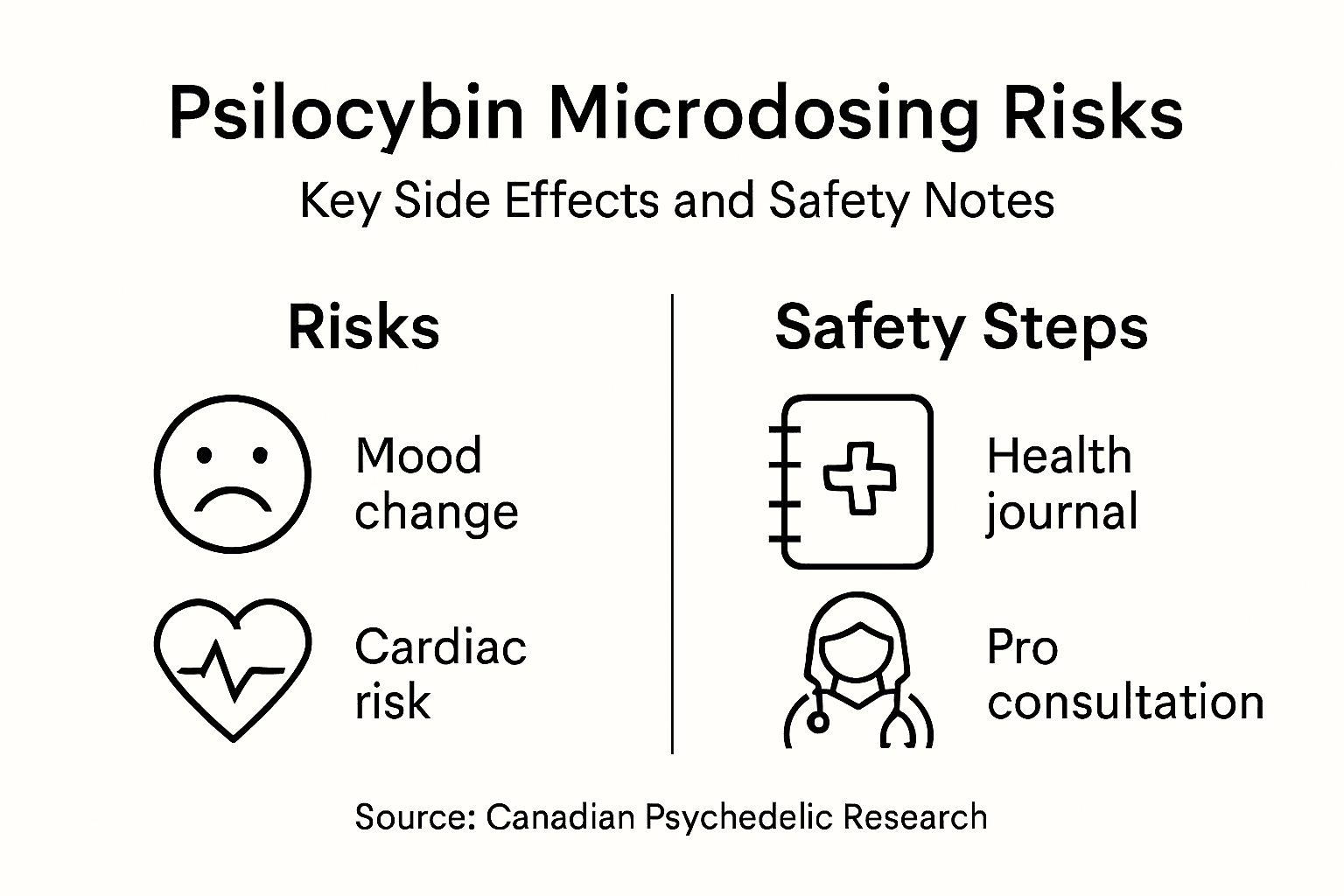
Psychological side effects can include mood fluctuations, potential exacerbation of underlying mental health conditions, and unexpected emotional responses. Some users report increased anxiety, depressive symptoms, or temporary cognitive disruptions. The variability of individual neurological responses underscores the importance of personalized medical consultation and comprehensive health screening before exploring psilocybin microdosing.
Potential cardiac risks emerge from long-term microdosing, particularly concerning serotonin receptor interactions that might impact heart valve health. The metabolite psilocin’s high affinity for specific serotonin receptors raises potential concerns about valvular heart disease with chronic use. These cardiovascular implications demand rigorous medical monitoring and periodic health assessments for individuals considering extended microdosing protocols.
Pro tip: Maintain a detailed health journal documenting any physical or psychological changes, and schedule regular check-ups with healthcare professionals who understand psychedelic medicine.
Here is a comparison of common psilocybin microdosing risks and their monitoring strategies:
| Risk Type | Potential Impact | Monitoring Approach |
|---|---|---|
| Psychological | Mood disturbance | Regular mood check-ins |
| Physiological | Heart health risks | Periodic cardiovascular exams |
| Product Quality | Dosage inconsistencies | Source verification |
| Legal | Fines or prosecution | Legal counsel consultation |
Discover Safe and Responsible Psilocybin Microdosing Solutions
Navigating the safety concerns and legal challenges of psilocybin microdosing in Canada requires reliable information and trusted product sourcing. This article highlights key risks such as dosage precision, psychological responses, and legal restrictions that many Canadians face when exploring microdosing for mood balance, anxiety relief, or cognitive focus. At Fungal Friend, we understand the importance of careful guidance and product quality to support your journey safely.
Explore our carefully curated selection of microdose-friendly psilocybin mushroom capsules, infused teas, and chocolate blends especially designed for newcomers and experienced users alike. Our commitment to education, transparency, and discreet service helps you make informed choices while respecting Canadian laws. Visit the Uncategorized Archives – Fungal Friend for insightful resources that deepen your understanding. Start with confidence today and experience natural, thoughtful support for your wellness goals at Fungal Friend.
Frequently Asked Questions
What is psilocybin microdosing?
Psilocybin microdosing involves taking very small amounts of psilocybin, typically 0.1 to 0.3 grams, to potentially enhance cognitive function without inducing hallucinations or intense psychedelic experiences.
What are the potential risks associated with psilocybin microdosing?
Potential risks include psychological side effects like mood fluctuations, exacerbation of existing mental health conditions, and physiological concerns such as cardiac risks from serotonin receptor interactions. Maintaining regular health monitoring is essential.
How does psilocybin microdosing affect the brain?
Psilocybin interacts with serotonin receptors in the brain, leading to subtle neurological changes that may enhance cognitive flexibility, emotional processing, and stress resilience without causing significant perceptual alterations.
How can I safely approach psilocybin microdosing?
Start with the lowest possible dose, consult with healthcare professionals to understand individual physiological responses, and keep a detailed journal to track any changes in mood or cognition during the microdosing period.