
Blue meanie mushroom identification: key traits for safe microdosing
Identifying blue meanie mushrooms correctly is essential for anyone exploring microdosing as a path to mental wellness and natural anxiety relief. With growing interest in psilocybin’s therapeutic potential, distinguishing authentic blue meanies from toxic look-alikes has become a critical safety skill. This guide walks you through the key visual traits, habitat clues, and comparison points you need to recognize blue meanie mushrooms confidently. You’ll learn the criteria that separate safe specimens from dangerous imposters, empowering you to make informed decisions for your microdosing journey.
Table of Contents
- Criteria For Identifying Blue Meanie Mushrooms Safely
- Top Blue Meanie Mushroom Varieties And Look-Alikes
- Comparison Of Blue Meanie Identification Features With Other Psychedelic Mushrooms
- Making The Right Identification Decision For Safe Microdosing
- Discover Safe Microdosing Resources And Products
- How Can I Safely Identify Blue Meanie Mushrooms?
Key takeaways
| Point | Details |
|---|---|
| Blue bruising is signature | Authentic blue meanie mushrooms display intense blue discoloration when handled or damaged. |
| Cap and gill features matter | Conical to bell-shaped caps with purple-brown gills help distinguish blue meanies from toxic species. |
| Habitat provides vital clues | Blue meanies grow on wood debris or grassy areas, offering environmental confirmation. |
| Trusted resources reduce risk | Consulting safety guidelines and verified sources minimizes the danger of misidentification. |
Criteria for identifying blue meanie mushrooms safely
Before you examine any specimen, you need a clear checklist of visual and environmental markers. Blue meanie mushrooms have distinctive traits that, when evaluated together, provide reliable identification. Missing even one criterion can lead to dangerous confusion with toxic species.
Start with the cap. Blue meanies typically feature a conical to bell-shaped cap that ranges from 1 to 3 inches in diameter. The cap color varies from caramel to golden brown when dry, but often displays striking blue hues, especially near the edges or when bruised. Distinguishing features such as cap shape, coloration, and bruising patterns are essential for correct psychedelic mushroom identification. This blue bruising is your most reliable indicator. When you gently press the cap or stem, authentic blue meanies develop a vivid blue-green discoloration within minutes.
Next, examine the gills. Fresh blue meanie mushrooms have gills that start light gray or tan, then darken to deep purple-brown as spores mature. The gill attachment is typically adnate, meaning they’re broadly attached to the stem. Spore prints should be dark purple-brown, a key differentiator from non-psychedelic species.
Habitat and seasonality offer additional confirmation. Blue meanies thrive in subtropical and tropical climates, often appearing on cattle dung, wood chips, or grassy fields enriched with organic matter. They fruit most abundantly during warm, humid months, typically after rainfall. If you’re foraging, note the substrate and weather conditions. Blue meanies rarely grow in dense forests or on bare soil.
- Cap size: 1 to 3 inches, conical to bell-shaped
- Color: Caramel to golden brown, blue hues when bruised
- Gills: Light gray to dark purple-brown, adnate attachment
- Bruising: Intense blue-green discoloration upon handling
- Habitat: Cattle dung, wood debris, enriched grassy areas
- Season: Warm, humid months following rain
Pro Tip: Always perform a spore print test. Place the cap gill-side down on white paper for several hours. A dark purple-brown print confirms psilocybin-containing species, while other colors suggest different mushrooms.
For comprehensive safety protocols, review magic mushroom safety guidelines before consuming any wild-harvested specimen. Even experienced foragers cross-reference multiple criteria to avoid life-threatening mistakes.
Top blue meanie mushroom varieties and look-alikes
Understanding specific blue meanie varieties and their dangerous doppelgangers is crucial for safe identification. The term “blue meanie” commonly refers to Psilocybe cubensis strains, but regional variations and toxic mimics complicate recognition.
Psilocybe cubensis blue meanie strains are the most widely recognized. These mushrooms feature robust stems, caramel caps, and pronounced blue bruising. They’re cultivated globally and prized for consistent psilocybin content. Variations in psilocybin mushrooms exist but certain visual traits help differentiate the blue meanie with high confidence. Another notable species is Psilocybe subaeruginosa, native to Australia and New Zealand, which also bruises blue but has a smaller cap and prefers cooler climates.
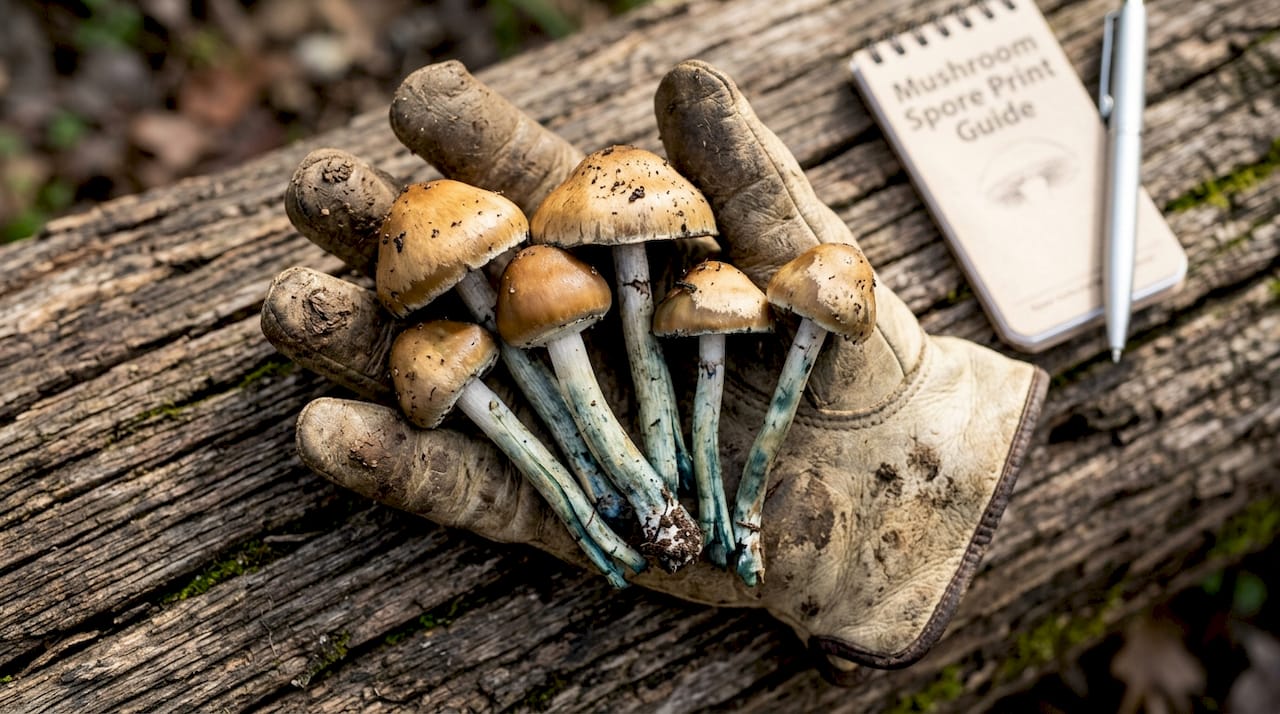
Toxic look-alikes pose serious risks. Galerina marginata, known as the deadly Galerina, shares similar brown caps and grows on wood but lacks blue bruising and has rusty brown spores. Consuming even a small amount can cause fatal liver damage. Panaeolus species can also confuse foragers. While some Panaeolus mushrooms contain psilocybin, others are inert or toxic, making precise identification critical.
Here’s a comparison table to help you distinguish blue meanies from common look-alikes:
| Feature | Blue Meanie (Psilocybe cubensis) | Psilocybe subaeruginosa | Galerina marginata (Toxic) | Panaeolus species |
|---|---|---|---|---|
| Cap size | 1 to 3 inches | 0.5 to 2 inches | 0.5 to 1.5 inches | 0.5 to 2 inches |
| Cap color | Caramel to golden brown | Olive-brown to tan | Rusty brown | Light brown to tan |
| Blue bruising | Intense blue-green | Moderate blue | None | Variable, often absent |
| Spore color | Dark purple-brown | Dark purple-brown | Rusty brown | Black to dark gray |
| Habitat | Dung, wood chips, grass | Wood debris, cool climates | Decaying wood | Dung, grassy areas |
| Risk level | Safe when identified correctly | Safe when identified correctly | Deadly toxic | Variable, requires expert ID |
- Psilocybe cubensis: Reliable blue bruising, purple-brown spores, subtropical habitat
- Psilocybe subaeruginosa: Smaller cap, cooler climate preference, intense potency
- Galerina marginata: No blue bruising, rusty spores, wood habitat, deadly toxic
- Panaeolus species: Variable traits, black spores, requires expert confirmation
Understanding legal considerations for psilocybin in Canada is equally important. While identification skills protect your health, legal knowledge protects your freedom. Always verify local regulations before foraging or possessing psilocybin mushrooms.
Comparison of blue meanie identification features with other psychedelic mushrooms
Once you grasp blue meanie traits, comparing them to other popular psychedelic mushrooms sharpens your identification skills. Liberty caps (Psilocybe semilanceata) and golden teachers (Psilocybe cubensis strain) are frequently confused with blue meanies, but key differences exist.
Liberty caps have distinctly pointed, nipple-like caps and prefer cool, grassy meadows. They bruise blue but less intensely than blue meanies. Golden teachers, a Psilocybe cubensis strain, share the same species as blue meanies but have lighter golden caps and less aggressive bruising. Accurate mushroom identification reduces the risk of adverse effects and ensures the intended psychedelic experience.
Bruising intensity is a critical differentiator. Blue meanies exhibit rapid, vivid blue-green bruising, while liberty caps show slower, lighter blue reactions. Spore print color remains consistent across psilocybin species, dark purple-brown, but cap texture varies. Blue meanies have smooth, slightly sticky caps when moist, whereas liberty caps feel dry and papery.
Here’s a side-by-side feature comparison:
| Feature | Blue Meanie | Liberty Cap | Golden Teacher |
|---|---|---|---|
| Cap shape | Conical to bell-shaped | Pointed, nipple-like | Broad, convex |
| Cap color | Caramel to golden brown | Olive-brown to tan | Golden yellow to light brown |
| Bruising intensity | Intense blue-green | Moderate blue | Light blue |
| Spore color | Dark purple-brown | Dark purple-brown | Dark purple-brown |
| Cap texture | Smooth, slightly sticky | Dry, papery | Smooth, dry |
| Habitat | Dung, wood chips, grass | Cool grassy meadows | Dung, enriched substrates |
| Microdosing pros | Consistent potency, widely available | High potency, smaller dose needed | Gentle effects, beginner-friendly |
| Microdosing cons | Requires precise dosing | Difficult to find, seasonal | Lower potency per gram |
- Blue meanies: Best for experienced users seeking reliable potency
- Liberty caps: Ideal for microdosing due to high psilocybin concentration
- Golden teachers: Beginner-friendly with predictable, mild effects
Pro Tip: When working with dried specimens, blue bruising may fade but often leaves dark blue-black stains on the stem or cap. Check for these residual marks to confirm psilocybin content even after drying.
For deeper insights into psilocybin’s mental health applications, explore the psilocybin role in mental health guide. Understanding both identification and therapeutic context ensures you approach microdosing with knowledge and respect.
Making the right identification decision for safe microdosing
Applying your identification knowledge requires balancing safety, legality, and practical sourcing decisions. Even with solid visual skills, wild harvesting carries risks that lab-tested products eliminate.
In 2026, psilocybin is heavily regulated in Canada, but legal exceptions exist for medical use and research. Possession and consumption outside these contexts remain illegal, though enforcement varies. Before foraging or purchasing, verify current provincial regulations and federal exemptions. Legal frameworks shift rapidly as research expands, so staying informed protects you from unintended legal consequences.
Verified identification is non-negotiable. Even experienced mycologists occasionally misidentify mushrooms, and the stakes are too high for guesswork. If you’re uncertain about any specimen, discard it. Wild harvesting offers adventure but introduces contamination risks, pesticide exposure, and the constant threat of toxic look-alikes. Sourcing from trusted suppliers who provide lab-tested, accurately labeled products removes these variables entirely.
Microdosing dosages for blue meanies typically range from 0.1 to 0.3 grams of dried mushroom. Start at the lower end and track your response over several days. Consistent schedules, such as the Fadiman protocol (one day on, two days off), help you monitor effects without building tolerance. Keep a journal noting mood, focus, and any physical sensations to refine your optimal dose.
- Confirm identification using multiple criteria before consumption
- Verify legal status in your province before possessing psilocybin
- Source from trusted suppliers to avoid contamination and misidentification
- Start with 0.1 grams and adjust based on tracked effects
- Follow consistent microdosing schedules to monitor benefits
- Keep a journal to document mood, focus, and physical responses
For step-by-step guidance, consult the beginner microdosing guide for safe psilocybin use. Detailed dosage recommendations are available in the psilocybin dosage guidelines for 2026. Both resources help you navigate microdosing with confidence and safety.
Always prioritize harm reduction. Review magic mushroom safety guidelines regularly to stay current on best practices. Safe microdosing combines accurate identification, legal awareness, and responsible consumption habits.
Discover safe microdosing resources and products
Now that you understand blue meanie identification and safe microdosing principles, accessing trusted resources and quality products becomes your next step. Fungal Friend offers comprehensive guides and lab-tested psilocybin products designed for Canadian microdosing enthusiasts.
Start with the beginner microdosing guide for safe psilocybin use to build foundational knowledge. This resource covers everything from dosage protocols to tracking methods, ensuring you approach microdosing with clarity and safety. For precise dosing recommendations tailored to 2026 research, explore the psilocybin dosage guidelines for 2026.
When you’re ready to begin your microdosing journey, browse microdose mushroom capsules for accurately dosed, lab-tested options. These capsules eliminate guesswork and provide consistent effects, perfect for both beginners and experienced users seeking reliable mental wellness support.
How can I safely identify blue meanie mushrooms?
What visual traits confirm a blue meanie mushroom?
Authentic blue meanies display intense blue-green bruising when handled, conical to bell-shaped caps ranging from caramel to golden brown, and dark purple-brown gills. The stem is typically white to pale yellow and also bruises blue. Always perform a spore print test to confirm dark purple-brown spores, a hallmark of psilocybin-containing species.
How do habitat and season affect blue meanie identification?
Blue meanies thrive in warm, humid climates and fruit most abundantly after rainfall. They grow on cattle dung, wood chips, or enriched grassy areas, rarely appearing in dense forests or on bare soil. Seasonal timing provides additional confirmation, as blue meanies are most common during subtropical and tropical warm months.
Should I rely on a single identification criterion?
Never rely on one trait alone. Toxic look-alikes can share individual features like cap color or habitat. Combine multiple criteria including blue bruising, spore color, gill attachment, cap shape, and habitat to achieve confident identification. Consult magic mushroom safety guidelines regularly to minimize risk.
What are the legal considerations for microdosing blue meanie mushrooms in Canada?
Psilocybin mushrooms remain controlled substances in Canada, but exemptions exist for medical and research purposes. In 2026, some patients receive legal access through Health Canada’s Special Access Program for end-of-life care or treatment-resistant conditions. Recreational possession and consumption remain illegal in most contexts. Always verify current federal and provincial regulations before acquiring or using psilocybin mushrooms. For detailed legal information, review legal considerations for psilocybin in Canada 2026.
What are the key differences between blue meanies and other psychedelic mushrooms?
Blue meanies exhibit more intense blue-green bruising compared to liberty caps or golden teachers. Cap shape differs significantly, with blue meanies showing conical to bell-shaped profiles, liberty caps displaying pointed, nipple-like tops, and golden teachers featuring broad, convex caps. Spore color remains consistent across psilocybin species at dark purple-brown, but cap texture and habitat preferences vary. Blue meanies prefer subtropical climates and dung substrates, while liberty caps thrive in cool grassy meadows. For therapeutic applications, explore the psilocybin role in mental health guide.
How can I ensure safe microdosing while using wild-harvested blue meanies?
Confirm identification using multiple criteria, including blue bruising, spore print color, gill attachment, and habitat. Start with minimal doses of 0.1 grams and track effects over several sessions before increasing. Wild-harvested mushrooms carry contamination risks, so consider lab-tested products when possible. Keep a detailed journal documenting mood, focus, and physical responses to refine your optimal dose. Always consult magic mushroom safety guidelines before consuming any wild specimen.