
Create a microdosing journal workflow for mental clarity
Many Canadians turn to psilocybin microdosing to support mental wellness, sharpen focus, and boost productivity. Yet without a clear tracking system, users often struggle to identify which doses work best or how their mood shifts over time. A structured microdosing journal workflow solves this challenge by capturing essential data points, revealing patterns, and guiding informed adjustments. This guide walks you through building a personalized journaling routine that maximizes benefits, enhances safety, and transforms your microdosing practice into a science-backed path toward mental clarity and sustained well-being.
Table of Contents
- Preparing For Your Microdosing Journal Workflow
- Step-By-Step Microdosing Journal Workflow For Beginners
- Troubleshooting And Common Journaling Mistakes To Avoid
- Analyzing Your Microdosing Journal To Optimize Benefits
- Explore Expert Microdosing Guides And Products
- What Is A Microdosing Journal Workflow And Why Is It Important?
Key takeaways
| Point | Details |
|---|---|
| Structured tracking boosts self-awareness | Recording dosage, mood, and productivity reveals patterns that optimize mental wellness outcomes. |
| Essential journal components | Include date, dose amount, timing, mood scales, focus notes, and any side effects observed. |
| Consistency unlocks deeper insights | Regular entries enable pattern recognition and informed adjustments to your microdosing protocol. |
| Avoid common tracking mistakes | Skipping entries or vague notes reduces effectiveness and can compromise safety monitoring. |
| Choose your preferred format | Digital apps offer data analysis while physical notebooks support mindful reflection. |
Preparing for your microdosing journal workflow
Before you begin tracking, gather the right tools and clarify your intentions. Your journaling system needs to fit seamlessly into your daily routine while capturing meaningful data. Start by selecting either a dedicated notebook or a digital app that allows custom fields and easy review. Add a reliable timer or phone alarm to remind you of entry times, and prepare a simple mood scale from one to ten for consistent emotional tracking.
Setting microdosing intentions enhances mental health and wellness outcomes. Define what you hope to achieve through microdosing before your first entry. Are you seeking relief from anxiety, sharper focus at work, improved creativity, or emotional balance? Write these goals at the front of your journal so every entry connects to your larger purpose. Clear intentions transform random observations into purposeful data collection.
Your journal template should include these core categories:
- Date and time of dose
- Exact dosage amount in milligrams
- Current mood rating before and after
- Productivity level and focus quality
- Physical sensations or side effects
- Notable thoughts or insights
- Sleep quality from previous night
Pro Tip: Match your journaling method to your lifestyle. Digital apps excel at generating graphs and spotting trends automatically, while handwritten journals encourage slower, more mindful reflection that deepens self-awareness.
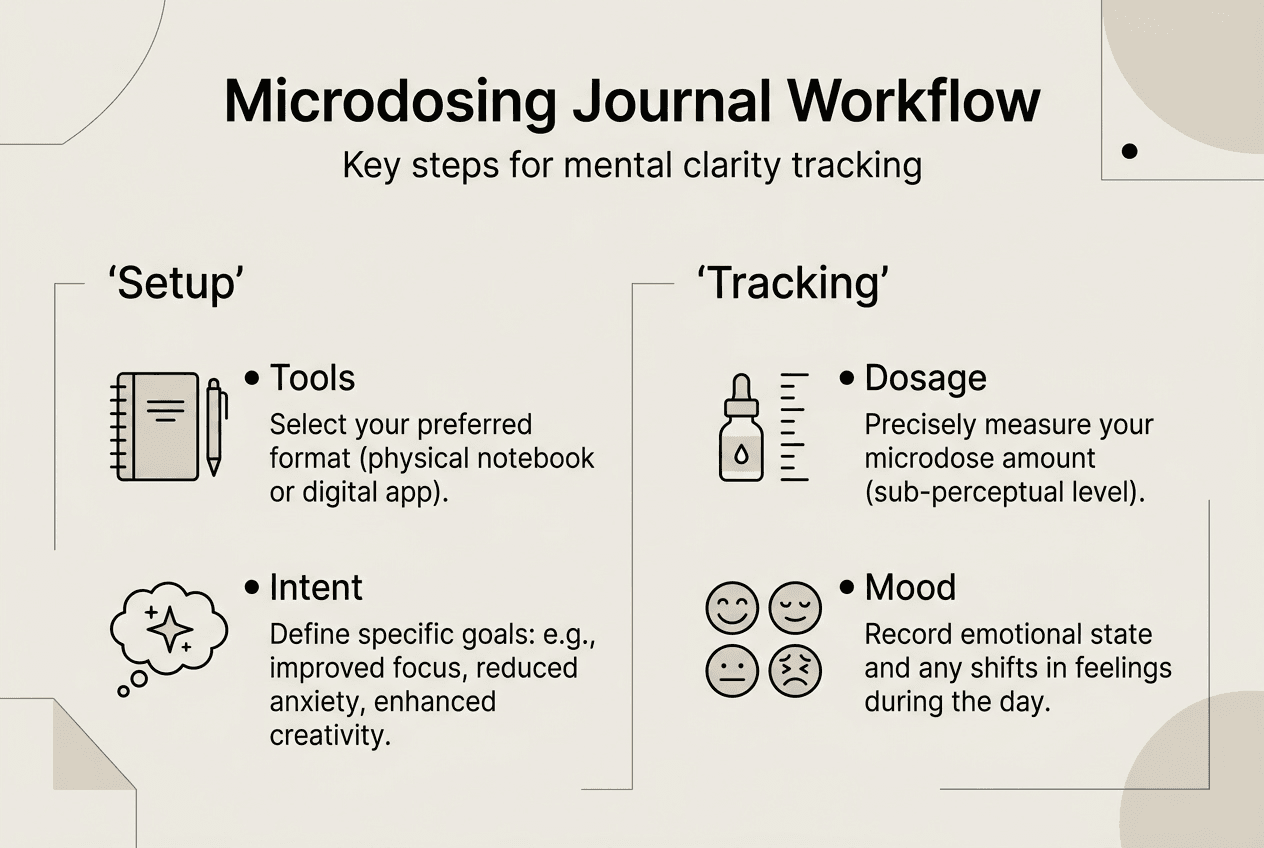
Create a simple data table to organize your tracking categories:
| Category | What to Record | Why It Matters |
|---|---|---|
| Dosage | Exact milligrams taken | Identifies optimal dose range |
| Timing | Hour of day consumed | Reveals best scheduling |
| Mood | Scale of 1 to 10 rating | Tracks emotional patterns |
| Productivity | Focus and task completion | Measures cognitive benefits |
| Physical | Energy, appetite, sensations | Monitors body responses |
| Sleep | Hours and quality rating | Links rest to effectiveness |
With your tools and intentions ready, the next step is implementing your journaling workflow with step-by-step instructions.
Step-by-step microdosing journal workflow for beginners
A structured workflow supports safe and productive microdosing experiences. Follow these daily steps to build a consistent tracking habit that delivers actionable insights:
-
Morning baseline entry: Before taking your microdose, record your starting mood, energy level, and any relevant context like sleep quality or stress factors. This baseline helps you measure changes accurately throughout the day.
-
Dosage documentation: Write down the exact amount you consume, the specific strain if known, and the precise time you take it. Include the form, whether capsule, tea, or chocolate, as absorption rates vary.
-
First checkpoint at 90 minutes: Set a timer for 90 minutes post-dose. Record your current mood, any physical sensations, and initial cognitive effects. Note whether you feel more alert, creative, or calm.
-
Midday productivity assessment: Around three to four hours after dosing, evaluate your focus quality, task completion, and mental clarity. Document specific examples like finishing a challenging project or maintaining concentration during meetings.
-
Evening reflection entry: Before bed, complete a final entry capturing your overall day, mood trajectory, social interactions, and any delayed effects. Rate your productivity and emotional state compared to baseline.
-
Physical and side effect notes: Throughout the day, jot down any physical responses like changes in appetite, energy dips, mild nausea, or heightened sensory perception. These details help identify your tolerance and optimal dosing.
-
Hydration and self-care reminders: Note your water intake, meals, and rest periods. These factors significantly influence how psilocybin affects your system and should be tracked alongside direct microdosing effects.
Pro Tip: Keep entries brief and focused. Aim for three to five sentences per checkpoint rather than lengthy paragraphs. Over-detailing leads to journaling fatigue and inconsistent tracking, while concise notes remain sustainable long term.
Capture both qualitative observations and quantitative ratings. A mood score of seven means little without context, so add a sentence describing what that seven feels like: “calm and focused, handled work stress without overwhelm.” This combination of numbers and narratives creates a complete picture of your microdosing response.

Having established the workflow steps, let’s explore troubleshooting common pitfalls to keep your journaling effective and safe.
Troubleshooting and common journaling mistakes to avoid
Avoiding common microdosing mistakes enhances safety and efficacy of the practice. Even well-intentioned users fall into tracking errors that undermine their journaling efforts. Recognizing these pitfalls helps you maintain accurate, useful records.
Skipping entries represents the most frequent mistake. Life gets busy, and you might think you’ll remember details later, but memory proves unreliable for subtle mood shifts and dosage effects. Set non-negotiable alarms for your checkpoint times and treat journaling as essential as taking the dose itself. Missing even two or three days creates gaps that obscure patterns.
Vague or inconsistent notes render your journal nearly useless for analysis. Writing “felt good” or “kind of tired” provides no actionable data. Instead, use your established scales and specific descriptors: “mood 8/10, completed three focused work hours, slight afternoon energy dip at 3pm.” Consistency in language and rating systems allows meaningful comparisons across weeks and months.
Another common error involves ignoring context variables. Your microdosing effects don’t occur in a vacuum. Failing to note poor sleep, high stress, skipped meals, or alcohol consumption the night before makes it impossible to understand why a particular dose felt different. Always record these influential factors.
Safety Warning: Never adjust your dosage based solely on one or two entries. Patterns emerge over at least two weeks of consistent tracking. Hasty changes based on limited data increase risks of taking too much or missing your optimal therapeutic window.
Some users also make these critical mistakes:
- Recording dosage inconsistently or rounding numbers instead of using exact measurements
- Failing to note the time of day, which affects how psilocybin interacts with your circadian rhythm
- Ignoring negative effects or side effects due to confirmation bias
- Not reviewing entries regularly, treating the journal as a write-only document
- Comparing your results to others rather than tracking your unique response
To fix these issues, simplify your entry format if it feels overwhelming. A streamlined template with checkboxes and number scales takes 60 seconds to complete. Schedule a weekly 15-minute review session every Sunday to read through your entries and identify emerging patterns. This regular analysis transforms raw data into personalized insights.
Understanding how to troubleshoot errors sets you up to recognize and interpret your journaling results effectively.
Analyzing your microdosing journal to optimize benefits
Reviewing microdosing journals regularly enhances personal insight and treatment adjustment. After two to three weeks of consistent entries, you possess enough data to spot meaningful trends and make informed decisions about your protocol.
Start by comparing your baseline measurements against current readings. Create a simple before and after comparison:
| Metric | Before Journaling | After 3 Weeks | Improvement |
|---|---|---|---|
| Average mood rating | 5.2/10 | 7.4/10 | +2.2 points |
| Productive hours daily | 3.5 hours | 5.8 hours | +2.3 hours |
| Anxiety episodes weekly | 8 instances | 3 instances | 62% reduction |
| Sleep quality rating | 6.1/10 | 7.9/10 | +1.8 points |
| Focus consistency | Sporadic | Sustained | Qualitative gain |
Look for patterns in your entries by asking specific questions. Does your mood improve most on days when you dose in the morning versus afternoon? Do certain dosages correlate with better focus but worse sleep? Are side effects more common when you skip breakfast? These connections reveal your unique response profile.
Best practices for periodic review include:
- Conducting weekly mini-reviews to catch immediate issues or positive trends
- Performing monthly deep analyses to assess overall progress toward your goals
- Highlighting entries that represent your ideal state to identify what conditions produce it
- Noting any concerning patterns like increasing tolerance or persistent side effects
- Adjusting your dosage, timing, or frequency based on at least two weeks of data
Your journal becomes especially valuable when communicating with healthcare professionals. If you decide to discuss your microdosing practice with a therapist, counselor, or doctor, your detailed records provide concrete evidence of effects, benefits, and any concerns. This documentation supports informed medical guidance rather than relying on vague recollections.
Integrate your findings into ongoing dose planning. If your entries show that 100mg produces optimal focus without side effects while 150mg causes afternoon fatigue, you’ve identified your sweet spot. When your mood ratings plateau, it might signal time for a tolerance break. Your journal transforms subjective experiences into objective data that guides these decisions.
Track how external factors influence your microdosing response. Perhaps entries reveal that doses taken after poor sleep produce minimal benefits, suggesting you should skip those days. Or you might notice that combining microdosing with morning meditation amplifies positive effects, indicating a valuable routine to maintain.
With an understanding of how to analyze your entries, you can now seamlessly integrate journaling into your microdosing routine for ongoing success.
Explore expert microdosing guides and products
Your microdosing journal workflow deserves support from trusted resources and precisely dosed products. Fungal Friend specializes in helping Canadians navigate their psilocybin journey with comprehensive educational content and safe, reliable microdose options.

Our beginner microdosing guide walks you through foundational techniques that complement your journaling practice. You’ll discover how to start safely, what to expect during your first experiences, and how to recognize when adjustments are needed. These evidence-based resources align perfectly with the tracking methods outlined in your journal.
For precise dosing that makes journaling easier, explore our microdose mushroom capsules. Each capsule contains an exact measured amount, eliminating guesswork and ensuring your journal entries reflect consistent dosages. This accuracy proves essential when analyzing patterns and optimizing your protocol.
Stay current with our psilocybin dosage guidelines updated for 2026 safety standards. These recommendations help you interpret your journal findings and make informed decisions about adjusting your routine. Combined with your personal tracking data, these guidelines create a complete framework for safe, effective microdosing.
What is a microdosing journal workflow and why is it important?
A microdosing journal workflow is a structured system for recording and tracking the effects of psilocybin microdoses on your mental state, productivity, and physical well-being. It transforms casual microdosing into a data-driven practice by capturing dosage amounts, timing, mood changes, cognitive effects, and side effects in organized entries. This systematic approach helps you understand your unique response patterns, identify optimal doses, and make informed adjustments. Without consistent tracking, you’re essentially experimenting blindly, unable to distinguish genuine benefits from placebo effects or recognize concerning patterns that warrant protocol changes.
How often should I update my microdosing journal?
Daily updates are recommended, with entries made at specific checkpoints throughout your microdosing day. Record a baseline entry before dosing, a first checkpoint around 90 minutes after consumption, a midday productivity assessment, and an evening reflection. This frequency captures the full arc of effects while details remain fresh and accurate. Consistency in timing your entries improves pattern recognition across weeks and months. Even on non-dosing days, brief mood and productivity notes provide valuable comparison data that highlights the contrast between microdose and baseline states.
What tools work best for microdosing journaling?
Digital apps offer convenience, automatic data aggregation, and easy graph generation that reveals trends at a glance. Popular options include customizable habit trackers, mood logging apps, or simple spreadsheet templates. Physical notebooks favor tactile recording and mindful reflection, encouraging slower, more thoughtful entries that deepen self-awareness. Many users find that handwriting creates stronger memory connections to their experiences. The best tool is whichever you’ll actually use consistently, so choose based on your daily habits and preferences rather than perceived superiority of one format over another.
Can journaling help identify negative reactions or side effects?
Yes, detailed journal entries help detect troubling patterns early before they become serious issues. By recording physical sensations, mood dips, anxiety spikes, or sleep disturbances alongside your doses, you can identify whether psilocybin is causing unwanted effects or if other factors are responsible. This documentation proves especially valuable when certain side effects appear only at specific dosages or times of day. Your journal also supports communication with healthcare professionals if you need medical guidance, providing concrete evidence rather than vague recollections. Early pattern detection through consistent tracking allows you to adjust or pause your protocol before minor issues escalate into significant problems.