
Stigma and Psychedelic Use – Overcoming Barriers in Canada
Finding reliable information about psilocybin in Canada can feel confusing when myths and cultural stigma cloud real science. Many Canadian adults interested in microdosing for mental health needs face outdated beliefs and legal uncertainty, making open conversations challenging. This article sheds light on common misconceptions, explains what stigma really means for safe use, and offers practical advice for reducing judgment as you explore the benefits of psilocybin responsibly.
Table of Contents
- What Stigma Means for Psychedelic Use
- Common Myths About Psilocybin and Safety
- Legal Status of Psychedelics in Canada
- Mental Health Impacts and Social Acceptance
- Reducing Stigma When Microdosing Safely
Key Takeaways
| Point | Details |
|---|---|
| Misinformation About Psilocybin | Scientific evidence counters myths, revealing psilocybin is not neurotoxic and has minimal addiction risk. |
| Context Matters | The safety and outcome of psilocybin use largely depend on mindset, dosage, and environment. |
| Legal Landscape | Psilocybin remains illegal in Canada with evolving regulations; knowledge of local laws is essential for safe access. |
| Growing Acceptance | Increasing evidence and patient testimonials are shifting public views, but stigma and access gaps still persist. |
What Stigma Means for Psychedelic Use
[content with proper markdown formatting]
Common Myths About Psilocybin and Safety
Misinformation about psilocybin spreads faster than facts. Many Canadian adults hear alarming claims that don’t hold up under scientific scrutiny. Understanding what’s actually true helps you make informed decisions about your health.
The most persistent myth claims psilocybin causes permanent brain damage. Research shows this isn’t supported by evidence. Studies examining brain structure and function after psilocybin use find no evidence of neurotoxicity or lasting neurological harm.
Another widespread belief is that psilocybin is addictive like alcohol or opioids. The reality tells a different story. Psilocybin is among the safest substances with virtually zero addiction potential—your body doesn’t develop physical dependence on it.
People often assume psilocybin experiences are universally dangerous or traumatic. Context matters far more than the substance itself. The setting, your mindset, dosage, and whether you have guidance dramatically influence outcomes.
Here’s what the science actually shows about risk:
- Psychological risks exist but are context-dependent and largely preventable
- Low doses carry minimal risk when used responsibly
- Supervised or intentional use significantly reduces harm
- Most negative outcomes stem from unsafe environments, not the substance
Safety concerns are real but context-dependent—psilocybin itself ranks among the safest substances when used thoughtfully.
Many believe psilocybin is a one-way ticket to psychological problems. Actually, therapeutic research shows potential benefits for anxiety, depression, and end-of-life distress. Individual responses vary, which is why proper preparation and support matter.
Another myth suggests all psychedelic experiences are identical. They’re not. Dosage, strain, individual biology, and setting create vastly different experiences. Microdosing, for example, produces subtle effects quite different from full experiences.
The legal status in Canada sometimes gets confused with safety. Legal changes reflect evolving scientific understanding, not sudden changes in how psilocybin actually affects your brain. Evidence on psilocybin’s efficacy and safety continues accumulating as research expands.
What should you actually focus on?
- Source your information from scientific research, not social media rumors
- Understand that context and preparation prevent most problems
- Recognize that individual variation is normal and expected
- Know that responsible use looks different from reckless use
Pro tip: When you encounter a claim about psilocybin safety, ask yourself whether it comes from peer-reviewed research or from fear-based sources—this single habit filters out most misinformation.
Here’s how scientific research contrasts with common myths about psilocybin:
| Myth vs. Reality | Common Myth | Research-Based Fact |
|---|---|---|
| Brain Impact | Causes permanent damage | No evidence of lasting harm |
| Addictiveness | Highly addictive | Virtually zero addiction risk |
| Experience Type | Always dangerous | Outcomes depend on context |
| Psychological Risk | Promotes mental illness | May reduce depression/anxiety |
| Dosing Effect | All doses are alike | Microdosing differs from full use |
Legal Status of Psychedelics in Canada
Canada’s legal framework around psychedelics is complex and evolving. Understanding where things stand helps you navigate both the law and emerging opportunities for therapeutic access.

Federally, psilocybin and psilocin remain controlled substances under the Controlled Drugs and Substances Act (CDSA). Production, sale, and possession remain illegal for most purposes, with limited exceptions for authorized clinical research.
The reality is more nuanced than a simple yes-or-no answer. Several Canadian provinces and municipalities have begun moving toward different approaches, creating a patchwork of regulations across the country.
Here’s the current legal landscape:
- Federal law criminalizes psilocybin for recreational and personal use
- Licensed clinical trials remain the primary legal avenue for therapeutic research
- Some provinces like Alberta and British Columbia have explored decriminalization frameworks
- Vancouver and Toronto have established certain exemptions for therapeutic administration
- No approved psilocybin medications currently exist in Canada’s pharmaceutical system
The legal status continues shifting as provinces and municipalities respond to therapeutic evidence and public health considerations.
Provincial and municipal variation matters significantly. Vancouver’s approach differs from Toronto’s, which differs from most other cities. Some municipalities have deprioritized enforcement while pursuing policy discussions, creating gray zones where advocates push for change.
Therapeutic access has expanded through specialized exemption programs. Health Canada has granted exemptions for certain patients to access psilocybin in supervised medical settings, though these remain limited and tightly controlled.
The federal government continues evaluating psychedelics through a therapeutic lens. Research initiatives grow yearly, and policy discussions happen regularly. Understanding regulations and emerging legal exceptions helps you stay informed as things evolve.
What does this mean for you practically?
- Know your local regulations—they vary by province and city
- Legal pathways for therapeutic use exist but require medical oversight
- Clinical trials represent legitimate access points for certain conditions
- Stay informed about ongoing policy changes in your jurisdiction
- Distinguish between decriminalization and legalization—they’re different
Pro tip: Subscribe to updates from Canadian psychedelic policy organizations or Health Canada announcements to catch regulatory changes that might affect you before they’re widely publicized.
Below is a summary of differences in provincial approaches to psychedelics in Canada:
| Province/City | Policy Shift | Noteworthy Detail |
|---|---|---|
| Alberta | Explores decriminalization | Early-stage discussions underway |
| British Columbia | Explores decriminalization | Some pilot programs in progress |
| Vancouver | Local therapeutic exemptions | Enforcement deprioritized |
| Toronto | Limited clinical exemptions | Select clinics participate |
| Other Regions | Remain strict | No policy change so far |
Mental Health Impacts and Social Acceptance
The conversation around psychedelics and mental health has shifted dramatically in recent years. What was once dismissed as recreational drugs is now recognized as having legitimate therapeutic potential for serious mental health conditions.
Research shows that psychedelics produce rapid therapeutic effects on treatment-resistant depression and other conditions where conventional medications often fail. These aren’t minor improvements—patients report profound psychological shifts and lasting symptom relief.
The therapeutic mechanisms are different from traditional antidepressants. Psychedelics don’t just manage symptoms; they appear to facilitate deep psychological processing and existential renewal. This makes them unique in psychiatry’s toolkit.
Social acceptance is growing but remains uneven. Public attitudes break down into two key dimensions:
- Openness: Recognition of therapeutic value and willingness to consider psychedelics as treatment
- Concerns: Skepticism, stigma, and worry about safety or misuse
Public perspective on clinical psychedelics shows balanced openness and legitimate concerns—neither pure enthusiasm nor blanket rejection reflects where most Canadians actually stand.
Interestingly, openness to clinical psychedelics correlates with positive psychological traits like curiosity and emotional intelligence. People who are generally open-minded tend to see therapeutic potential more readily.
The stigma piece remains significant. Even as evidence accumulates, many Canadians hesitate to discuss psychedelic therapy openly with family, friends, or healthcare providers. Fear of judgment outweighs confidence in the science for many.
Younger adults aged 25-45 show greater acceptance than older generations. This demographic shift matters because it influences how quickly attitudes change and how quickly policy might follow.
Mental health integration is accelerating. Major hospitals and clinics now research psilocybin-assisted therapy for depression, anxiety, and PTSD. Canadian institutions contribute meaningfully to this research.
What’s changing the needle on acceptance?
- Published research demonstrating clear therapeutic benefits
- Patient testimonials from people who’ve been helped
- Media coverage that moves beyond sensationalism
- Healthcare providers openly discussing psychedelics as tools
- Insurance and policy discussions about coverage
The gap between public openness and actual access remains real. Acceptance is growing faster than availability, creating frustration for people who want to try these approaches but can’t yet access them legally.
Pro tip: If you’re considering psychedelic therapy, start conversations with mental health providers who specialize in psychedelic-assisted treatment—they understand both the science and the navigation of current legal pathways.
Reducing Stigma When Microdosing Safely
Microdosing offers a path forward for many Canadians seeking mental health support without the judgment that often surrounds psychedelics. But reducing personal and societal stigma requires intentional action on multiple levels.
Stigma operates differently at three distinct levels. Individual stigma lives inside your own mind—internalized shame or fear of judgment. Interpersonal stigma shows up in conversations with friends, family, and healthcare providers. Institutional stigma exists within medical systems, workplaces, and legal frameworks.
Addressing all three matters. You can’t control institutional barriers alone, but you absolutely can influence interpersonal and individual stigma through how you approach microdosing.
Here’s what reduces stigma effectively:
- Evidence-based language: Frame microdosing as a mental health practice, not recreational use
- Transparency with trusted people: Selective disclosure to supportive individuals builds understanding
- Professional guidance: Working with informed healthcare providers legitimizes your approach
- Safe, consistent practice: Demonstrating responsible use contradicts stereotypes
- Education first: Sharing research before discussing your own experience shapes perspective
Reducing stigma requires collaborative strategies across individual, interpersonal, and institutional levels—stigma reduction is never a solo effort.
Microdosing’s subtlety actually helps here. Unlike dramatic psychedelic experiences, microdosing produces quiet cognitive shifts most people won’t notice. This gives you control over disclosure in a way larger doses don’t.
Internalized stigma often poses the bigger obstacle. Many people hesitate to try microdosing because they carry internalized beliefs about psychedelics, even when evidence supports therapeutic benefit. Examine those beliefs honestly.
Your healthcare provider’s knowledge matters significantly. Safe microdosing practices benefit from professional oversight, and providers who understand these approaches can validate your choices rather than shame them.
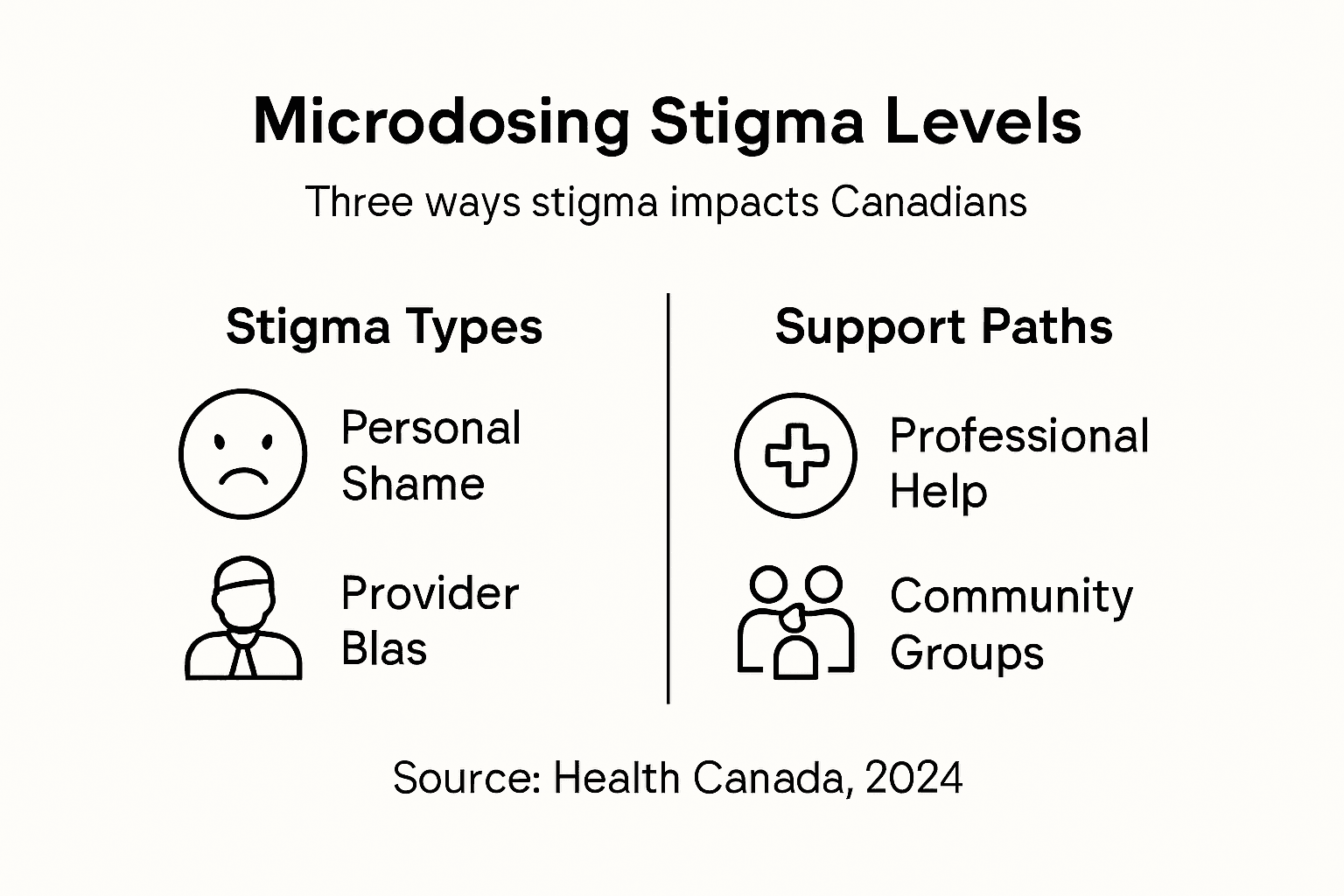
Who you tell and how you frame it shapes their response. “I’m using a therapeutic microdosing protocol for anxiety” communicates differently than vague references to “trying something new.”
Consider these conversation strategies:
- Start with your why—explain the mental health challenge you’re addressing
- Lead with research—share peer-reviewed studies before personal experience
- Emphasize safety—describe dosage, frequency, and professional guidance
- Acknowledge concerns—don’t dismiss skepticism as purely ignorant
- Be selective—share with people likely to understand, not everyone
Community matters too. Finding others on similar paths—whether online or in person—reduces isolation and reinforces that you’re not alone in this choice.
Pro tip: Before disclosing microdosing to anyone, decide what you actually need from them—validation, information sharing, or silence—then frame the conversation accordingly.
Break Free From Stigma and Explore Safe Psychedelic Support Today
The article highlights a common challenge many Canadians face when considering psychedelics: overcoming stigma that fuels fear and misinformation. Whether you are worried about safety myths or hesitant to discuss microdosing openly, these barriers can keep you from accessing natural options to support mental wellness and personal growth. Understanding that responsible microdosing with trusted products in a safe environment reduces psychological risks is key to moving forward.
At Fungal Friend, we are dedicated to helping you navigate these concerns with education, transparency, and carefully curated psilocybin products designed for therapeutic use. From microdose capsules to infused teas and chocolates, each product is crafted to support mood balance, anxiety reduction, and focus enhancement while respecting Canadian legal realities. Our platform combines safety guidance and discreet delivery to empower you in reducing stigma both internally and with your circle.
Ready to embrace a scientifically informed path beyond stigma? Explore our selection at Fungal Friend and start your journey toward mental clarity and emotional balance with confidence. Learn more about safe microdosing practices and how to discuss your experience with others on our landing page. Don’t let stigma hold you back from discovering the potential benefits of psilocybin in your mental health routine.
Frequently Asked Questions
What are some common myths about psilocybin?
Many myths suggest that psilocybin causes permanent brain damage or is highly addictive. However, research shows that psilocybin does not lead to lasting neurological harm and carries virtually zero addiction potential.
How can I safely use psilocybin for therapeutic purposes?
To ensure safe use, it’s essential to consider the context, including your mindset, the dosage, and whether you have professional guidance. Responsible and supervised use significantly reduces risks.
What is microdosing, and how does it differ from full experiences?
Microdosing involves taking a sub-threshold dose of psilocybin that produces subtle effects, unlike full psychedelic experiences which can be more pronounced and intense. Microdosing aims to enhance cognitive function and mood without the hallucinatory effects.
How can stigma around psychedelics affect mental health conversations?
Stigma may prevent individuals from discussing their interest in psychedelics openly, which can lead to feelings of isolation and shame. Reducing stigma involves using evidence-based language and transparency with trusted individuals in order to foster understanding and support.