
Why microdosing surged in 2025: Canadian wellness guide
Nearly 10 million adults in North America experimented with psychedelic microdosing in 2025, with psilocybin mushrooms leading the trend. This surge reflects growing frustration with conventional mental health treatments and curiosity about natural wellness alternatives. Canadians seeking relief from anxiety, mood challenges, and focus issues increasingly turned to sub-perceptual doses of psilocybin, hoping for therapeutic benefits without the intensity of full psychedelic experiences. This guide explores the science, protocols, controversies, and Canadian context surrounding microdosing’s rapid rise, offering practical insights for those considering this approach in 2026.
Table of Contents
- Understanding Microdosing: What It Is And Why It Gained Popularity In 2025
- How Does Psilocybin Microdosing Work? Biological Effects And Protocols
- Evaluating Evidence: Benefits, Placebo Effect, And Safety Considerations
- Microdosing In Canada: Research, Legality, And Safe Practices
- Explore Safe Microdosing With Expert Guides And Products
Key takeaways
| Point | Details |
|---|---|
| Popularity surge | Mental health treatment gaps and self-medication trends drove 2025’s microdosing boom, with psilocybin as the most common substance. |
| Biological mechanism | Psilocybin acts on serotonin receptors at sub-perceptual doses, potentially influencing brain plasticity and reducing inflammation. |
| Evidence mixed | Users report mood and focus gains, but placebo-controlled studies suggest benefits may largely reflect expectation effects. |
| Dosing protocols | Structured schedules like Fadiman and Stamets methods help prevent tolerance while tracking subjective effects. |
| Canadian research | Ongoing Phase 2 trials in Canada investigate daily psilocybin microdosing for anxiety treatment under clinical supervision. |
Understanding microdosing: what it is and why it gained popularity in 2025
Microdosing involves taking roughly one-tenth to one-twentieth of a recreational psychedelic dose, typically 0.1 to 0.3 grams of dried psilocybin mushrooms. At this level, users report no hallucinations or perceptual distortions, just subtle shifts in mood, energy, and mental clarity. The practice gained traction among professionals, students, and wellness seekers looking for cognitive enhancement and emotional balance without pharmaceutical side effects.
The 2025 surge in microdosing reflected broader societal trends. Mental health services faced overwhelming demand, waitlists stretched months long, and many Canadians felt traditional treatments like SSRIs fell short. Against this backdrop, anecdotal reports of microdosing benefits spread rapidly through social media, podcasts, and wellness communities. Psilocybin accounted for nearly half of all psychedelic microdosing days reported in recent surveys, outpacing LSD and other substances.
Key factors driving the 2025 microdosing wave included:
- Growing acceptance of psychedelic research and therapy in mainstream medicine
- Frustration with limited access to affordable mental health care
- Desire for natural alternatives to pharmaceutical antidepressants and stimulants
- Influencer testimonials and celebrity endorsements normalizing the practice
- Emerging clinical trials lending scientific credibility to microdosing claims
“The microdosing trend represents a grassroots movement of people taking mental health into their own hands, often out of necessity rather than preference.”
This shift positioned microdosing as both a wellness hack and a form of self-advocacy. Canadians exploring microdosing trends in 2025 sought improved anxiety management, sharper focus, and emotional resilience in an increasingly stressful world. Yet the rapid adoption outpaced rigorous scientific validation, creating tension between enthusiastic user reports and cautious research findings. Understanding this context helps frame the biological mechanisms and evidence that follow.
How does psilocybin microdosing work? Biological effects and protocols
Psilocybin converts to psilocin in the body, which then binds to serotonin 5-HT2A receptors in the brain. Even at microdose levels, this interaction influences neural pathways involved in mood regulation, cognitive flexibility, and stress response. Research suggests psilocybin may reduce neuroinflammation and promote neuroplasticity, the brain’s ability to form new connections and adapt to challenges. These effects could theoretically support mental health improvements, though the mechanisms remain incompletely understood.

At sub-perceptual doses, psilocybin appears to modulate activity in the default mode network, a brain system linked to self-referential thinking and rumination. Overactivity in this network correlates with anxiety and depression. By temporarily altering connectivity patterns, microdosing might help users break negative thought loops and approach problems with fresh perspectives. Some studies also point to anti-inflammatory effects that could benefit mood disorders rooted in immune system dysregulation.
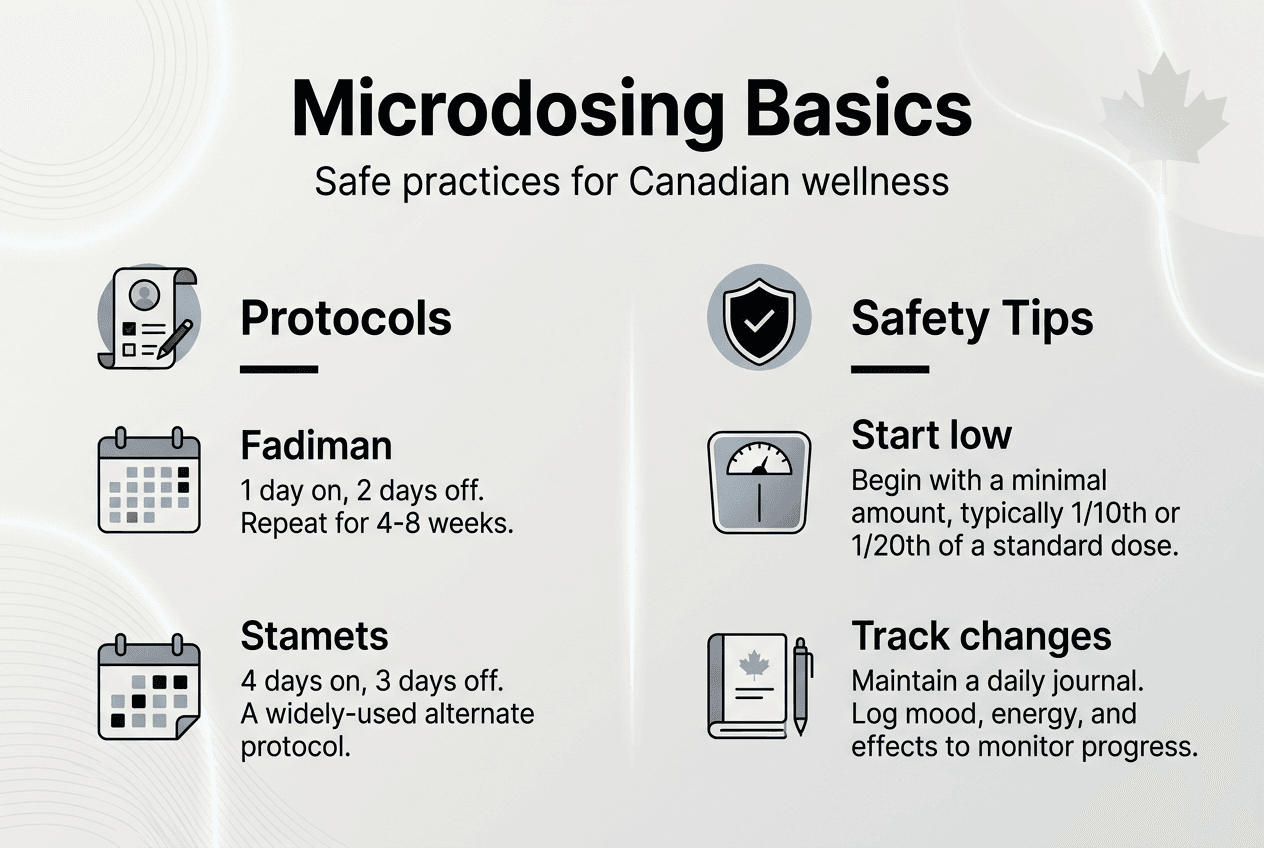
Structured dosing protocols emerged to optimize benefits and minimize risks like tolerance. The most popular approaches include:
- Fadiman Protocol: Dose on Day 1, rest on Days 2 and 3, repeat the cycle for 4 to 8 weeks, then take an extended break.
- Stamets Stack: Dose 5 days on, 2 days off, combining psilocybin with lion’s mane mushroom and niacin for synergistic effects.
- Every Other Day: Simpler schedule alternating dose and rest days, useful for beginners tracking initial responses.
- Intuitive Dosing: Advanced approach where experienced users dose based on personal need and response patterns.
These protocols aim to prevent receptor desensitization while allowing users to observe patterns in their mental state. Keeping a detailed journal proves essential for tracking mood shifts, energy levels, focus quality, and any adverse reactions. Many microdosers note improvements on dosing days but also value rest days for integrating insights and avoiding dependency.
| Protocol | Dosing Pattern | Rest Period | Best For |
|---|---|---|---|
| Fadiman | 1 day on, 2 days off | Every 3rd day | Beginners, systematic tracking |
| Stamets Stack | 5 days on, 2 days off | Weekly breaks | Enhanced neuroplasticity focus |
| Every Other Day | Alternating days | Daily rotation | Simple routine, quick feedback |
| Intuitive | As needed | Variable | Experienced users, self-awareness |
Pro Tip: Start with the lowest effective dose (0.05 to 0.1 grams) and increase gradually only if needed. Following a structured protocol with consistent rest days prevents tolerance buildup and helps you distinguish genuine effects from placebo or expectation. Canadians new to microdosing can explore beginner-friendly guidance and updated dosage guidelines for 2026 to establish safe, effective practices.
Evaluating evidence: benefits, placebo effect, and safety considerations
User testimonials paint an enthusiastic picture of microdosing benefits. People report enhanced creativity, improved mood stability, sharper focus, and reduced anxiety symptoms. These subjective experiences fueled the 2025 popularity surge and continue to drive interest in 2026. However, when researchers conduct placebo-controlled trials, the picture becomes murkier. Meta-analyses reveal that while acute mood improvements occur, overall cognitive benefits disappear when compared against placebo groups.
This doesn’t necessarily mean microdosing is worthless. Placebo effects themselves produce real neurobiological changes and genuine symptom relief. If expectation and ritual contribute to mental health improvements, that’s still valuable for individuals seeking wellness tools. The challenge lies in separating pharmacological effects from psychological ones and understanding which benefits persist over time versus fade with novelty.
Current research limitations include:
- Small sample sizes in most studies
- Difficulty maintaining true blinding due to subtle perceptual effects
- Lack of long-term safety and efficacy data
- Wide variability in dosing, substance purity, and user protocols
- Self-selection bias in survey-based research
Safety concerns deserve equal attention. Unregulated psilocybin products led to increased poison control calls and emergency room visits in 2025, often due to misidentified mushrooms, contamination, or incorrect dosing. Tolerance can develop with frequent use, requiring higher doses for the same effect and potentially leading to dependency patterns. Some users experience negative effects like anxiety spikes, headaches, or digestive discomfort.
| Evidence Category | Findings | Confidence Level |
|---|---|---|
| Subjective mood improvement | Widely reported, acute benefits | Moderate (mixed with placebo) |
| Cognitive enhancement | Inconsistent, often placebo-matched | Low |
| Anxiety reduction | Promising anecdotal reports, trials ongoing | Low to moderate |
| Safety profile | Generally well-tolerated but unregulated risks exist | Moderate |
Canadian clinical trials in 2026 aim to address these gaps. Researchers are conducting rigorous studies with proper controls, standardized dosing, and longitudinal follow-up to determine whether microdosing offers genuine therapeutic value beyond placebo. Until these results emerge, users face uncertainty about long-term consequences and optimal protocols.
“The gap between enthusiastic user reports and cautious scientific findings highlights the need for more rigorous research before microdosing can be confidently recommended as a mental health intervention.”
Anyone considering microdosing should weigh potential benefits against known risks, prioritize safe sourcing, and remain skeptical of exaggerated claims. Exploring psilocybin trends in wellness and law helps contextualize where the practice fits within evolving regulatory and scientific landscapes.
Microdosing in Canada: research, legality, and safe practices
Canada stands at the forefront of psychedelic research in 2026. Phase 2 clinical trials are investigating daily psilocybin microdosing for anxiety treatment, with participants receiving standardized doses under medical supervision. These studies aim to establish whether microdosing can serve as a legitimate therapeutic tool, particularly for individuals who haven’t responded well to conventional treatments. Results expected in late 2026 or early 2027 will significantly shape public policy and medical practice.
Despite research progress, psilocybin remains illegal under federal law for recreational use. Possession, sale, and cultivation can result in criminal charges. However, exemptions exist for clinical research, and some municipalities have moved toward de facto decriminalization by deprioritizing enforcement. Vancouver and other cities signal shifting attitudes, though legal status remains murky and variable across provinces.
For Canadians interested in exploring microdosing safely in 2026, several practices reduce risk:
- Start with the lowest possible dose (0.05 to 0.1 grams) to assess individual sensitivity
- Source from trusted, tested suppliers to avoid contamination or misidentification
- Follow established protocols like Fadiman or Stamets to prevent tolerance
- Keep detailed journals tracking dose, timing, mood, energy, focus, and any negative effects
- Avoid microdosing if you have personal or family history of psychosis or severe mental illness
- Consult healthcare providers familiar with psychedelic medicine when possible
Monitoring your response proves crucial. Some people experience immediate mood lifts, while others notice subtle changes only after several weeks. Negative reactions like increased anxiety, restlessness, or physical discomfort signal the need to adjust dose or discontinue use. The goal is finding a sub-perceptual dose that enhances wellbeing without causing noticeable intoxication or side effects.
Pro Tip: Treat microdosing as an experiment, not a cure-all. Combine it with other wellness practices like therapy, exercise, sleep hygiene, and stress management for best results. Relying solely on psilocybin without addressing underlying lifestyle factors rarely produces lasting change. Canadians can access comprehensive microdosing guidance for 2026 and understand legal considerations to navigate this evolving landscape responsibly.
As research advances and regulations potentially shift, staying informed about scientific developments and legal changes helps you make educated decisions about whether microdosing aligns with your wellness goals and risk tolerance.
Explore safe microdosing with expert guides and products
Navigating the microdosing landscape requires reliable information and quality resources. Fungal Friend offers comprehensive educational content designed specifically for Canadians exploring psilocybin microdosing in 2026. Whether you’re a complete beginner or refining your protocol, expert guidance helps you approach this practice safely and effectively.
Our beginner’s guide to safe psilocybin use walks you through fundamental concepts, from understanding sub-perceptual dosing to establishing your first protocol. For those ready to dial in their approach, our 2026 dosage guidelines provide updated recommendations based on current research and user experiences. We also detail safe microdosing methods that emphasize harm reduction, proper sourcing, and realistic expectations. These resources empower you to make informed choices aligned with your wellness goals while minimizing risks associated with unregulated products and improper protocols.
FAQ
Is microdosing psilocybin legal in Canada in 2026?
Psilocybin remains federally illegal for recreational use in Canada, though clinical trials operate under special exemptions granted by Health Canada. Some municipalities have moved toward de facto decriminalization by deprioritizing enforcement, but possession and sale can still result in criminal charges. Legal status varies by region and continues evolving as research progresses. For current information on regulations and exemptions, explore legal considerations for psilocybin in Canada.
What are the most common microdosing schedules used?
The Fadiman Protocol (dose one day, rest two days) and Stamets Stack (five days on, two days off) represent the most popular approaches. These schedules prevent tolerance buildup while allowing users to track effects systematically. Many people journal their experiences throughout the cycle, noting changes in mood, focus, creativity, and physical sensations. Beginners often start with the Fadiman Protocol due to its simplicity and built-in observation periods. Learn more about common microdosing protocols to find an approach that fits your lifestyle.
Does microdosing psilocybin really improve focus and anxiety?
Many users report better focus, mood stability, and anxiety relief when microdosing psilocybin. However, placebo-controlled studies suggest these benefits may largely reflect expectation effects rather than pharmacological action. Temporary mood boosts appear documented, but sustained cognitive improvements remain unproven in rigorous research. Ongoing Canadian trials aim to clarify whether genuine therapeutic effects exist beyond placebo. Individual responses vary widely, making personal experimentation and careful tracking essential.
What risks should I watch for when microdosing psilocybin?
Risks include consuming unregulated or misidentified mushrooms, tolerance buildup with frequent use, and potential negative physical effects like nausea or headaches. Increased poison control calls in 2025 highlighted dangers of improper sourcing and dosing. Long-term consequences remain unknown due to limited research. People with personal or family history of psychosis should avoid psilocybin entirely. Professional guidance and safe sourcing practices significantly reduce these risks.