
How to prepare psilocybin microdose capsules safely
Preparing your own psilocybin microdose capsules offers precise control over dosing and quality, but many Canadians struggle with the technical demands of accurate measurement and safe handling. Without proper equipment and knowledge, you risk inconsistent doses that undermine the therapeutic benefits of microdosing. This comprehensive guide walks you through the complete preparation process, from understanding Canada’s legal framework to mastering the step-by-step techniques that ensure safe, effective microdose capsules. You’ll learn which tools are essential, how to avoid common mistakes, and what protocols maximize benefits while minimizing risks.
Table of Contents
- Key takeaways
- Understanding legal and safety considerations in Canada
- Essential tools and materials for preparing microdose capsules
- Step-by-step process for preparing psilocybin microdose capsules
- Common pitfalls and tips for successful microdose capsule preparation
- Explore safe microdosing resources and products
- Frequently asked questions
Key Takeaways
| Point | Details |
|---|---|
| Legal framework and exemptions | Psilocybin remains illegal in Canada without authorization under the Controlled Drugs and Substances Act, with rare exemptions granted by Health Canada through the Special Access Program or Section 56(1) for serious conditions. |
| Precise dosing tools | Use a digital milligram scale accurate to 0.001 g to measure 50 to 250 mg capsules, since small variations can drastically alter effects. |
| Contamination and safety checks | Test for contaminants such as mold, pesticides, and heavy metals and assess medical contraindications before use. |
| Drug interactions and risks | SSRIs and other antidepressants MAOIs and blood pressure medications can interact with psilocybin, and certain psychotic or heart conditions require caution. |
| Dosing cadence and safety | Common microdosing protocols avoid daily use to minimize tolerance and preserve potential benefits while documenting experiences for safety. |
Understanding legal and safety considerations in Canada
Before preparing any psilocybin capsules, you need to understand where Canadian law stands. Psilocybin remains illegal in Canada without authorization under the Controlled Drugs and Substances Act, which prohibits possession, production, and distribution. However, Health Canada grants case-by-case exemptions through the Special Access Program and Section 56(1) exemptions for patients with serious medical conditions who have exhausted conventional treatments.
These exemptions remain rare and require extensive documentation from healthcare providers. Most Canadians exploring microdosing operate in a legal gray zone, so understanding the risks and potential consequences is essential before proceeding. The landscape continues evolving, with advocacy groups pushing for broader access, but current enforcement varies significantly by jurisdiction.
Safety considerations extend beyond legal compliance. Approximately 20% of microdosers report mild side effects, and certain medical conditions create serious contraindications. If you have schizophrenia, bipolar disorder, or other psychotic conditions, psilocybin can trigger severe episodes. Heart conditions also warrant caution, as psilocybin temporarily elevates heart rate and blood pressure.
Medication interactions present another critical concern:
- SSRIs and other antidepressants can reduce psilocybin effects or create dangerous interactions
- MAOIs combined with psilocybin may cause severe adverse reactions
- Blood pressure medications require careful monitoring due to cardiovascular effects
- Immunosuppressants and other prescription drugs need evaluation before microdosing
Potency variation in natural mushrooms creates dosing challenges. Psilocybin content ranges from 0.03% to 1.78% depending on species, growing conditions, and storage. This variation makes accurate scales non-negotiable, you cannot eyeball doses safely. Testing for contaminants like mold, pesticides, or heavy metals adds another safety layer, especially if sourcing mushrooms from unknown suppliers.
“Long-term effects of regular microdosing remain understudied. Approach this practice with informed caution, documenting your experiences and consulting healthcare professionals familiar with psychedelic medicine.”
For comprehensive guidance on navigating these complexities, review legal considerations for psilocybin in Canada to stay informed about current regulations and exemption pathways.
Essential tools and materials for preparing microdose capsules
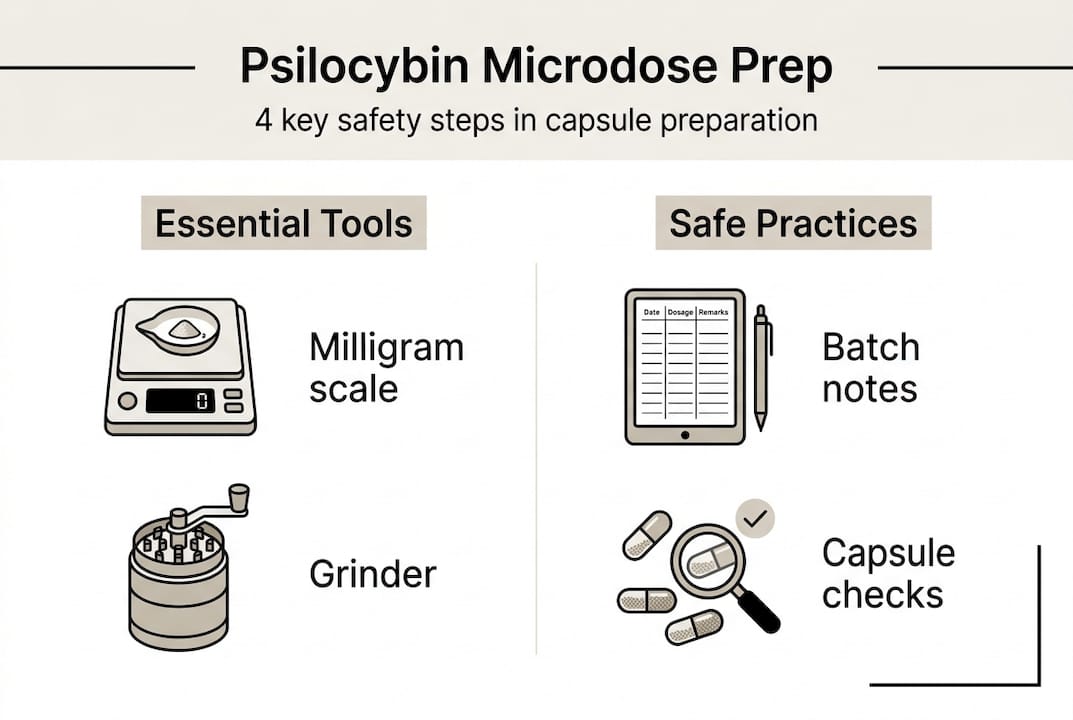
Precision equipment transforms mushroom preparation from guesswork into reliable science. Your tool selection directly impacts dosing accuracy and capsule consistency. Start with a digital milligram scale accurate to 0.001g, this is your most critical investment. Standard kitchen scales lack the precision needed for 50-250mg doses, where a 10mg variance can significantly alter effects.
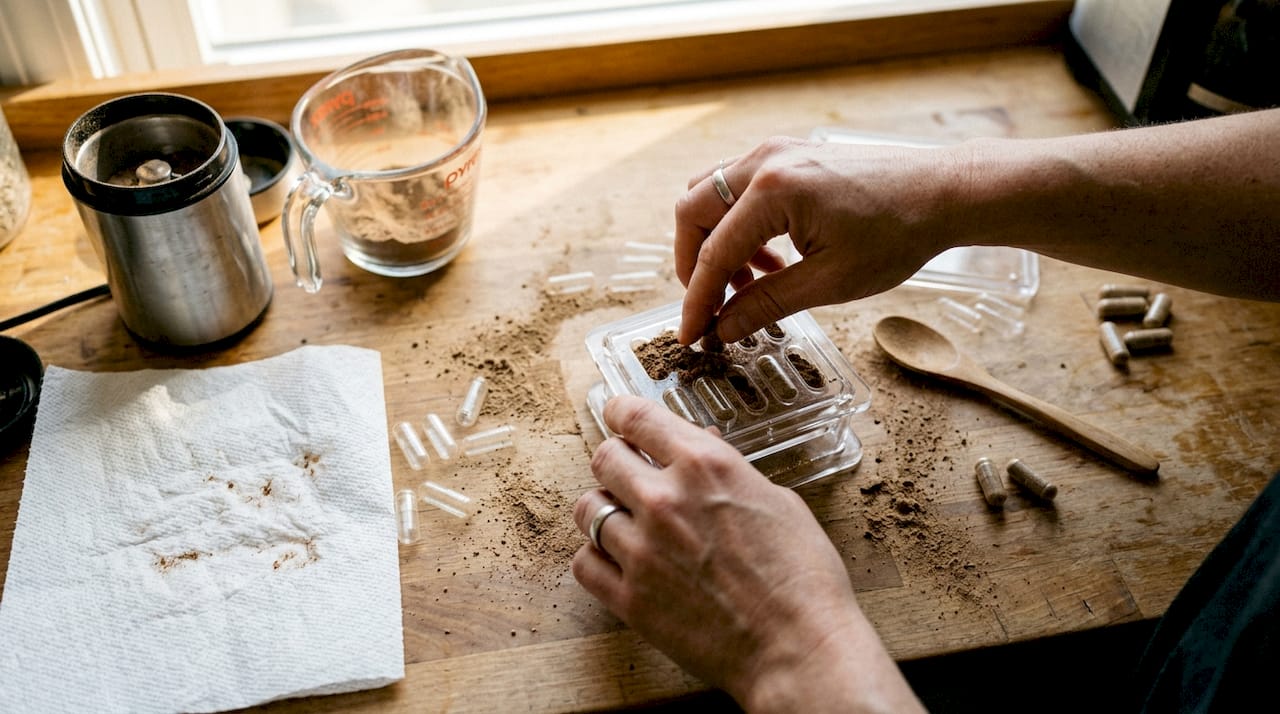
A dedicated coffee or spice grinder creates the fine, uniform powder essential for even distribution in capsules. Blade grinders work well for small batches, but burr grinders offer superior consistency if you prepare larger quantities. Clean your grinder thoroughly between batches to prevent cross-contamination and maintain accurate dosing.
Capsule filling machines streamline the process once you move beyond experimental single doses. These devices hold 24, 50, or 100 capsules at once, letting you fill entire batches with consistent powder compression. Manual tamping tools ensure each capsule contains the target dose without air pockets that create weight discrepancies.
| Tool | Typical Cost | Purpose |
|---|---|---|
| Milligram scale (0.001g) | $25-60 | Accurate dose measurement |
| Coffee/spice grinder | $15-40 | Fine powder consistency |
| Capsule filling machine | $20-50 | Batch preparation efficiency |
| Size 0 or 1 capsules (1000 count) | $15-25 | Dose containment |
| Desiccant packets | $8-15 | Moisture control for storage |
| Airtight storage containers | $10-20 | Long-term potency preservation |
Size 0 or 1 veggie or gelatin capsules accommodate typical microdose ranges perfectly. Size 0 holds approximately 400-500mg powder, while size 1 contains 300-400mg. Many practitioners prefer vegetarian capsules made from plant cellulose rather than animal-derived gelatin for ethical reasons and because they dissolve more predictably in the stomach.
Drying equipment varies based on your starting material. A food dehydrator set to 95-115°F (35-46°C) removes moisture efficiently without degrading psilocybin. Alternatively, placing mushrooms on a screen in a cool, dry space with good airflow works for smaller quantities, though it takes several days. Completely dried mushrooms snap cleanly when bent, any flexibility indicates remaining moisture that invites mold growth.
Pro Tip: Grind dried mushrooms in 5-10 second bursts with 10-15 second cooling intervals. This prevents motor overheating and keeps powder temperature low, preserving psilocybin potency while achieving the fine consistency needed for accurate capsule filling.
The importance of scale accuracy cannot be overstated given natural potency variation. A scale reading 100mg when the actual weight is 110mg creates a 10% dosing error that compounds across batches. Calibrate your scale regularly using certified calibration weights, and always weigh on a stable, level surface away from drafts. For detailed information on what goes into professionally prepared capsules, explore mushroom capsule ingredients explained.
Step-by-step process for preparing psilocybin microdose capsules
Successful capsule preparation follows a methodical sequence that prioritizes safety and consistency. Rushing or skipping steps introduces variables that compromise dosing accuracy. Set aside 2-3 hours for your first batch to work carefully through each phase.
-
Dry mushrooms completely until crisp. Place fresh or partially dried mushrooms in your dehydrator at 95-115°F for 6-12 hours, checking periodically. Properly dried mushrooms snap cleanly like a cracker with no bend or sponginess. Any remaining moisture creates mold risk during storage and makes grinding difficult. If air-drying, arrange mushrooms on a screen in a space with good airflow, low humidity, and temperatures between 60-70°F. This method takes 3-7 days depending on initial moisture content and ambient conditions.
-
Grind dried mushrooms into fine, uniform powder. Break larger mushrooms into smaller pieces before grinding to prevent motor strain. Add pieces to your clean, dry grinder and pulse in short bursts. After each 5-10 second pulse, pause 10-15 seconds to prevent overheating. Continue until you achieve a fine, flour-like consistency with no visible chunks. Inconsistent grinding creates hot spots where some capsules contain more potent material than others.
-
Weigh your target dose precisely using a calibrated milligram scale. Place your empty capsule filling machine tray on the scale and tare to zero. For a 100mg microdose, you need exactly 10g of powder for 100 capsules. Calculate your total powder requirement by multiplying your desired dose per capsule by the number of capsules you want to prepare. Batch example: 100 capsules at 100mg dose requires accurately weighing 10g powdered dried mushrooms. Weigh conservatively, you can always add more powder but cannot remove excess once capsules are filled.
-
Prepare capsule filling machine and fill capsules to target dose. Separate capsule halves and place the longer bottom sections into the machine’s holes. Spread your weighed powder evenly across the capsules, using the included tamping tool to compress powder gently into each capsule. Add more powder and tamp again until capsules are filled to your target weight. Work methodically to ensure even distribution, checking several capsules on your scale to verify consistent weights. Adjust powder levels in individual capsules as needed to hit your target dose.
-
Seal capsules and store properly in airtight containers. Place the shorter top halves onto filled capsule bottoms, pressing firmly until you hear or feel them lock together. Remove completed capsules from the machine and inspect each one to ensure proper sealing. Place finished capsules immediately into airtight bottles or jars with desiccant packets to absorb any residual moisture. Store containers in a cool, dark location like a cupboard or drawer, avoiding areas with temperature fluctuations or direct light exposure.
Pro Tip: Document each batch with date, mushroom strain, total powder weight, number of capsules, and target dose per capsule. This record-keeping helps you track consistency across batches and identify any correlation between specific preparations and your subjective effects. Include notes about grinding time, powder texture, and any deviations from your standard process.
Batch calculations become intuitive with practice. If you want 50 capsules at 150mg each, you need 7.5g powder total (50 × 0.15g). For 200 capsules at 75mg, prepare 15g powder (200 × 0.075g). Always weigh slightly more powder than calculated to account for losses during transfer and filling. Starting with conservative doses when using a new mushroom batch protects against unexpectedly high potency. Learn foundational microdosing principles through the beginner microdosing guide safe psilocybin use before beginning preparation.
Common pitfalls and tips for successful microdose capsule preparation
Even experienced preparers encounter challenges that compromise capsule quality or safety. Learning from common mistakes saves time, money, and potential health risks. The most frequent error is grinding too coarsely, leaving visible mushroom fragments in powder. Coarse powder distributes unevenly in capsules, creating dose variability where some capsules deliver significantly more psilocybin than others. Always grind until you achieve flour-like consistency.
Overheating powder during grinding degrades psilocybin and reduces potency. Continuous grinding generates friction heat that can push temperatures above the threshold where psilocybin begins breaking down. The short burst method with cooling intervals prevents this degradation while still achieving fine powder texture. If your grinder feels hot to the touch, you are grinding too long without breaks.
Due to potency variation (0.03-1.78% psilocybin), start with lower doses and monitor effects when using mushrooms from a new source or batch. What felt like a comfortable 100mg microdose from one batch might produce noticeably stronger effects from another. Begin 25-50mg below your usual dose for the first few days with new material, gradually adjusting upward if effects are weaker than expected.
Storage mistakes destroy months of careful preparation:
- Exposure to light breaks down psilocybin, especially UV wavelengths from sunlight or fluorescent bulbs
- Heat accelerates chemical degradation, so avoid storage near stoves, water heaters, or sunny windows
- Moisture promotes mold growth and dissolves capsule shells, making desiccants essential
- Oxygen gradually oxidizes psilocybin, so minimize air exposure by using appropriately sized containers
Personal monitoring through detailed journaling catches problems early. Record your dose, time of consumption, food intake, activities, mood before dosing, and effects throughout the day. This documentation reveals patterns that help optimize your protocol and identifies adverse reactions before they become serious. Note any changes in sleep, appetite, anxiety levels, or physical sensations.
Avoid mixing psilocybin with alcohol, as the combination can increase nausea and unpredictable psychological effects. SSRIs and other serotonergic medications may dangerously amplify serotonin levels when combined with psilocybin, a condition called serotonin syndrome. Always disclose your microdosing practice to healthcare providers before starting new medications or treatments.
“Your body’s response to psilocybin is highly individual. What works perfectly for others may not suit your biochemistry, lifestyle, or mental health history. Approach microdosing as a personal experiment requiring careful observation and willingness to adjust based on your unique experience.”
Quality control extends beyond initial preparation. Check stored capsules monthly for any signs of moisture, discoloration, or capsule degradation. If capsules stick together or feel soft, moisture has penetrated your storage system. Discard compromised capsules rather than risk consuming degraded or contaminated material. Replace desiccant packets every 2-3 months to maintain their moisture-absorbing capacity.
Scale drift creates dosing errors over time. Calibrate your scale every 2-3 months using certified calibration weights, and always verify zero reading before weighing powder. If your scale shows inconsistent readings or fails to return to zero reliably, replace it immediately. The $30-40 cost of a quality scale is trivial compared to the safety risks of inaccurate dosing.
For a comprehensive safety framework covering preparation and consumption, review the microdosing safety checklist for Canadians to ensure you address all critical considerations.
Explore safe microdosing resources and products
Mastering capsule preparation requires ongoing education about dosing protocols, safety updates, and best practices. Fungal Friend offers comprehensive guides that synthesize current research and practitioner experience into actionable frameworks for safe microdosing. Whether you are refining your preparation technique or exploring different dosing schedules, expert resources help you make informed decisions.
For those seeking convenience without sacrificing quality, professionally prepared microdose mushroom capsules eliminate preparation variables while delivering consistent, tested doses. These products undergo rigorous quality control that home preparation cannot match, offering peace of mind for users prioritizing reliability. Explore detailed protocols through the beginner microdosing guide safe psilocybin use and stay current with evidence-based recommendations via psilocybin dosage guidelines 2026 safe microdosing.
Frequently asked questions
Is it legal to prepare psilocybin microdose capsules in Canada?
Psilocybin is illegal without Health Canada authorization but exemptions exist for medical use via specific programs. The Controlled Drugs and Substances Act prohibits possession, production, and distribution of psilocybin-containing mushrooms. Health Canada grants case-by-case exemptions through the Special Access Program and Section 56(1) for patients with serious conditions who have exhausted conventional treatments. For detailed information on navigating these regulations, consult legal considerations for psilocybin in Canada.
What equipment do I need to prepare accurate microdose capsules?
Essential tools include a precise milligram scale, coffee/spice grinder, capsule filling machine, and size 0/1 capsules. The milligram scale must measure accurately to 0.001g for proper microdosing in the 50-250mg range. A dedicated grinder prevents cross-contamination and creates uniform powder consistency. Capsule filling machines improve efficiency and consistency when preparing batches larger than 10-20 capsules. Learn more about capsule composition through mushroom capsule ingredients explained.
How do I store psilocybin microdose capsules to maintain potency?
Store capsules in cool, dark, airtight containers with desiccants to preserve psilocybin potency up to one year or more. Light, heat, oxygen, and moisture all degrade psilocybin over time. Amber glass bottles or opaque plastic containers work well when kept in cupboards or drawers away from temperature fluctuations. Replace desiccant packets every 2-3 months to maintain moisture absorption. Check stored capsules monthly for signs of degradation like discoloration or softening.
What microdosing protocols are recommended to avoid tolerance?
Fadiman protocol involves dosing one day on, two-three days off; Stamets stack cycles 4-5 days on, 2-3 off to prevent tolerance. The Fadiman approach gives your serotonin receptors time to reset between doses, maintaining sensitivity over weeks or months. Stamets protocol combines psilocybin with lion’s mane mushroom and niacin, using slightly more frequent dosing but still incorporating breaks. Daily dosing quickly builds tolerance and diminishes benefits. Explore comprehensive protocol guidance through psilocybin microdosing Canada safe wellness guide.