
Psychedelic Therapy: Science, Benefits, and Risks Explained
Finding reliable options for relief from anxiety and distraction is a common challenge for many Canadian adults today. With conversations about mental health evolving, curiosity around safe and psychedelic-assisted therapy continues to grow. Misconceptions have surrounded this field for years, but clinical protocols and ethical frameworks now help create supportive, research-backed environments for healing. This overview explores what defines psychedelic therapy, uncovers the most persistent myths, and highlights key details every Canadian should know before considering these innovative treatments.
Table of Contents
- Psychedelic Therapy Defined And Common Myths
- How Psychedelic Therapy Sessions Work
- Types Of Psychedelic Substances Used
- Current Legal Status And Safety In Canada
- Potential Benefits And Known Risks
Key Takeaways
| Point | Details |
|---|---|
| Psychedelic Therapy Distinction | Psychedelic therapy is a structured treatment utilizing psychedelics in a clinical environment, differing from recreational drug use. |
| Potential Benefits | It offers rapid relief for conditions such as depression and PTSD through enhanced self-awareness and neurological improvements. |
| Risk Management | Comprehensive screening and professional oversight are essential to mitigate psychological and physiological risks associated with the therapy. |
| Legal Considerations | In Canada, patients must navigate strict medical authorization and regulatory requirements to access psychedelic treatments safely. |
Psychedelic Therapy Defined and Common Myths
Psychedelic therapy represents an innovative approach to mental health treatment that utilizes carefully controlled psychedelic substances to facilitate profound psychological healing. At its core, psychedelic-assisted therapy involves administering substances like psilocybin or MDMA within a structured therapeutic environment to help patients address complex mental health challenges.
The scientific definition of psychedelic therapy extends beyond simple substance administration. Ethical frameworks for psychiatric treatment emphasize creating a supportive context where patients can explore their inner psychological landscape under professional guidance. This approach differs dramatically from recreational drug use, focusing instead on intentional, clinically supervised experiences.
Common myths about psychedelic therapy persist, despite growing scientific evidence supporting its potential. Here are some prevalent misconceptions:
- Myth: Psychedelic therapy is just recreational drug use
- Reality: Controlled clinical protocols prioritize safety and therapeutic outcomes
- Myth: Psychedelics are inherently dangerous
- Reality: Supervised treatments show promising results for treatment-resistant conditions
- Myth: These therapies lack scientific validation
- Reality: Ongoing research demonstrates significant potential for mental health interventions
Modern psychedelic therapy research emphasizes rigorous patient screening, informed consent, and comprehensive psychological support. Clinicians carefully assess individual patient suitability, monitor experiences in controlled settings, and provide integrated therapeutic follow-up to maximize potential benefits and minimize risks.
Pro tip: Always consult qualified mental health professionals and participate only in clinically approved psychedelic therapy programs to ensure your safety and therapeutic effectiveness.
How Psychedelic Therapy Sessions Work
Psychedelic therapy is a meticulously structured therapeutic approach that transforms mental health treatment through carefully orchestrated clinical sessions. Psychedelic therapy sessions involve multiple deliberate stages designed to maximize psychological healing and personal insight while ensuring patient safety and comprehensive support.
Clinical psychedelic therapy protocols typically unfold across three critical phases: preparation, direct intervention, and integration. The process emphasizes a holistic approach that goes far beyond simply administering a psychedelic substance.
The key stages of a psychedelic therapy session include:
- Preparation Phase: Establishing therapeutic goals and building trust with the clinical team
- Screening and Assessment: Comprehensive medical and psychological evaluation
- Dosing Session: Controlled substance administration in a supportive environment
- Guided Experience: Professional therapist support during the psychedelic journey
- Integration Therapy: Processing and applying insights from the experience
Modern psychedelic therapy research highlights the critical importance of ‘set and setting’ – the psychological state of the patient and the physical/emotional environment where the therapy occurs. Therapists carefully design each session to create a safe, comfortable space that minimizes potential anxiety and maximizes therapeutic potential.

The entire process is structured to provide a profound yet controlled psychological exploration. Trained professionals monitor patients continuously, ensuring physical and emotional safety throughout the experience. By combining medical expertise with a compassionate, supportive approach, psychedelic therapy offers a unique pathway to addressing complex mental health challenges.
Pro tip: Always verify the credentials and specialized training of psychedelic therapy practitioners, ensuring they have extensive experience in both clinical psychology and psychedelic-assisted treatment protocols.
Types of Psychedelic Substances Used
Psychedelic therapy leverages a diverse range of substances, each with unique neurochemical properties and therapeutic potential. Psychedelic substances represent a complex family of compounds that interact with the brain’s neurological systems in profound and nuanced ways, offering targeted approaches to mental health treatment.
Psychedelic substance classifications traditionally divide these compounds into several distinct categories, each with specific neurological interactions and clinical applications. Understanding these categories helps medical professionals select the most appropriate intervention for individual patient needs.
The primary categories of psychedelic substances include:
-
Classic Serotonergic Psychedelics:
- Psilocybin (from mushrooms)
- LSD (lysergic acid diethylamide)
- Mescaline (from peyote cactus)
-
Entactogens:
- MDMA (commonly known as ecstasy)
- Promotes emotional openness and social connection
-
Dissociative Psychedelics:
- Ketamine
- Provides rapid antidepressant effects
- Used in controlled medical settings
Modern psychedelic therapy research highlights the nuanced mechanisms of these substances. Classic psychedelics primarily interact with serotonin 5-HT2A receptors, facilitating deep psychological insights, while compounds like MDMA and ketamine work through different neurological pathways to address specific mental health challenges.
Here’s a summary of the main categories of psychedelic substances and their clinical applications:
| Substance Category | Example Compounds | Main Therapeutic Use | Key Neurological Action |
|---|---|---|---|
| Classic Psychedelics | Psilocybin, LSD | Deep psychological insight | Serotonin 5-HT2A receptor modulation |
| Entactogens | MDMA | Emotional trauma processing | Increased serotonin and dopamine |
| Dissociative Psychedelics | Ketamine | Rapid depression relief | NMDA receptor antagonism |
Each psychedelic substance offers a unique therapeutic approach, requiring careful medical supervision and personalized treatment strategies.
The selection of a specific psychedelic substance depends on multiple factors, including the patient’s medical history, mental health condition, and potential therapeutic goals. Trained healthcare professionals conduct comprehensive assessments to determine the most appropriate and safe intervention.
Pro tip: Always consult with a licensed medical professional specialized in psychedelic therapy to understand which substance might be most suitable for your specific mental health needs.
Current Legal Status and Safety in Canada
The landscape of psychedelic therapy in Canada represents a complex and evolving regulatory environment that balances medical innovation with patient safety. While certain psychedelic substances remain controlled, recent developments have opened pathways for therapeutic research and limited clinical applications.
Legal psychedelic options in Canada currently include ketamine and psilocybin through specific medical authorization channels. Healthcare practitioners can access these treatments for patients under strict clinical protocols, with patients requiring comprehensive medical assessments and professional oversight.
Key legal considerations for Canadian patients include:
-
Medical Authorization Requirements:
- Physician recommendation
- Comprehensive medical screening
- Documented treatment-resistant conditions
-
Approved Psychedelic Substances:
- Ketamine (authorized for treatment-resistant depression)
- Psilocybin (limited clinical research contexts)
- MDMA (emerging therapeutic protocols)
-
Regulatory Restrictions:
- Controlled substance classifications
- Limited prescription pathways
- Mandatory clinical supervision
Psilocybin safety guidelines emphasize the critical importance of professional medical guidance. Unauthorized use remains illegal, and patients must work closely with licensed healthcare providers to navigate legal and medical requirements.
Psychedelic therapy in Canada requires strict adherence to medical protocols and regulatory frameworks to ensure patient safety and legal compliance.
The Canadian healthcare system continues to evaluate and expand psychedelic treatment options, with ongoing research exploring therapeutic potential while maintaining rigorous safety standards. Patients interested in these emerging treatments should consult specialized healthcare professionals who understand the nuanced legal and medical landscape.
Pro tip: Always verify current legal status and seek guidance from licensed medical professionals specifically trained in psychedelic therapy protocols before considering any treatment.
Potential Benefits and Known Risks
Psychedelic therapy represents a nuanced approach to mental health treatment, offering profound potential benefits while simultaneously requiring careful risk management. Understanding both the therapeutic possibilities and potential challenges is crucial for patients considering this innovative treatment modality.
Psychedelic therapy research reveals significant potential benefits across multiple mental health conditions. Patients have experienced rapid and sustained reductions in symptoms of depression, anxiety, and post-traumatic stress disorder (PTSD), often achieving meaningful results after just a few carefully supervised sessions.
Key potential benefits include:
-
Psychological Insights:
- Rapid emotional breakthroughs
- Enhanced self-understanding
- Reduced psychological barriers
-
Neurological Improvements:
- Increased neuroplasticity
- Enhanced brain connectivity
- Potential reset of entrenched neural patterns
-
Mental Health Outcomes:
- Significant depression symptom reduction
- Anxiety management
- PTSD symptom alleviation
Safety analyses of psychedelic treatments highlight important risk considerations. While these therapies demonstrate generally favorable safety profiles, potential psychological risks exist that require comprehensive screening and professional management.
Known risks and potential challenges include:
-
Psychological Risks:
- Temporary emotional overwhelm
- Potential exacerbation of underlying psychiatric conditions
- Risk of challenging psychological experiences
-
Physiological Considerations:
- Transient physical side effects
- Individual variability in response
- Potential cardiovascular interactions
Careful clinical protocols, thorough patient screening, and professional supervision are essential to mitigate potential risks and maximize therapeutic benefits.
The emerging field of psychedelic therapy demands a balanced approach that respects both its transformative potential and the need for rigorous safety standards. Patients must work closely with qualified professionals who can provide comprehensive guidance and support throughout the therapeutic process.
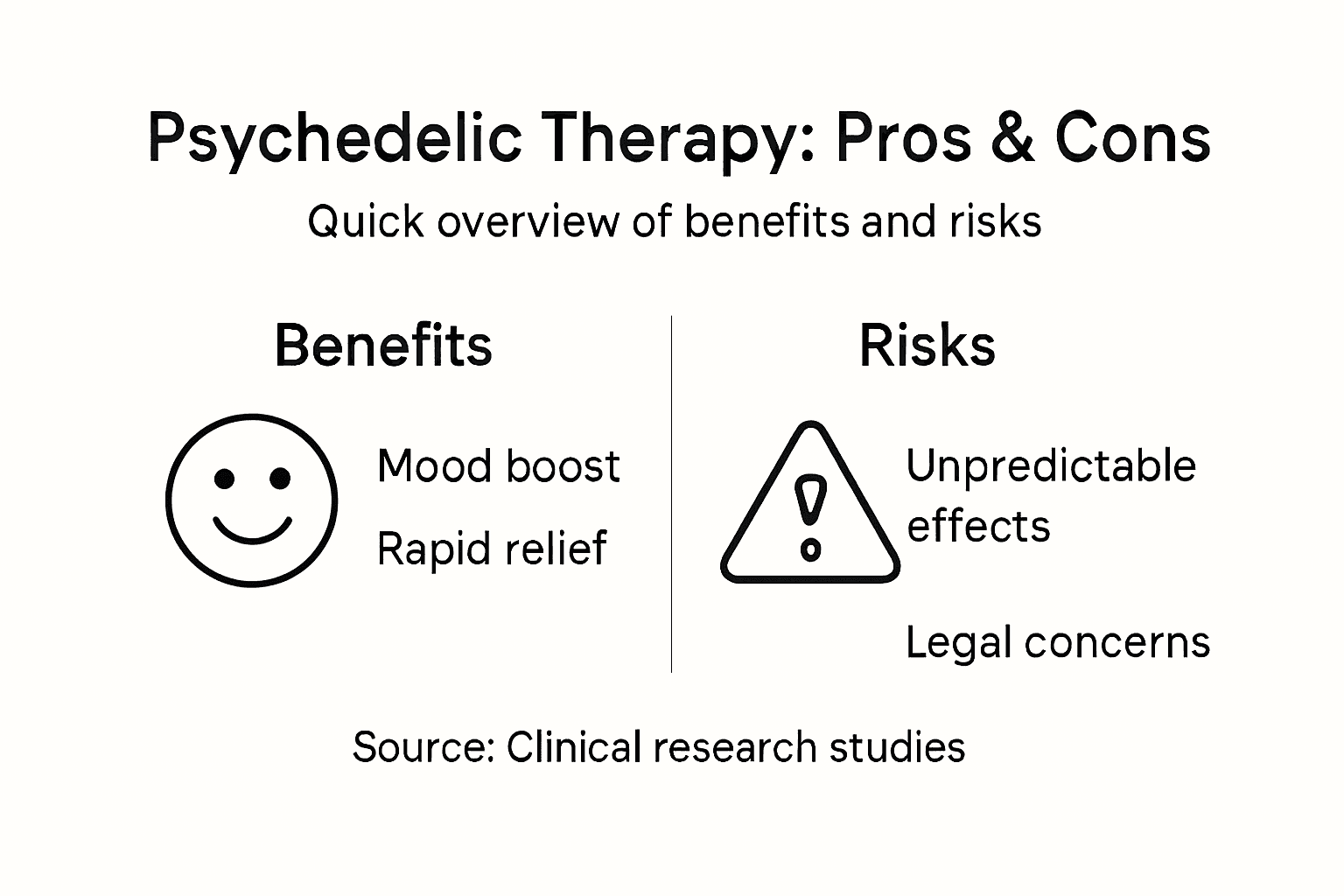
The table below compares the major benefits and risks associated with psychedelic therapy:
| Aspect | Key Benefits | Notable Risks |
|---|---|---|
| Psychological | Enhanced self-awareness, breakthrough moments | Potential emotional distress |
| Neurological | Increased brain plasticity | Unpredictable individual responses |
| Health Outcomes | Rapid relief for depression, PTSD | Possible negative interaction with medication |
| Safety Profile | Monitored, low serious side effects | Temporary anxiety or discomfort |
Pro tip: Prioritize comprehensive medical screening and choose practitioners with specialized training in psychedelic-assisted therapy to ensure the safest and most effective treatment experience.
Discover Safe and Supported Psychedelic Experiences with Fungal Friend
Navigating the complex world of psychedelic therapy requires trusted guidance and access to reliable, high-quality products designed with your mental health goals in mind. Whether you seek microdose psilocybin for mood balance or a deeper psychedelic journey, understanding the risks and benefits is critical to making informed choices. At Fungal Friend, we recognize the importance of controlled environments and professional support as highlighted in the science of psychedelic therapy. Our curated selection helps bridge that gap by offering carefully crafted products tailored for clarity, focus, and emotional wellbeing.

Enhance your personal psychedelic experience today by exploring our range of natural, legally compliant options available through Uncategorized Archives – Fungal Friend. Start confidently with expert insights and find your ideal product on our main site Fungal Friend. Take the next step toward thoughtful, safe psychedelic use supported by quality and expertise.
Frequently Asked Questions
What is psychedelic therapy?
Psychedelic therapy is a mental health treatment that uses carefully controlled psychedelic substances, such as psilocybin or MDMA, in a structured therapeutic environment to help address complex mental health challenges.
How does a typical psychedelic therapy session work?
A typical session involves three phases: preparation (setting goals and building trust), the dosing session (controlled substance administration), and integration therapy (processing and applying insights from the experience).
What are the potential benefits of psychedelic therapy?
Psychedelic therapy has shown potential benefits, including rapid reductions in symptoms of depression, anxiety, and PTSD, as well as enhanced self-understanding and increased brain connectivity.
What are the known risks associated with psychedelic therapy?
While generally safe under professional guidance, psychedelic therapy can pose risks such as temporary emotional overwhelm, exacerbation of underlying psychiatric conditions, and transient physical side effects. Thorough screening and professional supervision are essential.