
Legal Psilocybin Guide for Canadians: Safe Access in 2026
You’ve heard the buzz about psilocybin microdosing for mental health, and maybe you’ve seen online dispensaries claiming legal sales in Canada. Here’s the reality: psilocybin remains a controlled substance, and most forms of personal use are still illegal. However, legal pathways do exist for medical access through clinical trials and special exemptions. This guide cuts through the confusion, showing you exactly how to access psilocybin legally, what risks to avoid, and the steps to take if you’re considering it for wellness or mental health support.
Table of Contents
- Understanding psilocybin’s legal status in Canada
- Legal pathways to psilocybin access in Canada
- Microdosing in Canada: Is it actually legal?
- Safety, health risks, and ethical considerations
- How to pursue safe, legal psilocybin use in 2026
- Get expert support and stay safe on your psilocybin journey
- Frequently asked questions
Key Takeaways
| Point | Details |
|---|---|
| Psilocybin is still controlled | All psilocybin use outside authorized medical access remains illegal in Canada. |
| Three legal access routes | You can access psilocybin only via clinical trials, the Special Access Program, or a Section 56 exemption. |
| Microdosing is not legal | No Health Canada-approved microdosing products exist and self-sourcing is risky. |
| Stay safe through medical supervision | Avoid illegal dispensaries and prioritize physician involvement for all psilocybin use. |
| Medical evidence required for exemptions | Applicants for legal access must prove failed treatments and obtain healthcare support. |
Understanding psilocybin’s legal status in Canada
Despite growing interest and therapeutic research, psilocybin is a Schedule III controlled substance under Canada’s Controlled Drugs and Substances Act. This classification makes possession, production, sale, and use illegal without explicit authorization from Health Canada. No exceptions exist for personal wellness, microdosing protocols, or purchases from gray-market dispensaries.
Many Canadians mistakenly believe recent policy shifts have legalized psilocybin for personal use. That’s false. The law criminalizes all unauthorized activities involving magic mushrooms, including growing them at home, buying from online shops, or consuming them for self-directed therapy. Penalties range from fines to criminal charges, depending on the quantity and intent.
What remains illegal in 2026:
- Possession of any amount without authorization
- Cultivation or production for personal or commercial use
- Sale or distribution through dispensaries or online platforms
- Consumption for microdosing, recreation, or self-therapy
Some dispensaries operate openly, creating the illusion of legality. These businesses exist in a legal gray zone and face potential raids, closures, and criminal prosecution. Customers who purchase from them also risk legal consequences and health hazards from untested products. For more context on psilocybin legal considerations and the broader psychedelics legal landscape, understanding your rights and risks is essential.
“Psilocybin’s Schedule III status means it’s treated similarly to other controlled substances. Without proper authorization, any use is illegal and carries real consequences.” — Health Canada guidance
The takeaway? If you’re exploring psilocybin for mental health or wellness, you must pursue one of the legal pathways outlined below. Self-sourcing or relying on unverified sellers puts you at legal and medical risk.
Legal pathways to psilocybin access in Canada
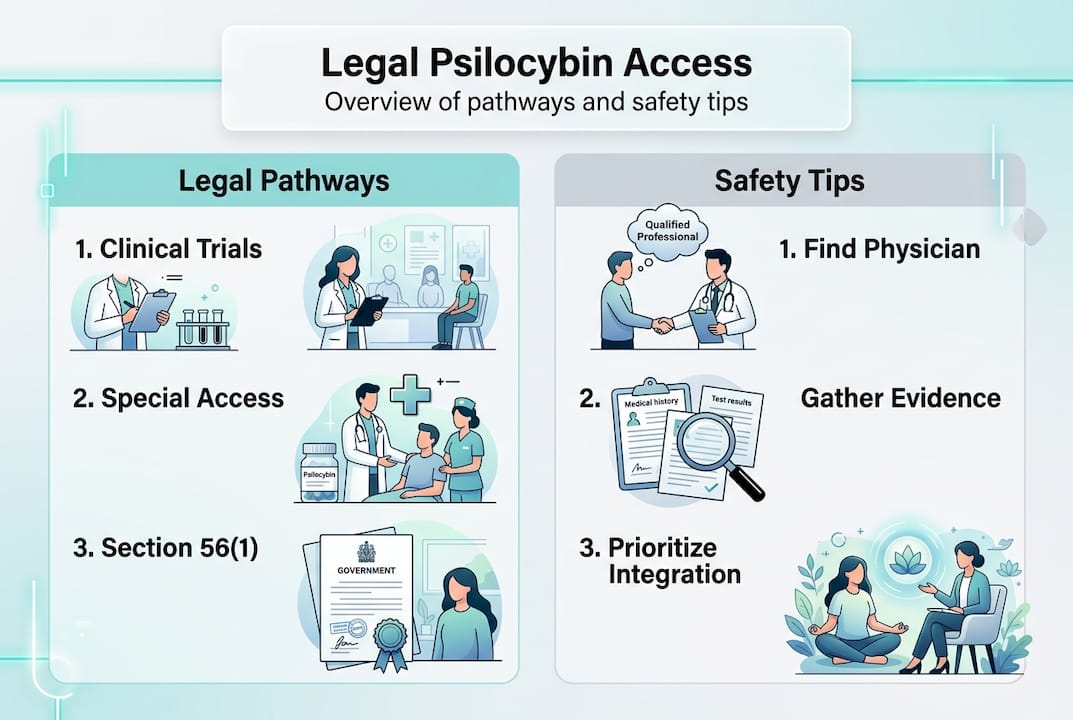
Canada offers three pathways for legal access: clinical trials, the Special Access Program (SAP), and Section 56(1) exemptions. Each serves different populations and has distinct approval criteria.
Clinical trials provide supervised access to psilocybin for participants enrolled in Health Canada-approved research studies. These trials typically focus on treatment-resistant depression, PTSD, or end-of-life anxiety. Participants receive psilocybin in controlled settings with medical oversight, making this the safest and most accessible option for many Canadians. However, enrollment is limited and often requires meeting specific diagnostic criteria.
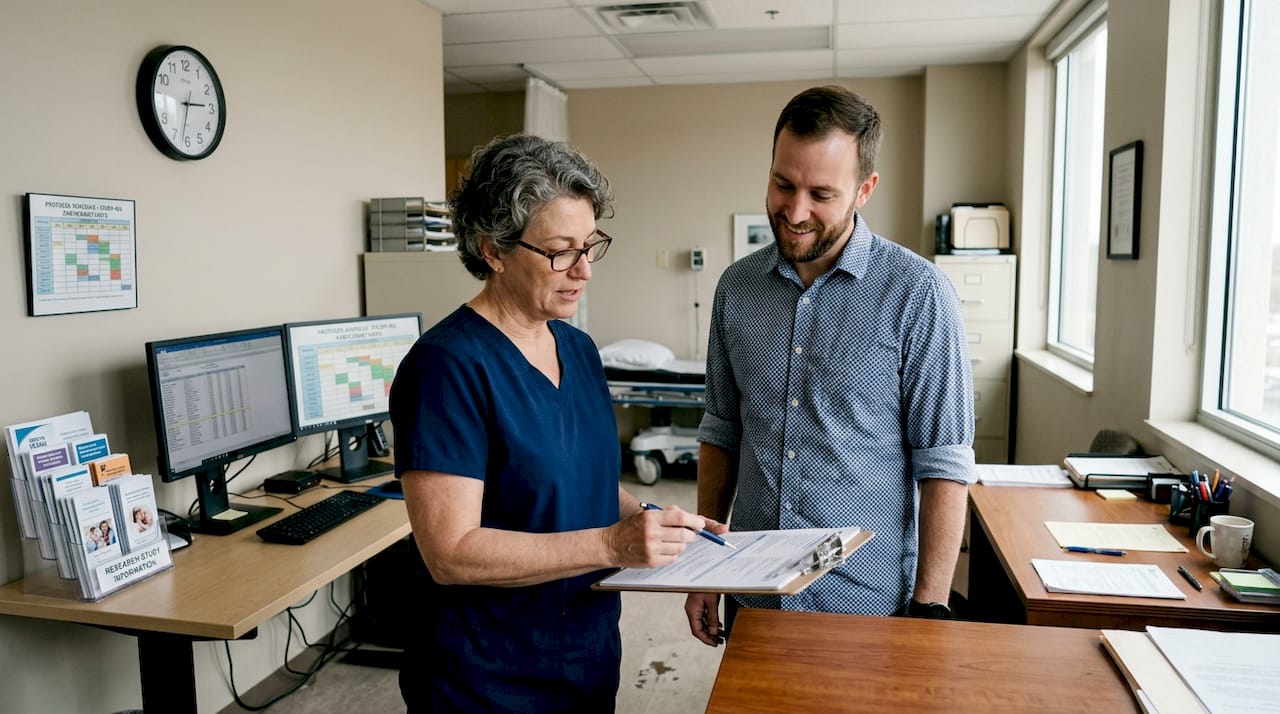
The Special Access Program (SAP) allows physicians to request unauthorized drugs for patients with serious or life-threatening conditions when conventional treatments have failed. Between 2022 and 2025, Health Canada approved hundreds of SAP applications for psilocybin, primarily for patients with terminal cancer or severe depression. Approval rates have increased as evidence mounts, but the process requires thorough medical documentation and physician advocacy.
Section 56(1) exemptions grant legal access for specific purposes, including compassionate use and healthcare provider training. Historically, approval rates were low. However, a 2025 Federal Court ruling requires Health Canada to reconsider refusals for healthcare professionals seeking experiential training with psilocybin. This decision may expand access for therapists and doctors preparing to offer psychedelic-assisted therapy.
| Pathway | Who Qualifies | Approval Rate | Best For |
|---|---|---|---|
| Clinical Trials | Research participants meeting study criteria | High (if eligible) | First-timers, those seeking supervised use |
| Special Access Program | Patients with serious conditions, failed treatments | Moderate to high | Medical necessity, terminal illness |
| Section 56(1) Exemption | Compassionate cases, HCP training | Low (improving post-2025 ruling) | Unique circumstances, professional training |
Pro Tip: Start with clinical trials if you meet eligibility criteria. They offer the most structured support, including therapy integration and medical monitoring. If trials aren’t available, work with a physician to explore SAP.
For those curious about microdosing safety in 2026 or why legality matters, understanding these pathways is your first step toward responsible use.
Microdosing in Canada: Is it actually legal?
Microdosing involves taking sub-perceptual doses of psilocybin, typically 0.1 to 0.3 grams of dried mushrooms, every few days. Popular protocols include the Fadiman method (one day on, two days off) and the Stamets stack (four days on, three days off, combined with lion’s mane and niacin). Advocates claim benefits like improved focus, mood balance, and creativity. Despite the hype, microdosing is illegal unless accessed through approved channels.
Health Canada has not authorized any microdosing products for sale. No legal capsules, teas, or chocolates exist outside of clinical trials or exemptions. Online dispensaries and local shops selling microdose kits operate illegally, and their products are untested for purity, potency, or contamination. Purchasing from these sources exposes you to legal penalties and health risks.
Common microdosing myths:
- Myth: Microdosing is legal because the doses are small.
- Reality: Any amount of psilocybin is illegal without authorization, regardless of dose size.
- Myth: Dispensaries selling microdose products are operating legally.
- Reality: These businesses violate federal law and may be shut down at any time.
- Myth: Microdosing is risk-free because it’s natural.
- Reality: Unregulated products may contain contaminants, incorrect dosages, or harmful additives.
Research into microdosing is ongoing, with clinical trial results showing mixed outcomes. Some studies suggest modest improvements in mood and cognition, while others find no significant difference compared to placebo. Until Health Canada approves microdosing protocols, self-directed use remains illegal and unsupported by conclusive evidence.
| Protocol | Dosage | Schedule | Legal Status |
|---|---|---|---|
| Fadiman | 0.1-0.3g | 1 day on, 2 off | Illegal without exemption |
| Stamets Stack | 0.1-0.3g + lion’s mane + niacin | 4 days on, 3 off | Illegal without exemption |
| Intuitive | Variable | As needed | Illegal without exemption |
Pro Tip: If you’re interested in microdosing for mental health, explore clinical trials first. You’ll receive medical-grade psilocybin, professional guidance, and legal protection. For more on microdosing dosage guidelines, microdosing trends, and psilocybin microdosing safety tips, start with evidence-based resources.
Safety, health risks, and ethical considerations
Unauthorized psilocybin use carries both legal and medical consequences. Legally, possession or purchase can result in criminal charges, fines, and a record that affects employment, travel, and future SAP or exemption eligibility. Medically, illicit products pose serious risks.
A recent study found that unauthorized hallucinogen use linked to emergency room visits was associated with a 6.1% five-year mortality rate, compared to 0.6% for non-users. While psilocybin itself has low toxicity, the dangers stem from contaminated products, unknown dosages, and lack of medical supervision. Illicit mushrooms may contain mold, pesticides, or other psychoactive compounds that increase adverse reactions.
Key risks of unauthorized use:
- Criminal penalties including fines and imprisonment
- Contaminated or mislabeled products
- Unpredictable dosing leading to overwhelming experiences
- Psychological distress without therapeutic support
- Loss of eligibility for legal access programs
In contrast, controlled clinical use shows minimal long-term physical risks. Studies indicate psilocybin is non-addictive and well-tolerated when administered in supervised settings. The difference lies in quality control, dosing accuracy, and integration support.
Ethical use principles:
- Prioritize physician-guided access through legal pathways
- Ensure proper set (mindset) and setting (environment) for any psilocybin experience
- Engage in therapy or integration sessions to process insights
- Avoid combining psilocybin with other substances or medications without medical advice
Pro Tip: If you’re considering psilocybin for the first time, work with a healthcare provider experienced in psychedelic therapy. They can help you prepare mentally, choose an appropriate dose, and integrate the experience afterward. For more on psilocybin safety realities and how to learn about microdosing safety, education is your best defense against harm.
“The risks of self-sourcing psilocybin far outweigh any perceived benefits. Legal access ensures you receive tested products and professional support, which are critical for safety and efficacy.” — Psilocybin risk statistics
How to pursue safe, legal psilocybin use in 2026
Ready to explore psilocybin legally? Here’s a step-by-step guide to navigating the system safely and effectively.
1. Find a participating physician. Not all doctors are comfortable prescribing or supporting psilocybin access. Seek out physicians with experience in psychedelic medicine, palliative care, or psychiatry. Organizations like TheraPsil and the Canadian Psychedelic Association maintain directories of supportive healthcare providers.
2. Gather medical evidence. For SAP applications, you’ll need documentation showing that conventional treatments have failed. This includes medical records, treatment histories, and diagnostic reports. Your physician will use this evidence to justify the request to Health Canada.
3. Submit an SAP application. Your doctor will complete the application on your behalf, outlining your condition, failed treatments, and the rationale for psilocybin therapy. Health Canada reviews applications on a case-by-case basis, typically responding within weeks.
4. Prepare for potential denial. If SAP is denied, discuss a Section 56(1) exemption with your physician. The 2025 court ruling has made this pathway more viable, especially for compassionate use cases.
5. Prioritize safety and integration. Legal use requires physician involvement to ensure proper dosing, monitoring, and therapeutic support. Avoid self-sourcing due to contamination risks and legal consequences. Plan for integration sessions with a therapist trained in psychedelic-assisted therapy to process insights and sustain benefits.
Pro Tip: Set and setting matter. Even in legal contexts, psilocybin experiences are influenced by your mindset and environment. Choose a calm, comfortable space and consider having a trusted friend or therapist present for support.
For ongoing guidance, explore resources like our guide to safe microdosing and insights into the wellness microdosing surge. Official information on SAP is available through Health Canada.
Get expert support and stay safe on your psilocybin journey
Navigating psilocybin’s legal landscape can feel overwhelming, but you don’t have to do it alone. At Fungal Friend, we provide evidence-based guides, safety resources, and community support tailored for Canadians exploring psilocybin for mental health and wellness. Whether you’re a first-timer seeking legal pathways or an experienced user prioritizing safety, our platform offers step-by-step resources to help you make informed decisions.
From understanding dosage protocols to connecting with supportive healthcare providers, we’re here to bridge the gap between curiosity and responsible action. Explore our comprehensive psilocybin microdosing guide, review dosage guidelines, or start with our beginner’s microdosing guide to build a foundation of knowledge. Legal compliance and ongoing support are essential for safe, effective use, and we’re committed to helping you every step of the way.
Frequently asked questions
Can I buy magic mushrooms or microdose kits legally in Canada?
No, buying psilocybin products for personal use is illegal unless accessed through a clinical trial or authorized medical exemption. Online dispensaries operate outside the law.
What’s the easiest legal way to try psilocybin for wellness?
The Special Access Program with physician support is the most accessible route for approved medical use, usually for serious mental health conditions or terminal illness.
Are there risks to buying from an online dispensary?
Yes, online magic mushroom sales are illegal and may involve untested, contaminated products. Buyers face legal penalties and health hazards from unregulated sources.
Is microdosing approved by Health Canada?
Microdosing protocols are not approved by Health Canada, and self-sourcing psilocybin remains illegal. No legal microdose products exist outside of clinical trials.
What proof do I need for a legal psilocybin exemption?
Applicants should provide medical evidence of failed treatments and a support letter from a healthcare provider. Documentation strengthens your case for SAP or Section 56 exemptions.