
Psilocybin microdosing guide: safe doses for wellness
Most people assume that taking psilocybin means seeing visuals, losing track of time, or spending hours in an altered state. That assumption keeps a lot of curious Canadians from exploring one of the most talked-about wellness tools of the decade. Microdosing is something entirely different. It sits well below the threshold that triggers any psychedelic experience, and interest in it has grown sharply as more people look for natural support for anxiety, focus, and mood. This guide walks you through everything you need to know, from what microdosing actually is, to how much to take, which format to choose, and how to do it safely.
Table of Contents
- What is psilocybin microdosing?
- How psilocybin dosage works: Factors to consider
- Recommended psilocybin microdose amounts
- Choosing your dosing method: Capsules, dried, or chocolates?
- Microdosing protocols: Schedule, tracking, and adjustment
- Safety, risks, and when to seek medical advice
- Expert resources and next steps for Canadian microdosers
- Frequently asked questions
Key Takeaways
| Point | Details |
|---|---|
| Start low, adjust slowly | Begin with a small dose and gradually increase only if necessary, tracking your response. |
| Product type matters | Capsules provide consistent dosing while dried mushrooms or chocolates may need more careful measuring. |
| Protocol prevents tolerance | Use established microdosing schedules and allow days off to avoid building tolerance to psilocybin. |
| Safety is essential | Know your health status and consult healthcare providers when starting any new supplement, especially psilocybin. |
What is psilocybin microdosing?
Microdosing means taking a very small, sub-perceptual amount of psilocybin, the active compound in magic mushrooms. Sub-perceptual means you should not feel high. You should not see anything unusual. The goal is subtle: a slight lift in mood, a bit more mental clarity, or a reduction in background anxiety that lets you move through your day more effectively.
A standard psychedelic dose of dried psilocybin mushrooms typically falls between 2 and 5 grams. A microdose sits at roughly 0.05 to 0.3 grams, which is a fraction of that. The psilocybin microdosing effects are intentionally mild, and that is the entire point.
People who microdose regularly report a range of benefits:
- Reduced anxiety and emotional reactivity
- Improved focus and mental stamina
- More stable mood across the day
- Greater creativity and problem-solving ability
- Better sleep quality over time
These outcomes are not guaranteed, and individual results vary. But the therapeutic uses of psilocybin are increasingly supported by user experience data and early clinical research. As one key point from that research makes clear, microdosing does not induce hallucinations and is used to subtly enhance mood and focus. That distinction matters enormously for anyone worried about losing control or functioning at work.
“The most common misunderstanding about microdosing is that it is just a smaller trip. It is not. It is a fundamentally different intention and a fundamentally different experience.”
With a clearer sense of what microdosing is and is not, let’s break down the factors that influence the right dose for your needs.
How psilocybin dosage works: Factors to consider
There is no universal dose that works for everyone. Individual biology and product type affect psilocybin effects significantly, which is why two people can take the same amount and have noticeably different experiences.
Here are the key variables to think about before you start:
- Body weight and metabolism: Heavier individuals may need slightly more to feel the same effect, though the relationship is not perfectly linear.
- Past experience with psychedelics: First-timers are often more sensitive. If you have used psilocybin before, your baseline tolerance may be higher.
- Product form: Dried mushrooms, capsules, and chocolates all deliver psilocybin differently. Potency can vary between batches of dried mushrooms, while capsules offer more consistency.
- Desired outcome: Are you targeting anxiety relief, focus, or mood stability? Your intention shapes the ideal dose range.
- Medications and health conditions: Certain antidepressants, particularly SSRIs, can blunt psilocybin effects or interact unpredictably. Always review this with a healthcare provider.
If you are new to this, the beginner psilocybin microdosing guide at Fungal Friend is a solid starting point. For a more structured approach, the psilocybin dosage workflow walks you through a step-by-step process for finding your personal sweet spot. Understanding psilocybin and mental health interactions is also worth reviewing before you begin.
Pro Tip: Start at the lowest possible dose and keep a simple journal. Note your mood, energy, and focus each day, whether you dosed or not. Patterns emerge quickly, and the data you collect is far more useful than any general recommendation.
Once you understand the variables, you will need dosage recommendations to get started safely.
Recommended psilocybin microdose amounts
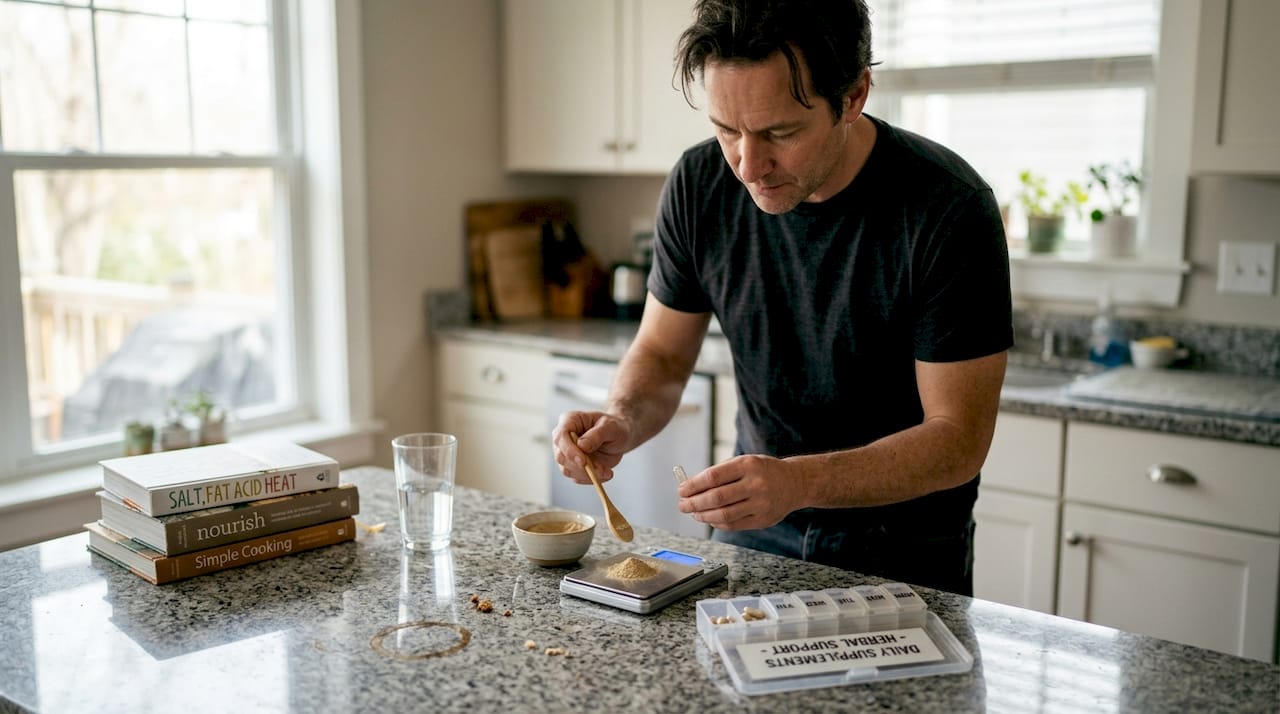
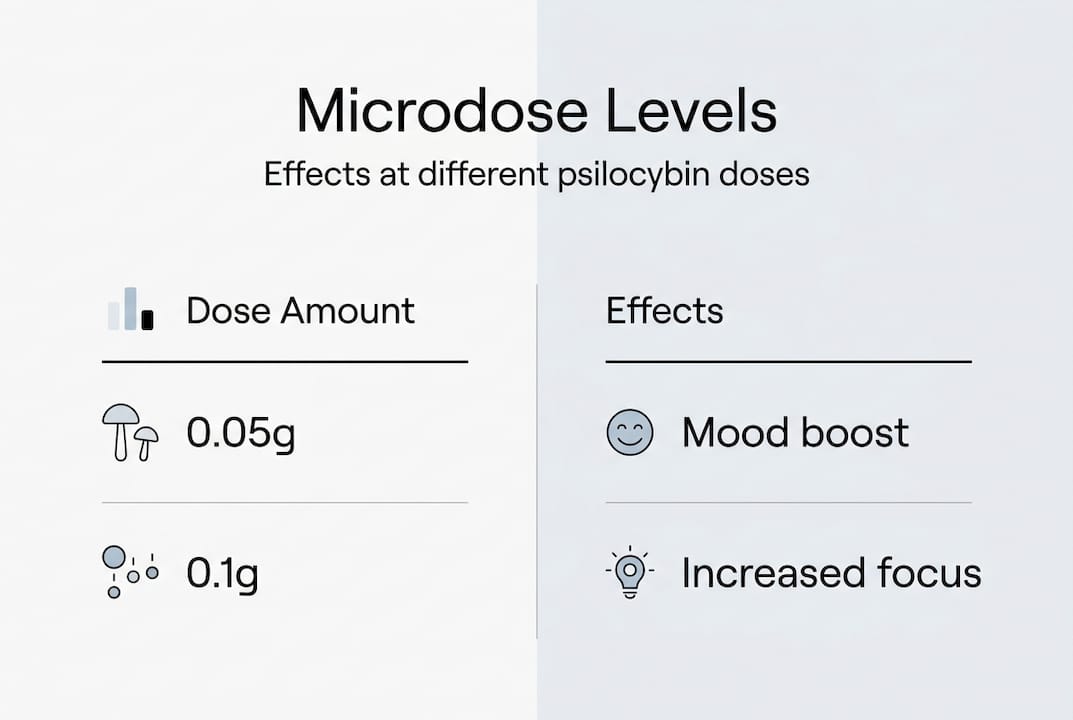
The typical psilocybin microdose is about 1/10 to 1/20 of a full psychedelic dose. In practical terms, that translates to a range of 0.05 to 0.3 grams of dried mushrooms. Most beginners do best starting at the lower end of that range.
| Experience level | Dried mushrooms | Capsule equivalent | Notes |
|---|---|---|---|
| Beginner | 0.05 to 0.1g | 50 to 100mg | Start here, assess for 2 weeks |
| Intermediate | 0.1 to 0.2g | 100 to 200mg | After baseline is established |
| Experienced | 0.2 to 0.3g | 200 to 300mg | Only with solid tracking history |
Signs that you have exceeded the microdose threshold include noticeable visual changes, difficulty concentrating, emotional intensity, or feeling “off” in a way that disrupts your day. These are signals to reduce your dose, not push through.
The microdose psilocybin effects at each level differ more than most people expect. Even moving from 0.1g to 0.15g can shift the experience meaningfully for sensitive individuals.
Pro Tip: Take your microdose in the morning, ideally with food. Effects typically begin within 30 to 60 minutes and last 4 to 6 hours. Avoid dosing in the afternoon if sleep quality matters to you.
Now that you know the recommended amounts, let’s review choosing between different dosing methods and products.
Choosing your dosing method: Capsules, dried, or chocolates?
The format you choose affects accuracy, convenience, and how consistently you can stick to a protocol. Each option has real trade-offs.
Capsules offer precision while dried mushrooms allow flexible dosing. Chocolates sit somewhere in between, offering a more enjoyable experience but requiring careful attention to serving size.
| Method | Dosage accuracy | Onset time | Taste | Convenience |
|---|---|---|---|---|
| Capsules | High | 30 to 60 min | Neutral | Very high |
| Dried mushrooms | Moderate | 20 to 45 min | Earthy | Moderate |
| Chocolates | Moderate | 30 to 60 min | Pleasant | High |
For first-timers, capsules are the easiest entry point. The dose is pre-measured, there is no preparation involved, and you can track your intake precisely. Check out the mushroom capsule ingredients page to understand what goes into a quality product.
Experienced users often prefer dried mushrooms because they can fine-tune their dose more freely. Chocolates are a popular middle ground, especially for people who find the taste of dried mushrooms off-putting. The mushroom chocolate dosage tips guide covers how to portion and track chocolate-based products accurately.
The most important factor is not which format you choose. It is consistency. Switching formats mid-protocol makes it harder to interpret your results and adjust intelligently.
After choosing your method, you need to understand safe and effective protocols.
Microdosing protocols: Schedule, tracking, and adjustment
A protocol is simply a structured schedule for when you dose and when you rest. Without one, it is easy to dose too frequently, build tolerance, and lose the benefits you are working toward.
Here are the three most widely used approaches:
- Fadiman protocol: Dose on day one, rest on days two and three, then repeat. This is the most researched schedule and a great starting point for beginners.
- Stamets stack: Dose for four consecutive days, then rest for three. Often combined with lion’s mane mushroom and niacin for added cognitive support.
- Custom schedule: Some experienced users dose every other day or only on high-demand workdays. This works best once you have a solid baseline from a structured protocol.
Spacing doses at least 3 days apart prevents rapid tolerance build-up, which is one of the most common reasons people stop noticing benefits. Tolerance to psilocybin develops quickly when doses are too frequent, and rest days are not optional.
Most people report noticeable improvements in mood and focus within 2 to 4 weeks of consistent microdosing. That timeline aligns with what the psilocybin tolerance and spacing research suggests about how the brain adapts to regular low-dose exposure.
Pro Tip: Always plan for integration days. These are your off days, and they are when much of the benefit actually settles in. Use them to reflect, journal, and notice what has shifted. The microdosing checklist at Fungal Friend is a practical tool for staying on track.
Sticking to a protocol supports safer, more predictable results. Here is how to maximize benefits while minimizing risks.
Safety, risks, and when to seek medical advice
Microdosing is generally considered low-risk for healthy adults, but that does not mean risk-free. Being informed is the most important harm reduction tool you have.
Common risks and considerations include:
- Legal status in Canada: Psilocybin remains a controlled substance. Possession and sale are illegal outside of specific medical or research exemptions. Know the current rules before you proceed.
- Unpredictable sensitivity: Even at low doses, some people experience anxiety, emotional intensity, or discomfort. This is more common in first-time users.
- Medication interactions: SSRIs, MAOIs, and lithium can all interact with psilocybin in ways that range from reduced effectiveness to serious risk. Review the essential psilocybin dosage tips before combining anything.
- Underlying mental health conditions: The psilocybin mental health risks are real for certain populations.
Psilocybin should be avoided by those with a personal or family history of psychosis. This includes schizophrenia, bipolar disorder with psychotic features, and related conditions. The risk of triggering or worsening these conditions is not worth taking.
“Responsible microdosing starts with honest self-assessment. If you have any doubt about your mental health history or current medications, speak with a healthcare provider before you begin.”
If you experience persistent anxiety, paranoia, or emotional instability while microdosing, stop and consult a professional. These are not signs to push through.
Armed with knowledge, you are ready to microdose safely and intentionally.
Expert resources and next steps for Canadian microdosers
If you have made it this far, you already have a stronger foundation than most people who start microdosing. The next step is putting that knowledge into practice with the right support behind you.
At Fungal Friend, we have built a library of resources specifically for Canadian adults who want to microdose with intention. The beginner microdosing guide is the best place to start if you are new, covering everything from your first dose to your first full protocol. For those ready to dial in their amounts, the dosage guidelines page gives you a clear, evidence-informed framework. And if you want a step-by-step walkthrough of how to actually run a safe protocol from start to finish, the safe microdosing method guide covers exactly that. Our product selection, including capsules, chocolates, and teas, is curated to support consistent, accurate dosing at every experience level.
Frequently asked questions
What is the ideal starting psilocybin microdose for beginners?
The beginner dosage is 0.05 to 0.1 grams of dried psilocybin mushrooms, or the equivalent in capsule or chocolate form. Starting at the lower end gives your body time to calibrate before you adjust upward.
Is psilocybin microdosing legal in Canada?
Psilocybin remains illegal in Canada except under limited medical or research exemptions. Always verify the current regulations in your province before purchasing or using any psilocybin product.
How long does it take to notice microdosing benefits?
Most people report subtle improvements in mood and focus within 2 to 4 weeks of consistent microdosing. Results depend heavily on dose accuracy, protocol adherence, and individual biology.
Can you build a tolerance to psilocybin microdosing?
Yes. Taking psilocybin daily builds tolerance quickly, which is why 3-day spacing between doses is strongly recommended. Rest days are not just recovery time, they are when your sensitivity resets.
Who should avoid psilocybin microdosing?
Anyone with a personal or family history of psychosis should not use psilocybin without direct medical supervision. People on SSRIs, MAOIs, or lithium should also consult a healthcare provider before starting.