
Responsible microdosing: Safe practices for wellness in Canada
Microdosing psilocybin has gone from underground wellness trend to mainstream conversation, but the hype often outpaces the evidence. Many Canadians assume a small dose of magic mushrooms will reliably sharpen focus, lift mood, and reduce anxiety. The reality is more nuanced. Responsible microdosing involves sub-perceptual doses taken on structured schedules, paired with careful self-monitoring and a clear understanding of Canadian law. This guide breaks down what responsible microdosing actually looks like, what the science supports, and how to approach it safely.
Table of Contents
- What is responsible microdosing?
- Microdosing protocols: Schedules and stacks
- What does the research say about microdosing?
- Legal and safety considerations in Canada
- Practicing responsible microdosing: Step-by-step guide
- Explore safe, effective microdosing resources
- Frequently asked questions
Key Takeaways
| Point | Details |
|---|---|
| Start low and track | Always begin with the lowest recommended dose and keep a detailed journal of your experiences to maximize safety. |
| Follow evidence-based protocols | Structured schedules like Fadiman or Stamets Stack support responsible use and reduce the risk of tolerance. |
| Understand the legal risks | Psilocybin and LSD remain illegal for most Canadians outside special programs—prioritize compliance and education. |
| Prioritize health and harm reduction | Screen for contraindications, avoid unsafe combinations, and consult medical professionals to minimize health risks. |
| Scientific benefits are unclear | Self-reported improvements exist but current research shows inconsistent effects—be skeptical and responsible. |
What is responsible microdosing?
Microdosing means taking an extremely small, “sub-perceptual” dose of a psychedelic substance. Sub-perceptual means you should not feel high, see visuals, or experience any significant alteration in consciousness. The goal is subtle: a gentle lift in mood, a bit more mental clarity, or reduced background anxiety.
For psilocybin, that typically means 0.1 to 0.5 grams of dried mushrooms. For LSD, it is 5 to 20 micrograms. These amounts are 1/10th to 1/20th of what someone would take recreationally. Understanding psilocybin dosing basics before you start is essential, and comparing psilocybin vs LSD helps you choose the right substance for your goals.
Responsible microdosing is not casual or impulsive. It requires intention, precision, and ongoing self-awareness. Here is what separates responsible practice from recreational use:
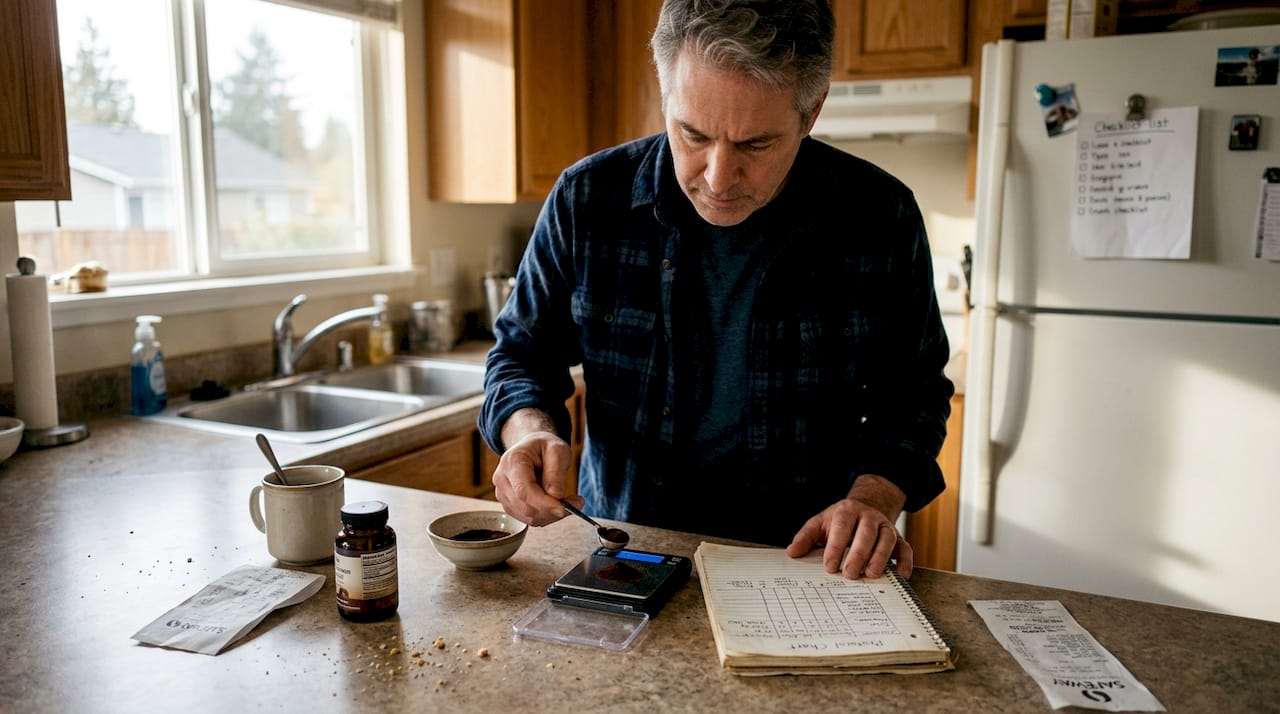
- Accurate dosing using a precise milligram scale (not eyeballing)
- Clear intention for why you are microdosing (mood, focus, creativity)
- Structured schedule with planned rest days to prevent tolerance
- Daily journaling to track effects, mood, and any side effects
- Avoiding risky situations like driving, operating machinery, or high-stakes decisions on dose days
- Consulting a health professional before starting, especially if you take medications
“Harm reduction is the foundation of responsible psychedelic use. Without structure and self-awareness, even small doses carry real risks.” — Canadian Centre for Addictions
Pro Tip: Always start at the lowest suggested dose (0.1g for psilocybin) and use a scale accurate to 0.01 grams. Eyeballing dried mushrooms is unreliable and can turn a microdose into something much stronger.
With the basics in mind, let’s look at the protocols people use, how they are structured, and what harm reduction principles guide them.
Microdosing protocols: Schedules and stacks
A protocol is simply a structured plan for when you dose and when you rest. Two protocols dominate the microdosing community: the Fadiman Protocol and the Stamets Stack.
The Fadiman Protocol follows a “one day on, two days off” rhythm, meaning you dose every third day. The Stamets Stack uses a “four days on, three days off” or “five days on, two days off” pattern, and adds Lion’s Mane mushroom and niacin (vitamin B3) to potentially enhance neurogenesis. Both protocols include a full break after 4 to 8 weeks.
| Protocol | Dose days | Rest days | Duration | Additives |
|---|---|---|---|---|
| Fadiman | Every 3rd day | 2 days between doses | 4 to 8 weeks, then break | None |
| Stamets Stack | 4 on / 3 off or 5 on / 2 off | 2 to 3 days per week | 4 weeks, then 2 week break | Lion’s Mane, niacin |
Rest days are not optional. They prevent tolerance buildup, which can happen surprisingly fast with psilocybin. Without breaks, you may need higher doses to feel the same effect, which defeats the purpose entirely.
Here is how to set up a responsible microdosing routine from scratch:
- Choose your protocol based on your schedule and goals (Fadiman is simpler for beginners)
- Prepare your doses in advance using a precise scale and labeled containers
- Set a start date that avoids high-stress days or important obligations
- Begin your journal the day before your first dose to establish a baseline mood
- Dose in the morning to avoid any sleep disruption
- Log everything after each dose day: mood, energy, focus, side effects
- Complete a full cycle before evaluating whether to adjust anything
- Take a full break of at least two weeks after each cycle
The beginner microdosing guide at Fungal Friend walks through each of these steps in detail. For a broader wellness context, the safe wellness guide covers how microdosing fits into a balanced health routine.
Pro Tip: Only adjust your dose or protocol after completing a full cycle with consistent journaling. Changing things mid-cycle makes it impossible to know what is actually working.
Knowing the protocols is essential, but understanding the evidence behind microdosing takes your approach from routine to truly responsible.
What does the research say about microdosing?
Here is where things get genuinely interesting, and a little humbling. The anecdotal reports are enthusiastic. Thousands of people swear by microdosing for mood, creativity, and focus. But the clinical picture is far more complicated.
A recent meta-analysis covering 14 studies and 1,614 participants found no significant cognitive improvements from microdosing, with an effect size of just d = -0.06. That is not a small positive effect. That is essentially zero, with a slight lean toward reduced cognitive control in some measures. Self-reported benefits, on the other hand, are consistently positive in observational studies.
“Responsible use prioritizes harm reduction over unproven claims. The gap between what people report and what controlled trials show is a reason for caution, not dismissal.”
The table below shows how observational and experimental findings compare:
| Outcome | Observational (self-report) | Experimental (controlled trials) |
|---|---|---|
| Mood improvement | Frequently reported | Mostly similar to placebo |
| Focus enhancement | Commonly reported | Weak or null evidence |
| Creativity boost | Widely reported | Inconsistent, hard to measure |
| Anxiety reduction | Often reported | Mixed; some increase anxiety |
| Cognitive performance | Positive self-perception | No significant benefit |
The placebo effect is a real and powerful force here. When people expect to feel better, they often do. That is not a reason to dismiss microdosing, but it is a reason to track your experience honestly rather than through rose-colored glasses.
The effects of microdosing page at Fungal Friend breaks down what users actually report versus what trials confirm. Risks are generally mild and transient: occasional anxiety, slight blood pressure increases, and disrupted sleep if dosed too late in the day. These are manageable with good protocol design.
Evidence matters, but responsible practice also means staying within the law and understanding your personal risk profile.
Legal and safety considerations in Canada
This is the part most microdosing guides gloss over. In Canada, psilocybin is a Schedule III controlled substance and LSD is Schedule I. Possession, production, and distribution are illegal without a specific exemption. The two main exemption pathways are the Special Access Program (for patients with serious conditions) and Section 56 exemptions (for research purposes). These are not easy to obtain for the average person.
Understanding the psilocybin legal status in Canada is not optional. It is a core part of responsible practice. Here is how to minimize legal and personal risk:
- Never share or distribute your supply, even with friends
- Do not source from unverified suppliers where product quality and content are unknown
- Understand your exemption eligibility before pursuing any formal pathway
- Keep quantities small and for personal use only
- Stay informed as Canadian policy continues to evolve
“For Canadians, prioritize medical consultation and quality control. Microdosing is not a replacement for therapy, and it carries real legal risks that should not be minimized.”
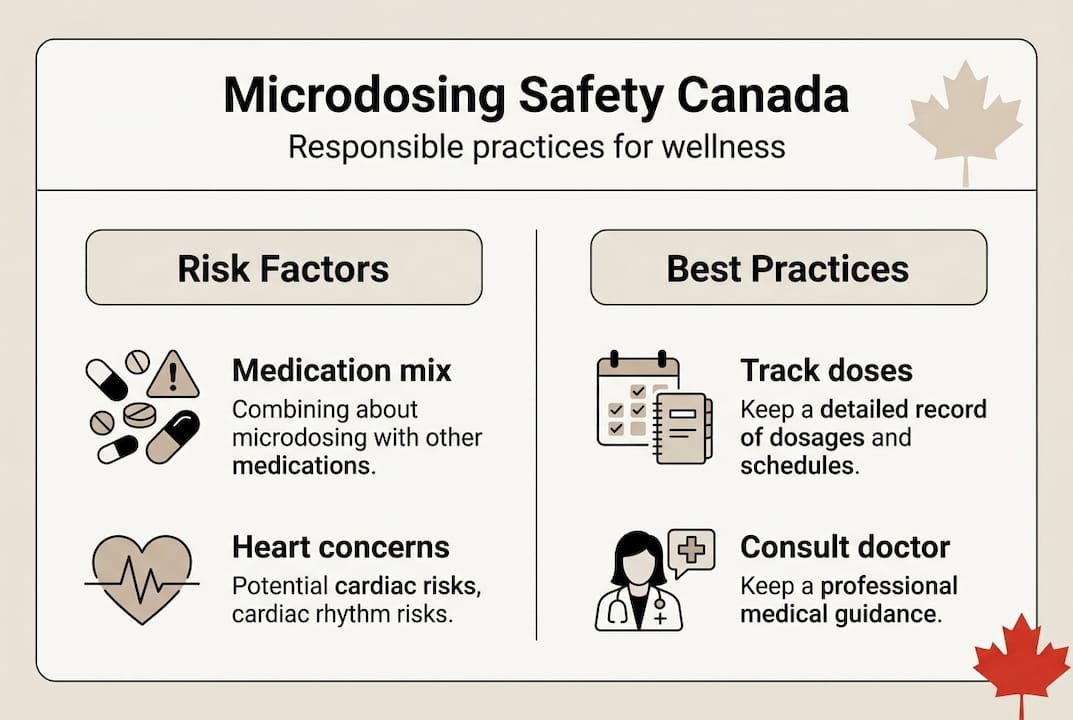
Safety goes beyond legality. The psychedelic safety guidelines for Canada outline who should avoid microdosing entirely. That includes people with a personal or family history of psychotic disorders, those with serious heart conditions, pregnant or breastfeeding individuals, and anyone taking SSRIs, MAOIs, or lithium. These are not suggestions. They are hard stops.
The risks of microdosing page covers drug interactions and contraindications in detail. Consulting a doctor before starting is not just good advice. For many people, it is genuinely necessary.
With legal and safety basics covered, you can now move toward a personalized, responsible application of microdosing within your wellness journey.
Practicing responsible microdosing: Step-by-step guide
Responsibility is not a one-time checkbox. It is an ongoing practice that evolves as you learn more about how your body and mind respond. Here is a practical framework built around safe microdosing practices that Canadian adults can actually follow:
- Do your research first. Read up on legal status, safety guidelines, and evidence before touching any substance. Ignorance is not a harm reduction strategy.
- Screen yourself for contraindications. Be honest about your medical history, current medications, and mental health background. If anything raises a flag, consult a doctor.
- Source carefully and precisely. Use lab-tested products where possible. Know exactly what you are taking and in what amount.
- Create a journaling routine. Start logging your baseline mood, sleep, and energy at least three days before your first dose.
- Stick to a structured protocol with scheduled breaks. Do not improvise. Follow Fadiman or Stamets as written for at least one full cycle.
- Regularly self-assess. After each cycle, review your journal honestly. Are the effects real? Are there any concerning patterns? Adjust only after a full break.
The microdosing safety checklist at Fungal Friend is a practical tool you can use before and during your routine to stay on track.
Pro Tip: If you experience unexpected anxiety, heart pounding, or elevated blood pressure during a dose day, stop your protocol immediately and consult a doctor before resuming. These are signals worth taking seriously.
Armed with this framework, Canadian adults can explore microdosing safely, ethically, and effectively within their personal wellness journey.
Explore safe, effective microdosing resources
Putting this guide into practice is easier when you have the right tools and information behind you. Fungal Friend was built specifically for Canadians who want to approach microdosing with intention, not guesswork.
From lab-tested mushroom capsules to educational resources on dosing and safety, Fungal Friend bridges the gap between curiosity and confident, informed practice. Whether you are just starting out or refining an existing routine, the detailed dosing guidelines and the microdosing for beginners guide give you a structured, evidence-aware foundation. Continuing your journey responsibly starts with access to the right information and support.
Frequently asked questions
How much psilocybin or LSD counts as a microdose?
A typical microdose is 0.1 to 0.5 grams of dried psilocybin mushrooms or 5 to 20 micrograms of LSD, well below a recreational dose.
Is microdosing legal in Canada?
No. Psilocybin and LSD are controlled substances in Canada and illegal to possess without a specific exemption for medical or research use.
Are there proven benefits to microdosing for mood or focus?
Some people report improved mood or focus, but controlled studies show benefits are often similar to placebo effects, with no significant cognitive improvements in meta-analyses.
What are the main health risks of microdosing?
Risks include anxiety, mild blood pressure increases, and interactions with medications or conditions like psychotic disorders, heart issues, pregnancy, or use of SSRIs and MAOIs.
How can I practice microdosing responsibly?
Start low, track your doses and effects in a journal, take scheduled breaks between cycles, and consult a health professional before and during use.