
Legal considerations for psychedelics in Canada 2026
Many Canadians believe microdosing psilocybin falls into a legal gray area, but the reality is far more black and white than most assume. Despite growing interest in psychedelic therapy and mental wellness applications, Canada classifies psilocybin as a controlled substance with narrow medical and research exceptions. This guide cuts through the confusion surrounding psychedelic legality, therapeutic access, and microdosing practices. You’ll learn exactly what’s permitted under current Canadian law, how to minimize legal risks, and where to access safe, authorized psychedelic resources for mental health support.
Table of Contents
- Key takeaways
- Understanding the current legal status of psychedelics in Canada
- Legal risks and safety considerations when using psychedelics
- Regulations and healthcare policies on psychedelic-assisted therapies
- Navigating microdosing legally and safely in Canada
- Explore safe, legal microdosing and psychedelic resources
- FAQ
Key Takeaways
| Point | Details |
|---|---|
| Legal status overview | Psychedelics like psilocybin are controlled substances in Canada, and possession or distribution is illegal without a Health Canada exemption. |
| Exemptions are limited | Health Canada exemptions exist under section 56 but are tightly controlled and relatively rare, with fewer than 500 Canadians having received individual exemptions for psilocybin assisted therapy through 2026. |
| No recreational access | There is no recreational framework, and access remains limited to clinical trials or approved exemptions rather than routine medical practice. |
| Safety and risk | Unlawful use can bring fines, criminal charges, and negative effects on travel and employment, so following legal guidelines and medical advice reduces risk. |
Understanding the current legal status of psychedelics in Canada
Psilocybin mushrooms, LSD, MDMA, and similar substances fall under Schedule III of Canada’s Controlled Drugs and Substances Act. This classification makes possession, production, and distribution criminal offenses without proper authorization. The penalties can include fines up to $1,000 for simple possession or imprisonment for trafficking.
Health Canada does grant exemptions under section 56 of the Act, but these remain tightly controlled. Authorized therapeutic use requires healthcare providers to apply for specific patient exemptions or conduct approved clinical trials. As of 2026, fewer than 500 Canadians have received individual exemptions for psilocybin-assisted therapy, primarily for end-of-life distress or treatment-resistant depression.
The landscape differs significantly from cannabis legalization. While recreational cannabis became legal in 2018, psychedelics face much stricter barriers. No recreational framework exists, and lawmakers show little appetite for broad decriminalization despite advocacy pressure.
Key legal distinctions you should understand:
- Possession of any amount without exemption constitutes a criminal offense
- Growing psilocybin mushrooms at home remains illegal regardless of personal use intent
- Sharing or gifting psychedelics to others qualifies as trafficking under current law
- Importing psychedelic substances, even for personal use, violates federal regulations
- Research institutions need special licenses and must follow rigorous protocols
Enforcement practices vary across provinces and municipalities. Vancouver and Toronto police often deprioritize simple possession cases, focusing resources on trafficking operations. However, this informal tolerance offers no legal protection. Border agencies actively screen for psychedelic substances, and convictions can affect employment in regulated professions, security clearances, and international travel eligibility.
Healthcare providers face their own restrictions. Psychiatrists and therapists cannot simply prescribe or administer psychedelics based on clinical judgment. Each therapeutic application requires navigating Health Canada’s exemption process, which involves extensive documentation, patient screening, and ongoing reporting requirements. This bureaucratic burden limits access even for patients who might benefit most.
Legal risks and safety considerations when using psychedelics
The consequences of unauthorized psychedelic use extend beyond immediate criminal penalties. Legal risks include fines, criminal charges, and impact on employment or travel if substances are used outside approved exemptions. A possession conviction creates a criminal record that appears in background checks for jobs, professional licenses, and volunteer positions requiring vulnerable sector screening.
International travel becomes complicated with a drug conviction. The United States denies entry to individuals with controlled substance offenses, even for minor possession. Other countries maintain similar policies, potentially restricting your ability to travel for work or leisure. Pardons and record suspensions take years to obtain and don’t guarantee border agencies will overlook past offenses.
Beyond legal consequences, unregulated psychedelic use carries health risks that compound when operating outside medical supervision. Dosage inconsistency in street products makes accidental overdoses more likely. Contamination with other substances, including synthetic compounds or toxic fungi misidentified as psilocybin mushrooms, has caused hospitalizations and deaths.
Psychological risks demand equal attention. Psychedelics can trigger acute anxiety, paranoia, or psychotic episodes, especially in individuals with personal or family history of mental health conditions. Without proper screening and therapeutic support, vulnerable users may experience lasting psychological harm rather than the intended benefits.
Practical safety considerations for harm reduction:
- Never use psychedelics alone, especially at higher doses or in unfamiliar settings
- Disclose all medications and health conditions to avoid dangerous interactions
- Start with extremely low doses if experimenting despite legal risks
- Avoid mixing psychedelics with alcohol, cannabis, or other substances
- Keep emergency contacts readily available and inform someone of your plans
Sourcing presents another layer of risk. Purchasing from illegal markets means zero quality control or accountability. You cannot verify substance identity, purity, or potency. Dealers may misrepresent products or sell research chemicals marketed as natural psychedelics. This uncertainty makes every use a gamble with your health and legal standing.
Pro Tip: If you’re considering psychedelic use for mental health reasons, explore legal alternatives first. Licensed therapists offer evidence-based treatments for anxiety, depression, and trauma. Some psychedelic safety considerations emphasize working with professionals who understand both therapeutic potential and risk management, even if they cannot legally provide psychedelic therapy themselves.
Employers in safety-sensitive industries, including transportation, healthcare, and construction, often conduct drug testing. While standard tests don’t typically screen for psychedelics, specialized testing can detect recent use. Positive results may lead to termination or professional sanctions regardless of whether use occurred off-duty.
Regulations and healthcare policies on psychedelic-assisted therapies
Health Canada’s regulatory framework for psychedelic therapy balances emerging evidence with public safety concerns. Health Canada regulates psychedelic-assisted therapies through exemptions and licensed clinical trials to ensure appropriate medical oversight. The Special Access Program and section 56 exemptions provide two main pathways for legal therapeutic use.
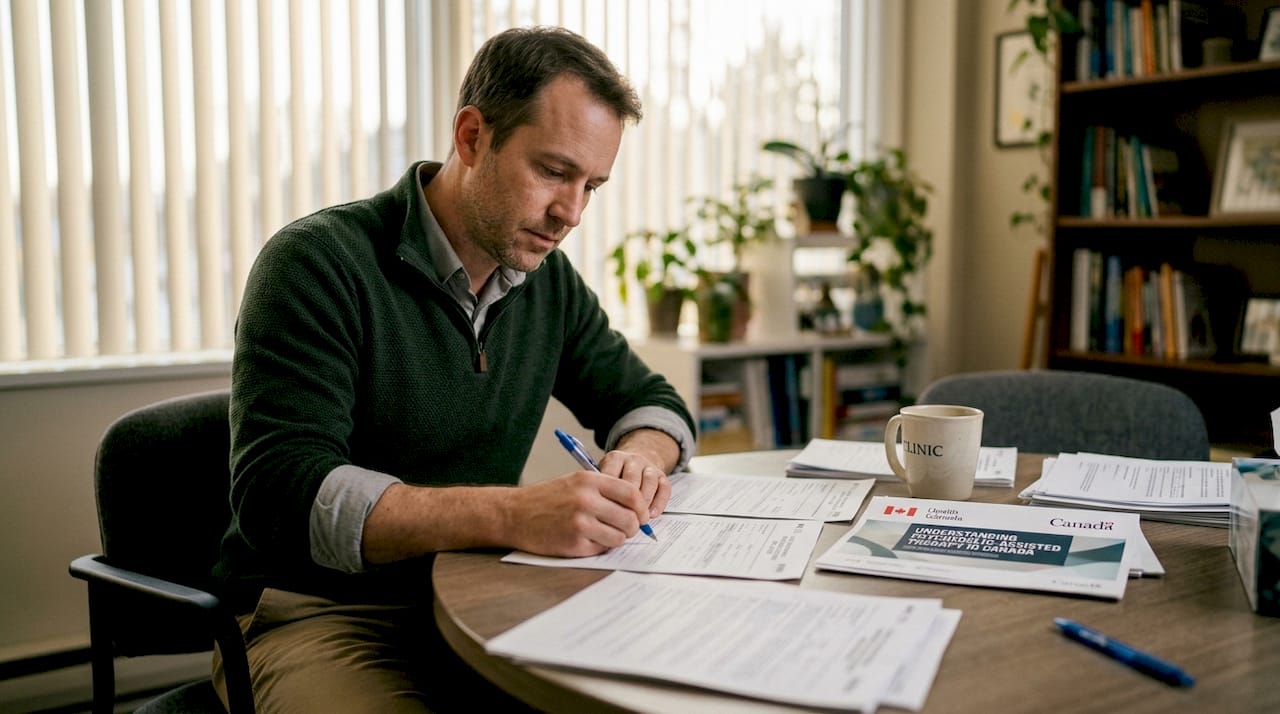
The Special Access Program allows physicians to request unauthorized drugs for patients with serious or life-threatening conditions when conventional treatments have failed. Applications require detailed medical justification, patient consent documentation, and evidence supporting potential benefits. Health Canada reviews each case individually, often taking weeks or months to approve or deny requests.
Section 56 exemptions operate differently, typically applying to clinical research or compassionate access programs. These exemptions permit specific healthcare providers to administer controlled substances under defined protocols. Researchers conducting clinical trials must obtain multiple approvals, including research ethics board clearance and controlled substance licenses.
| Therapy Type | Authorization Required | Patient Eligibility | Clinical Oversight | Current Availability |
|---|---|---|---|---|
| Psilocybin-assisted therapy | Section 56 exemption or Special Access | Treatment-resistant depression, end-of-life distress | Licensed psychiatrist or trained therapist | Very limited, case-by-case |
| MDMA-assisted therapy | Clinical trial participation | PTSD, typically after failed conventional treatment | Research team with medical supervision | Expanding through trials |
| Ketamine therapy | Off-label prescription | Depression, suicidal ideation, chronic pain | Physician administration in clinic | Widely available |
| Ayahuasca ceremonies | Religious exemption (rare) | Members of recognized religious groups | Ceremonial leaders | Extremely limited |
Access barriers remain substantial despite regulatory pathways. Few therapists have completed specialized training in psychedelic-assisted therapy. Those who have often face long waitlists and cannot accept many patients due to exemption limitations. Geographic disparities mean rural Canadians have virtually no access to legal psychedelic therapy regardless of medical need.
Cost presents another obstacle. Legal psychedelic therapy typically costs $3,000 to $8,000 per treatment course, including preparation sessions, dosing sessions, and integration therapy. Provincial health plans don’t cover these expenses, and private insurers rarely reimburse psychedelic treatments. This pricing puts authorized therapy out of reach for most Canadians who might benefit.
Pro Tip: If you’re exploring psychedelic therapy and mental wellness options, ask potential providers about their specific authorization status. Legitimate therapists will clearly explain their legal standing, exemption details, and how they obtained approval to offer services. Vague answers or reluctance to discuss legal authorization should raise red flags.
Healthcare policies continue evolving as clinical evidence accumulates. Multiple Canadian universities now conduct psilocybin research, and results from large-scale trials may influence future regulatory decisions. However, experts predict any significant policy changes remain years away. The current system prioritizes caution and incremental expansion over rapid liberalization.
Informed consent protocols for psychedelic therapy exceed standard medical practice requirements. Patients must understand not only treatment risks and benefits but also the experimental nature of therapy and limited long-term safety data. Documentation must demonstrate patients explored conventional alternatives and comprehend that psychedelic therapy lacks the extensive safety record of established treatments.
Navigating microdosing legally and safely in Canada
Microdosing is not broadly legal but is practiced with caution as legal exceptions and advocacy efforts continue developing. The practice involves taking sub-perceptual doses of psychedelics, typically one-tenth to one-twentieth of a recreational dose, with claimed benefits for mood, focus, and creativity. Despite popularity in wellness communities, microdosing psilocybin remains illegal without medical exemption.
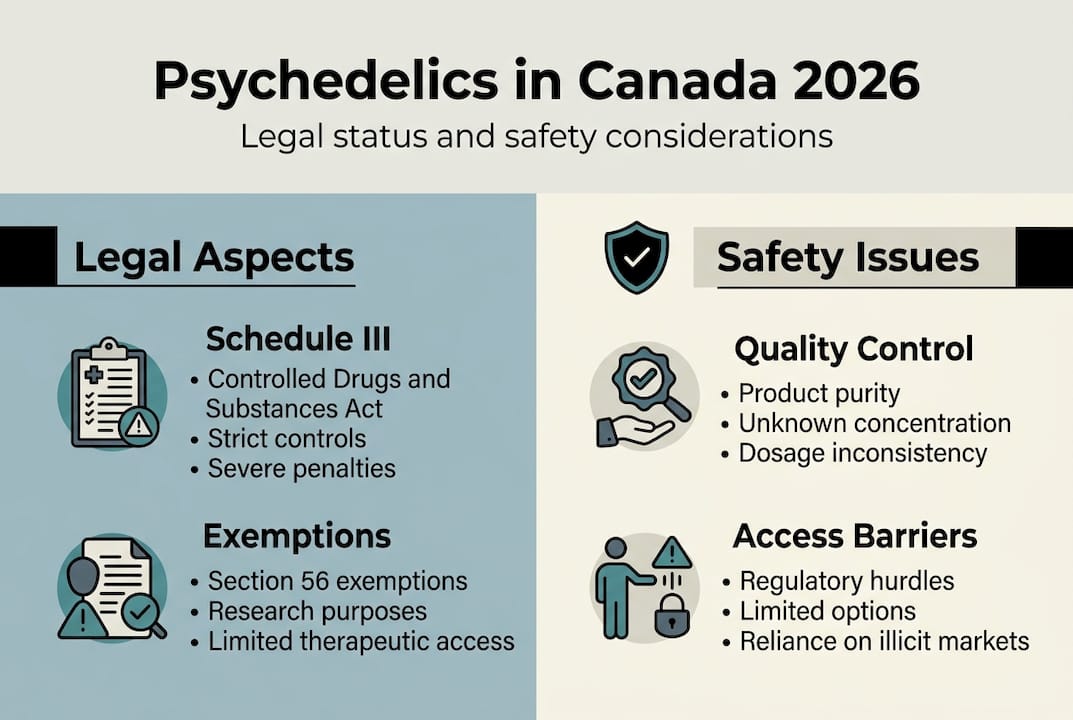
No legal gray area exists despite common misconceptions. Possessing any quantity of psilocybin mushrooms or other controlled psychedelics violates federal law. The small amounts involved in microdosing don’t change legal status or reduce potential penalties. Law enforcement could theoretically charge someone with a single microdose capsule just as they would someone with larger quantities.
Practical enforcement tells a different story. Police rarely prioritize microdosing cases, focusing instead on trafficking and production operations. Some municipalities have passed resolutions encouraging police to deprioritize simple possession, though these carry no legal weight. Vancouver, Victoria, and Toronto have seen advocacy groups push for decriminalization, but actual policy changes remain limited.
| Consideration | Legal Risk Level | Common Practice | Harm Reduction Approach |
|---|---|---|---|
| Personal possession of microdoses | Moderate to high (criminal offense) | Widespread despite illegality | Minimize quantities, discrete storage |
| Purchasing from illegal sources | High (supports trafficking) | Common due to limited alternatives | Research vendor reputation, test products |
| Growing at home | Very high (production charges) | Increasing among enthusiasts | Avoid entirely, legal consequences severe |
| Sharing with friends | Very high (trafficking charges) | Occasional in trusted circles | Never distribute, even as gifts |
| Discussing use publicly | Low to moderate (no direct charges) | Growing openness in some communities | Maintain privacy, consider employment impact |
Best practices for those choosing to microdose despite legal risks focus on harm reduction and discretion. Start with the lowest possible dose to assess individual sensitivity. Psilocybin affects people differently based on body weight, metabolism, and neurochemistry. What qualifies as sub-perceptual for one person may produce noticeable effects in another.
Safe microdosing considerations:
- Research dosing protocols thoroughly before starting any regimen
- Keep detailed private notes tracking doses, timing, and observed effects
- Take regular breaks to prevent tolerance and assess ongoing benefits
- Avoid microdosing before driving, operating machinery, or making critical decisions
- Never combine microdosing with alcohol or other psychoactive substances
- Consult healthcare providers about potential medication interactions
- Stop immediately if you experience negative psychological effects
Sourcing remains the most problematic aspect of microdosing. Illegal markets offer no quality assurance, and potency varies dramatically between mushroom batches and even individual mushrooms. Some users attempt to grow their own supply, but cultivation carries significantly higher legal penalties than simple possession. Production charges can result in imprisonment rather than fines.
Product testing services exist in some Canadian cities, allowing anonymous substance verification. These harm reduction programs, often run by public health organizations, can identify dangerous adulterants and confirm substance identity. However, they cannot make illegal products legal or eliminate all risks associated with unregulated use.
Advocacy organizations continue pushing for microdosing decriminalization and regulated access. Groups like TheraPsil and the Canadian Psychedelic Association work toward policy reform, supporting patients seeking medical exemptions and lobbying for broader legal changes. Progress remains slow, with federal officials showing little enthusiasm for expanding access beyond tightly controlled therapeutic contexts.
Some Canadians explore legal alternatives to psilocybin microdosing. Lion’s mane and other functional mushrooms offer cognitive benefits without legal concerns. While effects differ substantially from psychedelic microdosing, these legal options provide risk-free ways to support mental clarity and focus.
Explore safe, legal microdosing and psychedelic resources
Navigating Canada’s psychedelic landscape requires reliable information and trusted resources. Fungal Friend provides comprehensive educational content to help you understand your options and make informed decisions about mental wellness approaches. Whether you’re curious about microdosing fundamentals or seeking detailed dosage information, expert guides clarify complex topics in accessible language.
Our beginner microdosing guide walks you through essential concepts, safety considerations, and practical protocols. For those ready to explore specific dosing strategies, psilocybin dosage guidelines offer detailed information tailored to different experience levels and wellness goals. Understanding therapeutic applications becomes easier with our psychedelic therapy overview, which explains current research, potential benefits, and how professional therapy differs from self-directed use. These resources empower you to engage thoughtfully with psychedelic wellness while prioritizing safety and legal awareness.
FAQ
Are psychedelics legal in Canada for personal use?
Personal use of most psychedelics remains illegal without medical exemption under the Controlled Drugs and Substances Act. Psilocybin, LSD, and MDMA are Schedule III controlled substances, making possession a criminal offense. Exceptions exist only for authorized therapy through Health Canada exemptions or participation in approved clinical research. Recreational use carries legal penalties including fines and potential imprisonment.
Can I legally microdose psilocybin mushrooms in Canada?
Microdosing psilocybin is generally illegal regardless of the small quantities involved. No legal gray area exists, though enforcement varies by region and police often prioritize trafficking over personal possession. Legal exceptions require medical exemptions through Health Canada’s Special Access Program, which are rarely granted for microdosing purposes. Advocacy efforts continue pushing for decriminalization, but current law treats any psilocybin possession as a criminal matter.
What health professionals are authorized to provide psychedelic therapy?
Licensed psychiatrists and specially trained therapists with Health Canada section 56 exemptions can provide psychedelic therapy. Authorization requires extensive application processes, clinical protocols, and ongoing reporting requirements. Most therapists cannot legally offer psychedelic services even if trained, as exemptions remain limited to specific research contexts or compassionate access cases. Therapy requires rigorous informed consent, medical screening, and clinical oversight throughout treatment.
How can I stay safe legally when exploring psychedelics?
Stick to legal exemptions or licensed therapies whenever possible to avoid criminal consequences. Educate yourself thoroughly about current regulations, potential penalties, and safer alternatives before making decisions. If considering unauthorized use despite risks, prioritize harm reduction through trusted sources, conservative dosing, and never using alone. Consulting healthcare providers about mental health goals often reveals legal treatment options you may not have considered.
What are the penalties for unauthorized psychedelic possession in Canada?
Penalties for simple possession can include fines up to $1,000 for summary conviction or up to seven years imprisonment for indictable offenses, though jail time is rare for first-time personal possession. Trafficking charges carry much harsher penalties, including potential imprisonment. Beyond criminal consequences, convictions create records affecting employment, professional licensing, and international travel. Courts may offer diversion programs for first offenders, but outcomes vary by jurisdiction and case circumstances.