
Why education is vital for safe psychedelic use in Canada
TL;DR:
- Proper education significantly reduces bad trip risks and enhances long-term mental health outcomes.
- Legal access to psilocybin in Canada is limited to authorized clinical trials and exemptions.
- Preparation, screening, and integration are essential for safe, effective psychedelic experiences.
Without proper preparation, up to 23% of psychedelic users experience what researchers call a “bad trip,” yet that number drops dramatically when education, set, and setting are in place. For Canadians curious about psilocybin and microdosing, this gap between informed and uninformed use is not just a matter of comfort. It shapes mental health outcomes, legal exposure, and long-term wellness. This guide pulls together the best available evidence on why education is the single most important tool you can bring to any psychedelic experience, whether you are exploring microdosing for focus and mood or considering deeper therapeutic work.
Table of Contents
- The risks of uneducated psychedelic use
- Why education improves microdosing outcomes
- Legal and safety challenges for Canadians
- Preparing, screening, and integrating: The pillars of safe use
- Why education is the real game-changer in psychedelics
- Learn safely and confidently with expert resources
- Frequently asked questions
Key Takeaways
| Point | Details |
|---|---|
| Education reduces risks | Learning about preparation and screening can cut negative outcomes by up to 70 percent. |
| Regulatory knowledge protects | Understanding Canadian legality prevents accidental lawbreaking and improves safety. |
| Microdosing success depends on evidence | Education helps distinguish between real benefits and placebo effects, maximizing wellness. |
| Practical frameworks matter | Following tested preparation, screening, and integration strategies is critical for safe psychedelic use. |
| Expert guidance is key | Consulting official guidelines and expert resources ensures safer and more effective outcomes. |
The risks of uneducated psychedelic use
Most people who have a rough psychedelic experience share one thing in common: they were not prepared. That is not a judgment. It reflects a real gap in how psychedelic information reaches everyday Canadians. When you skip the groundwork, the risks multiply fast.
Research published in peer-reviewed literature shows that bad trips occur in up to 23% of uneducated users, while preparation and proper set and setting reduce negative outcomes by as much as 70%. Those are not small numbers. That gap represents the difference between a meaningful experience and a genuinely destabilizing one.
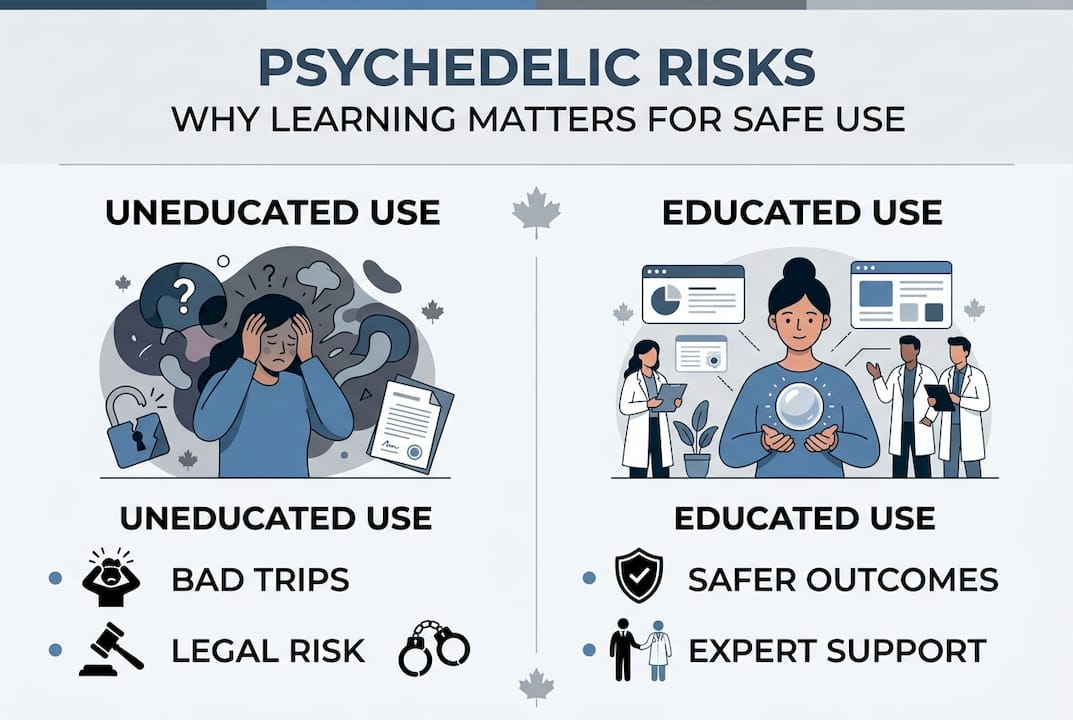
Expert consensus in psychedelic-assisted therapy now emphasizes standardized screening and supervision as non-negotiables. Clinicians flag specific risks that untrained users rarely consider: suicidality signals during difficult experiences, mania triggered in people with undiagnosed bipolar disorder, and the long-term integration challenges that follow intense sessions without support.
Here is a quick comparison of outcomes based on education level:
| Factor | Uneducated use | Educated use |
|---|---|---|
| Bad trip incidence | Up to 23% | Reduced by ~70% |
| Integration challenges | Common | Significantly reduced |
| Anxiety or panic | Frequent | Manageable with prep |
| Legal awareness | Low | High |
| Contaminant exposure | Higher risk | Lower with lab-tested sources |
The key risks you face without proper education’s role in psychedelics firmly in place include:
- Anxiety and panic spirals during a session with no coping tools
- Mania or psychosis triggered in people with underlying vulnerabilities
- Poor integration where insights from the experience go unprocessed
- Legal jeopardy from sourcing or possessing unregulated substances
- Contaminant exposure from unverified products with unknown compounds
Understanding psilocybin safety rules before you ever take a dose is not overcautious. It is the baseline. And knowing psilocybin legality in Canada protects you from consequences that have nothing to do with the substance itself.
Why education improves microdosing outcomes
Microdosing sits in an interesting place scientifically. The self-reported benefits are compelling: better mood, sharper focus, reduced anxiety, and even relief from depression. But when researchers run placebo-controlled trials, the picture gets more complicated. Randomized controlled trials often show no significant benefit beyond placebo, which tells us that expectation and mindset play a massive role in outcomes.
This is exactly where education earns its keep. When you understand what the science actually says, you enter the experience with realistic expectations. You are not chasing a guaranteed productivity boost. You are running a careful, self-directed experiment with your own wellbeing.
Here is how self-reported outcomes compare to clinical findings:
| Outcome | Self-reported | Clinical trial findings |
|---|---|---|
| Mood improvement | Strong positive | Mixed, often placebo-level |
| Productivity boost | Frequently reported | Minimal beyond placebo |
| Anxiety reduction | Common | Inconsistent |
| Depression relief | Widely reported | Requires more RCT evidence |
It is also worth knowing that microdosing side effects are real, even at sub-perceptual doses. Anxiety, elevated blood pressure, nausea, and headaches are all documented. With chronic use, there are emerging concerns about 5-HT2B receptor activation and potential cardiac effects. These are not reasons to panic, but they are reasons to track your experience carefully.
A solid education-based approach to microdosing looks like this:
- Screen for contraindications before your first dose, including mental health history and current medications
- Track your effects with a journal or app, noting mood, energy, sleep, and any side effects
- Follow integration steps after any notable experience, even a microdose day
- Know your safety signals so you recognize when to pause or seek support
Pro Tip: Before you start, cross-reference your plan with safe microdosing guidelines and review a beginner microdosing guide from a source that cites actual research, not just anecdotes.
Legal and safety challenges for Canadians
Here is the reality that many Canadians do not fully grasp: psilocybin is a Schedule III controlled substance under the Controlled Drugs and Substances Act. Legal access exists only through approved clinical trials or specific Health Canada exemptions. Outside of those channels, possession and use carry real legal consequences.
This is not a technicality. It shapes everything from where you source your product to how you store it. The KHSC at-home clinical trial led by Kingston Health Sciences Center marked a significant shift, becoming the first Health Canada-approved trial for home microdosing. That signals where the system is heading, but it is not where most Canadians can access psilocybin today.
The safety challenges tied to unregulated sourcing are serious:
- Contamination risk from products with unknown compounds or incorrect labeling
- Inaccurate dosing when capsules or edibles are not lab-tested
- No quality assurance from street or homegrown sources
- Legal exposure if products are seized or use is reported
- No recourse if something goes wrong with an unverified product
Pro Tip: Only use products from sources that provide third-party lab testing. Avoid anything sourced from unverified vendors, regardless of how trusted they seem in online communities.
Navigating this landscape requires a solid understanding of the legal psilocybin guide for Canadians, including the legal considerations that apply specifically to your province. A thorough psilocybin microdosing guide will also walk you through how to minimize risk while staying within the boundaries of what is currently accessible.
Preparing, screening, and integrating: The pillars of safe use
Safe psychedelic use is not a single event. It is a process with three distinct phases, and each one matters as much as the others.
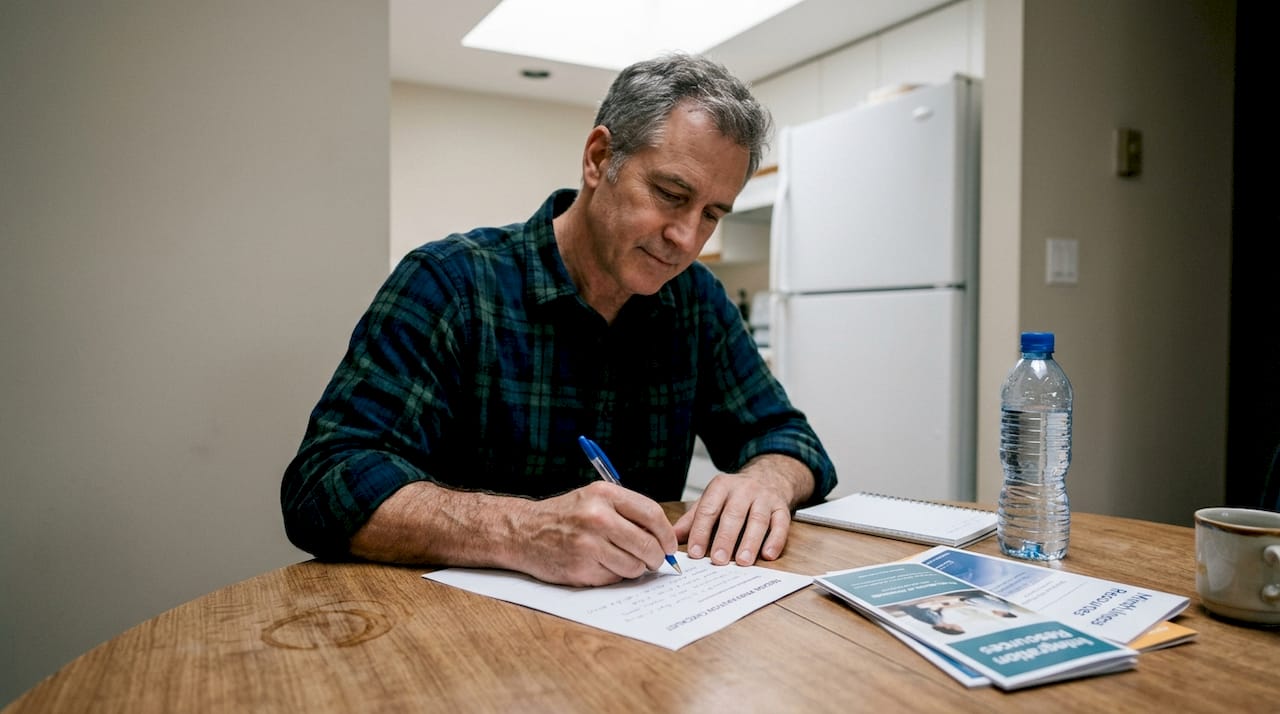
Preparation sets the foundation. This means clarifying your intention, choosing a safe and comfortable setting, and making sure your mindset going in is stable. You do not want to be processing a major life crisis for the first time mid-session.
Screening is where many people skip a critical step. Some conditions and medications make psilocybin significantly more risky. According to expert consensus, standardized screening for suicidality, bipolar disorder, and other vulnerabilities is essential before any supervised session, and that standard applies to personal use too.
Edge cases that require extra caution or full avoidance include:
- Personal or family history of psychosis or schizophrenia
- Current use of SSRIs without a supervised taper plan
- Cardiovascular vulnerabilities or uncontrolled blood pressure
- Active suicidal ideation or recent psychiatric crisis
Integration is where the real work happens. Observational data is broadly positive about psychedelic experiences, but RCTs consistently remind us that placebo effects are strong. What that means practically is that how you process and apply your experience matters enormously.
Here is a step-by-step framework for safe use:
- Screen for risks using a mental health checklist and medication review
- Prepare your environment with a trusted person, comfortable space, and clear intention
- Dose carefully starting low and tracking every response
- Integrate your learnings through journaling, therapy, or community support
“Education is not just a prerequisite for safe psychedelic use. It is the variable that most reliably predicts whether an experience leads to lasting benefit or lasting harm.”
The beginner psilocybin guide and microdosing pillars resources we have built are designed to walk you through each of these phases in plain language.
Why education is the real game-changer in psychedelics
We see a pattern repeat itself constantly in the psychedelic space. Someone shares a powerful story about how psilocybin changed their life. People hear the transformation and want the same result. What they do not hear is the months of preparation, the careful screening, the guided session, and the weeks of integration work that followed.
Education is not a bureaucratic hurdle. It is the actual mechanism behind good outcomes. When people skip it, they are not just taking a risk with one experience. They are removing the scaffolding that makes lasting change possible.
There is also a scientific literacy piece that gets overlooked. Understanding that placebo effects dominate in many RCTs does not mean psilocybin does not work. It means mindset, expectation, and preparation are doing heavy lifting. That is a reason to take education more seriously, not less.
As Canada moves toward broader access through clinical trials and potential policy reform, the people who will benefit most are not the ones who got there first. They are the ones who arrived prepared.
Learn safely and confidently with expert resources
If this guide has made one thing clear, it is that knowledge is not optional when it comes to psychedelics. It is the foundation everything else is built on. At Fungal Friend, we have put serious effort into building resources that meet you where you are, whether you are just starting to explore microdosing or looking to deepen your practice with better information.
Our psilocybin microdosing guide covers safe doses, timing protocols, and what to watch for. The beginner microdosing guide is built for first-timers who want a clear, honest starting point. And if you want to get specific about dosing, our psilocybin dosage guidelines break it down with precision. Start with the resources, then make your decisions from a place of confidence.
Frequently asked questions
What are the main risks of microdosing psilocybin without proper education?
Without education, you face a higher chance of anxiety, inaccurate dosing, legal trouble, and negative psychological effects. Bad trip rates reach 23% without preparation, and documented side effects like elevated blood pressure and cardiac concerns with chronic use make screening essential.
Is psilocybin legal for personal microdosing in Canada?
No. Psilocybin is Schedule III in Canada, and legal access is limited to approved clinical trials or Health Canada exemptions. Personal unsupervised use remains illegal and carries real legal and safety consequences.
Does education actually make microdosing more effective?
Education helps you screen for risks, dose accurately, and integrate your experience, but clinical trials show that placebo effects are strong in microdosing research. That means mindset and preparation are doing significant work, which is itself a reason to prioritize education.
What are best practices for preparing and integrating psychedelic experiences?
Screen for mental health risks and medication conflicts first, then choose a safe and intentional setting, dose carefully, and follow up with journaling or professional support. Expert consensus consistently points to standardized screening and integration as the practices that separate beneficial outcomes from harmful ones.